
Negative Online Reviews: 5 Practical Tips To Reduce Legal Risk
Understand when negative online reviews are protected speech, when they cross into defamation, and how to post criticism safely.
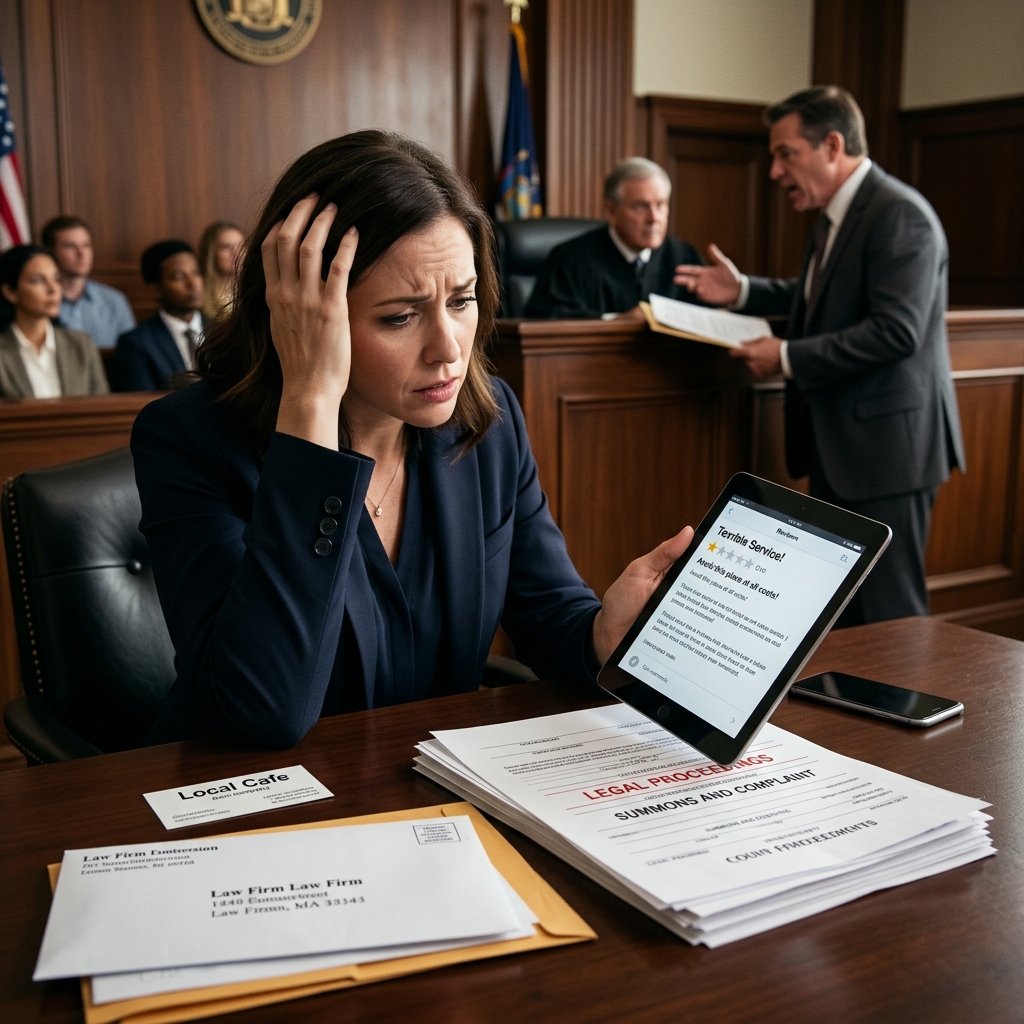
Online reviews have become a powerful tool for consumers. They influence which restaurant we try, which contractor we hire, and even which doctor we see. But with that power comes risk: if you post a harsh review, could the business turn around and sue you? The answer is that honest opinions are usually protected, but false statements that harm someone’s reputation can lead to defamation claims.
This article explains when a negative online review is legally safe, when it can cross the line into defamation, and how you can protect yourself while still speaking candidly about your experiences.
Why Negative Reviews Matter — And Why Businesses Care
Online platforms make it simple to rate a product or service within seconds. A single one-star review can appear on Google, Yelp, or social media and be seen by thousands of potential customers.
Because of this visibility, businesses worry about:
- Lost sales when prospective customers choose a competitor after reading a bad review.
- Long-term reputational damage if negative comments remain searchable for years.
- Fake or malicious reviews created by competitors or anonymous users.
Most companies understand that not every customer will be happy and that criticism is part of doing business. But some may consider legal action when they believe a review is false, deceptive, or deliberately harmful.
Free Speech vs. Defamation: The Legal Basics
In many countries, including the United States, individuals have strong rights to express opinions about goods and services they use. In the U.S., this freedom is anchored in the First Amendment and reinforced by modern statutes designed to protect consumer reviews. However, these rights stop where defamation begins.
What Is Defamation?
Defamation generally refers to a false statement of fact about a person or business that is communicated to others and causes harm to their reputation or finances. Defamation typically has two forms:
- Libel: Written defamation, which includes online reviews, social media posts, emails, and blog comments.
- Slander: Spoken defamation, such as statements made in a conversation or recorded audio.
To be defamatory, a review usually must:
- Present specific factual claims (not just general opinions).
- Be false or misleading, not merely unpleasant or critical.
- Be communicated to someone other than the person or business described.
- Cause or be likely to cause serious harm to reputation or financial interests.
Opinions vs. Statements of Fact
Most negative reviews are protected because they express subjective opinions based on personal experience. Courts generally distinguish between:
| Type of statement | Example | Legal risk |
|---|---|---|
| Opinion | “In my view, the service was slow and unprofessional.” | Typically protected speech if based on real experience. |
| Fact | “This business charges hidden fees and falsifies invoices.” | Higher risk if the statement is false and harms reputation. |
| Accusation of misconduct | “The owner steals customers’ credit card information.” | Very high risk if untrue; may be defamatory and possibly criminal. |
When you leave a review, law and policy favor transparency and honest feedback, but you are expected to avoid making unverified factual accusations that could seriously damage a company or person.
Consumer Review Fairness: Protection for Honest Feedback
In the United States, Congress enacted the Consumer Review Fairness Act to protect people’s ability to share their honest opinions about products, services, and business practices. Under this law:
- Businesses cannot use contract clauses or website terms to ban negative reviews or punish customers financially for posting them.
- Companies that attempt to enforce such clauses may face enforcement actions by the Federal Trade Commission (FTC).
- Consumers who are threatened for posting truthful reviews can report the business to the FTC and, in some cases, to state attorneys general.
This means that if you post an honest review based on your actual experience, a business generally cannot use contract fine print to silence you. However, the law does not shield fake, misleading, or defamatory reviews, nor does it protect reviews that disclose confidential information or violate other legal obligations.
When Can You Be Sued Over a Negative Review?
From a practical perspective, most negative reviews do not lead to lawsuits. Legal action is expensive, time-consuming, and often generates bad publicity for the business, sometimes amplifying the original complaint (a phenomenon frequently referred to as the “Streisand effect”). Nevertheless, lawsuits do occur in certain situations.
Common Grounds for Legal Claims
A business or individual is more likely to sue when a review appears to involve:
- Clearly false factual allegations that can be disproved (for example, claiming an event happened when it demonstrably did not).
- Serious accusations of illegal or unethical behavior (such as fraud, theft, or violence) with no evidence to support them.
- Fake reviews posted by competitors, disgruntled former employees, or anonymous accounts with no actual customer experience.
- Patterns of targeted harassment, where a user repeatedly posts damaging content with the intent to harm a particular business.
In some jurisdictions, negative fake reviews may violate advertising and competition laws and can be treated as illegal denigrating advertising or misleading commercial communication. Businesses may seek damages and injunctions to have these reviews removed.
Public Figures vs. Private Businesses
The legal standard can differ depending on who is being reviewed. In the U.S., public figures (such as celebrities or high-profile officials) typically must prove actual malice—that the false statement was made knowingly or with reckless disregard for the truth—to win a defamation case. Private individuals and small businesses generally need only show negligence, meaning the reviewer should have known the statement was false.
This distinction underscores why it is essential to check your facts before making serious allegations about a local business, professional, or individual.
Practical Tips for Posting Safer Negative Reviews
You can be candid and honest without increasing your legal risk. These practical guidelines help you share criticism responsibly:
1. Stick to What You Personally Experienced
- Describe events you directly observed, such as delays, cleanliness issues, or customer service interactions.
- Avoid repeating rumors or second-hand claims about a business or person.
- If the situation involved multiple people, focus on what you saw and heard rather than speculating about motives.
2. Separate Opinions from Alleged Facts
- Use phrases that clearly signal opinion: “In my opinion,” “I felt,” “My impression was”.
- When stating facts—such as prices, wait times, or specific actions—make sure they are accurate and, if possible, verifiable.
- Do not present assumptions or guesses as solid, objective facts.
3. Avoid Exaggeration and Inflammatory Language
- Resist the urge to use sweeping statements like “They are criminals” or “This business scams everyone” unless you have clear evidence and have reported concerns to authorities.
- Explain specific problems instead of using vague insults.
- Remember that emotional language may make your review seem less credible to readers and more risky legally.
4. Keep Documentation Where Possible
- Save receipts, emails, photos, or messages that support the experience you describe.
- Documentation can make it easier to show that your review is grounded in reality if it is ever challenged.
- Do not post sensitive personal information or confidential data in a public review.
5. Understand Platform Rules and Reporting Tools
Review platforms like Google, Yelp, and others maintain terms of service that govern what users can post. These typically:
- Prohibit hateful, threatening, or obscene content.
- Ban reviews about topics unrelated to the business or service.
- Offer tools to flag inappropriate or fake reviews for removal.
If you see a review that appears to be fraudulent or abusive, you can often report it to the platform. Businesses use the same mechanisms to challenge reviews they believe violate platform policies.
What Businesses Typically Do About Bad Reviews
From the business perspective, filing a lawsuit over a negative review is rarely the first step. Many lawyers warn that legal action against customer reviewers carries “substantial and asymmetric” risks, including high costs and reputational blowback. Instead, businesses often pursue other strategies.
Non-Legal Responses
- Public replies: Responding politely to a review to explain, apologize, or offer to remedy the issue, demonstrating good customer service.
- Private outreach: Contacting the reviewer to clarify the situation or request a modification if there is a misunderstanding.
- Flagging inappropriate content: Using platform tools to report reviews that contain profanity, irrelevant material, or obvious errors.
- Encouraging more honest reviews: Asking satisfied customers to leave feedback to offset isolated negative comments.
When Businesses Consider Legal Action
Litigation may be considered when a business believes it is facing:
- A deliberate campaign of false reviews by a competitor or disgruntled individual.
- Anonymous reviews that make serious factual allegations and appear coordinated.
- Claims that meet the legal threshold of defamation or malicious falsehood, causing measurable financial loss.
Before suing, businesses and their lawyers must assess evidence, potential damages, and whether local anti-SLAPP (Strategic Lawsuit Against Public Participation) statutes could quickly dismiss their case and require them to pay the reviewer’s legal fees. This legal environment discourages lawsuits that are primarily intended to silence critics rather than address genuinely false statements.
Frequently Asked Questions
Can a business sue me just because I left a low rating?
A low star rating accompanied by a brief comment that reflects your honest opinion is highly unlikely to result in a defamation lawsuit, especially if it does not make specific factual accusations. Laws generally protect the right to express dissatisfaction.
What if my review is completely true but very negative?
Truth is a strong defense to defamation. If your review accurately reflects your experience and you do not embellish or misstate facts, it is usually protected, even if it is extremely critical. Keeping records of your experience can be helpful.
Can I be sued for a review I wrote under a pseudonym?
Using a pseudonym does not prevent a lawsuit. If a business believes the review is defamatory, it may seek court permission to obtain identifying information from the platform or service provider. Anonymous reviewers have been unmasked in some cases, especially when serious allegations are involved.
Are fake reviews illegal?
Yes. Fake reviews that misrepresent a real experience—whether positive or negative—can violate advertising and consumer protection laws in multiple jurisdictions. Negative fake reviews may be treated as unfair trade practices or illegal advertising, exposing the poster and possibly the business that benefits from them to legal consequences.
What should I do if a business threatens to sue me over my review?
If you receive a legal threat, do not ignore it. Consider taking these steps:
- Review your post carefully to confirm it is accurate and based on your own experience.
- Preserve all evidence related to the transaction and the communication.
- Consult a lawyer familiar with defamation or online speech in your jurisdiction.
- If the threat is tied to honest criticism and contract terms that forbid negative reviews, you may report the business to consumer protection authorities such as the FTC in the U.S..
Key Takeaways for Reviewers
Negative online reviews are an essential part of the modern marketplace. They help other consumers make informed decisions and encourage businesses to maintain quality standards. The law increasingly recognizes the value of honest reviews and protects them from unfair suppression.
At the same time, posting content online is not risk-free. To minimize your legal exposure:
- Be truthful and base your review on real experiences.
- Frame criticisms as opinions where appropriate and avoid unsupported factual accusations.
- Stay calm and specific—detail what happened rather than attacking a person’s character.
- Respect platform rules and avoid personal attacks, threats, or discriminatory language.
When in doubt, seek legal advice before posting or responding to especially contentious situations. Understanding the boundary between free speech and defamation helps you use online reviews responsibly while still sharing valuable information with other consumers.
References
- It’s illegal to ban honest reviews — Federal Trade Commission. 2017-02-21. https://www.ftc.gov/business-guidance/blog/2017/02/its-illegal-ban-honest-reviews
- Managing Negative Reviews: Legal Risks and Solutions — Klemchuk LLP. 2020-06-01. https://www.klemchuk.com/ideate/managing-negative-customer-reviews
- Fake reviews on online platforms: perspectives from the US, UK and EU — Busco, G. et al., International Review of Law, Computers & Technology (via PubMed Central). 2021-07-09. https://pmc.ncbi.nlm.nih.gov/articles/PMC8294234/
- Negative Online Reviews: Think Before You Sue — Vegas Legal Magazine. 2018-05-15. https://www.vegaslegalmagazine.com/negative-online-reviews-think-before-you-sue/
- How To Deal With a Negative Online Review About Your Business — Brabners LLP. 2021-03-10. https://www.brabners.com/insights/litigation-disputes/how-to-deal-with-a-negative-online-review-about-your-business
- Don’t be Such a Critic: Negative Online Reviews Can Cost You — HUB International. 2016-10-20. https://www.hubinternational.com/en-CA/blog/2016/10/dont-be-such-a-critic-negative-online-reviews/
- Online defamation: When a bad review may cross the line — Johns, Flaherty & Collins Law Firm. 2019-08-01. https://www.johnsflaherty.com/blog/online-defamation-when-a-bad-review-may-cross-the-line
Similar Articles








Read full bio of Sneha Tete


