
Calling 911 On Yourself for Drunk Driving: What Really Happens
Exploring what happens when drivers report themselves as too drunk to drive, and how the law treats voluntary self-reporting.
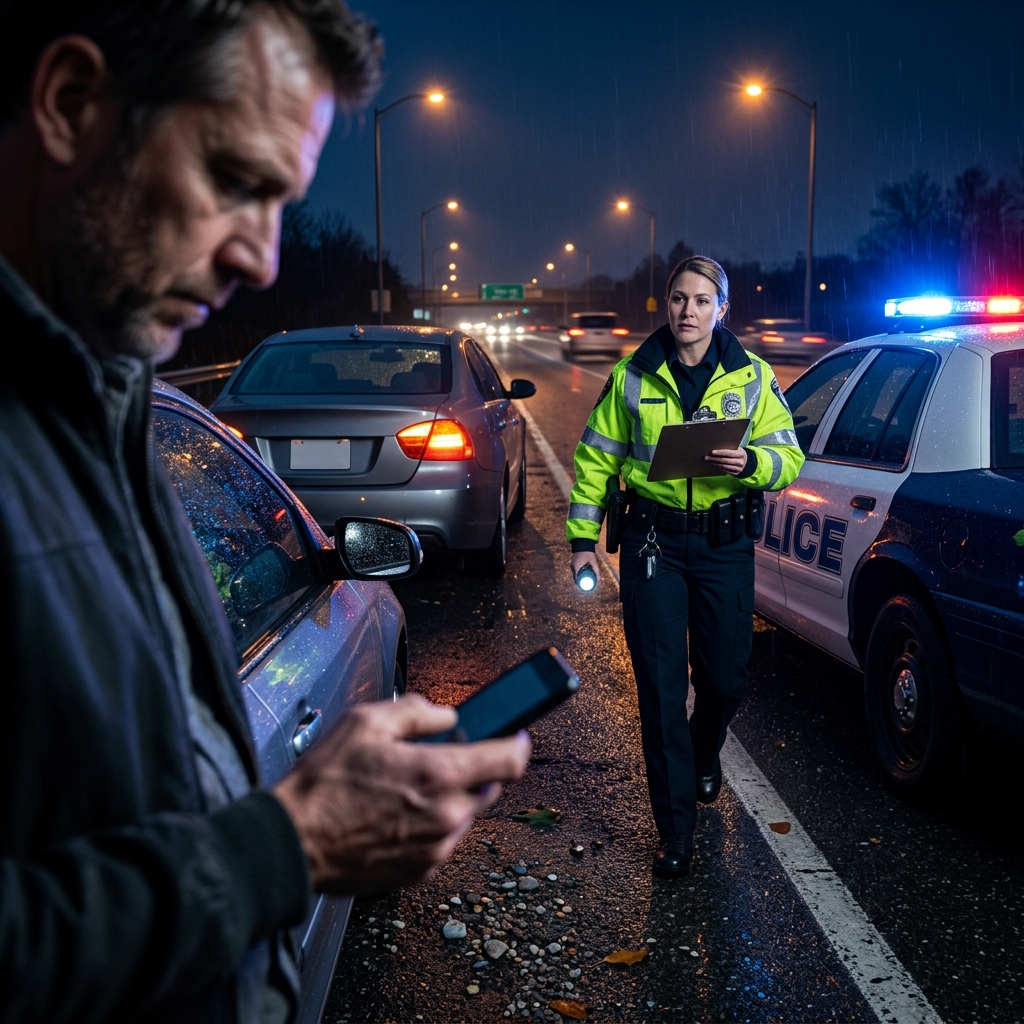
Modern drunk driving laws are designed to prevent crashes and save lives, but people do not always make rational decisions about whether they are fit to drive. Occasionally, someone who has been drinking realizes they may be unsafe behind the wheel and asks a difficult question: if I call 911 and report myself as too drunk to drive, am I going to be arrested? This article examines how impaired driving laws work, how police typically respond to self-reports, and what risks and protections may exist if you voluntarily disclose your own drinking and driving.
Drunk Driving Basics: How Impairment Is Defined
To understand the consequences of calling 911 on yourself, it helps to first understand what counts legally as drunk or impaired driving. Most jurisdictions use a mix of specific blood alcohol concentration (BAC) thresholds and a broader impairment standard.
Key elements commonly found in impaired driving laws include:
- Per se alcohol limits: In all U.S. states, driving with a BAC of at least 0.08% is illegal for most drivers, regardless of apparent driving ability.
- Impairment-based standard: Even below 0.08%, you can be charged if alcohol or drugs make you “less able to safely control the vehicle,” meaning your ability to operate a motor vehicle is meaningfully reduced by substances.
- Drug and medication impairment: Laws usually cover controlled substances and sometimes impairing medications, even when used as prescribed, if they affect safe driving.
Under these frameworks, a driver who feels too impaired to drive safely may already meet the legal definition of impaired driving if they are behind the wheel or even operating the vehicle in a limited way, such as moving it a short distance in a parking lot.
When Does Impairment Become a Crime?
Simply consuming alcohol is not illegal; the legal issue is operating or being in control of a vehicle while impaired. The exact moment when you cross the line from “drinking” to “criminal conduct” can depend on how your state defines operation or control of a vehicle.
Common factors that matter for criminal liability include:
- Actual driving on a roadway: Most clearly, impaired driving laws apply when you drive on public roads while under the influence.
- Physical control of a vehicle: In some states, sitting in the driver’s seat with keys in the ignition, or even nearby, can be treated as being in “actual physical control” of the vehicle, especially if you are capable of starting and moving it.
- Location of the vehicle: The vehicle’s location matters. Laws may apply on highways, public property, and in some cases private property or parking lots, depending on the statute and case law.
This means a person who is intoxicated but not yet driving may still be at risk if the law treats having control over the vehicle while impaired as equivalent to driving. In those jurisdictions, an officer responding to your call could theoretically find grounds for an impaired driving charge even if the car has not moved.
Calling 911: How Police Typically Respond
When you call 911 and say you are too drunk to drive, dispatchers and officers are primarily focused on safety. Their priority is to prevent crashes, injuries, and deaths, rather than punish someone who is asking for help. However, they also have a duty to enforce impaired driving laws.
Common steps that may occur when you report yourself include:
- Location and risk assessment: Dispatchers will ask where you are, whether you are currently driving, and whether anyone else is in danger.
- Sending officers to the scene: Officers may be sent to check on you, especially if you are on a roadway or in a vehicle.
- Assessment of impairment: Upon arrival, officers can observe your behavior, speech, coordination, and smell of alcohol. If they suspect impairment, they may conduct standardized field sobriety tests or request a breath test.
Whether you are arrested often depends on what officers observe and can prove at the scene, not simply on the fact that you made the call. Your admission is important, but most impaired driving cases rely heavily on physical evidence and officer observations.
Can You Be Arrested Based Solely on Your Phone Call?
A self-report that you are “too drunk to drive” is incriminating, but it may not be sufficient on its own for a conviction. Police and prosecutors typically need reliable evidence of impairment linked to operation or control of a vehicle. Your phone call is one piece of evidence among many.
From a legal perspective, several questions arise:
- Is your statement a confession? When you tell 911 that you are drunk and driving, you are effectively making a statement against your own interest. Such statements can be admissible in court, but prosecutors still need to connect them to a specific time, place, and act of driving.
- Is there corroborating evidence? If officers cannot corroborate that you drove or were in control of the vehicle while impaired—because you parked before calling, or never started driving—it may be harder to sustain a charge.
- Where were you when you called? If you are already safely parked and not in control of the vehicle, an officer may decide that no impaired driving offense is occurring at that moment. In that scenario, the focus may shift to arranging safe transportation and ensuring you do not drive.
In practice, if you have been driving and officers arrive to find you intoxicated in or near your vehicle, there is significant risk of arrest. Your call may be treated in combination with officer observations and any chemical tests as evidence of impaired driving.
Self-Reporting vs. Mandatory Reporting: Different Contexts
It is useful to distinguish between voluntary self-reporting to police and other types of mandatory reporting found in law. Mandatory reporting usually appears in contexts like medical conditions or professional licensing, where drivers or license holders must notify authorities about specific issues.
| Type of Reporting | Who Reports | What Is Reported | Legal Consequences |
|---|---|---|---|
| 911 self-report of drunk driving | Driver / caller | Being or feeling too impaired to drive | Possible police response, investigation, and potential arrest if evidence supports impairment |
| Medical condition disclosure | Driver to motor vehicle agency | Conditions like seizures, alcohol use problems, or dementia that affect safe driving | Review of driving fitness, possible restrictions, or license changes |
| Professional license self-report | Licensed professional to board | DUI arrests or convictions, other criminal matters | Disciplinary actions, probation, or license suspension depending on severity |
While medical and professional reporting focus on long-term risk and accountability, calling 911 about your own drinking is an immediate, safety-focused disclosure. Yet all these systems share a key theme: law views impaired driving as dangerous enough to justify both proactive prevention and reactive enforcement.
Safety vs. Punishment: How Law Balances the Two
Lawmakers and agencies often try to encourage safe behavior without discouraging people from asking for help. For example, medical reporting programs emphasize keeping medically impaired drivers off the road, sometimes allowing for treatment and license restrictions instead of criminal penalties. Similarly, impaired driving campaigns highlight the importance of not driving at all when you have consumed alcohol or drugs.
This balancing act creates tension in the self-report scenario:
- Safety incentive: People should feel able to call for assistance instead of driving drunk. If self-reporting invariably leads to arrest, some individuals may choose to take the risk and drive home.
- Legal accountability: At the same time, impaired driving is a serious offense, and many jurisdictions treat it as criminal to deter dangerous behavior.
How this tension is resolved often depends on local policy, prosecutorial discretion, and the specific facts of the case. Some officers may exercise discretion when a person has clearly chosen safety (for example, calling from a bar before getting into a car) and has not yet driven, focusing on arranging alternative transportation rather than punishment.
Professional Licenses: Extra Consequences Beyond Criminal Court
For people who hold professional licenses—such as physicians, nurses, teachers, or lawyers—a drunk driving incident can have consequences beyond court fines and potential incarceration. Many licensing boards require self-reporting of criminal arrests or convictions, including DUI.
Typical features of professional DUI self-reporting include:
- Mandatory disclosure deadlines: In some states, licensed professionals must report DUI arrests or convictions within a specified time period—often 30 days—to their licensing authority.
- Board review and possible discipline: Boards can impose probation, fines, or license suspension, particularly if the conduct suggests ongoing substance misuse or risk to clients or patients.
- Duty to protect the public: Licensing systems prioritize public safety and trust, viewing impaired driving as a sign that professional judgment may be compromised.
Although calling 911 on yourself might be seen as a responsible act, it does not necessarily shield a professional from these reporting obligations if the incident leads to arrest or conviction.
Medical and Substance Use Disclosure to Driving Authorities
Separate from criminal law, many states ask or require drivers to disclose medical conditions and substance use issues that may affect safe driving. These disclosures can involve alcohol use problems, drug dependence, seizures, or loss of consciousness, all of which can increase crash risk.
For example, Maryland law requires drivers to report certain medical conditions, including alcohol use problems, to the Motor Vehicle Administration when diagnosed, or when applying for or renewing a license. Drivers can report via online accounts, by phone, or in person, and may need to complete health questionnaires or physician reports. The goal here is preventive: authorities review whether a driver can safely operate a vehicle and may impose restrictions or require periodic medical updates.
These systems illustrate that the law is not solely punitive. It can also provide structures for managing health-related risk, which may indirectly encourage people to be honest about impairments instead of hiding them until a crash occurs.
Practical Tips: If You Feel Too Impaired to Drive
For people who realize they should not be driving, the decision to call 911 is only one option. In most cases, there are safer and less legally risky alternatives you can pursue to avoid driving while impaired.
Consider these practical strategies:
- Stop driving immediately: If you are already on the road, pull over safely and stop driving as soon as you recognize your impairment.
- Use alternative transportation: Call a sober friend, family member, or a taxi or rideshare service to get home.
- Stay where you are: If you are at a bar, restaurant, or friend’s home, stay there until you are sober enough to travel safely, or arrange lodging nearby.
- Secure your vehicle: Park legally and leave the car overnight, returning when you are no longer impaired.
- Seek professional help if impairment is recurring: If you repeatedly find yourself too impaired to drive, consider talking to a health professional or counselor, as this can signal a larger alcohol or drug use issue.
Calling 911 may still be appropriate if you are in a dangerous situation—for example, if you are stranded on a highway shoulder while impaired or if impairment is so severe that you fear for your safety or that of others around you. In such cases, the risk of a crash or injury can outweigh concerns about legal consequences.
Frequently Asked Questions (FAQs)
1. If I call 911 before I start driving, can I still be charged with DUI?
If you have not yet driven and are not in “actual physical control” of the vehicle, charges are less likely, but this depends heavily on your state’s legal definition of operation or control and what officers observe at the scene. Parking the vehicle, keeping keys out of the ignition, and staying out of the driver’s seat can reduce legal risk, though they do not guarantee immunity.
2. Does my phone call count as evidence against me?
Your statement to 911 can be used as evidence, especially if it includes admissions like “I was driving and I’ve had too much to drink.” However, prosecutors generally want corroborating evidence, such as officer observations, field sobriety tests, and chemical test results.
3. Will officers always arrest someone who calls in their own impairment?
No single outcome is guaranteed. Officers have discretion and will consider whether you have been driving, how impaired you appear, and whether there is an immediate safety threat. In some cases, they may focus on ensuring you do not drive and help arrange safe transportation, while in others they may proceed with an arrest if legal standards are met.
4. Are there “Good Samaritan” protections for drunk drivers who call for help?
Many jurisdictions have “Good Samaritan” or medical amnesty laws related to drug overdoses, encouraging people to call for emergency help without fear of certain charges. Although these laws often focus on controlled substances rather than alcohol or driving, the policy idea—rewarding help-seeking behavior—is similar. Whether any specific protection applies to impaired driving depends on local law, so legal advice from a qualified attorney is important.
5. What if I hold a professional license?
If a self-reported incident leads to arrest or conviction, you may be required to report it to your licensing board within a specified timeframe. Boards can impose discipline ranging from warnings to license suspension. Consulting with an attorney familiar with professional discipline can be critical if your career depends on maintaining a clean record.
Why Legal Advice Matters
Because impaired driving laws vary significantly by jurisdiction and the consequences can be severe—including criminal records, license suspension, professional discipline, and insurance impacts—it is important to seek advice from a qualified lawyer if you are involved in any incident related to drunk or drug-impaired driving. A lawyer can explain how your local laws treat self-reporting, what defenses might be available, and how to navigate interactions with both courts and licensing authorities.
This article offers general information, not legal advice, and cannot substitute for consultation with a licensed attorney in your area.
References
- Drunk & Impaired Driving – Wisconsin State Law Library — Wisconsin State Law Library. 2023-01-15. https://wilawlibrary.gov/topics/justice/crimlaw/drunk.php
- Impaired driving laws — Minnesota Department of Public Safety, Office of Traffic Safety. 2022-06-30. https://dps.mn.gov/divisions/ots/safe-driving-information-and-laws/traffic-safety-laws/impaired-driving-laws
- Mandatory Reporting — Pennsylvania Department of Transportation (PennDOT). 2021-09-01. https://www.pa.gov/agencies/dmv/resources/medical-reporting/mandatory-reporting
- Medical Condition Disclosure — Maryland Motor Vehicle Administration. 2023-05-10. https://mva.maryland.gov/your-mva-guide/medical-vision-requirements-licenses/medical-condition-disclosure
- Understanding DUI Self-Reporting Requirements for Licensed Professionals in Pennsylvania — Ciccarelli Law Offices. 2023-02-20. https://ciccarelli.com/understanding-dui-self-reporting-requirements-for-licensed-professionals-in-pennsylvania/
- Should I Self-Report a DUI to the Licensing Board? — Chapman Law Group. 2022-11-01. https://www.chapmanlawgroup.com/dui-reporting-board/
- Does a nurse or physician self-report a DUI to the licensing board? — Favia Law Firm. 2016-05-20. https://favialawfirm.com/2016/05/20/does-a-nurse-or-physician-self-report-a-dui-to-the-licensing-board/
Similar Articles








Read full bio of Sneha Tete




