
California’s Immigrant Driver License Rules Explained
How California licenses for immigrants work, who qualifies, and what documents matter most.
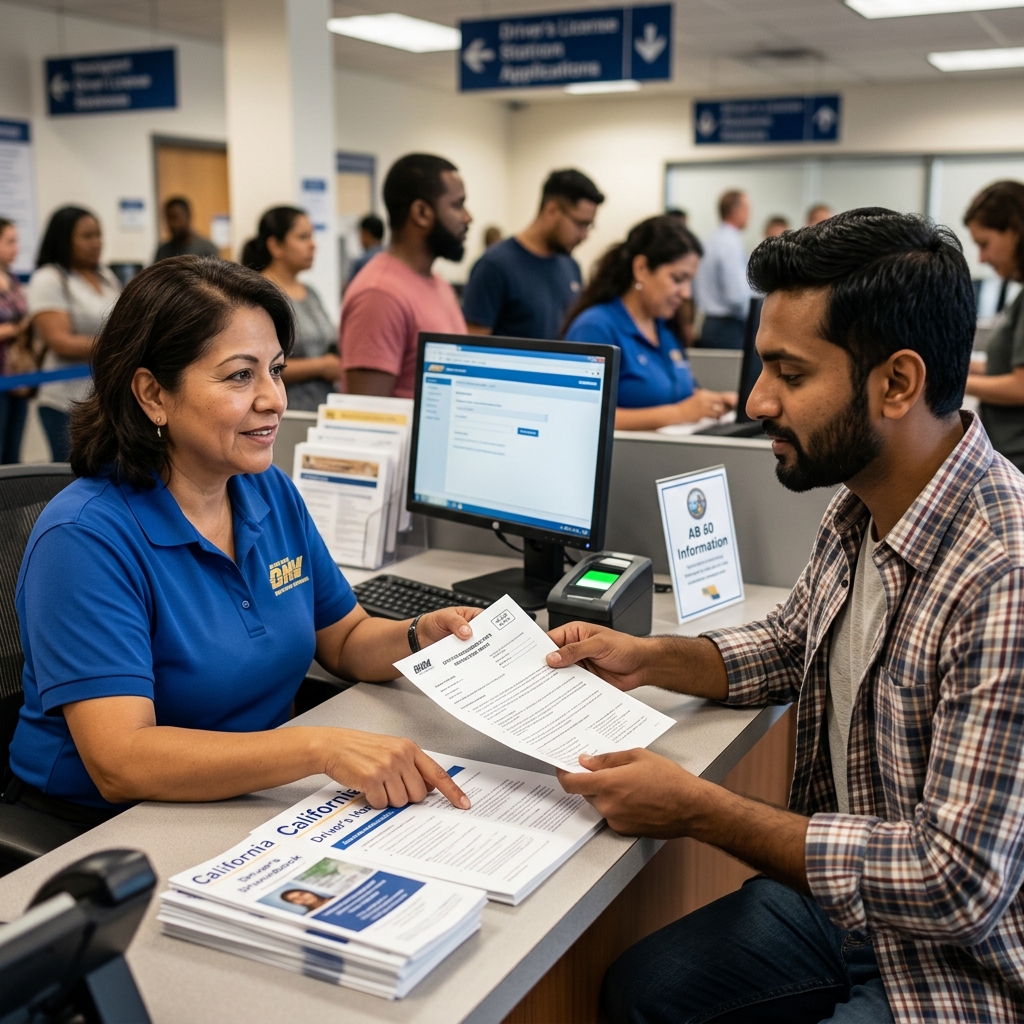
Understanding California’s License Path for Immigrants
California is one of the most flexible states in the country when it comes to driver’s licenses for immigrants. State law allows many residents to get a standard driver’s license even if they do not have lawful immigration status, and that policy has become an important part of daily life for families, workers, students, and caregivers across the state.
The core idea behind California’s approach is straightforward: if a person can prove identity, pass the required driving tests, and meet the state’s paperwork rules, immigration status alone does not block access to a license. That matters because driving is often not a luxury in California; for many people, it is essential for commuting, taking children to school, reaching medical appointments, and managing work schedules.
At the same time, California’s system is not the same as a federal identification program. The state’s immigrant-friendly licensing rules are designed to permit driving, not to replace immigration status, work authorization, or federal ID rules. That distinction is one of the most important things to understand before applying.
Who Can Apply for a California Driver’s License?
California generally allows state residents to apply for a driver’s license regardless of immigration status. That includes undocumented immigrants, asylum seekers, and others who may not have a Social Security number or permanent status. The key requirement is that the applicant meets the state’s licensing standards and can document identity and California residency.
For asylum seekers, work authorization can make the application process easier because it may help satisfy identity or Social Security documentation requirements. But California’s broader licensing system also recognizes that many applicants will not have a work permit. In those cases, the applicant may still be eligible if the DMV accepts alternative documents that satisfy the state’s rules.
In practice, eligibility depends less on immigration category and more on whether the applicant can assemble the right paperwork and pass the testing process. That is why applicants should focus first on the DMV requirements, rather than assuming they are ineligible because they lack a particular immigration document.
What AB 60 Changed in California
California’s AB 60 law, often called the Safe and Responsible Driver Act, created the modern path for immigrants without lawful status to obtain a state driver’s license. The law became effective in 2015 and opened the door for hundreds of thousands of people who previously could not obtain a license because of their immigration status.
AB 60 was not just a technical change in the DMV rules. It reflected a broader state policy choice to reduce unlicensed driving, improve road safety, and make everyday life more manageable for immigrant families. By allowing more residents to obtain a license, the law also helped bring more drivers into the system where they can be tested, insured, and identified in a standardized way.
Even so, AB 60 licenses come with limits. They are valid California driver’s licenses, but they are not the same as a federal REAL ID-compliant card. Applicants should understand both the benefits and the restrictions before deciding what kind of license to pursue.
Documents You Usually Need at the DMV
Although exact document combinations can vary, most applicants should expect to provide proof of identity, proof of California residence, and other supporting records if available. If the applicant has work authorization, a work permit card, a Social Security number, and proof of California address may be enough for some applications. For a REAL ID license, additional documentation is required.
For those without a work permit, the DMV may accept other documents depending on the license type sought and the applicant’s circumstances. The most important thing is to bring original, unexpired records when possible. Photocopies are often not enough unless the DMV specifically allows them.
- Proof of identity, such as a valid passport or other acceptable identification document
- Proof of California residency, such as a utility bill, lease, or school record
- Social Security number, if one has been issued
- Work authorization documents, if available
- Any prior DMV paperwork, if the applicant has applied before
For residency, it is smart to bring more than one document if possible. DMV clerks may reject a record if it does not show a full name, current address, or other required details. Having backup documents can prevent a second trip.
Testing and Fees Still Apply
California’s immigrant licensing rules do not waive the normal road safety process. Most applicants still need to pass a written knowledge test, a vision test, and a driving test. The written test may be available in more than one language, which helps many applicants who are more comfortable reading in a language other than English.
The driving test remains important because the state wants each license holder to demonstrate safe operation of a vehicle. In many cases, the applicant must bring a vehicle that is properly insured and registered for the road test. The DMV also charges a fee, and applicants should plan for that cost in advance.
These requirements can feel burdensome, but they are part of the reason California licenses are accepted as evidence that a driver has met state safety standards. The result is not a shortcut; it is a lawful pathway to licensing for a broader group of residents.
AB 60 Licenses Versus REAL ID Licenses
One of the most common points of confusion is the difference between an AB 60 license and a REAL ID license. Both are issued by the California DMV, but they serve different purposes and are not available to the same group of applicants.
An AB 60 license is available to eligible California residents regardless of immigration status, but it is not a REAL ID. A REAL ID license is subject to federal identification standards and generally requires evidence of lawful presence, along with additional identity documents. That makes REAL ID unavailable to many undocumented applicants.
The distinction matters because a REAL ID can be used for certain federal purposes, while an AB 60 license generally cannot. Anyone applying should decide in advance whether they need a standard state license for driving only or whether they qualify for a REAL ID card.
| License Type | Who It Is For | Federal Use | Typical Documents |
|---|---|---|---|
| AB 60 license | Eligible California residents regardless of immigration status | Not valid for federal purposes | Identity and California residency documents |
| REAL ID license | Applicants who meet federal lawful presence rules | Valid for certain federal identification uses | Stronger identity and lawful presence documentation |
How California Uses the License Information
California law includes protections intended to prevent discrimination against AB 60 holders. State and local agencies are generally barred from treating someone unfairly just because they hold this type of license. The license is also recognized within the state as a valid driver’s license for ordinary driving-related purposes.
However, the information on the license may still raise concerns for some immigrants. Because the card is marked to indicate federal limitations, holders should understand that it is not intended to serve as a universal ID. It should be treated as a driving document with specific state protections, not as proof of immigration status or federal identity.
That is why many advocacy groups advise immigrants to think carefully about where and how they present the license. A document that works well for state driving purposes may not be the best choice for every interaction, especially outside California or in a federal setting.
Practical Situations Where Caution Is Important
Even though California protects the use of AB 60 licenses in many state settings, caution is still wise in certain situations. An immigration-safe license is not the same as a shield against every possible inquiry. The practical limits depend on who is asking, where the interaction takes place, and what the purpose of the request is.
- Do not assume the license is acceptable for federal airport screening or other federal ID checks
- Be careful using it in other states, where local rules may differ
- Do not rely on it as proof of lawful immigration status
- Keep in mind that state protections do not erase all risks in encounters with law enforcement
For many people, the safest strategy is to use the license for driving and routine state purposes, while keeping other identity documents available for separate situations where a different form of ID may be better suited.
Why the Law Matters for Families and Communities
California’s immigrant driver licensing system has practical effects that go far beyond the DMV office. Families often depend on one person to handle school pickups, grocery trips, work commutes, and medical visits. When that person lacks a license, the entire household can be affected.
By making licenses more accessible, the state reduces the number of people forced to drive without testing, insurance, or legal authorization to operate a vehicle. That can improve road safety and help immigrant communities participate more fully in daily life. It also gives residents a way to interact with the transportation system in a more stable and predictable way.
Supporters of the policy often point to these benefits as evidence that the law is both humane and practical. Critics focus more on the limits of the card and the possibility that the information on it could still be used in sensitive situations. Those concerns are real, but they do not change the basic point that California has created one of the most accessible licensing systems in the country.
Steps to Take Before You Apply
Applicants can improve their chances of success by preparing carefully before visiting the DMV. The process is usually much smoother when people arrive with complete documentation and an understanding of what type of license they want.
- Check whether you want a standard license or a REAL ID license.
- Gather identity documents and California residency records.
- Confirm whether you have a Social Security number or work authorization, if applicable.
- Study for the written exam and review the driving rules.
- Make sure the vehicle you plan to use for the driving test is legal and insured.
It is also helpful to review DMV rules ahead of time, because document requirements may change. Applicants who are unsure about a record should bring it anyway if it supports their identity or residency, since extra documentation can sometimes help resolve a borderline issue.
Frequently Asked Questions
Can undocumented immigrants get a California driver’s license?
Yes. California allows many residents to obtain a driver’s license regardless of immigration status, as long as they meet the DMV’s requirements.
Does an AB 60 license mean I have legal immigration status?
No. An AB 60 license authorizes driving in California, but it does not grant immigration status, work authorization, or federal benefits.
Can I use an AB 60 license everywhere?
No. The license is valid for driving in California, but it has federal limitations and may not be accepted for every purpose outside the state.
Is a REAL ID available to everyone who gets a California license?
No. REAL ID requires additional federal documentation and lawful presence standards that many immigrant applicants do not meet.
What if I do not have a Social Security number?
Applicants without a Social Security number may still be eligible for a California license, depending on the documents they can provide and the license category they seek.
What This Means for Immigrant Drivers
California’s licensing system gives many immigrants a legal path to drive, work, and care for their families without being excluded by immigration status alone. The law is not simple, and it does not eliminate every risk, but it does create a meaningful route to lawful driving for a broad range of residents.
For applicants, the most important takeaways are practical: know what documents you have, understand whether you need an AB 60 license or a REAL ID, and prepare for the DMV tests and fees. With those pieces in place, many immigrants can move from uncertainty to a valid California driver’s license and the everyday mobility that comes with it.
References
- California – Driver’s Licenses for Asylum Seekers — ASAP Together. n.d. https://asaptogether.org/en/licenses/california/
- CA gave 1M undocumented immigrants licenses — CalMatters. 2023-01-24. https://calmatters.org/california-divide/2023/01/drivers-licenses-undocumented-immigrants/
- AB 60 Driver’s License Frequently Asked Questions — Immigrant Legal Resource Center. 2015-04-27. https://www.ilrc.org/sites/default/files/resources/ab_60_4_27_15.pdf
- Applying for a Driver’s License, Regardless of Immigration Status — ACLU of Northern California. n.d. https://www.aclunorcal.org/know-your-rights/know-your-rights-california-ab-60-drivers-licenses/
- AB 60 Driver’s License Holders — ACLU of Southern California. n.d. https://www.aclusocal.org/know-your-rights/your-rights-ab-60-drivers-license/
Similar Articles








Read full bio of medha deb


