
California Wildfire Lawsuits Against Utility Companies
How California wildfire victims pursue claims against utility companies through insurance, civil lawsuits, and evolving liability rules.
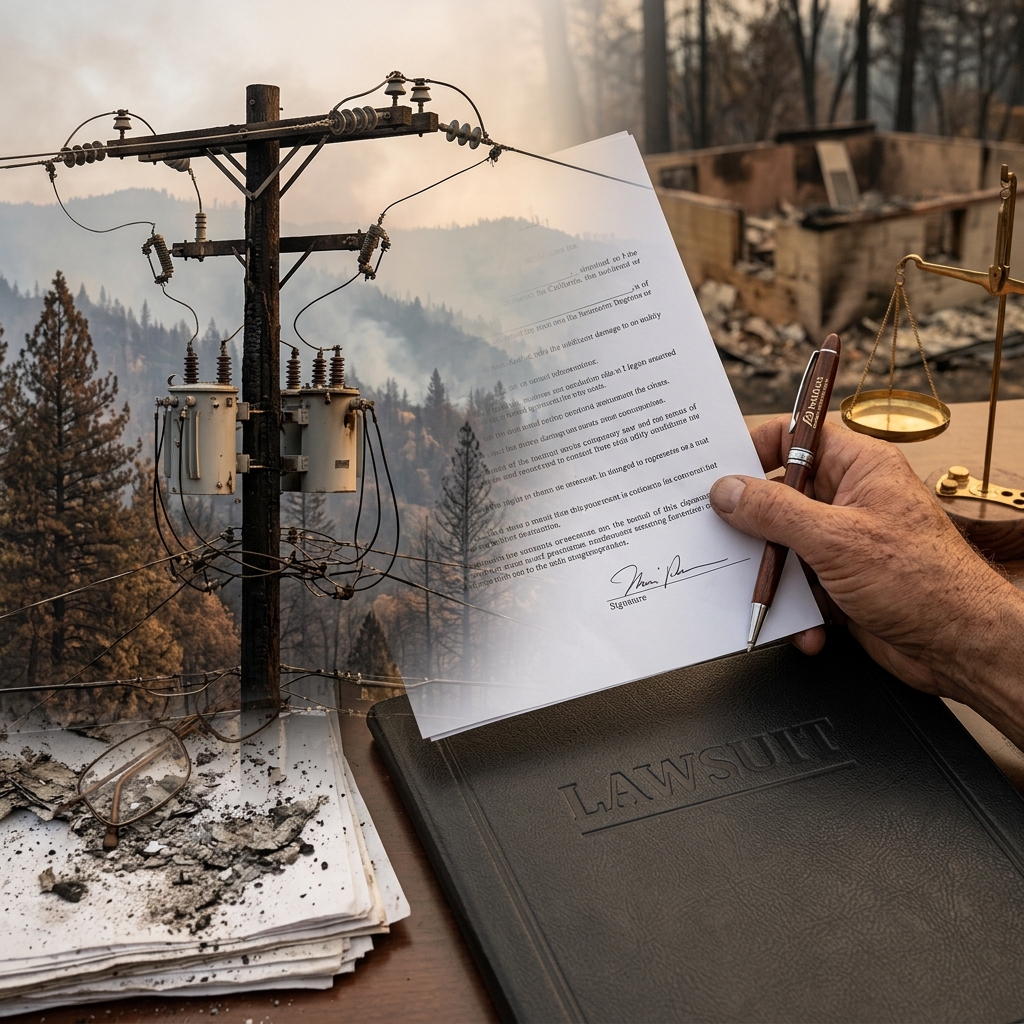
Catastrophic wildfires have become a recurring reality in California, destroying thousands of homes, businesses, and lives each year. When investigative agencies link a fire to utility infrastructure, victims often turn to the courts to seek compensation from the responsible power companies. Under California law, utilities can face substantial liability for wildfire damage, including in circumstances where they were not intentionally or recklessly at fault. This article explains how wildfire victims pursue claims against utilities, how liability is determined, and what damages may be available.
Why Utility Companies Are Frequently Sued After Wildfires
Major California wildfires have repeatedly been traced to power lines, transformers, and other utility equipment, particularly during periods of extreme heat, drought, and high winds. When a fire originates near energized lines or malfunctioning equipment, fire investigators and regulators analyze whether the utility complied with safety standards, vegetation management requirements, and shutoff protocols.
Several factors make utilities central defendants in wildfire litigation:
- Extensive infrastructure: Utilities maintain thousands of miles of overhead lines across forests, mountains, and urban-wildland interfaces, increasing the chance of equipment interactions with dry vegetation.
- High fire risk conditions: Drought, heat, and strong winds can turn small sparks into fast-moving fires, especially in areas with heavy fuel loads and steep terrain.
- Regulated obligations: Utilities are subject to state safety rules and must file plans to prevent equipment-caused fires. Violations or inadequate implementation can support negligence claims.
- Deep financial resources: Compared with many individual defendants, utilities have greater capacity to pay large judgments or settlements, making them primary targets in civil suits.
As a result, insurers, businesses, local governments, and individuals have repeatedly sued California utilities following fires to recoup billions of dollars in losses.[10]
Legal Theories Used Against Utility Companies
Wildfire litigation against utilities typically relies on a combination of traditional tort claims and California-specific constitutional doctrines. Understanding these theories helps victims evaluate potential options for recovery.
Negligence and Wrongful Death Claims
Many lawsuits allege that the utility negligently designed, operated, or maintained its equipment, or failed to take reasonable steps to prevent foreseeable fire risks. Negligence claims generally require four elements:
- Duty of care: Utilities owe a legal duty to operate safely and minimize fire hazards for customers and communities along their lines.
- Breach of duty: Plaintiffs must show the utility failed to meet that duty, for example by ignoring warnings, delaying repairs, or inadequately managing vegetation.
- Causation: The breach must be connected to ignition or spread of the fire, usually supported by expert reports and fire investigation findings.
- Damages: The fire must have caused measurable harms, such as property damage, bodily injury, or death.
When fatalities occur, families may bring wrongful death claims asserting that a loved one died because the utility failed to prevent a foreseeable fire or did not act promptly to shut off power under extreme conditions.
Inverse Condemnation: California’s Strict Liability Rule
One distinctive feature of California wildfire law is the doctrine of inverse condemnation, a constitutional concept normally associated with government takings of private property. Courts in California have applied this doctrine to investor-owned utilities when their equipment causes damage, even without proof of negligence. Under this approach:
- Utilities can be held strictly liable for property losses caused by their equipment, meaning victims do not need to show careless or intentional conduct.
- Liability is based primarily on whether utility facilities were a substantial factor in causing the fire.
- The goal is to distribute the cost of public-serving infrastructure-related harms across ratepayers rather than individual victims.
This doctrine has led to extremely large financial exposures for utilities after major fires, sometimes reaching tens of billions of dollars in potential liability.[10]
Claims by Insurers and Public Entities
In addition to individual property owners and residents, insurers and public entities often sue utilities to recover funds already spent on fire-related losses.[10] Common claimants include:
- Home and commercial insurers that paid policyholders for burned structures and contents.
- Local governments seeking reimbursement for infrastructure damage, emergency response costs, and long-term rebuilding.
- Federal agencies that expended resources to fight fires, repair damaged land, or support disaster recovery.
These plaintiffs may rely on negligence, inverse condemnation, and statutory reimbursement rights to pursue utilities in civil court.
How Wildfire Victims Build Claims Against Utilities
For individuals and businesses affected by a wildfire potentially linked to utility equipment, preparing a strong claim involves careful documentation and timely legal action.
Immediate Steps After the Fire
Victims should focus first on safety and stabilization, then begin gathering information that may later be crucial in legal proceedings. Recommended steps include:
- Contact insurers: Notify homeowners, renters, or commercial insurers as soon as practicable and open claims for all damaged property.
- Document damage: Photograph and record video of structures, vehicles, landscaping, and personal property before significant cleanup occurs.
- Maintain an inventory: Create detailed lists of lost items, with approximate values and any available receipts or purchase records.
- Preserve evidence: Avoid throwing out damaged items until getting guidance, because debris can provide important proof of fire intensity and impact.
- Save communications: Keep notices from utilities, local agencies, and insurers regarding debris removal, inspections, and emergency programs.
This material later helps attorneys and experts reconstruct what happened and quantify losses for settlement or trial.
Working with a Wildfire Attorney
Because utility-related wildfire litigation is technically complex and often involves large groups of plaintiffs, most victims retain lawyers experienced in these cases. An attorney can:
- Evaluate whether existing investigations suggest utility responsibility for the fire.
- Explain applicable legal theories, including negligence and inverse condemnation.
- Coordinate with experts in fire origin, electrical engineering, and damages assessment.
- File individual suits or join mass tort or coordinated proceedings when appropriate.
- Monitor deadlines, including statutes of limitation and claims-filing periods.
Lawyers also communicate with insurers to avoid conflicting statements and to ensure that insurance payments and potential utility recoveries are properly aligned.
Typical Litigation Process Against Utilities
While each case is unique, wildfire litigation against utility companies usually moves through several core stages:
- Complaint filing: Plaintiffs file formal complaints in state or federal court alleging specific causes of action.
- Discovery: Both sides exchange documents and take depositions, including utility maintenance records, inspection logs, and internal communications.
- Expert analysis: Fire investigators and engineers provide opinions about ignition, spread, and the condition of relevant equipment.
- Motions and hearings: Courts may evaluate the applicability of inverse condemnation, the sufficiency of evidence, and other legal questions.
- Settlement negotiations: Many cases resolve through negotiated settlements or global resolutions covering large groups of victims.[10]
- Trial (if necessary): If settlement is not reached, cases proceed to trial where juries or judges determine liability and damages.
Some major wildfire cases have ended with historic settlements creating trusts to compensate thousands of claimants over multiple years.[10]
What Types of Damages Wildfire Victims Can Seek
Victims of utility-related wildfires may pursue a broad range of damages, depending on the nature of their losses and the legal theories involved.
| Category of Damage | Examples | Who May Claim |
|---|---|---|
| Property damage | Homes, rentals, vehicles, landscaping, business premises | Homeowners, renters, business owners |
| Contents and personal property | Furniture, electronics, inventory, tools, personal items | Residents, commercial entities |
| Economic losses | Lost income, disrupted operations, extra living expenses | Employees, business owners, families |
| Personal injury | Burns, smoke inhalation, trauma-related medical care | Individuals harmed by the fire |
| Wrongful death | Loss of financial support, companionship, funeral costs | Surviving family members |
| Public entity costs | Emergency response, infrastructure repair, environmental remediation | Cities, counties, and agencies |
Insurance payments may cover some of these losses, but civil claims against utilities can help fill gaps where insurance limits, exclusions, or deductibles leave victims undercompensated.
Role of Insurance in Wildfire and Utility Claims
Insurance and utility liability are closely intertwined in wildfire recovery. Most property owners first seek coverage through their own policies, then consider utility claims for remaining losses.
Home and Business Insurance Claims
Standard homeowners and commercial property policies often cover fire damage, subject to policy limits and specific terms. After major fires, insurers may face extensive claims for destroyed structures and contents. Policyholders should:
- Review policy language on fire damage, smoke damage, and additional living expenses.
- Submit claims promptly with detailed documentation of losses.
- Communicate about temporary housing, business interruption, and debris removal coverage.
If a utility is later found liable, insurers may pursue subrogation claims to recover amounts already paid to policyholders from the utility or associated settlement funds.
Interaction Between Insurance and Utility Lawsuits
Insurance payments do not necessarily bar individual claims against utilities, but they can affect how damages are calculated and distributed. Key interactions include:
- Offsets: Courts may account for insurance payments to avoid double recovery on the same loss.
- Subrogation: Insurers may step into the shoes of their policyholders for certain claims, pursuing utilities directly for reimbursement.
- Supplementary damages: Victims can seek damages for uninsured or underinsured losses, such as deductibles, policy limits gaps, or non-covered items.
Coordination between attorneys and insurers helps ensure that victims receive full compensation without jeopardizing legal rights.
Evolving Legal Landscape for Utility Wildfire Liability
California’s framework for utility wildfire liability is not static. Policymakers and courts regularly reconsider how to balance the need for affordable electricity with the reality of increasing fire risks.
Regulatory and Legislative Changes
In recent years, state lawmakers and regulators have taken steps to address the financial strain of massive wildfire liabilities on utilities while maintaining protections for victims. Measures have included:
- Creating funds or mechanisms to help utilities pay wildfire claims while continuing essential services.
- Increasing requirements for wildfire mitigation plans, including line hardening and expanded use of public safety power shutoffs.
- Exploring reforms to inverse condemnation and cost recovery rules to adjust how damages are allocated among utilities, ratepayers, and victims.
These changes can affect victims’ litigation strategies and potential outcomes, making it important to consult counsel familiar with the latest developments.
Large Settlements and Precedent-Setting Cases
Some wildfire cases linked to utilities have resulted in large, structured settlements that influence future litigation. One multi-billion-dollar settlement created a trust to pay thousands of claims over time, funded through utility contributions and other mechanisms.[10] Such outcomes:
- Illustrate the scale of potential utility exposure after catastrophic fires.
- Provide models for resolving large numbers of claims in a coordinated fashion.
- Encourage utilities to further invest in wildfire prevention and safety improvements.[10]
Victims involved in these settlements must typically follow specific procedures and deadlines to submit claims to the trust or settlement program.
Frequently Asked Questions About Utility Wildfire Lawsuits
1. Do I need to prove the utility was negligent to recover?
Not always. Under California’s inverse condemnation doctrine, utilities can be strictly liable for property damage caused by their equipment, even if negligence is not proved. However, negligence claims remain important for certain types of damages and for establishing liability in personal injury and wrongful death actions.
2. Can renters sue the utility, or is it only homeowners?
Renters can pursue claims for lost personal property, relocation costs, and other damages, regardless of property ownership. Their rights may differ from those of homeowners regarding structure damage, but they are not excluded from litigation simply because they do not own the building.
3. What if my insurance already paid me for some losses?
You may still have claims for uncovered losses, including deductibles, policy limits gaps, and items excluded by your policy. Insurers may independently seek reimbursement from the utility through subrogation, but this does not eliminate your ability to pursue remaining damages.
4. How long do I have to file a lawsuit against a utility?
Deadlines depend on the type of claim and applicable statutes of limitation. Property damage and personal injury claims normally must be filed within specific timeframes under state law, and some public entity or trust claims have shorter notice requirements. Consulting an attorney promptly after the fire helps avoid missed deadlines.
5. Are small claims worth pursuing, or only large losses?
Victims with smaller claims may still pursue recovery, especially when suits are consolidated or handled through global settlements that streamline proceedings. Attorneys can advise whether joining a coordinated action is practical based on the size and nature of your losses.
6. Who investigates whether a utility caused the fire?
Multiple entities may investigate, including state fire agencies, utility regulators, utility internal teams, and independent experts retained by plaintiffs or insurers. Their reports and findings often form the backbone of later civil litigation.
References
- Insurers Sue California Utility Over Wildfire Damages — Voice of America. 2018-12-19. https://www.voanews.com/a/insurers-sue-california-utility-over-wildfire-damages/4728477.html
- Southern California Edison (SCE) Wildfire Lawsuit 2025 Update — Wisner Baum. 2025-01-01 (approx.). https://www.wisnerbaum.com/california-wildfire-lawyer/edison-lawsuit/
- Utility Line Fires — Aitken Aitken Cohn. 2023-01-01 (approx.). https://www.aitkenlaw.com/utility-company-wildfire-liability/
- California Wildfire Claims Guide: Insurance & Utility Liability — Law Offices of Robert A. Kaufman. 2022-01-01 (approx.). https://lawkaufman.com/california-wildfire-litigation/
- The Laws That Hold Utilities Liable for Wildfires are Changing — Stanford Law School. 2025-08-29. https://law.stanford.edu/2025/08/29/the-laws-that-hold-utilities-liable-for-wildfires-are-changing/
- Historic $13.5 Billion PG&E Wildfire Settlement — Watts Law Firm LLP. 2020-12-01 (approx.). https://www.wattstrialfirm.com/focused-on-results/historic-13-billion-pge-wildfire-settlemen/
Similar Articles








Read full bio of medha deb


