
California Revenge Porn Law: Practical Steps And A Legal Guide
A clear guide to California’s rules on sharing intimate images without consent and the penalties that can follow.
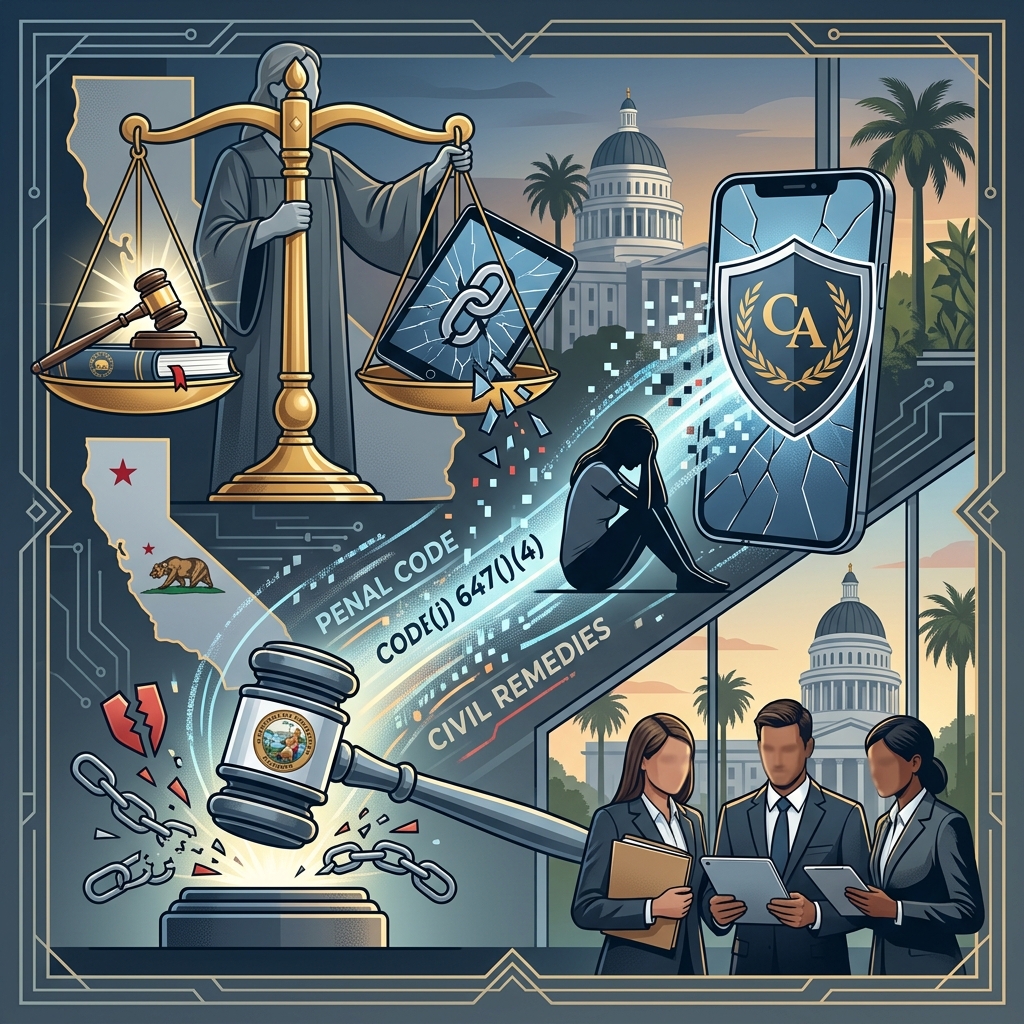
California treats the unauthorized sharing of private sexual images as a serious legal wrong, not a personal dispute. The state’s criminal and civil laws give victims options to seek accountability when intimate images are distributed without permission and under circumstances that were meant to keep them private.
This issue is often described by the phrase “revenge porn,” but the law reaches beyond revenge alone. It can apply whenever someone intentionally spreads a nude photo, sexual video, or similar image in a way that violates privacy and causes harm. Understanding the legal framework matters for both potential victims and anyone accused of posting or forwarding such material.
What the Law Is Trying to Prevent
The core concern is nonconsensual distribution of intimate content. California law focuses on situations where a person shares an image that was expected to remain private, knows or should know the sharing will cause distress, and then causes that distress. The goal is to stop the use of private images as a weapon, regardless of whether the original relationship was romantic, sexual, or otherwise personal.
These cases often involve text messages, social media posts, file-sharing apps, direct messages, or any other digital channel. The medium does not matter as much as the lack of consent and the harmful intent or effect.
How California Defines the Offense
Under California Penal Code section 647(j)(4), a person can face criminal liability for intentionally distributing the intimate image of another identifiable person when the image was understood to remain private and the distribution causes serious emotional distress. That definition reflects several important elements that prosecutors generally need to show.
- The image shows intimate body parts or sexual conduct.
- The person who shared it did so intentionally.
- The parties had an understanding or agreement that the image would stay private.
- The distributor knew or reasonably should have known that sharing it would cause serious emotional distress.
- The person depicted actually suffered that distress.
Because the law is built around specific facts, the same image may be legal to share in one setting and unlawful in another. Consent, context, and purpose are often central issues.
When the Law Does Not Apply
Not every disclosure of a sexual image is a crime. California recognizes limited exceptions, including sharing tied to lawful reporting of unlawful conduct, compliance with a subpoena or court order, or use in a lawful public proceeding. These exceptions are narrow and do not protect casual reposting, humiliation, or retaliation.
In practice, these exceptions matter most where an image becomes relevant in a legal dispute or official process. A person who claims one of these defenses usually needs to show that the disclosure was tied directly to that lawful purpose rather than personal embarrassment, retaliation, or gossip.
Criminal Penalties in California
The basic offense is generally treated as a misdemeanor. According to California legal summaries, a first conviction can carry up to six months in county jail and a fine of up to $1,000. More serious outcomes may follow when the facts involve repeat conduct, a minor, or other aggravating circumstances.
Some secondary sources describe enhanced penalties of up to one year in jail and a higher fine in certain situations, such as prior convictions or when the victim was under 18. Those enhancements reflect California’s broader effort to treat image-based abuse more severely when the harm is greater or the offender has already been warned by the justice system.
| Issue | Typical legal significance |
|---|---|
| First offense | Often charged as a misdemeanor with up to 6 months in jail and a fine |
| Minor involved | Can trigger increased punishment |
| Repeat offense | May lead to harsher consequences |
| Lawful exception | May defeat criminal liability if the disclosure was truly protected |
Even when jail time is not imposed, a conviction can have lasting effects. A criminal record may affect employment, licensing, housing, and future court proceedings.
Civil Lawsuits Are Also Possible
California also allows victims to pursue civil remedies. A person whose intimate images were intentionally distributed without consent may be able to sue for damages under the state’s privacy laws. Civil claims can seek compensation for emotional distress, related losses, and other harm caused by the unlawful sharing.
Civil cases matter because criminal prosecution does not always happen, and a victim may still need a way to pursue personal recovery. Civil court can also offer a different path when the primary goal is compensation, a restraining order, or formal recognition of harm.
In many situations, civil and criminal processes may move at the same time. The same facts can support both a police report and a lawsuit, although the standards of proof are different.
Time Limits Can Affect a Claim
Deadlines are critical in these cases. California materials indicate that the statute of limitations for certain civil claims is generally one year from the date the victim discovers, or reasonably should have discovered, the unauthorized sharing. That rule matters because intimate images are sometimes reposted later, and victims may not learn about the distribution immediately.
For victims, the practical lesson is simple: once the sharing is discovered, waiting can reduce legal options. For anyone evaluating a defense, the timing of discovery and filing can become a major issue.
What Evidence Usually Matters Most
Evidence often determines whether a case can move forward. In image-based abuse cases, the strongest records usually show who posted the image, when it was shared, where it appeared, and how the victim learned about it. Screenshots, URLs, saved messages, account names, and witness statements can all help establish the chain of events.
- Save screenshots before content disappears.
- Record usernames, dates, and platform details.
- Preserve direct messages, emails, or texts that show threats or admissions.
- Note how the image was circulated and by whom.
- Keep copies of takedown requests and platform responses.
Because online content can be deleted quickly, preserving evidence early is often essential. Without it, a victim may struggle to prove the content existed or identify the person responsible.
Steps Victims Commonly Take
Victims often begin by asking the platform to remove the content. Most major websites and social media services have policies against nonconsensual intimate imagery, and fast reporting can sometimes limit further spread. That step may not solve every problem, but it can reduce the audience and create a record of the complaint.
Many victims also contact law enforcement. A police report can start a criminal investigation and document the timeline. In parallel, an attorney may help evaluate civil claims, emergency court orders, or other remedies designed to stop further distribution.
In urgent cases, the most practical strategy is to act on several fronts at once: preserve the evidence, seek removal, report the matter, and get legal advice about next steps.
Common Defenses and Disputes
People accused under this law often raise defenses about consent, privacy expectations, or intent. If the person depicted actually agreed to the distribution, that fact may undercut the claim. Another disputed issue is whether the image was truly private in the first place.
Intent also matters. A defendant may argue that they did not knowingly distribute the image in a way that would cause serious emotional distress, or that the image was shared for a lawful purpose covered by an exception. In practice, these defenses are highly fact-specific.
Courts may also examine whether the image qualifies as intimate under the statute. Not every embarrassing photo is covered, and not every private photograph meets the legal definition.
Why the Law Matters Beyond Relationships
Although these cases often begin after a breakup, the law reaches farther than former partners. Roommates, acquaintances, co-workers, strangers, and even anonymous online users can be involved. The legal problem is the nonconsensual publication of intimate material, not the identity of the relationship alone.
That broader reach reflects how digital sharing works. A single post can spread rapidly across platforms, group chats, and websites, making the original harm difficult to undo. The legal system therefore treats the unauthorized release of intimate images as a privacy and safety issue, not simply a personal disagreement.
Practical Takeaways for Readers
California’s approach combines criminal punishment, civil remedies, and narrowly drawn exceptions. If someone posts or forwards an intimate image without permission, the conduct may expose them to jail time, fines, and a lawsuit. If you are the victim, your strongest early moves are to document the content, report it quickly, and preserve every piece of evidence you can.
Because the facts can vary widely, legal advice is especially useful in these cases. The difference between lawful conduct and a punishable offense may turn on consent, the privacy understanding between the parties, and the exact way the image was shared.
Frequently Asked Questions
Is every nude photo shared online illegal?
No. California law focuses on intentional, nonconsensual distribution of intimate images that were understood to remain private and that cause serious emotional distress.
Can someone be charged if they only forwarded the image?
Yes, if the forwarding was intentional and the other legal elements are present. The law is not limited to the first person who posted the content.
What if the image was taken years ago?
Age of the image does not automatically make sharing legal. What matters is consent, privacy expectations, intent, and the effect of the distribution.
Can a victim sue even if there is no criminal case?
Yes. Civil claims may still be available even when prosecutors do not file charges.
What should someone do first after discovering the image?
Save evidence, ask for removal, document the source, and speak with a lawyer or law enforcement if appropriate.
References
- California Legislature, Penal Code § 647(j)(4) — California Legislative Information. 2026-07-09. https://leginfo.legislature.ca.gov/faces/codes_displaySection.xhtml?sectionNum=647.&lawCode=PEN
- California Civil Code § 1708.85 — California Legislative Information. 2026-07-09. https://leginfo.legislature.ca.gov/faces/codes_displaySection.xhtml?sectionNum=1708.85.&lawCode=CIV
- California Code of Civil Procedure § 340 — California Legislative Information. 2026-07-09. https://leginfo.legislature.ca.gov/faces/codes_displaySection.xhtml?sectionNum=340.&lawCode=CCP
- SB 23 Analysis — California Senate Committee on Public Safety. 2019-01-01. https://spsf.senate.ca.gov/sites/spsf.senate.ca.gov/files/sb_23_analysis.pdf
- What’s California’s Revenge Porn Law? — Arias Sanguinetti. 2026-07-09. https://aswtlawyers.com/faqs/what-is-california-revenge-porn-law/
Similar Articles








Read full bio of Sneha Tete


