
California Pet Custody Law Explained: How To Protect Your Pet
How California’s pet custody statute reshaped divorce by focusing on the care and well-being of companion animals instead of treating them like furniture.
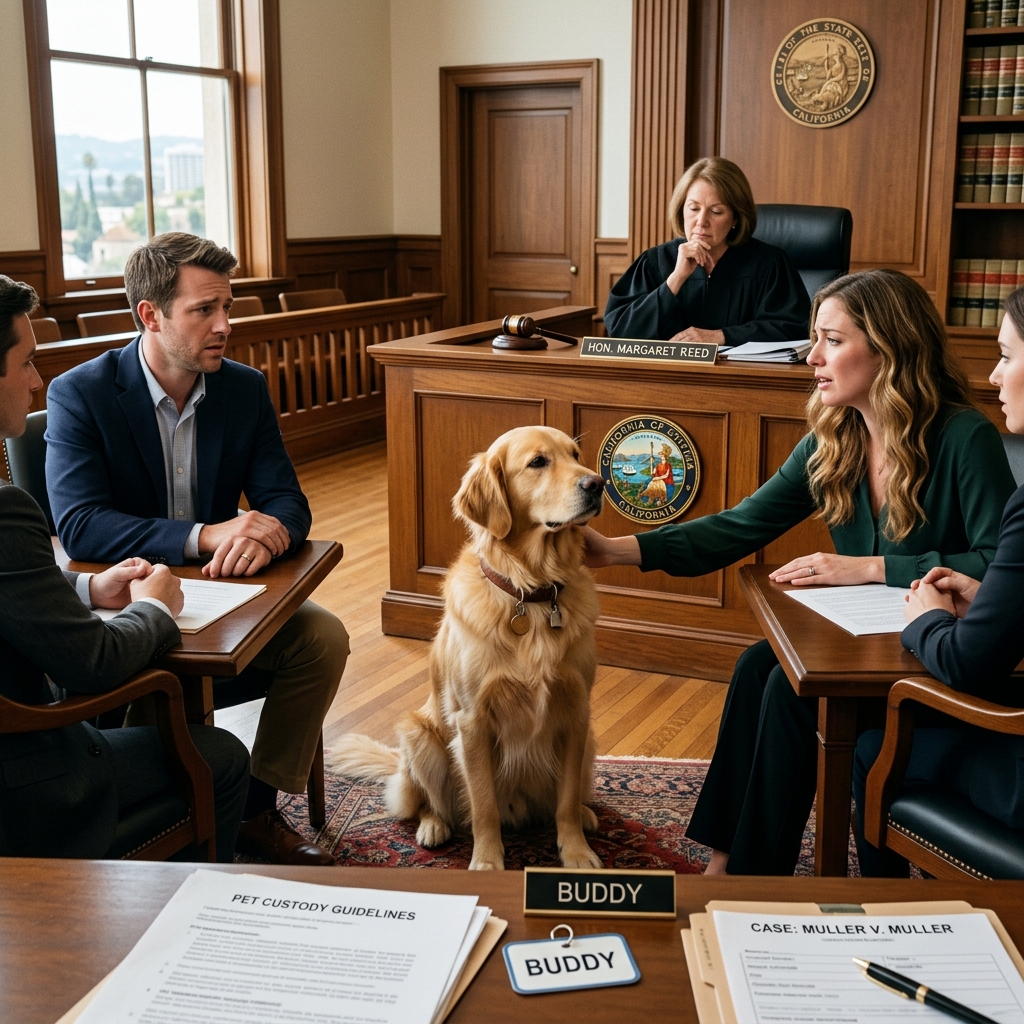
For many couples, a dog, cat, or other companion animal feels less like property and more like a member of the family. When a marriage breaks down, the question of who keeps the pet can be just as emotionally charged as child custody or dividing a home. California recognized this reality by enacting a dedicated pet custody statute that allows judges to look beyond simple ownership and consider the care and well-being of the animal.
This article explains how California’s pet custody law works in divorce and legal separation, what courts look at when deciding who keeps a pet, how joint arrangements can function, and what practical steps you can take to protect your companion animal when a relationship ends.
From Property to “Special” Property: Why the Law Changed
Historically, pets were treated like any other asset in a divorce. In California, that meant they were part of the community property system: the court would decide who received the pet in the same way it divided furniture, vehicles, or bank accounts.
This approach ignored the emotional bonds between people and their animals, as well as who actually provided day-to-day care. As disputes over pets became more common, California policymakers responded.
- Assembly Bill 2274 (AB 2274) was signed into law in 2018 and took effect on January 1, 2019.
- AB 2274 added California Family Code section 2605, often referred to as the state’s pet custody law.
- The statute does not remove pets from the legal category of property, but it creates a distinct framework that considers their care and protection.
California thus shifted toward a more humane model where pets are still legally property, but courts must look at who actually cares for them and what arrangement serves their best interests.
What California Family Code Section 2605 Does
Family Code section 2605 gives California judges specific powers and guidance when a divorcing or separating couple cannot agree on who will keep a pet.
Key features of the statute
- Temporary care orders: The court can issue an order requiring one spouse to care for the pet while the case is pending, before final ownership is decided.
- Final allocation of ownership: At the end of the case, the judge can assign sole or joint ownership of the pet, taking into account the animal’s care.
- Focus on care and safety: In deciding how to allocate ownership, the court must consider the pet’s care, including food, water, veterinary treatment, safe shelter, and protection from harm.
Section 2605 does not force judges to treat pets exactly like children, but it explicitly authorizes them to consider well-being rather than treating the animal as a neutral asset.
Which Animals Are Covered?
The law applies to “pet animals” or “companion animals” owned by the parties to a divorce or legal separation.
- Typical examples include dogs, cats, birds, rabbits, and other household pets.
- The focus is on animals kept primarily for companionship, not for agricultural or commercial purposes.
- If an animal is clearly part of a business (for example, livestock used in farming), regular property rules may still apply.
Courts generally apply the same principles regardless of species; the central issues are who looked after the animal and what arrangement best supports its welfare.
Community Property vs. Separate Property Pets
California is a community property state, so classification of the pet can affect how the court approaches the case.
| Type of Property | Definition (Simplified) | Impact on Pet Custody |
|---|---|---|
| Community property pet | Animal acquired or adopted during the marriage with marital resources. | Section 2605 squarely applies; the court can allocate sole or joint ownership considering the pet’s care and well-being. |
| Separate property pet | Animal owned by one spouse before marriage or acquired by gift or inheritance to that spouse alone. | Typically awarded to the original owner, but practical arrangements or agreements may still be recognized. |
Even when a pet is technically separate property, couples sometimes negotiate shared time informally or through their settlement agreements. However, the court’s strongest authority to shape ongoing arrangements arises with community property pets.
How Courts Decide Who Keeps the Pet
Section 2605 does not list every factor a judge must consider, but California family courts commonly look at a range of caregiving and welfare-related issues to determine what arrangement is best for the animal.
Common factors judges may consider
- Primary caregiver: Who feeds the pet, takes it for walks, cleans litter boxes, handles grooming, and attends to daily needs.
- Veterinary care: Which party has arranged and paid for vet visits, vaccinations, medications, and emergency treatment.
- Living environment: Size and safety of each home, availability of outdoor space if appropriate, and whether the animal is allowed indoors.
- Work and travel schedules: Whether each party is realistically available to spend time with and supervise the animal.
- Emotional bond: Evidence of a strong connection between the pet and each person, which might surface through testimony, photos, or witness statements.
- History of neglect or abuse: Any evidence that a person has threatened, neglected, or harmed the animal weighs heavily against granting them custody.
- Continuity and stability: Maintaining routines, familiar surroundings, and consistent caregivers to minimize stress for the animal.
The overarching aim is to adopt an arrangement that promotes the pet’s health, safety, and emotional stability, rather than simply awarding the animal to whoever purchased it.
Temporary Pet Orders During the Case
Divorce and legal separation cases can take months or longer to resolve. During that time, uncertainty over where a pet will live can create tension and lead to abrupt changes that are stressful for the animal. Family Code section 2605 addresses this by allowing courts to issue temporary care orders.
- Either spouse can request a temporary order assigning the pet to one party for the duration of the case.
- The order can specify that the designated person must provide food, water, veterinary care, shelter, and protection from harm.
- The law explicitly states that this temporary arrangement does not predetermine the final decision about ownership.
This mechanism helps ensure that a pet’s immediate needs are met and reduces the incentive for either party to use the animal as leverage during negotiations.
Sole vs. Joint Pet Ownership in Divorce
Under California’s pet custody statute, courts can assign either sole or joint ownership of a pet at the conclusion of a case.
When the court may award sole ownership
- One party has clearly been the primary caregiver and can demonstrate consistent responsibility.
- The other party has a work schedule or living situation that makes care impractical or unsafe.
- There is evidence that joint contact would create conflict or instability that could harm the animal.
- There is any history of threats, neglect, or abuse by the other party.
How joint arrangements can work
While the statute is written in terms of ownership, it effectively enables shared custody–like scenarios in appropriate cases.
- Parties can agree (or the court can order) that each will have the pet for designated days, weeks, or holidays.
- Responsibility for expenses such as food, grooming, and vet care can be divided or assigned to one party with reimbursement provisions.
- Transportation duties and pick-up/drop-off arrangements can be outlined to reduce future disputes.
California courts are not always eager to micro-manage detailed visitation schedules for pets, but couples can document specific plans in their settlement agreements. If joint ownership is ordered, both parties must comply with the terms, and violations can be enforced like other court orders.
Practical Steps to Strengthen Your Pet Custody Position
If you are concerned about who will keep a pet during or after divorce, it is wise to begin preparing early. While nothing is guaranteed, presenting clear evidence of your role in the animal’s life can be very persuasive.
Document your caregiving role
- Keep receipts and invoices for food, supplies, and veterinary care.
- Maintain a digital or paper log of daily tasks, such as feeding, walking, and grooming.
- Gather photos or videos that show your ongoing involvement with the animal.
- Ask neighbors, dog walkers, or pet sitters who can attest to your role if testimony is needed.
Create a strong, stable environment
- Ensure your home is safe, pet-friendly, and appropriate for the animal’s size and needs.
- Establish a consistent routine for exercise, feeding, and attention.
- Make plans for backup care if you work long hours, such as a walker, daycare, or trusted friend.
Consider negotiation and mediation
- Try to reach an agreement about the pet as part of your overall settlement.
- A trained family law mediator can help both sides design a humane, practical plan focused on the animal’s welfare rather than punishment or leverage.
- Putting a detailed agreement in writing can prevent future conflict and provide more certainty than leaving everything to the judge.
Common Misconceptions About Pet Custody in California
California’s law has generated significant interest, and with it, some persistent myths. Clarifying these misconceptions can help you form realistic expectations.
- Myth: Pets are treated exactly like children.
Reality: Pets remain property under the law, but they are treated as a unique category where care and well-being matter. The standards are more flexible and less detailed than child custody rules. - Myth: Whoever paid the adoption fee automatically wins.
Reality: Payment is one factor, but the court is more interested in who provides ongoing care and which home is best for the animal. - Myth: Joint custody is always available.
Reality: Joint arrangements are possible but not guaranteed; judges may decide that a single, stable home is better for the pet. - Myth: Temporary possession guarantees final ownership.
Reality: Section 2605 explicitly states that temporary care orders do not control the final decision about who keeps the pet.
Frequently Asked Questions
Does California’s pet custody law apply outside divorce or legal separation?
No. Family Code section 2605 is specifically designed for divorce and legal separation proceedings. Disputes between unmarried co-owners or roommates may be handled under general property and contract principles, although judges can still informally consider the animal’s welfare.
Can we create our own pet custody agreement?
Yes. Many couples choose to negotiate their own arrangements for pets, including detailed schedules, expense sharing, and travel rules. Courts generally approve reasonable agreements, and incorporating them into a settlement gives them the force of a court order. Mediation can be especially helpful in crafting a plan tailored to the animal’s needs.
What if my spouse threatens to harm or hide the pet?
If there is any risk of harm, you should raise this issue immediately with your attorney and the court. Judges can issue temporary orders about possession and care, and in serious cases, protective orders may be available. Evidence of threats or mistreatment will heavily influence the court’s final decision about the pet.
Does the law cover exotic pets?
The statute refers to “pet animals” and “companion animals,” which is broad. However, courts will consider safety, legality, and practicality when dealing with exotic animals. In many cases, the same fundamental questions—who cares for the animal and what environment is best—will still apply.
If we share custody, how are vet bills handled?
Section 2605 does not dictate how expenses must be shared. Couples can agree to split costs, assign them to one party, or design another formula. If the court orders joint ownership, it can incorporate expense-sharing terms into its orders or approve the parties’ agreement, allowing enforcement if a party fails to pay as required.
Why California’s Approach Matters
California is one of several states that have moved toward treating pets in divorce with more nuance. By authorizing judges to consider the care and protection of animals, Family Code section 2605 acknowledges what many pet guardians already know: dogs, cats, and other companions are not fungible property.
This shift has several practical benefits:
- It promotes animal welfare by directing courts to prioritize safe, stable homes.
- It encourages parties to think about the pet’s needs rather than using the animal as a bargaining chip.
- It provides clearer guidance to judges who previously had to improvise when faced with emotional disputes over pets.
For divorcing or separating couples, understanding the law and preparing thoughtful, evidence-based proposals can help ensure that the court’s decision reflects both the legal framework and the animal’s real-world needs.
References
- California’s New “Pet Custody” Law Differentiates Companion Animals from Other Types of Property — Animal Legal Defense Fund. 2018-10-02. https://aldf.org/article/californias-new-pet-custody-law-differentiates-companion-animals-from-other-types-of-property/
- How The New Pet Custody Law Works In California — Minella Law Group. 2019-01-10. https://minellalawgroup.com/blog/how-the-new-pet-custody-law-works-in-california/
- Who Gets Custody of the Dog in California Divorce? — Law Offices of Michel & Rhyne (Covina Divorce Lawyers). 2025-08-01. https://www.covinadivorcelawyers.com/blog/2025/august/who-gets-the-dog-in-a-california-divorce-/
- Pet Custody in California: What Happens to Rufus? — Provinziano & Associates. 2023-06-15. https://provinziano.com/blog/pet-custody-in-california/
- Divorce and Pets – New California Law — Boyd Law. 2019-01-02. https://www.boydlawlosangeles.com/divorce-and-pets-new-california-law/
- Fighting For Fido: Understanding Pet Custody in California — Modern Family Law. 2022-04-20. https://www.modernfamilylaw.com/resources/understanding-pet-custody-in-california/
- California Code, Family Code – FAM § 2605 — FindLaw. 2019-01-01. https://codes.findlaw.com/ca/family-code/fam-sect-2605/
Similar Articles








Read full bio of Sneha Tete


