
California Meal Breaks: What the Law Really Means
A practical guide to California meal-break rules, waivers, and employer obligations.
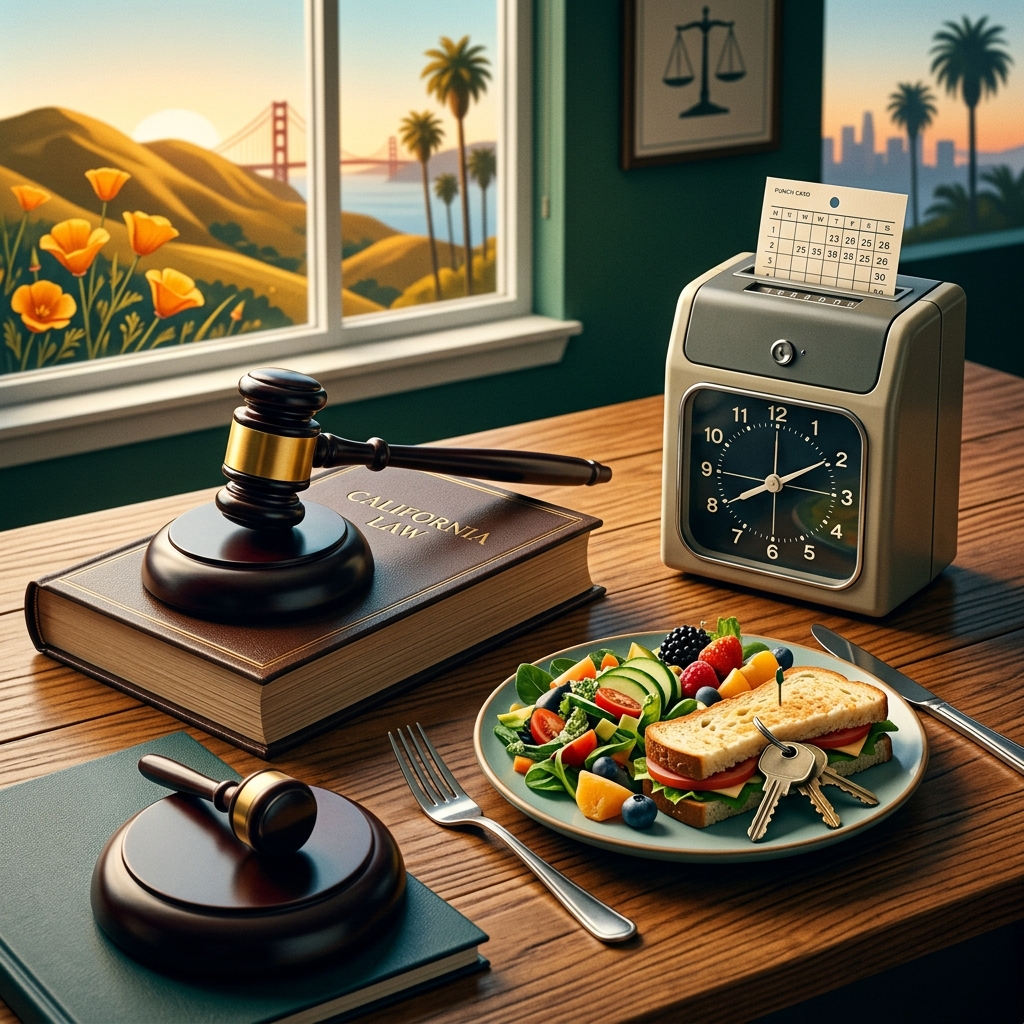
California’s meal-break rules are stricter than federal law, and they create real obligations for employers as well as clear protections for workers. In general, most nonexempt employees are entitled to an unpaid, duty-free meal period when they work more than five hours in a day, and a second meal period when the workday runs beyond ten hours.
One important point often missed is that California law focuses on providing the break, not forcing an employee to take it. The state’s labor guidance explains that an employer satisfies its duty by making an off-duty meal period available and not discouraging it; the employer does not have to police whether an employee actually eats or stays off the clock once the break is offered.
Why California’s break rules matter
Meal and rest break rules affect payroll, scheduling, timekeeping, and exposure to wage claims. For workers, they determine whether a shift is properly structured and whether missed breaks may trigger extra pay. For employers, they are a recurring compliance issue because a single scheduling mistake can create premium-pay liability.
These rules also matter because California treats meal periods and rest periods differently. Meal breaks are generally unpaid if they are fully duty-free, while rest breaks are paid and must still be free from work duties.
The basic meal-break rule
Under California law, most employers may not schedule a nonexempt employee for more than five hours without providing a meal period of at least 30 minutes. The meal period must be uninterrupted and off duty, and it should be given no later than the end of the fifth hour of work.
When the shift is longer, the rules become more demanding. If an employee works more than ten hours in a day, a second 30-minute meal period is required, though a limited waiver may apply in some cases.
When a meal period may be waived
California allows some flexibility for shorter shifts. If the total work period is no more than six hours, the employee and employer may mutually agree to waive the meal break. If the shift exceeds ten hours but does not go beyond twelve, the second meal period may be waived only if the first meal period was not waived and both sides agree.
That means a waiver is not automatic. It is an exception, not the rule, and it depends on both the length of the shift and mutual consent. Employers should treat waiver decisions carefully because the burden of compliance still rests on them.
Meal breaks versus rest breaks
Meal breaks and rest breaks are separate rights. California generally requires a paid 10-minute rest break for every four hours worked or major fraction thereof. In practical terms, an eight-hour shift usually calls for two rest breaks plus one meal period.
Rest breaks must also be uninterrupted, but unlike meal breaks, they are paid time. Employers cannot treat a rest break as optional just because a worker is busy, and they cannot make an employee remain on call during the break.
What employers must do to comply
Compliance is not only about having a written policy. Employers need scheduling practices, timekeeping systems, and supervisor training that all point in the same direction. The state’s guidance indicates that employers must not impede or discourage employees from taking their meal periods.
- Schedule meal periods before the end of the fifth hour of work when required.
- Provide a second meal period when the shift exceeds ten hours, unless a lawful waiver applies.
- Authorize and permit paid rest breaks at the required intervals.
- Keep records that show when breaks were offered and taken.
- Avoid pressure, staffing practices, or workload demands that effectively eliminate the break.
These steps are important because a policy that looks compliant on paper may still fail in practice if supervisors routinely interrupt breaks or schedule them too late.
What happens if a break is missed
California uses premium pay to enforce break rules. If an employer fails to provide a required meal period, it may owe one additional hour of pay at the employee’s regular rate for that workday. If a required rest break is not provided or is interrupted, the same one-hour premium can apply for each violation.
The regular rate is not always the same as the base hourly wage. California guidance explains that premium pay must be calculated using the employee’s regular rate, which can include other forms of compensation such as commissions and nondiscretionary bonuses.
Common mistakes that lead to liability
Many break violations come from everyday scheduling errors rather than deliberate misconduct. Examples include late lunches, short lunches, and “working through lunch” to catch up during busy periods. Another recurring problem is assuming that a break counted on the schedule is enough, even when the employee was effectively working during it.
Other mistakes involve misunderstanding waivers. A valid waiver depends on the number of hours worked and mutual agreement; it is not a blanket permission to skip lunches whenever the employer wants.
| Work schedule | Meal-break expectation | Rest-break expectation |
|---|---|---|
| Up to 5 hours | Generally no meal break required | May still trigger a rest break depending on total hours |
| More than 5 to 10 hours | One 30-minute meal period | Paid 10-minute rest periods as required |
| More than 10 to 12 hours | Two meal periods, unless waiver rules apply | Paid 10-minute rest periods as required |
| More than 12 hours | Two meal periods plus an additional meal-break obligation may apply in some cases | Paid 10-minute rest periods as required |
The table above is a simplified overview, but it reflects the core idea in California law: the longer the shift, the more break protection the employee receives.
How employees can protect their rights
Workers who believe they were denied meal or rest breaks should start by reviewing their own schedules, time records, and pay stubs. Break violations are often easier to prove when a pattern appears across multiple shifts.
- Keep a personal log of missed, late, or interrupted breaks.
- Save schedules, clock-in records, and text messages from supervisors.
- Note whether you were told to keep working during a supposed break.
- Check whether premium pay was added to wages after a violation.
Because California allows wage claims to reach back several years, documentation can matter a great deal when an employee later seeks unpaid premiums or unpaid wages.
Special considerations for employers
Employers should not assume that a break policy alone solves the problem. The practical question is whether workers are actually able to take compliant breaks. That means supervisors must be trained to respect break timing, staffing levels must make breaks realistic, and managers should not create incentives that push employees to skip them.
Industries with tight staffing, such as healthcare, retail, hospitality, and other service settings, often need especially careful scheduling. Even when employees volunteer to keep working, employers still need to make sure the break rules are followed as required by law.
Frequently asked questions
Do employees have to take their meal breaks?
No. California law requires employers to provide the opportunity for a lawful meal period, but the employer’s duty is generally to make the break available and not discourage it.
Can an employee waive the first meal break?
Yes, but only if the shift is no more than six hours and the waiver is mutually agreed to by the employer and employee.
What if the employee works through lunch?
If the employee was not relieved of duty during the meal period, the break may be treated as a violation and premium pay may be owed.
Are rest breaks paid?
Yes. California rest breaks are generally paid time, unlike unpaid meal periods.
What is the penalty for a missed break?
A missed meal break or rest break can result in an additional hour of pay at the employee’s regular rate for each violation.
Why this area of law keeps generating disputes
Meal-break claims remain common because the legal standard is straightforward in theory but difficult in day-to-day operations. A business may know the rule yet still fail because a supervisor called an employee back early, staffing was too thin, or the break was delayed until the schedule no longer fit the statute.
For that reason, California employers often need to view meal breaks as part of wage-and-hour compliance rather than as a mere scheduling preference. For workers, understanding the timing and waiver rules is the first step toward recognizing when a break violation has occurred.
References
- Meal Periods – California Department of Industrial Relations — California Department of Industrial Relations. 2026-07-09. https://www.dir.ca.gov/dlse/faq_mealperiods.htm
- Wages, Breaks and Retaliation — California Department of Industrial Relations. 2026-07-09. https://www.dir.ca.gov/smallbusiness/Wages-Breaks-and-Retaliation.htm
- California Meal and Rest Break Laws — California Chamber of Commerce. 2026-07-09. https://www.calchamber.com/california-labor-law/meal-and-rest-breaks
- California Meal Break Law: Your Essential Guide for 2026 — APKAT Law. 2026-07-09. https://apkatlaw.com/california-lunch-break-law-your-essential-guide-for-2026/
- California Meal Break & Rest Break Law (2026) — California Labor Law. 2026-07-09. https://www.calaborlaw.com/california-meal-break-law-for-employees/
- California Meal and Rest Break Law — Justice Law Corporation. 2026-07-09. https://justicelawcorp.com/meal-and-rest-breaks/
Similar Articles








Read full bio of medha deb




