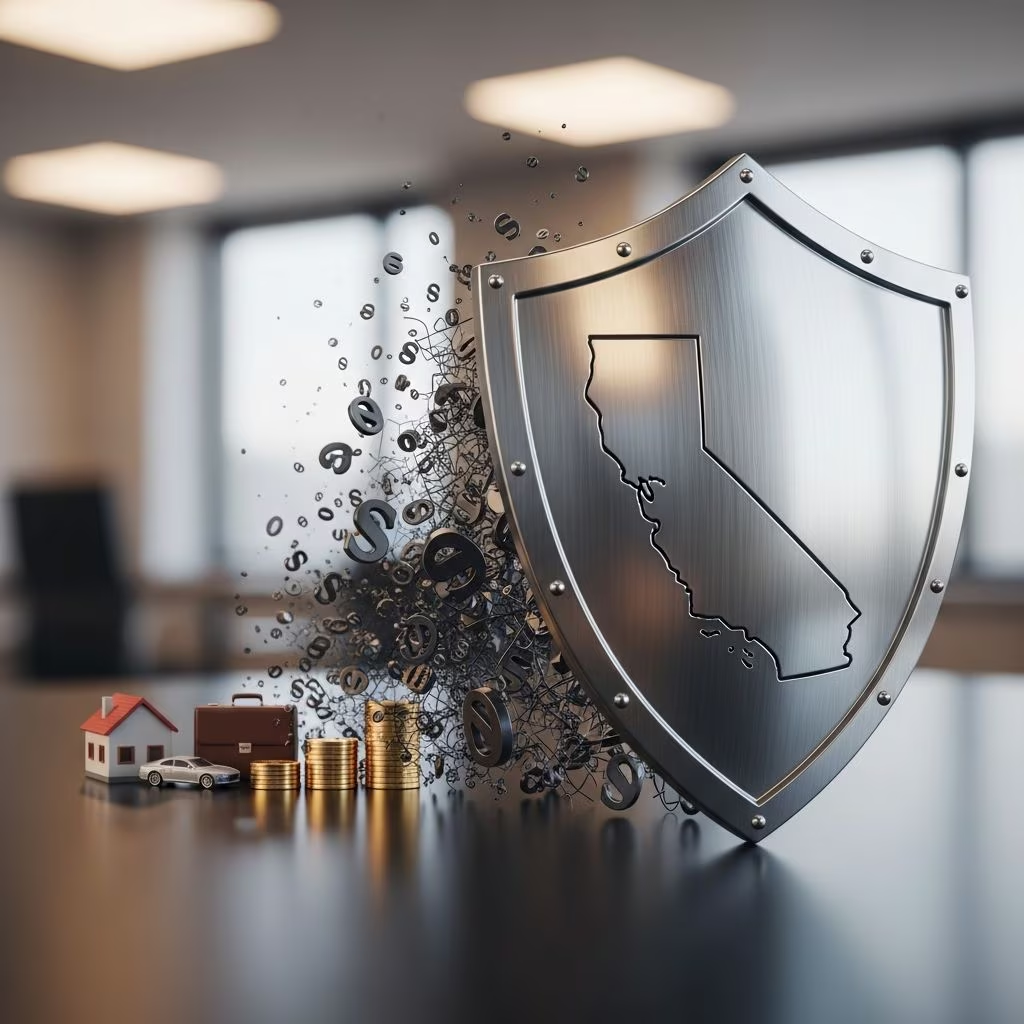
Forming a Limited Liability Company (LLC) in California provides owners, known as members, with significant protection against personal liability for business debts. Under California law, the LLC’s assets are distinct from members’ personal property, preventing creditors of the business from seizing individual homes, cars, or savings to settle company obligations.
Core Principles of Liability Protection in California LLCs
The foundational benefit of an LLC structure lies in its ability to separate business and personal finances. California Corporations Code Section 17703.04 explicitly states that members are not personally liable for the LLC’s debts, obligations, or liabilities solely by virtue of their membership. This separation ensures that if the business faces lawsuits or insolvency, personal assets remain insulated.
For instance, in a multi-member LLC, one partner’s poor financial decisions or business failures do not expose co-owners’ personal wealth to risk. This encourages entrepreneurship by minimizing individual exposure. Courts uphold this veil of protection rigorously, treating the LLC as a standalone legal entity.
How Creditors Target LLC Members’ Interests
While business creditors cannot directly access personal assets, personal creditors—those owed money by an individual member unrelated to the LLC—have limited recourse. California’s laws permit these creditors to obtain a charging order against the member’s LLC ownership interest.
- A charging order entitles the creditor only to the member’s share of distributions, such as profits, without granting voting rights, management control, or access to LLC assets.
- This mechanism protects other members from disruption, as the creditor cannot force sales or interfere in operations.
- Unique to California, creditors may also seek to foreclose on the membership interest after obtaining a charging order, potentially taking ownership of the debtor’s share—but still without managerial authority.
This balanced approach prioritizes LLC continuity while allowing debt recovery. Importantly, California applies the same rules to both single-member LLCs (SMLLCs) and multi-member LLCs, unlike some states that weaken protections for solo owners.
Exceptions That Can Expose Personal Assets
LLC protection is not absolute. Several scenarios can lead to personal liability, piercing the protective veil.
| Exception | Description | Legal Basis |
|---|---|---|
| Alter Ego Liability | Courts hold members liable if the LLC is treated as a personal extension, e.g., commingling funds or ignoring formalities. | CA Corp Code §17703.04; Mesler v. Bragg Mgmt. Co. (1985) |
| Tortious Conduct | Personal responsibility for wrongful acts like fraud committed through the LLC. | CA Corp Code §17703.04(c) |
| Breach of Fiduciary Duties | Violating duties of loyalty or care to the LLC or other members. | Common law principles |
| Personal Guarantees | Express agreements to back LLC debts personally, e.g., loans. | Contract terms |
| Prohibited Distributions | Improper payouts leaving the LLC insolvent. | CA Corporations Code |
Avoiding these pitfalls requires diligent separation of business and personal matters, such as maintaining separate bank accounts and accurate records.
Single-Member vs. Multi-Member LLCs: Protection Nuances
California law does not differentiate liability protections based on the number of members, providing uniform safeguards. For SMLLCs, personal creditors are still limited to charging orders or foreclosure on the interest, without seizing LLC assets directly. This parity simplifies planning for solo entrepreneurs.
However, adding a legitimate second member can enhance protection by invoking multi-member safeguards, deterring aggressive creditor actions. In manager-managed structures, the sole manager retains control while passive members hold interests.
Strengthening Your LLC’s Liability Shield
To maximize asset protection, implement these best practices:
- Draft a Comprehensive Operating Agreement: Outline management (member- or manager-managed), contributions, profit sharing, voting, and exit procedures. Though not mandatory, it’s vital for disputes and veil maintenance.
- Maintain Strict Separation: Use dedicated business accounts, avoid personal payments from LLC funds, and hold regular documented meetings—even if not required.
- Comply with Formalities: File annual statements, pay fees, and keep records to rebut alter ego claims.
- Consider Manager-Managed Setup: Limits non-manager involvement, preserving control in multi-member scenarios.
- Evaluate Foreign LLCs: States like Nevada or Wyoming offer stronger charging order exclusivity; register as foreign in California for operations.
Consulting a California business attorney ensures tailored compliance and robust defense against challenges.
Real-World Implications and Case Insights
Judicial precedents underscore these principles. In Mesler v. Bragg Management Co., the California Supreme Court applied corporate alter ego standards to LLCs, emphasizing proper operations to avoid personal exposure. Recent analyses confirm that while protections hold, lapses in formalities invite scrutiny.
For internal disputes, members can sue each other for fraud or negligence, potentially tapping personal assets, but good-faith decisions with disclosure are shielded. These dynamics highlight the need for proactive governance.
Frequently Asked Questions
Does a California LLC fully protect my home from business debts?
Yes, business creditors cannot seize personal assets like homes for LLC debts, provided no personal guarantees or exceptions apply.
What is a charging order, and how does it affect my LLC?
It’s a court order allowing personal creditors to claim only your LLC distributions, without control or asset access.
Are single-member LLCs less protected in California?
No, California treats SMLLCs and multi-member LLCs equally under the law.
Can I lose LLC protection by mixing personal and business funds?
Yes, commingling assets risks alter ego liability, piercing the veil.
Is an operating agreement required for liability protection?
Not legally required, but strongly recommended to define roles and prevent disputes.
References
- Understanding LLC Member Liability in California — Focus Law LA. 2023. https://focuslawla.com/llc-member-liability-california/
- Members Held Personally Liable for LLC Obligation — Poole & Shaffery. 2014-10. https://www.pooleshaffery.com/news/2014/october/members-held-personally-liable-for-llc-obligatio/
- California LLC Liability Protection — San Diego Biz Law. 2024. https://sandiegobizlaw.com/california-llc-liability/
- Piercing the Limited Liability Company Veil — California Lawyers Association. 2023. https://calawyers.org/business-law/piercing-the-limited-liability-company-veil/
- LLC Protection for Members’ Personal Debt in California — Nolo. 2024. https://www.nolo.com/legal-encyclopedia/llc-protection-members-personal-debt-california.html
- The Ultimate Guide to LLC Liability in California — Canei Law. 2024. https://caneilaw.com/llc-liability-protection-in-california/
- Protection for California LLC Members’ Personal Assets — ZenBusiness. 2024. https://www.zenbusiness.com/llc-protection-california/