
California Ignition Interlock Rules for First-Time DUI Offenders
How ignition interlock devices are reshaping consequences, privileges, and safety for first-time DUI offenders in California.
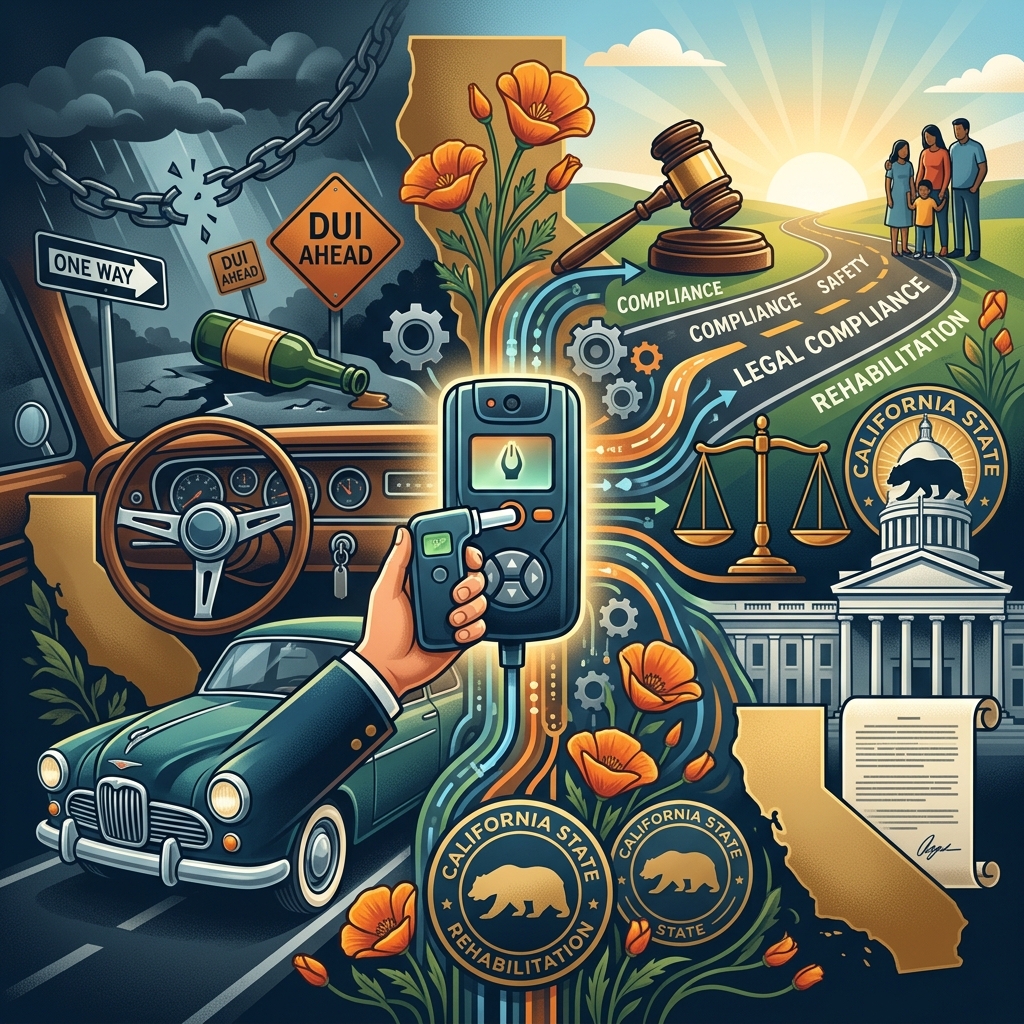
California has steadily moved toward wider use of ignition interlock devices (IIDs) as a tool to reduce drunk driving and allow some offenders to keep limited driving privileges under close monitoring. Recent legislative proposals have focused on making IIDs more common even for first-time DUI offenders, reflecting a broader public safety strategy. This article explains how these devices work, when courts and the Department of Motor Vehicles (DMV) may require them, and what first-time offenders should expect if an IID is part of their case.
Understanding Ignition Interlock Devices
An ignition interlock device is essentially a small, in‑car breathalyzer connected to a vehicle’s ignition system. The driver must provide a breath sample before the car will start, and the system blocks the engine if the measured breath alcohol concentration (BrAC) exceeds a preset threshold, often well below the legal limit for driving. Periodic “rolling retests” may be required while driving to ensure the driver remains sober during the trip.
- Core components: handheld unit, mouthpiece, and wiring that integrates with the ignition system.
- Pre‑start test: the driver blows into the device; if alcohol is detected above the limit, the vehicle will not start.
- Random retests: while driving, the device may prompt additional tests; repeated failures can trigger alerts or sanctions.
Because the driver must pass a breath test every time, IIDs are designed not only to punish impaired driving but to prevent it in real time.
Why California Uses IIDs for DUI Cases
California’s policy makers increasingly view IIDs as a middle ground between full license suspension and unrestricted driving. Existing law already allows or requires courts to order installation of an IID after a DUI conviction, and the DMV can tie IID use to license reinstatement conditions. Recent bills, such as proposed pilot programs and broader mandates, seek to expand this approach so that more offenders are monitored on the road rather than simply barred from driving.
Key goals behind IID expansion include:
- Lower repeat offense rates: continuous monitoring can deter reoffending and provide data on compliance.
- Safer roads: preventing vehicles from starting when drivers are impaired reduces crash risk.
- Maintaining employment: limited driving privileges can help offenders keep jobs, support families, and attend treatment programs.
Studies compiled by national policy organizations show that states using interlocks more broadly often see reductions in alcohol‑related crashes and fatalities. California’s evolving legislative landscape is consistent with this evidence‑based trend.
When First-Time Offenders May Face IID Requirements
Under current California law, courts can order an IID even after a first DUI conviction, particularly when certain aggravating factors are present. In addition, DMV rules may require an IID as a condition of regaining driving privileges in some situations. Separate legislative proposals aim to make these requirements more routine for first-time offenders across selected counties or statewide.
Typical scenarios where a first-time DUI offender might be ordered to install an IID include:
- High BAC levels: a blood alcohol concentration at or above about 0.15% often triggers stronger sanctions, including possible IID installation for several months.
- Crashes with injury: if the DUI involved an accident causing bodily injury, courts have clear authority to require an IID as part of sentencing.
- Underage drivers: offenders under 21 can be subject to interlock requirements even for relatively low alcohol levels.
Besides these factors, the DMV may use IIDs in reinstatement programs that allow some first‑time offenders limited driving while a suspension or restriction is still in effect.
License Reinstatement Conditions with IIDs
For eligible first-time offenders, California law sometimes offers a path to drive again if they install a state‑approved IID and meet other conditions. This approach shifts responsibility onto the offender to demonstrate both sobriety and compliance.
Typical reinstatement steps include:
- Waiting out any mandatory suspension period or resolving existing revocations.
- Installing an IID from an approved provider and submitting proof to the DMV.
- Enrolling in or completing required alcohol education or treatment programs.
- Providing an SR‑22 insurance certificate as proof of financial responsibility.
- Paying fines, administrative fees, and any IID-related costs.
DMV conditions may also require the offender to obey specific license restrictions and maintain continuous coverage and program participation. Noncompliance can lead to further suspension or revocation.
Legislative Moves Toward Broader IID Use
Beyond existing law, several recent California bills have sought to expand IID requirements for DUI offenders, including first-timers. One proposal, Assembly Bill 2210, would have created a pilot program requiring courts in selected counties to order IIDs for DUI convictions during a specified period. Under the bill, courts would have been required to order IIDs on a first criminal conviction rather than merely being authorized to do so.
Another proposal, Assembly Bill 366, has focused on making IIDs mandatory for all DUI offenders in California, including those with no prior convictions. The rationale behind these measures is to treat first‑time DUI incidents as serious public safety threats that merit technological monitoring rather than relying only on traditional punishments.
| Policy Element | Existing Law | Proposed Expansion |
|---|---|---|
| Court authority on first DUI | Court may order IID depending on case facts. | In pilot counties, court must order IID for specified convictions. |
| Geographic coverage | Statewide authority; usage varies by judge and county. | Pilot in Los Angeles, Orange, Sacramento, San Bernardino, San Diego; potential statewide expansion. |
| Scope of offenders | Repeat or aggravated first-time offenders commonly affected. | All DUI offenders, including first-timers, under AB 366. |
Although not all proposals have become law, they illustrate a clear legislative trend: IIDs are increasingly seen as a default tool, not a rare sanction, when managing DUI risks.
Costs, Responsibilities, and Daily Realities
Ignition interlocks impose financial and practical burdens alongside any benefits. In California, offenders generally pay the ongoing cost of leasing and maintaining the device, which often ranges from roughly $2.50 to $3.50 per day, plus installation and removal fees. Over a six‑month period, this can add up to several hundred dollars even without unexpected maintenance expenses.
Common responsibilities associated with IIDs include:
- Installation and calibration: using a provider approved by the state, with proper documentation submitted to the DMV or court.
- Regular service visits: monthly or periodic appointments where providers download data, check for tampering, and report results to authorities.
- Strict compliance: avoiding attempts to bypass or tamper with the device, which can lead to additional penalties or extended IID terms.
For many first-time offenders, these obligations mark a significant change in daily life. Every trip requires a breath test, and missed service appointments or failed readings can trigger serious consequences.
Benefits and Drawbacks for First-Time Offenders
From the perspective of a first-time DUI offender, the idea of having a breathalyzer wired into the car can seem intrusive and stigmatizing. Yet IIDs may also offer important advantages compared with a total loss of driving privileges.
Potential Benefits
- Ability to drive legally: instead of a long period of complete suspension, an IID can allow driving for work, school, and family obligations.
- Structured accountability: the device can support lifestyle changes by making drinking and spontaneous driving incompatible.
- Evidence of compliance: data from the IID may demonstrate sobriety and responsibility over time, which can be helpful in court or administrative proceedings.
Potential Drawbacks
- Cost burden: device lease fees, installation, maintenance, and associated program requirements add to fines and legal expenses.
- Privacy concerns: recorded data and frequent monitoring can feel intrusive.
- Technical issues: device malfunctions or misreadings can inconvenience compliant drivers and may require extra service visits.
These trade‑offs help explain why some offenders and defense attorneys are cautious about expanded IID mandates, even as lawmakers emphasize safety benefits.
Practical Tips for Offenders Facing IID Orders
First-time offenders who are ordered to install an IID, or who seek reinstatement that requires one, can reduce problems by planning ahead and understanding expectations. Although each case is different, several practical steps are widely recommended:
- Contact the DMV and court early: clarify what is required for reinstatement, including the exact duration of IID use.
- Select an approved provider: only devices installed by state‑approved vendors will satisfy legal requirements.
- Coordinate with insurance: arrange SR‑22 coverage and budget for higher premiums alongside IID costs.
- Track deadlines: missing installation dates, service appointments, or class completion can delay reinstatement.
- Avoid alcohol before driving: even small amounts can trigger device lockouts; plan transportation in advance if drinking.
Because IID rules and DUI penalties can change, it is often wise for offenders to seek professional legal guidance to understand current law and available options.
FAQs: Ignition Interlocks and First-Time DUI Offenders in California
Do all first-time DUI offenders in California have to install an IID?
No. Under current law, IID requirements depend on case specifics and location. Courts can order IIDs after a first conviction, particularly for high BAC, injury‑related crashes, or underage offenders, and DMV rules may add IID conditions for reinstatement. Proposed legislation would expand mandatory use, but policies are still evolving.
How long must a first-time offender typically use an IID?
For first-time DUI cases that require an IID, the typical duration is several months, often around four to six months, although this can vary by county and case circumstances, especially when injury is involved. Any new pilot programs or statewide mandates could adjust these ranges.
Who pays for the ignition interlock device?
In most California cases, the offender is responsible for the cost of leasing, installing, and maintaining the IID. Daily lease fees commonly fall in the range of $2.50 to $3.50, in addition to installation, removal, and service visit costs.
Can a first-time offender drive without an IID during the suspension period?
Driving without an IID is generally prohibited if a court or the DMV has ordered installation as a condition of license reinstatement or restricted driving privileges. Unauthorized driving during suspension can lead to further penalties, including longer suspensions or criminal charges.
What happens if the IID detects alcohol or is tampered with?
Failed breath tests or evidence of tampering are typically reported by the provider to the court or DMV. Consequences can include extended IID requirements, additional fines, modification of license status, or other sanctions depending on the severity and pattern of violations.
References
- AB 2210: Driving under the influence: ignition interlock devices — California Legislative Information / Digital Democracy. 2024-05-16. https://calmatters.digitaldemocracy.org/bills/ca_202320240ab2210
- California Ignition Interlock Device & DUI Laws — Intoxalock (California state requirements overview). 2024-01-01 (approx.). https://www.intoxalock.com/state-requirements/california
- Ignition Interlock Devices: How They Impact DUI Offenders — Santa Cruz Criminal Defense (blog summarizing California DUI IID practice). 2023-06-01 (approx.). https://www.santacruz-criminaldefense.com/blog/ignition-interlock-devices-how-they-impact-dui-offenders/
- Ignition Interlocks for First-Time DUI – AB 2210 — Law Office of Paul Tyler. 2024-09-01 (approx.). https://www.tylerlaw.com/ab-2210-ignition-interlock-device-bill/
- California bill requiring ignition interlock devices for all DUI offenders advances — California State Assembly (Petrie-Norris). 2025-07-22. https://petrie-norris.asmdc.org/news/20250722-california-bill-requiring-ignition-interlock-devices-all-dui-offenders-advances
- State Ignition Interlock Laws — National Conference of State Legislatures (NCSL). 2022-08-03. https://www.ncsl.org/transportation/state-ignition-interlock-laws
Similar Articles








Read full bio of medha deb




