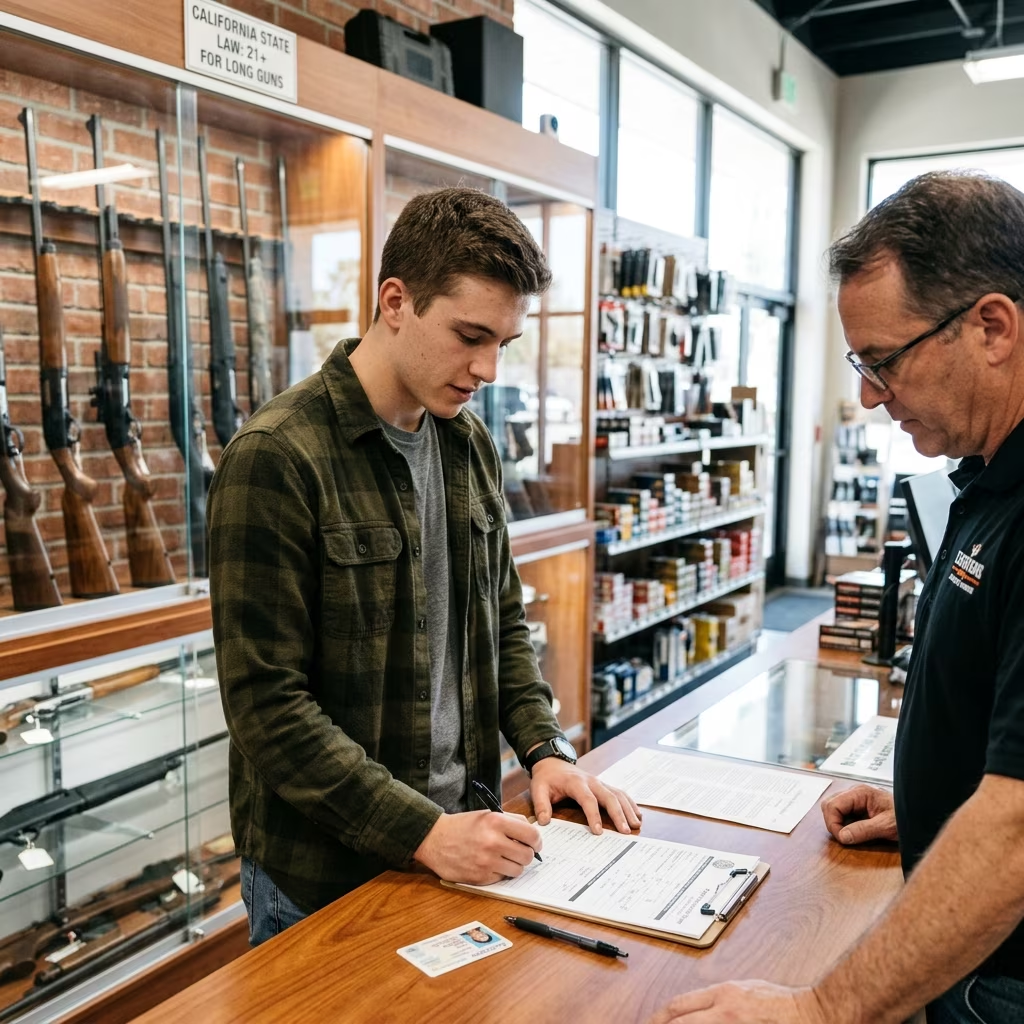
California has moved to tighten its firearm regulations by raising the minimum age to purchase most rifles and shotguns—often referred to as long guns—to 21 years old. This change brings long gun purchases closer in line with existing handgun restrictions and reflects the state’s broader effort to address gun violence and youth access to firearms.
From 18 to 21: How the Law Changed
For many years, California followed the common national pattern: adults could generally buy rifles and shotguns at 18, while handguns were restricted to those 21 and older. That changed when the state enacted legislation, including Senate Bill 1100, raising the minimum age for dealer sales of most long guns to 21.
The shift took effect on January 1, 2019, and means that, as a default rule, a licensed firearm dealer in California may not sell or transfer a rifle or shotgun to anyone under 21. Later reforms further tightened age-related rules for semiautomatic rifles and unfinished frames or receivers.
Key milestones in the age change
- Before 2019: 18-year-olds could generally buy rifles and shotguns in California, but had to be 21 to buy a handgun.
- SB 1100 (effective January 1, 2019): Raised the minimum age to buy long guns from dealers to 21, subject to specific exceptions.
- Subsequent legislation: Added restrictions on minors’ possession of semiautomatic rifles and tightened rules on frames, receivers, and homemade firearms, with age 21 often serving as the threshold.
What Counts as a “Long Gun” and Who Is Affected?
Long guns include most rifles and shotguns designed to be fired from the shoulder. In everyday use, this category covers hunting rifles, many sporting shotguns, and some semiautomatic rifles. Under the age-21 rule, adults aged 18 to 20 generally cannot purchase these firearms from licensed dealers, even though they are legal adults for most other purposes.
Firearms covered by the higher age limit
- Traditional bolt-action hunting rifles
- Pump-action and many semiautomatic shotguns
- Many semiautomatic rifles categorized as long guns (subject to additional restrictions for minors)
Separate statutes also address handguns, frames or receivers, and certain semiautomatic rifles, often using age 21 as the benchmark for sales or serial number applications.
Core Rule: 21 Is Now the General Minimum Age
The central feature of California’s modern firearm age policy is straightforward: licensed dealers are generally prohibited from selling or transferring any firearm, including long guns and frames or receivers, to individuals under 21.
Dealer obligations under the law
- Verify the buyer’s age and identity before completing a firearm transfer.
- Refuse sales of long guns and most other firearms to those under 21, unless a statutory exception applies.
- Comply with record-keeping and background check requirements, including the standard waiting period for firearm transfers.
Importantly, SB 1100 and related provisions focus on sales and transfers by dealers. The law does not automatically criminalize mere possession of a long gun by someone under 21; instead, it blocks the main pathway of acquiring such firearms from commercial sellers.
Recognized Exceptions to the Age-21 Rule
While the heightened age limit is broad, California law carves out several important exceptions, largely tied to lawful hunting, public safety employment, and military service.
Hunting license exception
Adults aged 18 or older who hold a valid, unexpired hunting license issued by the California Department of Fish and Wildlife may purchase certain long guns even if they are under 21. This exception reflects a policy judgment that supervised hunting and sporting use of non-handgun firearms can be appropriate for younger adults.
Public safety and military exceptions
- Active peace officers (and some reserve peace officers) authorized to carry firearms in the course of employment can be exempt from the standard age limit for non-handgun firearms.
- Federal law enforcement officers similarly benefit from tailored exceptions when firearms are part of their official duties.
- Active or honorably discharged members of the U.S. Armed Forces, National Guard, Air National Guard, or reserve components may buy certain long guns under 21 when they provide proper identification (such as military ID or discharge documentation).
These exceptions are narrowly drawn and often limited to non-handgun firearms. They are intended to ensure that individuals who rely on firearms for professional or service-related reasons are not unduly hindered by the general age limit.
Sales vs. Possession: Different Legal Questions
California law distinguishes between the sale or transfer of firearms and the possession of firearms by younger individuals. SB 1100 primarily restricts dealers from selling long guns to those under 21; it does not, by itself, ban all possession of long guns by under-21 adults.
| Issue | Rule for Ages 18–20 | Key Considerations |
|---|---|---|
| Buying long guns from dealers | Generally prohibited unless an exception applies (e.g., hunting license or qualifying service). | SB 1100 restricts dealer sales and transfers; proof of exception is required. |
| Possessing long guns | Not automatically prohibited for 18–20-year-olds, but subject to separate laws (especially for minors under 18). | Age-based possession bans focus more heavily on minors and certain semiautomatic rifles. |
| Buying handguns | Prohibited under 21 in virtually all standard circumstances. | Longstanding rule; handguns have tighter age limits than most long guns. |
Minors under 18 face even stricter limits on firearm possession, especially for handguns and semiautomatic rifles, and must rely on specific, temporary transfers or parental involvement to access firearms legally.
How California Compares Nationally
Across the United States, age limits for firearm purchases vary significantly, but many states still allow rifle and shotgun purchases at 18. California stands out for its decision to set 21 as the minimum age for most firearm purchases, including long guns, and for imposing additional age-based restrictions on semiautomatic rifles and unfinished receivers.
General national pattern
- In many states, adults 18+ may buy rifles and shotguns, while handguns are restricted to 21+.
- Federal law sets a minimum age of 18 for long gun purchases from licensed dealers and 21 for handgun purchases, but allows states to adopt stricter rules.
California’s approach, which often requires buyers to be 21 for both handguns and long guns, is among the more restrictive in the country and reflects the state’s broader gun safety policies.
Practical Impact on Young Adults and Dealers
For young adults, the raised age limit changes not only when they can purchase certain firearms, but also how they might participate in hunting, shooting sports, or rural firearm use. For dealers, the law adds compliance steps and limits potential sales to some customers.
Effects on 18–20-year-olds
- Cannot generally walk into a gun shop and buy a rifle or shotgun without qualifying for an exception.
- May still participate in hunting and sporting activities using firearms owned by parents, guardians, or other lawful possessors, subject to separate transfer rules.
- Face additional hurdles if they wish to construct or possess firearms without serial numbers, because serial number applications are typically restricted to those 21 and older.
Effects on licensed firearm dealers
- Must verify buyers’ age and documentation for any claimed exception (e.g., hunting license, law enforcement ID, military ID).
- Need to train staff on updated age rules to avoid unlawful transfers and potential license consequences.
- May see reduced sales volume among younger customers, especially in areas where hunting traditions are strong.
Policy Rationale Behind Raising the Age
Although specific legislative debates contain many arguments, several common policy themes help explain why California lawmakers chose to raise the age for long gun purchases:
- Reducing youth access to firearms: Limiting dealer sales to those 21 and older is intended to lower the likelihood that impulsive behavior or conflict among younger adults results in firearm violence.
- Aligning long gun and handgun rules: Treating long guns more like handguns underscores that rifles and shotguns can also be used in serious crimes, not just sporting contexts.
- Responding to high-profile incidents: Age-based measures often follow incidents in which relatively young adults used rifles to commit mass shootings or other serious offenses, prompting calls for stronger controls.
- Balancing tradition and safety: By providing exceptions for licensed hunters and public safety professionals, legislators aimed to preserve legitimate use while narrowing access for the general under-21 population.
These rationales are part of a broader debate about how best to balance Second Amendment rights, public safety, and the responsibilities of firearm ownership.
Frequently Asked Questions (FAQs)
1. Can someone under 21 still own a rifle or shotgun in California?
Yes, ownership and possession are not identical to dealer sales. The main age-21 rule restricts licensed dealers from selling or transferring long guns to those under 21, but it does not automatically prohibit all possession by under-21 adults. Separate laws address minor possession, semiautomatic rifles, and specific firearm types.
2. Is a hunting license enough for an 18-year-old to buy any long gun?
A valid, unexpired hunting license can allow an 18-year-old to buy certain long guns that are not handguns or otherwise restricted by separate provisions. However, the license does not override all age-based restrictions, particularly for semiautomatic centerfire rifles and other specially regulated firearms, so buyers must still comply with those additional rules.
3. Are military members treated differently under the law?
Yes. Active or honorably discharged members of the U.S. Armed Forces, National Guard, Air National Guard, and reserve components can qualify for exceptions that allow them to purchase certain non-handgun firearms under 21 when they present appropriate identification.
4. How do California’s rules differ from federal law?
Federal law generally requires buyers to be 18 to purchase long guns and 21 to purchase handguns from licensed dealers. California goes further by generally requiring purchasers to be 21 for long guns as well and imposing additional age-based restrictions on semiautomatic rifles, frames, and receivers.
5. Can a parent give a firearm to an 18-year-old child?
California allows certain intra-family transfers and temporary loans under defined conditions, but these transactions must comply with state transfer laws and age-based possession restrictions, especially for minors under 18. Anyone considering such a transfer should review current state statutes or consult qualified legal counsel to ensure the arrangement is lawful.
References
- Minimum Age to Purchase & Possess in California — Giffords Law Center. 2023-07-01. https://giffords.org/lawcenter/state-laws/minimum-age-to-purchase-possess-in-california/
- New gun law makes it illegal for adults under 21 to purchase long guns — KRCR News. 2019-01-02. https://krcrtv.com/news/local/new-gun-law-makes-it-to-where-adults-under-21-cannot-purchase-long-guns
- Governor Brown Signs Legislation Raising Minimum Age To Buy Long Guns To 21 — California Rifle & Pistol Association. 2018-09-30. https://crpa.org/news/crpa/governor-brown-signs-legislation-raising-minimum-age-to-buy-long-guns-to-21/
- California Gun Laws — Gibbons & Gibbons, A Law Corporation. 2026-01-01. https://www.gibbonslawyers.com/blog/california-gun-laws/
- Minimum Age to Purchase — Everytown Research & Policy. 2024-02-15. https://everytownresearch.org/rankings/law/minimum-age-to-purchase/