Gig Workers in California: Employee Status Battle
Unraveling California's complex fight over gig worker classification, from early rulings to Prop 22 and ongoing legal battles.
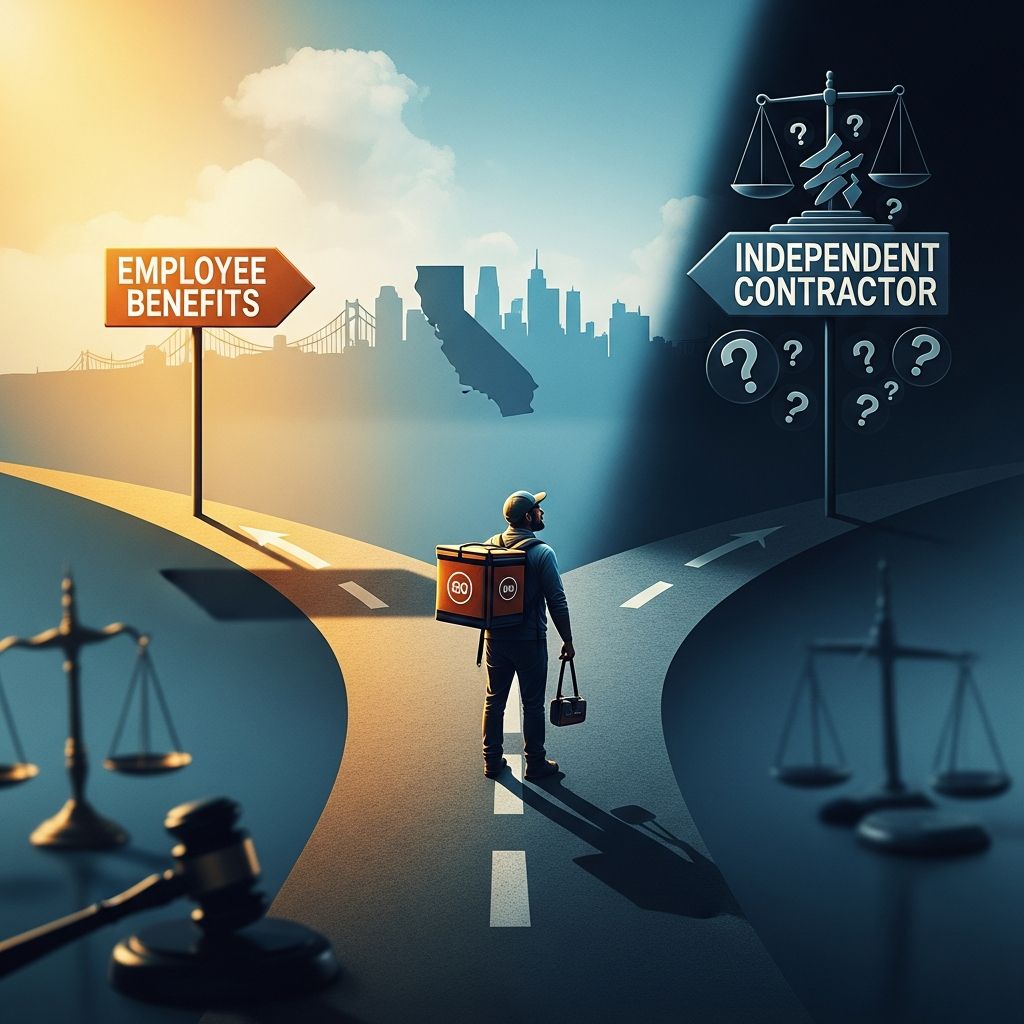
The gig economy has reshaped transportation in California, with platforms like Uber and Lyft relying on drivers to provide rides. A central question persists: are these drivers independent contractors free from traditional employment rules, or employees deserving wage protections, overtime, and reimbursements? This debate has fueled lawsuits, legislation, and ballot measures, creating a patchwork of rulings that affect millions.
Historical Roots of the Classification Dispute
Early conflicts arose when California’s Labor Commissioner examined specific driver claims. In a landmark 2015 case involving driver Barbara Berwick, the agency determined that Uber exercised substantial control, classifying her as an employee despite the company’s contract language. Uber set fares, required specific vehicle standards, conducted background checks, and could deactivate drivers based on passenger ratings below 4.6 stars. These factors indicated behavioral oversight typical of employment relationships.
Uber contested this, portraying itself as a technology platform merely connecting drivers and riders. However, the ruling highlighted requirements like providing personal banking details, maintaining vehicles under 10 years old, and using Uber-approved tools, all pointing to integrated operational control. This decision awarded Berwick approximately $4,000 in unreimbursed expenses, such as mileage and tolls, at IRS rates, plus minimum wage entitlements.
Shifting Legal Tests for Worker Status
California employs distinct tests to differentiate employees from contractors. Pre-2018, the Borello test dominated, weighing multiple factors like control level, work integration, and opportunity for profit or loss. It allowed flexibility but often favored employee status for tightly managed roles.
The 2018 Dynamex Supreme Court decision introduced the stricter ABC test, presuming worker status as employees unless proven otherwise. To qualify as contractors, businesses must show: (A) the worker performs work outside the company’s usual business; (B) they set their own hours and methods; and (C) they operate an independent trade. This raised the bar significantly for gig platforms.
| Test | Key Criteria | Application to Gig Work |
|---|---|---|
| Borello (Pre-2018) | Multi-factor: control, integration, skill required | Allowed some flexibility; Uber often prevailed initially |
| ABC (Post-Dynamex) | A: Outside usual business; B: Independent control; C: Separate business | Made employee classification likely for rideshare drivers |
These frameworks underscore why misclassification matters: employees gain minimum wage, overtime, expense reimbursements, workers’ compensation, and unemployment benefits, while contractors handle their own taxes and lack these safeguards.
Legislative Responses: AB5 and Its Challenges
Codifying Dynamex, Assembly Bill 5 (AB5) took effect in 2020, mandating the ABC test across most industries. This targeted gig companies, as ridesharing core to Uber’s business (prong A) failed easily. Unions and advocates pushed AB5 to curb exploitation, arguing drivers faced dictated pricing and deactivation risks without employee perks.
Gig firms fought back fiercely, funding Proposition 22—a 2020 ballot initiative exempting app-based drivers from AB5. Prop 22 deemed drivers contractors but promised minimum earnings guarantees (120% of minimum wage per active hour), healthcare subsidies for high-mileage drivers, and accident insurance. Proponents hailed it as balanced; critics decried it as industry self-regulation dodging full protections.
Court Battles Over Proposition 22
Prop 22 faced immediate scrutiny. A 2021 Superior Court judge struck it down as unconstitutional, violating voter rights and labor protections by undermining the ABC test indirectly. Appeals reversed this in part; by 2023, a state appeals court upheld most provisions, classifying rideshare drivers as contractors under Prop 22’s framework.
Federal involvement peaked in 2024 when the U.S. Supreme Court declined to block PAGA lawsuits against Uber and Lyft. PAGA empowers workers to sue for labor violations on behalf of colleagues and the state, seeking penalties. The Court allowed claims predating Prop 22 (pre-December 2020), potentially exposing companies to billions in back wages, overtime, and fines for misclassification under Borello or ABC tests.
California’s Labor Commissioner escalated with wage theft suits against Uber and Lyft, alleging willful misclassification deprived drivers of rights. These actions cap relief at December 15, 2020, per Castellanos v. State, which affirmed Prop 22’s partial validity, but signal ongoing enforcement.
Practical Impacts on Drivers and Companies
- Earnings and Expenses: As contractors post-Prop 22, drivers cover gas, maintenance, and taxes independently, but receive earnings floors during engaged time.
- Deactivation Risks: Low ratings trigger account suspension, mimicking at-will employment termination without appeal processes.
- Insurance Gaps: Prop 22 offers limited coverage; full workers’ comp remains absent.
- Tax Burdens: Contractors self-report income quarterly, deducting mileage, unlike W-2 employees.
For platforms, employee status implies payroll taxes, overtime calculations for all hours (including waiting), and expense indemnification, potentially raising costs 20-30% per analyses of similar cases. Uber appeals early rulings, but precedent looms large.
Broader Gig Economy Ramifications
This saga influences delivery apps, freelancers, and beyond. While Prop 22 carves out rideshare exemptions, other sectors adhere to AB5, prompting reclassifications. Nationally, federal DOL rules echo ABC-like prongs, pressuring multistate operators.
Drivers report mixed experiences: flexibility appeals, but instability—algorithmic pricing, surge fluctuations, and competition—erodes autonomy. A 2025 CalMatters report notes thousands of pre-Prop 22 claims seeking billions, underscoring retroactive liabilities.
Advice for Gig Workers and Businesses
Suspecting misclassification? Review contracts, track hours/expenses, and consult employment attorneys. PAGA suits offer leverage for groups, splitting penalties 75/25 with the state. Businesses should audit controls: avoid dictating tools, rates, or schedules to pass ABC prongs.
Future legislation or appeals could upend Prop 22; monitor California Supreme Court dockets.
Frequently Asked Questions (FAQs)
Are Uber drivers employees in California today?
As of 2025, Prop 22 classifies them as independent contractors with partial benefits, though pre-2020 claims proceed under prior tests.
What is the ABC test?
A three-prong standard presuming employee status unless work is outside core business, independently controlled, and part of an established trade.
Can drivers sue under PAGA?
Yes, for violations before Prop 22; the Supreme Court upheld this in 2024.
What expenses must employers reimburse?
For employees, mileage at IRS rates, tolls, and work-related costs; contractors handle these.
Does Prop 22 provide healthcare?
Subsidies for drivers averaging 15+ hours weekly, but not full employer plans.
References
- In California, an Uber Driver is an Employee — Union Counsel. 2015. https://www.unioncounsel.net/private-sector-news/in-california-an-uber-driver-is-an-employee
- Are Uber Drivers in California Employees or Independent Contractors? — Nolo. 2025-01-17. https://www.nolo.com/legal-encyclopedia/california-labor-commissioner-rules-uber-driver-employee-not-independent-contractor.html
- Uber Suffers Independent Contractor Misclassification Setbacks in CA — The National Trial Lawyers. N/A. https://thenationaltriallawyers.org/article/uber-suffers-independent-contractor-misclassification-setback/
- Labor Commissioner’s Wage Theft Lawsuits against Uber & Lyft — California Department of Industrial Relations. 2023. https://www.dir.ca.gov/dlse/Lawsuits-Uber-Lyft.html
- Uber, Lyft could owe California gig workers billions of dollars — CalMatters. 2025-03. https://calmatters.org/economy/2025/03/uber-lyft-could-owe-california-gig-workers-billions-of-dollars-in-california-wage-theft-case/
Similar Articles








Read full bio of medha deb