
California COVID-19 Pay: What Employers And Employees Must Know
A clear guide to California pay obligations for COVID-19-related absences, exclusions, and leave.
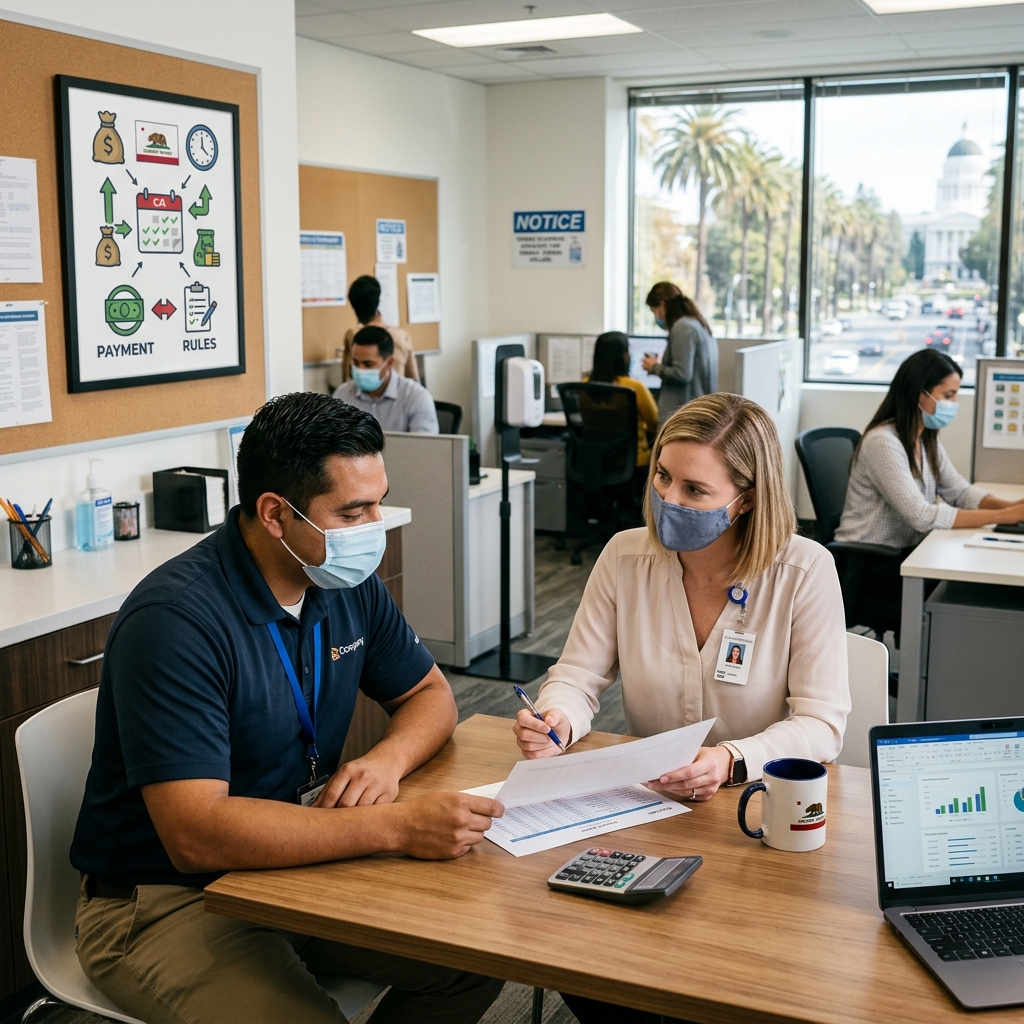
Understanding California COVID-19 Pay Obligations
California employers have had to navigate several overlapping pay rules connected to COVID-19, including workplace exclusion pay, supplemental paid sick leave, and benefit coordination when an employee cannot work. These rules were created to reduce workplace transmission while also protecting wages when workers were kept home because of exposure, illness, or quarantine-related issues.
The key point is that not every COVID-19 absence triggers the same pay requirement. In some situations, an employer must continue wages; in others, the worker may need to use paid sick leave, state disability insurance, or workers’ compensation instead.
When Pay Is Required After a Workplace Exclusion
Under California workplace safety rules, employers were required to exclude employees from the workplace when they tested positive for COVID-19 or had a qualifying exposure. If the positive test or exposure was work-related, exclusion pay could be required until the employee met the return-to-work criteria.
However, Cal/OSHA clarified that exclusion pay is not automatic in every case. The employee must be “able and available to work” to receive it. If a worker is too sick to perform job duties, or is unavailable for reasons unrelated to protecting others from transmission, exclusion pay is generally not owed under that framework.
How the “Able and Available” Rule Works
This standard matters because it separates wage replacement from illness-related leave. A worker who is home solely because the employer is preventing workplace spread may qualify for continued pay, but a worker who cannot work because of symptoms may fall into a different benefit category.
That distinction also helps explain why the same employee may be directed toward other programs instead of exclusion pay. Cal/OSHA stated that an employee unable to work because of COVID-19 symptoms may be eligible for workers’ compensation or State Disability Insurance benefits rather than wage continuation under the exclusion-pay rule.
Supplemental Paid Sick Leave in California
Separate from exclusion pay, California also created COVID-19 supplemental paid sick leave for certain employers and employees. The state labor agency explained that employees of employers with 500 or more workers nationwide were covered under one version of the law, while earlier and expanded versions also applied to other covered employers during designated periods.
That supplemental leave was meant to cover COVID-related absences such as quarantine, symptoms, vaccination, or caring for a family member with COVID-19, depending on the version of the statute in effect. The law also used hourly caps and daily pay limits to define how much an employee could receive.
Common Situations and Which Benefit May Apply
COVID-related absences do not all fit neatly into one category. The correct pay source depends on why the employee is off work, whether the absence is tied to workplace safety restrictions, and whether the worker can still perform job duties.
| Situation | Likely Pay Source | Key Point |
|---|---|---|
| Employee is excluded after work-related COVID-19 exposure and can still work | Exclusion pay | Pay may continue until return-to-work criteria are met |
| Employee has COVID-19 symptoms and cannot work | Disability or workers’ compensation may apply | Exclusion pay is generally not available if the worker cannot work |
| Employee needs COVID-19 leave under a statutory sick leave program | Supplemental paid sick leave | Coverage depends on the employer and the version of the law in force |
| Employee misses work for personal reasons unrelated to COVID-19 prevention | Ordinary leave rules | Exclusion pay is not intended for non-transmission-related absences |
Pay Limits and Rate Rules
Where supplemental paid sick leave applies, California used a formula tied to the worker’s regular rate of pay and, in some cases, the state or local minimum wage. State guidance also set overall maximums, including a daily cap of $511 and an aggregate cap of $5,110 in certain versions of the law.
These limits mattered because they prevented the benefit from functioning like unlimited wage replacement. Employers were required to calculate pay under the applicable rule, but they did not always have to pay beyond the statutory cap.
Interaction With Workers’ Compensation and Disability Insurance
One of the most important coordination issues is how COVID-related pay interacts with other wage-loss systems. California guidance noted that if an employee is receiving workers’ compensation temporary disability benefits for wages lost during the period of workplace exclusion, that worker is not considered “able and available to work” for exclusion-pay purposes.
Public health and workplace safety materials also explain that a worker who believes the illness was caught at work may be able to file a workers’ compensation claim, while someone who is too sick to work may be able to seek Disability Insurance benefits. In practice, that means employers and employees need to identify the correct benefit early to avoid double payment or missed claims.
Employer Compliance Responsibilities
California employers were not only required to understand wage obligations, but also to follow workplace safety rules that triggered those obligations. Cal/OSHA required employers to exclude infected or exposed workers from the workplace and to track COVID-19 cases and related records for a period of time after the emergency rules changed.
Even after the main COVID-19 prevention standard largely sunset, recordkeeping obligations remained in place for a limited period, and employers were advised to continue maintaining case logs and other records under the applicable rule. That recordkeeping function supports both safety compliance and pay determinations when an employee asserts a COVID-related claim.
What Employees Should Document
Workers seeking COVID-related pay in California should keep careful records. Useful documentation includes test results, dates of exposure, dates of symptom onset, employer notices, pay stubs, scheduling records, and any instructions from a manager or health authority.
Documentation is especially important when a worker is trying to determine whether the absence came from a workplace exposure, a general illness, or a separate leave entitlement. The more clearly the employee can show why the time off occurred, the easier it is to match the absence to the correct pay rule.
Practical Questions Employers Often Ask
Employers commonly ask whether they must pay every worker who is told to stay home after a positive COVID test. The answer depends on the reason for the absence and whether the employee could have otherwise worked.
They also ask whether supplemental leave still exists. The answer depends on the statutory version and the date at issue. California’s COVID-19 supplemental paid sick leave laws were time-limited and changed over time, so the relevant legal rule depends on when the absence happened.
Frequently Asked Questions
Does every COVID-19 exposure require paid time off?
No. Pay requirements depend on whether the exposure is work-related, whether the employee is able and available to work, and which California leave law applies.
If an employee is sick with COVID-19, must the employer keep paying them?
Not always. Cal/OSHA explained that a worker who cannot work because of symptoms may not qualify for exclusion pay and may instead need to look to disability or workers’ compensation benefits.
Can an employee receive both workers’ compensation temporary disability and exclusion pay?
No. Cal/OSHA stated that an employee receiving workers’ compensation temporary disability benefits for lost wages is not considered able and available to work for exclusion-pay purposes.
What was the purpose of California’s supplemental paid sick leave laws?
Those laws were designed to provide additional wage replacement for COVID-related absences, including illness, quarantine, exposure-related care, and certain family care situations, subject to statutory limits and coverage rules.
Are employers still required to keep COVID-19 records?
For a limited period after the main COVID-19 workplace rule expired, California employers still had recordkeeping obligations for workplace cases under the applicable Cal/OSHA provisions.
Why the Rules Matter Even After the Emergency Era
Although many emergency COVID-19 workplace requirements have ended, the pay analysis remains useful because disputes may still arise over past absences, retroactive claims, or lingering recordkeeping questions. California’s approach combined workplace safety, wage protection, and benefit coordination, so understanding the system requires looking at both labor standards and public health rules.
For employers, the safest approach is to classify each absence carefully, preserve documentation, and confirm whether the worker is eligible for exclusion pay, supplemental leave, disability benefits, or workers’ compensation. For employees, the key is to identify the reason for the absence and the date it occurred, because the applicable rule often turns on those facts.
References
- Cal/OSHA Clarifies COVID-19–Related Paid Time Off Requirements — Ogletree Deakins. 2021-??-??. https://ogletree.com/insights-resources/blog-posts/cal-osha-clarifies-covid-19-related-paid-time-off-requirements/
- Employment Law Information — Hoge Fenton Jones & Appel. 2022-02-19. https://www.hogefenton.com/covid-19-resources/employment-law/
- FAQs on California COVID-19 Supplemental Paid Sick Leave — California Department of Industrial Relations, Division of Labor Standards Enforcement. 2022-??-??. https://www.dir.ca.gov/dlse/FAQ-for-PSL.html
- COVID-19 Safety: Workers’ Rights — Los Angeles County Department of Public Health. 2022-??-??. http://publichealth.lacounty.gov/media/coronavirus/docs/business/Workers_Rights_Pamphlet.pdf
- Cal/OSHA COVID-19 Guidance and Resources — California Department of Industrial Relations, Division of Occupational Safety and Health. 2026-02-03. https://www.dir.ca.gov/dosh/coronavirus/
- COVID-19 Safety: Workers’ Rights — Los Angeles County Department of Public Health. 2022-??-??. http://publichealth.lacounty.gov/media/coronavirus/docs/business/Workers_Rights_Pamphlet.pdf
- Cal/OSHA COVID-19 Regulation Sunsetting — CalChamber HRWatchdog. 2025-02-03. https://hrwatchdog.calchamber.com/2025/02/cal-osha-covid-19-regulation-sunsetting/
- Cal/OSHA’s COVID-19 Rule About to Expire — Fisher Phillips. 2025-02-03. https://www.fisherphillips.com/en/insights/insights/caloshas-covid-19-rule-about-to-expire-but-employers-have-2-lingering-compliance-obligations
- End of an Era: Cal/OSHA’s COVID Non-Emergency Standard Sunsets — California Workplace Law Blog. 2025-02-03. https://www.californiaworkplacelawblog.com/2025/02/articles/calosha-2/end-of-an-era-cal-oshas-covid-non-emergency-standard-sunsets/
Similar Articles








Read full bio of medha deb




