California AB 130: Understanding Second Mortgage Foreclosure Protections
California's AB 130 law shields homeowners from foreclosure on forgotten second mortgages through strict servicer requirements.
What Are Zombie Second Mortgages and Why They Matter to California Homeowners
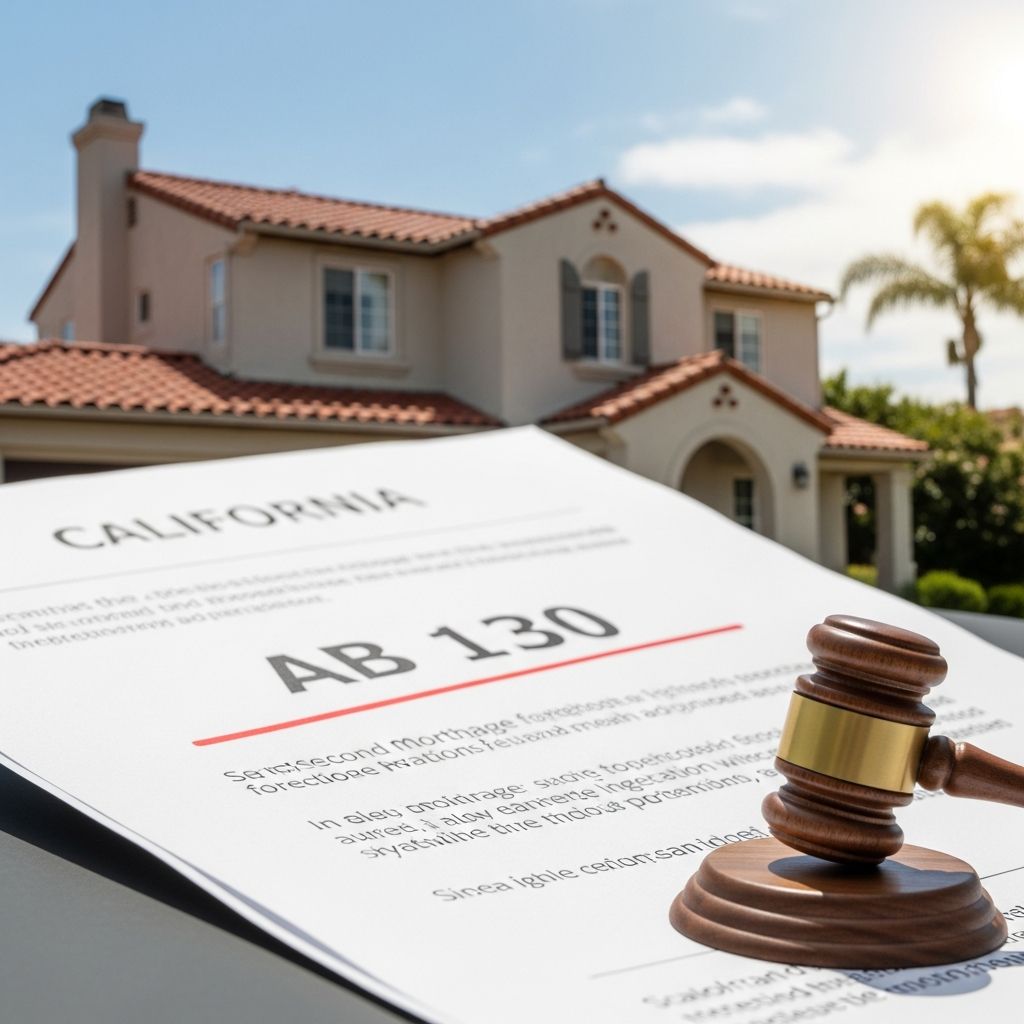
A zombie second mortgage is a debt obligation on a residential property that homeowners often believe has been forgiven, written off, or eliminated through a loan modification, yet mysteriously resurfaces years or even decades later. These forgotten debts typically originate from home equity lines of credit or second mortgages obtained during the pre-2008 housing crisis era. When lenders and debt collectors attempt to foreclose on these old obligations, homeowners face the shocking reality of potentially losing their homes to debts they thought were settled long ago.
The emergence of zombie second mortgages as a widespread problem prompted California policymakers to take action. In response to growing consumer complaints and foreclosure threats from dormant accounts, the state legislature crafted Assembly Bill 130, signed into law on June 30, 2025, with immediate effectiveness. This groundbreaking legislation establishes comprehensive protections and servicer requirements specifically designed to shield California homeowners from foreclosure proceedings tied to these lingering second mortgage obligations.
How Mortgage Priority and Subordinate Liens Function in Foreclosure Situations
To understand the significance of AB 130, it is essential to grasp how mortgage priority operates during foreclosure. When a homeowner borrows money secured by their property, the lender places a lien against the home. The first mortgage—the original loan used to purchase the property—holds priority status and is considered the primary lien. This first mortgage gets satisfied before any other claims against the property.
A second mortgage, by contrast, occupies a subordinate position in the repayment hierarchy. If the home is sold through foreclosure, proceeds from the sale first go toward satisfying the first mortgage obligation. Any remaining funds then go toward the second mortgage holder. Due to this secondary status, second mortgages carry greater risk for lenders, as they may receive nothing if the home’s sale price does not exceed the first mortgage balance.
The subordinate nature of second mortgages creates unique foreclosure dynamics. When lenders holding second mortgages decide to foreclose, they must do so with full awareness that they may never recover their investment, particularly in declining real estate markets where property values fall below outstanding first mortgage amounts. This subordinate position is where AB 130 establishes its regulatory framework, imposing strict requirements on servicers before they can proceed with foreclosure actions.
Key Requirements Servicers Must Meet Before Initiating Foreclosure
AB 130 establishes demanding procedural requirements that mortgage servicers must satisfy before recording a notice of default—the critical first step in California’s nonjudicial foreclosure process. These requirements represent a significant shift in servicer obligations and create substantial barriers to zombie mortgage foreclosure actions.
Servicers must simultaneously record a certification under penalty of perjury when filing the notice of default. This certification must affirmatively state that neither the current servicer nor any prior servicers engaged in unlawful practices as defined by the statute. Alternatively, if unlawful practices did occur, the servicer must disclose and list all instances where such practices took place. This dual approach—either proving clean conduct or fully disclosing misconduct—creates accountability throughout the loan’s servicing history.
The requirement to examine prior servicers’ conduct is particularly significant. Even if the current company managing the loan has maintained compliance with AB 130’s standards, the law traces responsibility backward through the entire loan servicing chain. If a predecessor company is no longer in business, the current servicer remains accountable for disclosing that predecessor’s potential violations. This retroactive application ensures that servicers cannot escape accountability by claiming ignorance of previous management decisions.
Additionally, servicers must send the borrower both the recorded certification and formal notice of the default simultaneously with service of the notice of default document. This requirement ensures borrowers receive transparent information about whether servicer misconduct preceded the foreclosure action, giving them the opportunity to evaluate their legal defenses.
Understanding Unlawful Practices That Trigger Borrower Protections
AB 130 defines specific servicer conduct as unlawful practices when performed in connection with subordinate mortgage loans. These prohibited behaviors represent common grievances from homeowners with zombie mortgages and form the foundation for borrower defenses against foreclosure.
One critical unlawful practice involves failing to provide any communication to the borrower regarding the subordinate loan for a period of at least three years. This prolonged silence, followed by sudden foreclosure action, exemplifies the zombie mortgage phenomenon. Servicers who maintain dormant accounts without borrower contact for years and then attempt to foreclose violate this provision.
Another prohibited practice occurs when servicers threaten nonjudicial foreclosure after previously providing the borrower with documentation indicating the debt had been written off or discharged. This conduct directly targets the situations where homeowners believed their second mortgages were forgiven during modifications or debt relief programs, then face unexpected foreclosure threats. The law recognizes this deceptive practice and treats it as unlawful.
Additional unlawful practices include failing to comply with prior loan modification agreements, misapplying loan payments, failing to provide accurate account statements, and engaging in other servicing misconduct that violates state or federal law. The law’s broad language captures the full spectrum of servicer abuses that disproportionately affect borrowers with second mortgages.
How Homeowners Can Challenge Nonjudicial Foreclosure Proceedings
AB 130 provides homeowners with powerful tools to challenge nonjudicial foreclosure actions on subordinate mortgages. The most significant protection involves the automatic injunction mechanism, which stops foreclosure sales temporarily upon filing a petition challenging the foreclosure.
When a homeowner files a petition with the appropriate court alleging that servicer misconduct violates AB 130’s standards, the court must issue an automatic injunction halting the foreclosure process. This automatic relief does not require the homeowner to prove wrongdoing before obtaining temporary protection; the mere filing of a properly framed petition triggers the injunction. This approach stands in sharp contrast to traditional foreclosure defense strategies, where homeowners must typically demonstrate a likelihood of success on the merits to obtain injunctive relief.
The automatic injunction can result in either temporary delays or permanent cessation of the foreclosure, depending on the trial judge’s ultimate determination. If the court finds that servicer conduct indeed violated AB 130 requirements, the judge possesses discretion to bar foreclosure entirely, allowing homeowners to retain their homes while remaining responsible for loan obligations.
Homeowners may also file suit to have a nonjudicial foreclosure sale set aside and declared invalid if unlawful practices preceded the sale. This post-sale remedy provides an additional layer of protection for homeowners whose properties were already sold through foreclosure involving servicer violations.
Remedies and Equitable Relief Available Through Court Orders
When courts find that mortgage servicers violated AB 130 requirements, judges possess broad discretion to order equitable remedies tailored to the severity and extent of the violations. These remedies go beyond simply stopping the foreclosure and can provide meaningful financial relief.
Courts may strike all or a portion of the arrears claim, reducing the amount homeowners owe. In some circumstances, judges can bar foreclosure entirely, leaving the borrower in possession of their home. Alternatively, courts might permit foreclosure to proceed but only after the servicer corrects the arrearage claim and complies with AB 130 requirements going forward.
The availability of these flexible remedies recognizes that servicer misconduct varies in severity. Minor compliance failures might warrant a corrected arrearage claim with permission to foreclose only upon future compliance, while egregious violations might justify complete foreclosure bars. Judges can calibrate their responses to match the particular facts of each case.
Defenses Available in Judicial Foreclosure Proceedings
While AB 130 primarily targets nonjudicial foreclosure processes, the law extends protections to homeowners facing judicial foreclosures on subordinate mortgages. In judicial foreclosure actions—where the lender brings a lawsuit seeking foreclosure—homeowners may raise any unlawful servicer practices as affirmative defenses.
An affirmative defense does not deny the underlying debt; instead, it acknowledges the debt but argues that specific circumstances excuse or limit the creditor’s right to enforce it. By permitting homeowners to raise servicer violations as affirmative defenses in judicial foreclosure, AB 130 ensures that lenders cannot circumvent the law by pursuing judicial rather than nonjudicial proceedings.
This defense mechanism applies to misconduct by current or prior servicers. Even if the judicial foreclosure involves a different servicer from the one that originally committed violations, the law permits its use in court proceedings. Homeowners must still establish that the servicer’s conduct constituted unlawful practice under AB 130’s definitions, but doing so provides a complete defense to the judicial foreclosure action.
Important Limitations and Exceptions to AB 130 Protections
Despite AB 130’s substantial protections, the law contains important limitations that homeowners should understand. The statute explicitly states that failure to comply with AB 130’s provisions does not affect the validity of a trustee’s sale if a bona fide purchaser bought the property at the foreclosure sale.
A bona fide purchaser is someone who bought the property at foreclosure in good faith, for fair market value, and without knowledge or notice of defects in title or prior violations. If such a purchaser obtained the property, AB 130 violations do not invalidate the sale or allow homeowners to reclaim the property. This protection for innocent third-party purchasers prevents the law from creating title uncertainty that could chill the foreclosure auction market.
Additionally, AB 130 applies exclusively to subordinate mortgages. Homeowners facing foreclosure on first mortgages do not benefit from these protections, even if servicer misconduct occurred. The law’s narrower scope reflects the specific zombie mortgage crisis involving dormant second liens rather than foreclosures on primary mortgages.
Why Professional Legal Guidance Is Essential for Homeowners
Homeowners facing foreclosure on zombie second mortgages should immediately seek consultation with a qualified foreclosure attorney. While AB 130 provides substantial legal tools, effectively deploying these protections requires understanding complex requirements and court procedures.
An experienced foreclosure lawyer can review loan files to identify servicer violations, evaluate whether the servicer properly complied with AB 130’s certification and notice requirements, and determine which defenses or remedies best serve the homeowner’s interests. Attorneys can file timely petitions requesting automatic injunctions, present evidence of unlawful practices, and advocate for favorable equitable remedies.
The window for challenging foreclosure actions is limited; homeowners must act quickly once they receive notice of default or foreclosure sale. Delaying legal consultation risks losing valuable rights under AB 130. Early intervention by competent counsel often determines whether homeowners successfully retain their homes or lose them through foreclosure proceedings involving servicer misconduct.
Frequently Asked Questions About California AB 130
Q: What is a zombie second mortgage and how does it differ from a regular second mortgage?
A: A zombie second mortgage is a subordinate loan on which the servicer has remained silent for years, sometimes leading borrowers to believe it was forgiven or written off. It differs from regular second mortgages primarily in the abandonment of servicing communications and the surprise foreclosure threat that follows dormancy. Both are subordinate liens, but zombie mortgages involve the specific pattern of non-communication followed by unexpected foreclosure action.
Q: When does AB 130 apply to my situation?
A: AB 130 applies to foreclosures on subordinate mortgages in California where the servicer engages in unlawful practices. The law became effective July 1, 2025, and applies to foreclosure notices of default recorded after that date. The law also provides defenses in judicial foreclosures on subordinate mortgages initiated after the effective date.
Q: Can I stop a foreclosure sale just by filing a petition in court?
A: Yes, AB 130 provides that filing a petition challenging the foreclosure as involving unlawful servicer practices triggers an automatic injunction halting the foreclosure process. You do not need to prove your case first; the mere filing of a proper petition stops the foreclosure temporarily while the court considers your claims.
Q: What happens if the servicer committed unlawful practices but the property was already sold to someone else?
A: If the property was sold to a bona fide purchaser—someone who bought in good faith, for value, without knowledge of defects—AB 130 violations do not invalidate the sale. However, if the purchaser had notice of violations or did not pay fair market value, the foreclosure sale might still be set aside through court action.
Q: Does AB 130 eliminate my second mortgage debt entirely?
A: No, AB 130 does not forgive or eliminate the underlying debt. Instead, it prevents servicers from foreclosing through unlawful practices and provides remedies such as striking portions of arrears or barring foreclosure while requiring the servicer to maintain the loan in compliance with law. The debt remains, but the foreclosure may be barred or reformed.
Q: What if the servicer who originally mishandled my loan is no longer in business?
A: The current servicer remains accountable for disclosing prior servicers’ unlawful practices, even if predecessor companies are defunct. AB 130 applies retroactively to examine the entire servicing history, and violations by prior servicers can form the basis for challenging current foreclosure actions.
References
- California AB 130: Zombie Second Mortgage Protections — Nolo. 2025. https://www.nolo.com/legal-encyclopedia/california-ab-130-new-foreclosure-law-protects-homeowners-from-zombie-second-mortgages.html
- AB 130 Signed into Law: ‘Zombie Mortgage’ Provision Effective — California Credit Unions. 2025. https://www.californiascreditunions.org/news/ab-130-signed-into-law-zombie-mortgage-provision-effective/
- California Enacts Servicing Requirements for Subordinate Residential Mortgages — CFS Review. 2025-07. https://www.cfsreview.com/2025/07/california-enacts-servicing-requirements-for-subordinate-residential-mortgages/
- California Quickly Enacts New Mortgage Servicing Standards That Can Affect Foreclosures — Alston Consumer Finance. 2025. https://www.alstonconsumerfinance.com/california-quickly-enacts-new-mortgage-servicing-standards-that-can-affect-foreclosures/
- New California Law on Servicing of Second Mortgages Causes Confusion Among Lenders and Servicers — Consumer Finance and Fintech Blog. 2025-10. https://www.consumerfinanceandfintechblog.com/2025/10/new-california-law-on-servicing-of-second-mortgages-causes-confusion-among-lenders-and-servicers/
Similar Articles







Read full bio of medha deb