
Strategies to Bypass Probate in South Dakota
Discover proven methods to transfer assets in South Dakota without the delays and costs of traditional probate proceedings.
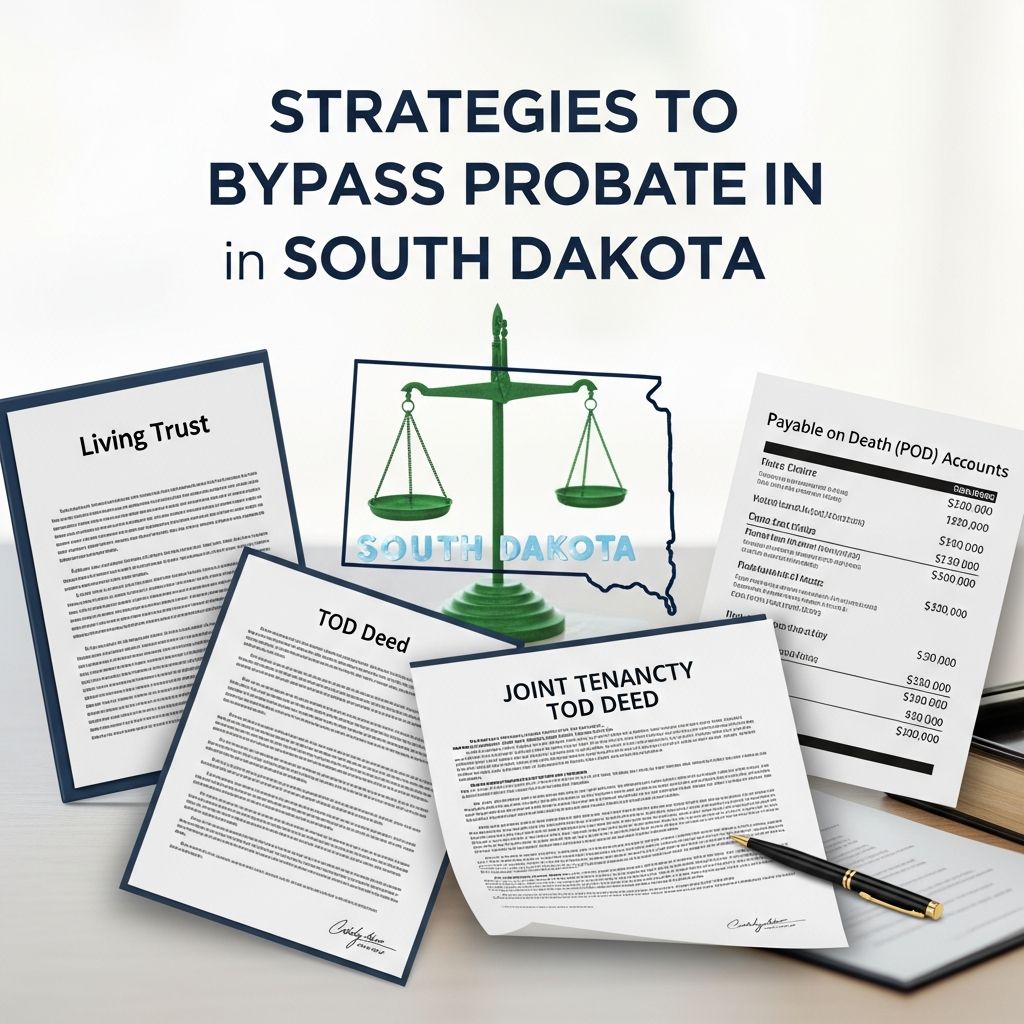
Probate serves as the court-supervised process to validate wills, settle debts, and distribute a deceased person’s assets in South Dakota. While necessary for many estates, it often involves time-consuming steps, public disclosure, and fees that can burden heirs. South Dakota follows the Uniform Probate Code (UPC), streamlining procedures but not eliminating the need for court involvement in larger estates. This guide outlines proactive estate planning techniques to transfer property directly to beneficiaries, minimizing or avoiding probate entirely.
Understanding Probate Essentials in South Dakota
The probate process in South Dakota begins within three years of death, as mandated by SDCL 29A-3-108, unless exceptions apply like uncertainty of death. Circuit courts across seven judicial districts oversee cases, with clerks handling filings. For testate estates (with a will), the document guides distribution after creditor claims and taxes. Intestate estates (no will) follow state succession laws, prioritizing spouses and descendants.
Key steps include appointing a personal representative, inventorying assets, notifying interested parties, paying debts, and closing the estate. Administrative costs, court fees ($75 for probate filing), attorney fees, and taxes reduce the estate’s value. Even simplified probate for estates under $50,000 requires court oversight, though it’s faster.
Core Benefits of Avoiding Probate
Steering clear of probate offers multiple advantages tailored to South Dakota residents:
- Speed: Assets transfer immediately, bypassing months or years of court delays.
- Privacy: Proceedings remain public records; non-probate methods keep details confidential.
- Cost Savings: Avoid fees based on estate value (e.g., 5% on first $1,000, scaling down).
- Control: Beneficiaries gain quick access without personal representative involvement.
- Simplicity: Reduces family stress during grief.
These benefits shine for estates with real property or values exceeding $50,000 held solely in the decedent’s name.
Primary Methods to Transfer Assets Outside Probate
Revocable Living Trusts: The Cornerstone Approach
A revocable living trust involves transferring assets into a trust during your lifetime, naming yourself as trustee and beneficiaries for after death. Upon passing, the successor trustee distributes property per trust terms without court intervention. South Dakota fully supports this under the UPC, making it ideal for real estate, bank accounts, and investments.
To establish one:
- Draft the trust document outlining terms.
- Retitle assets (e.g., deeds, account titles) to the trust.
- Name a successor trustee.
Trusts remain flexible—you retain control and can amend or revoke them. They cover comprehensive estates, unlike piecemeal designations.
Joint Ownership with Right of Survivorship
Co-owning property as joint tenants with right of survivorship (JTWROS) automatically vests full ownership in survivors upon death, skipping probate. Common for spouses on homes, vehicles, or accounts. Caveats include creditor risks to co-owners and potential gift taxes for non-spouses.
| Asset Type | Joint Ownership Suitability | Probate Impact |
|---|---|---|
| Real Estate | High (use survivorship deed) | Avoided |
| Bank Accounts | Medium (joint account) | Avoided |
| Personal Vehicles | Low (title transfer needed) | Avoided if titled properly |
Beneficiary Designations and Payable-on-Death Accounts
Designate beneficiaries on accounts for automatic transfer: Payable-on-Death (POD) for banks, Transfer-on-Death (TOD) for securities and vehicles, and direct beneficiaries on insurance or retirement plans. South Dakota recognizes TOD deeds for real estate, effective post-death.
Update designations regularly, as they override wills and don’t cover non-designated assets. Mismatches can complicate blended families.
Simplified Procedures for Modest Estates
Affidavits for Small Estates
For personal property under $25,000, heirs file a small estate affidavit after 30 days, claiming assets without probate—creditors must still be settled. No court filing required, ideal for minor holdings.
Informal Probate for Estates Up to $50,000
Estates valued at $50,000 or less qualify for informal probate: shorter timelines, fewer hearings. Real property demands full probate regardless of value if solely owned.
Intestate Succession Rules If Probate Occurs
Without a will, assets pass via SDCL 29A-2-102:
- Spouse gets all if no descendants or all descendants shared.
- $100,000 + half balance to spouse if other descendants.
- Remaining to descendants by representation, then parents, siblings, etc.
Homestead allowance, exempt property, and family allowance ($18,000 max) protect survivors.
Potential Pitfalls and Best Practices
Avoiding probate isn’t foolproof:
- Incomplete Planning: Non-trust assets still probate.
- Creditor Claims: Payable within estate timelines.
- Family Disputes: Trusts reduce but don’t eliminate contests.
- Tax Implications: No direct savings; consult professionals.
Integrate methods: Use trusts for bulk, designations for liquidity. Review post-life events like births or divorces. South Dakota doesn’t mandate attorneys for probate, but experts ensure compliance.
Frequently Asked Questions
What triggers probate in South Dakota?
Probate is required for solely owned assets over $50,000 or any real property without bypass mechanisms.
How long does probate take?
Three months to years; must start within three years of death.
Can I avoid probate for my home?
Yes, via living trust, TOD deed, or joint ownership.
Is a will enough to skip probate?
No—wills must probate; use non-probate transfers instead.
What about out-of-state property?
Ancillary probate may apply; centralize via trust.
Steps to Implement Your Plan Today
1. Inventory assets and values.
2. Consult an estate attorney for tailored advice.
3. Execute trusts, deeds, and designations.
4. Inform trustees and beneficiaries.
5. Update as circumstances change.
Proactive planning empowers South Dakotans to preserve legacies efficiently under the UPC framework.
References
- How Probate Laws Work in South Dakota — ProbateAdvance. Accessed 2026. https://probateadvance.com/south-dakota-probate-laws-probate-advance/
- Probate – South Dakota Attorney General — South Dakota Attorney General (sd.gov). Accessed 2026. https://atg.sd.gov/victim/seniors/probate.aspx
- About GiftLaw Pro – South Dakota Intestacy — GiftLaw Pro. Accessed 2026. https://giftlawpro.giftlegacy.com/glawpro_subsection.jsp?WebID=GL1999-0001&CC=1&SS=7&SS2=43
- Legal Insights: Probate – What is it, and should I seek to avoid it? — Lynn Jackson. Accessed 2026. https://lynnjackson.com/legal-insights-probate-what-is-it-and-should-i-seek-to-avoid-it/
- Avoiding Probate in South Dakota — Woods Fuller. Accessed 2026. https://www.woodsfuller.com/latest/avoiding-probate-in-south-dakota
- 2026 House Bill 1011 — South Dakota Legislature (sdlegislature.gov). 2026. https://sdlegislature.gov/Session/Bill/26586/291579
- Codified Law 29A-3 — South Dakota Legislature (sdlegislature.gov). Accessed 2026. https://sdlegislature.gov/Statutes/29A-3
Similar Articles








Read full bio of Sneha Tete


