
Buying Prescription Drugs Online: What Is Legal?
Understand when online prescription purchases are lawful, risky, or outright prohibited under U.S. drug laws.
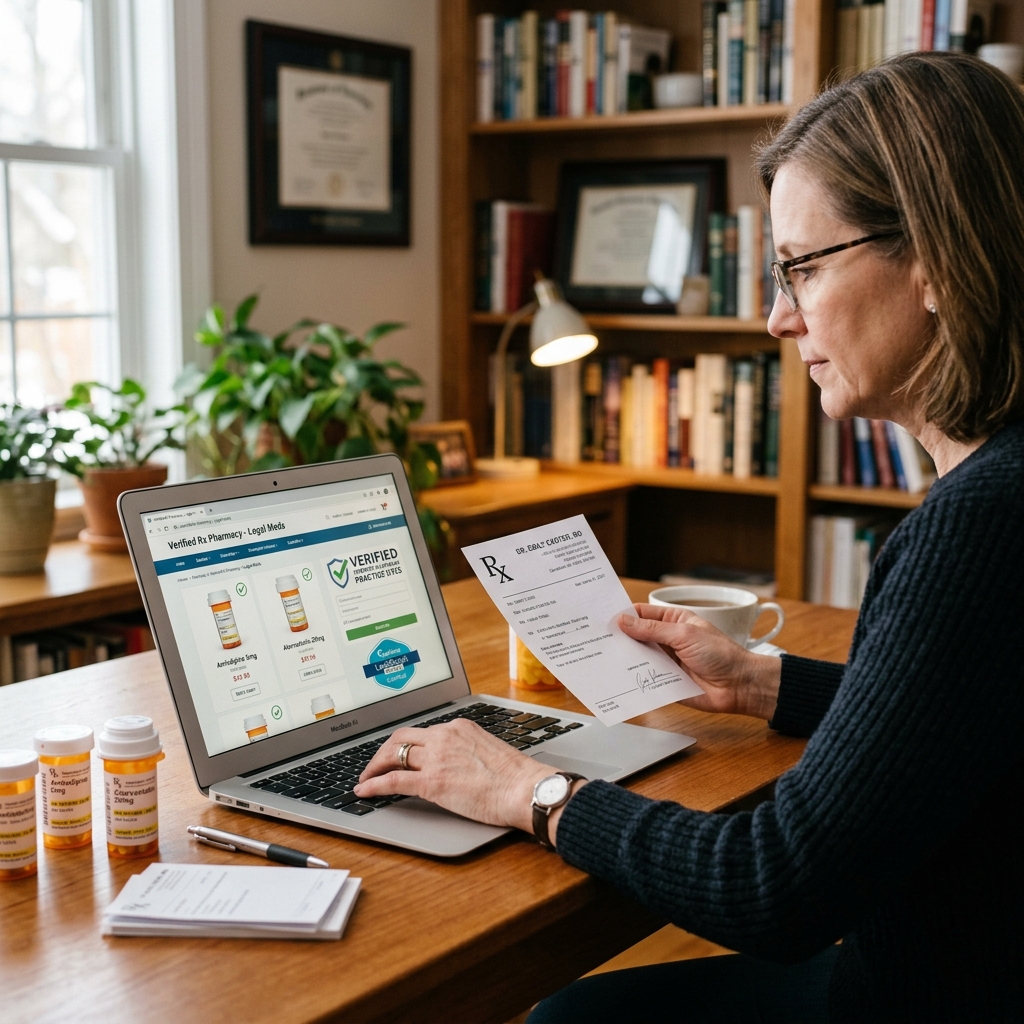
Ordering medicine from the internet can be convenient, but legality depends on what you buy, where the pharmacy is located, and whether the prescription is valid. In the United States, federal law allows legitimate online pharmacy activity, yet it also places strict limits on controlled substances and on pharmacies that do not follow licensing and prescription rules.
The core issue is simple: a lawful purchase usually requires a real prescription from a licensed practitioner and dispensing by a properly licensed pharmacy. If those safeguards are missing, the transaction may be illegal, unsafe, or both.
Why online medicine sales are heavily regulated
Prescription drugs are not ordinary consumer goods. Regulators treat them differently because incorrect medication, counterfeit products, improper dosing, and missing warnings can cause serious harm. Federal agencies warn that unsafe online pharmacies may sell unapproved drugs, dispense medicine without a prescription, or ship products of unknown origin.
Regulation also protects the drug supply chain. When medicines move through unlicensed sellers or foreign sources, consumers may receive counterfeit pills, expired products, or drugs that do not contain the ingredients listed on the label.
- Public safety: The medicine may be fake, contaminated, or wrong for the condition.
- Prescription integrity: A valid prescription is meant to ensure medical oversight.
- Supply-chain control: Licensed pharmacies help preserve traceability and accountability.
When buying prescription drugs online is lawful
Buying prescription medicine online is generally lawful when the process mirrors a traditional pharmacy transaction. A licensed prescriber must evaluate the patient, issue a legitimate prescription, and the pharmacy must dispense the medication under applicable state and federal rules.
For controlled substances, the rules are stricter. The DEA states that federal law prohibits buying controlled substances such as certain pain relievers, sedatives, stimulants, and anabolic steroids without a valid prescription, and that prescriptions written by so-called “cyber doctors” based only on questionnaires are not legitimate under the law.
The Ryan Haight Online Pharmacy Consumer Protection Act also governs online prescribing of controlled substances, generally requiring an in-person medical evaluation before a practitioner issues such a prescription, subject to certain telemedicine exceptions.
| Scenario | Likely legal status |
|---|---|
| Medication dispensed by a licensed pharmacy with a valid prescription | Generally lawful |
| Controlled substance prescribed after appropriate medical evaluation and within telemedicine rules | Potentially lawful |
| Prescription drug sold without a prescription | Generally unlawful |
| Controlled substance sold by an unlicensed website | Likely unlawful and high risk |
The role of telemedicine in online prescribing
Telemedicine has changed how some prescriptions are issued, but it has not removed legal safeguards. Under the Ryan Haight framework, in-person evaluation remains important, though certain telehealth flexibilities have been extended for some controlled medications.
That means a remote appointment may be enough in some circumstances, but not every online consultation qualifies. The key question is whether the prescribing practitioner is operating within the current federal and state rules, not simply whether a video call occurred.
- Valid telemedicine: A licensed practitioner evaluates the patient under applicable rules and prescribes within legal limits.
- Invalid shortcut: A website offers controlled substances after only a brief quiz or online form.
- Practical takeaway: The presence of telehealth does not automatically make an online prescription legal.
How to tell whether an online pharmacy is legitimate
The FDA says a safe online pharmacy always requires a doctor’s prescription, provides a physical address and telephone number in the United States, has a licensed pharmacist available to answer questions, and is licensed by a state board of pharmacy. The presence of these features does not guarantee perfection, but their absence is a major warning sign.
Trustworthy pharmacies also follow ordinary professional practices. They verify prescriptions, provide proper instructions, include required warnings, and maintain patient confidentiality.
- Requires a prescription: No legitimate prescription drug should be sold casually over the counter online.
- Lists real contact information: A verifiable address and phone number matter.
- Offers pharmacist support: Access to a licensed pharmacist is a positive indicator.
- Shows state licensing: Pharmacy licensing should be traceable.
Common red flags that suggest an illegal pharmacy
Federal warnings describe several common signs that an online pharmacy is not legitimate. One of the strongest indicators is selling prescription drugs without requiring a valid prescription from a healthcare provider.
Other warning signs include prices that are far below market rates, payments or pricing in foreign currency, lack of state or DEA licensing information, and packages arriving in unfamiliar language or damaged packaging.
- No prescription required: This is one of the clearest signs of illegality.
- Suspiciously low prices: Deep discounts may indicate counterfeit or diverted products.
- Foreign shipping clues: Medicine shipped from abroad may trigger import problems.
- Poor packaging: Broken seals, missing expiration dates, or odd labeling are red flags.
Why buying from rogue websites can create legal risk
Purchasing from an illegal site can expose consumers to both criminal and health consequences. The DEA warns that buying controlled substances online without a valid prescription may be punishable by imprisonment under federal law, and importing drugs into the United States can itself be a felony in some circumstances.
Even where a buyer is not prosecuted, the product may be seized, unusable, or dangerous. The FDA has warned that unsafe online pharmacies may offer prescription drugs without adequate directions or required risk information, making the medications more hazardous than the disease they are meant to treat.
In short, a bad online pharmacy can create at least three layers of danger: unlawful sale, unsafe medication, and unreliable delivery.
State licensing and pharmacy compliance
Online and mail-order pharmacies do not escape licensing rules just because they operate on the internet. A pharmacy generally must be licensed in the state where it is based and may also need authorization in every state where it ships orders.
This matters because pharmacy law is not entirely national. States can require nonresident or mail-order pharmacy licenses, and many also impose rules for controlled substances, prescription recordkeeping, and confidentiality.
| Compliance area | Why it matters |
|---|---|
| Resident pharmacy license | Shows the business is authorized where it is domiciled |
| Nonresident or mail-order licenses | May be required in states where customers live |
| Controlled substance registration | Needed for certain medications |
| Recordkeeping and privacy safeguards | Protects prescription integrity and patient information |
Questions to ask before placing an order
If you are considering buying medicine online, asking a few practical questions can prevent mistakes. These checks are especially important for chronic medications, narcotics, or any drug with abuse potential.
- Does the website require a real prescription from my prescriber?
- Is the pharmacy licensed in the state where it operates?
- Can I speak to a licensed pharmacist?
- Does the site list a U.S. address and working telephone number?
- Is the medication clearly identified with dosage, warnings, and expiration information?
- Does the pharmacy explain how it protects personal health information?
What to do if you already ordered from a suspicious site
If you suspect that medication came from an illegal or unsafe online source, stop using it until you can verify its origin. The DEA advises consumers who purchased alleged medication from certain fake pharmacies to stop using it and contact authorities.
You may also want to check with your state board of pharmacy, which can help confirm whether a pharmacy is licensed. If a product appears counterfeit, damaged, expired, or different from the medicine you normally receive, do not take it until a licensed professional reviews it.
- Stop use: Pause taking the product until you confirm it is legitimate.
- Verify the source: Check licensing and prescription records.
- Report concerns: Use official channels if the site appears fraudulent.
Frequently asked questions
Is it legal to buy prescription drugs online?
Yes, it can be legal if you have a valid prescription and the medication is dispensed by a properly licensed pharmacy under applicable federal and state rules.
Can I buy controlled substances online?
Only under limited circumstances. Controlled substances are tightly regulated, and the DEA warns that buying them without a valid prescription is illegal. Telemedicine may be allowed in certain cases, but it must comply with federal rules.
How can I tell whether an online pharmacy is safe?
A safe pharmacy requires a prescription, provides U.S. contact information, has a licensed pharmacist, and is licensed by the relevant state board of pharmacy.
What are the biggest warning signs?
No prescription requirement, very low prices, lack of licensing information, foreign-language packaging, and drugs that look different from what you previously received are all major red flags.
Can an online questionnaire replace a doctor visit?
Not for controlled substances, and not as a blanket rule. The DEA states that prescriptions written by “cyber doctors” relying only on questionnaires are not legitimate under the law.
Practical takeaways for consumers
Buying medicine online is not automatically illegal, but it becomes risky quickly if the pharmacy is unlicensed or if the prescription is not valid. The safest path is to use a pharmacy you can verify, insist on proper prescribing, and avoid sites that promise fast access to prescription-only drugs without medical oversight.
If a website looks unusually cheap, unusually easy, or unusually secretive, treat that as a warning rather than a convenience. In online pharmacy transactions, convenience should never replace legality or safety.
References
- DEA Consumer Alert – Diversion Control Division — U.S. Drug Enforcement Administration. 2026-07-10. https://www.deadiversion.usdoj.gov/scams/consumer_alert.html
- Legal Issues Related to Prescription Drug Sales on the Internet — Congressional Research Service. 2003-04-02. https://www.everycrsreport.com/reports/RS21711.html
- Online Prescribing of Controlled Substances — American Psychiatric Association. 2024-11-15. https://www.psychiatry.org/psychiatrists/practice/telepsychiatry/toolkit/ryan-haight-act
- Chapter 480-27 Requirements of a Prescription — Georgia Rules and Regulations. 2026-07-10. https://rules.sos.ga.gov/gac/480-27
- Internet Pharmacy Warning Letters — U.S. Food and Drug Administration. 2025-07-29. https://www.fda.gov/drugs/drug-supply-chain-integrity/internet-pharmacy-warning-letters
- DEA Issues Warning About Illegal Online Pharmacies — U.S. Drug Enforcement Administration. 2026-07-10. https://www.dea.gov/alert/dea-issues-warning-about-illegal-online-pharmacies
- Regulation of Internet Pharmacies: A Continuing Challenge — Mayo Clinic Proceedings / PubMed Central. 2015-12-01. https://pmc.ncbi.nlm.nih.gov/articles/PMC4686473/
- Online and mail-order pharmacy license requirements — Wolters Kluwer. 2026-07-10. https://www.wolterskluwer.com/en/expert-insights/online-and-mail-order-pharmacy-license-requirements
Similar Articles








Read full bio of medha deb


