
Buying a Home on Leased Land: Key Risks and Benefits
A practical guide to land lease home purchases, covering financing, legal issues, costs, and resale considerations.
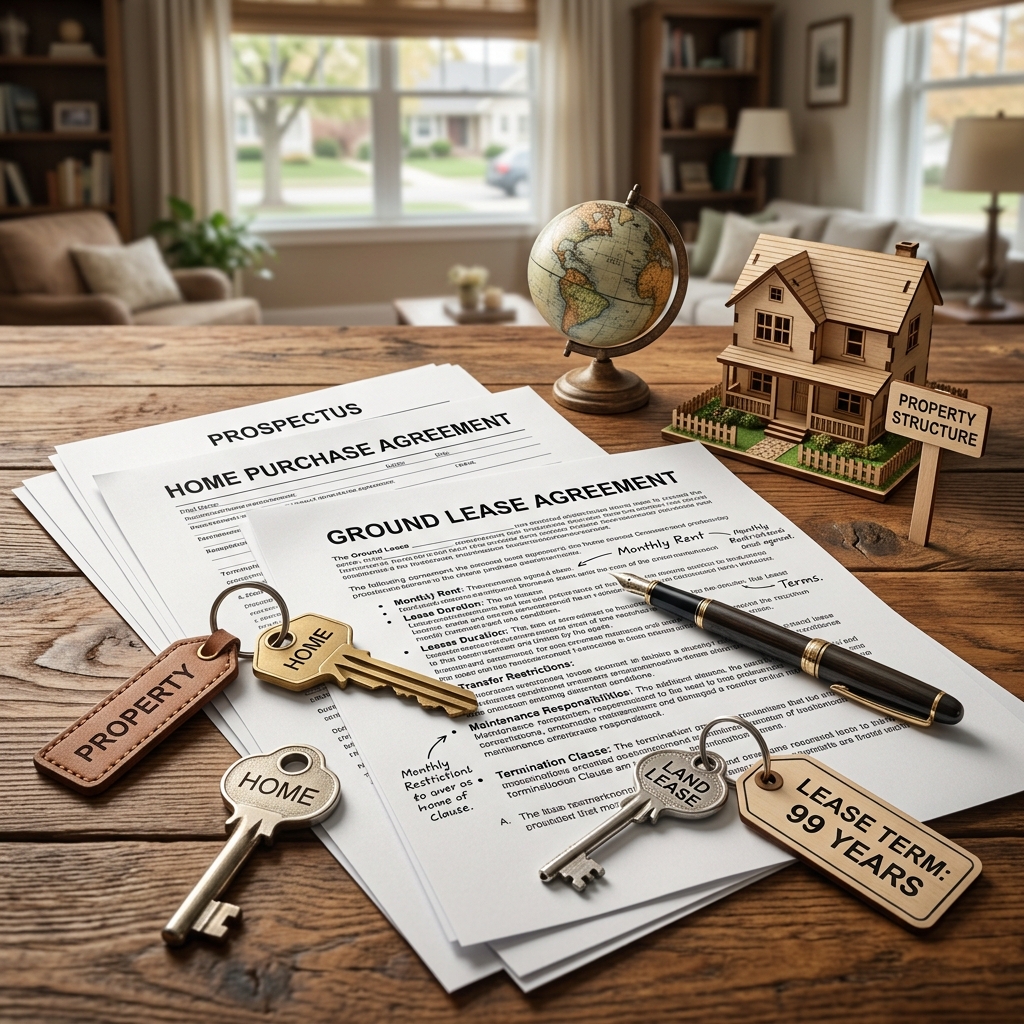
Buying a home on leased land—also called a land lease or ground lease—can make homeownership more affordable, but it introduces legal, financial, and resale issues that differ significantly from a traditional purchase where you own both the house and the land.
This guide explains how land leases work, the major pros and cons, how financing and resale are affected, and what you should review with a real estate attorney before signing any agreement.
What Does It Mean to Buy a Home on Leased Land?
In a traditional home purchase, you acquire ownership of both the house and the land it sits on. With a land lease, you buy the structure (the home, condo, or townhouse) but rent the land from a separate owner under a long-term lease.
These arrangements are most commonly seen in:
- Manufactured home communities
- Condominium and townhouse developments
- Resort or coastal areas where land values are high
- Planned communities or co-ops using land trusts and ground leases
Land lease terms are typically long—often 50 to 99 years—but the remaining term when you buy can vary dramatically and is a crucial factor in your decision.
Core Features of a Land Lease Arrangement
| Aspect | Traditional Ownership | Home on Leased Land |
|---|---|---|
| What you own | House and land | House only; land is rented |
| Upfront purchase price | Higher | Usually lower than similar homes on owned land |
| Monthly costs | Mortgage, taxes, insurance | Mortgage (or cash), land rent, possibly HOA fees, property tax on improvements |
| Equity growth | House and land value | Primarily house value; no equity in land |
| Financing options | Wide range of lenders | Limited; some lenders avoid land leases |
| Resale market | Broad buyer pool | Smaller pool, especially as lease term shortens |
Why Some Buyers Consider Leased-Land Homes
Despite the added complexity, land leases can open doors to homeownership for buyers who might otherwise be priced out of certain markets.
Typical motivations include:
- Lower upfront cost compared to buying both house and land in high-priced areas
- Access to desirable locations (beachfront, urban cores, resort communities) that would be unaffordable if you had to purchase the land
- Potential inclusion of community amenities such as pools, parks, fitness centers, or security services in the lease or HOA arrangement
- Simplified maintenance when common area upkeep is handled by the landowner or association
Financial Benefits and Drawbacks
Potential Financial Upsides
Buying a home on leased land may offer several advantages when viewed purely from a cash-flow or budget standpoint.
- Reduced purchase price: Because you are not acquiring the land, the home itself is often priced below comparable properties on owned lots.
- Lower entry barrier: Buyers with limited savings may find they can afford a nicer home or more desirable location than they could if they had to purchase land as well.
- Predictable lease payments—at least initially: Many leases spell out the rent amount and any scheduled increases, which can help with budgeting.
Major Financial Risks
However, the financial trade-offs are significant and often make land-lease properties less attractive over the long term.
- Continuing land rent: In addition to your mortgage (if any), you must pay ongoing lease fees for the land. These fees can be substantial and may rise over time as allowed by the lease.
- Limited equity growth: Because you do not own the land, you build equity only in the structure. Houses typically depreciate, while land often drives long-term appreciation, so overall wealth growth may be lower.
- Lease expiration risk: If the lease is short or nearing expiration, the value of your home can decline sharply. At lease end, the landowner may refuse renewal or demand different terms, potentially forcing you to move or surrender improvements.
- Possible tax obligations: Depending on local law, you may owe property tax on the home and may face tax on sale proceeds even though you do not own the land.
Financing Challenges with Land-Lease Properties
One of the most important differences between traditional ownership and leased land is the availability of mortgage financing.
According to legal and real estate sources, many mainstream lenders are cautious about land-lease properties because the borrower does not own the land and the lease can affect collateral value and foreclosure rights.
Common financing issues include:
- Fewer willing lenders: Some banks and mortgage programs decline to finance homes on leased land entirely.
- Stricter underwriting: Lenders that do participate may require longer remaining lease terms, proof of stable lease payments, or higher down payments.
- Impact of lease terms: Clauses allowing substantial rent increases, early termination, or unusual restrictions can make financing more difficult.
Because the pool of potential lenders is smaller, buyers may face higher financing costs or need to provide more cash upfront.
Resale and Marketability Considerations
Resale can be a major pain point for leased-land homes. The same concerns that make lenders wary can also deter future buyers.
Professional real estate guidance notes that these properties often have a smaller buyer pool and may take longer to sell, especially if the remaining lease term has shortened or rent has increased significantly.
Factors that influence resale include:
- Remaining lease length: Buyers and lenders typically prefer leases with many years left. A lease approaching expiration can severely limit interest.
- Rent level and escalation: High current rent or aggressive escalation clauses can make the monthly cost unattractive compared to traditional ownership.
- Community reputation and amenities: Well-managed communities with good amenities may support resale values; poorly managed ones may face declining demand.
Legal Structure and the Role of a Real Estate Attorney
A land lease is a binding legal contract that governs your rights and responsibilities on the property. Unlike a simple rental agreement, many land leases run for decades and involve complex provisions about improvements, maintenance, taxes, and what happens at the end of the term.
Legal commentators emphasize that buyers should work with an experienced real estate attorney to review the lease and purchase documents before committing to a transaction.
Your attorney will typically:
- Explain key lease provisions in plain language
- Identify clauses that could create unexpected costs or limit your rights (such as strict use restrictions or broad termination powers)
- Review how property taxes, insurance, and maintenance responsibilities are allocated
- Assess what happens to the home and any improvements at lease expiration
- Coordinate with your lender to ensure the lease terms satisfy financing requirements
The cost of hiring a lawyer for a purchase and lease review is usually modest compared with the potential financial and legal consequences of misunderstandings in a long-term land lease.
Key Lease Terms to Review Carefully
Before you agree to buy a home on leased land, obtain a full copy of the lease and read it thoroughly with professional help. Some of the most important provisions to understand include:
- Lease duration and renewal options
- How many years remain on the lease?
- Are there automatic renewal rights or only negotiated renewals?
- What happens if the lease is not renewed?
- Rent amount and escalation
- Current monthly or annual rent
- Scheduled increases (fixed, indexed to inflation, or market-based)
- Any cap on increases over time
- Use and improvement restrictions
- Rules on remodeling, adding structures, or changing use
- Requirements for obtaining landlord or association consent
- Maintenance and repair obligations
- Who maintains common areas versus your home and lot?
- Responsibility for major infrastructure like roads or utilities
- End-of-lease consequences
- Do improvements revert to the landowner?
- Is there any compensation or buy-out formula?
Practical Checklist Before Buying
To make a well-informed decision, consider working through the following practical checklist:
- Compare total monthly cost (mortgage, land rent, HOA fees, taxes, insurance) against similar homes on owned land.
- Ask about lease length and whether the landlord has a history of renewing leases on reasonable terms.
- Evaluate future rent increases to see how affordable the home will be in five, ten, or twenty years.
- Discuss financing options with lenders before making offers, so you know whether you can obtain a mortgage on acceptable terms.
- Plan for resale by considering how the remaining lease term and rent level will look to future buyers.
- Engage a real estate attorney to review the lease and purchase contract and highlight any unusual risks.
Frequently Asked Questions (FAQs)
Is buying a home on leased land always a bad idea?
No. Land-lease properties can be appropriate for some buyers, especially those prioritizing lower upfront costs or access to specific locations. The key is understanding the long-term implications of the lease terms, including rent increases, lease duration, and resale challenges.
How long should the lease be when I buy?
There is no universal rule, but lenders and buyers generally prefer leases with many decades remaining. Short remaining terms can reduce financing options and future resale value and may expose you to significant risk at lease expiration.
Do I pay property taxes if I do not own the land?
In many jurisdictions, you still pay taxes on the home and improvements, even though you do not own the land. Local tax law varies, so it is important to confirm with your attorney or tax adviser.
Can the landowner raise the rent whenever they want?
Rent increases are governed by the lease. Some agreements specify fixed increases or tie them to inflation indexes, while others allow adjustments based on market value. You need to read the escalation clauses carefully to understand how your costs may change.
What happens when the land lease expires?
At the end of the lease term, several outcomes are possible, depending on the contract. The landowner may offer renewal, renegotiate new terms, or choose not to renew, which may require you to vacate or surrender improvements. The specific rights and obligations at expiration should be clearly stated in the lease.
Do I still build equity in a leased-land home?
You build equity in the home itself but not in the land. Because structures often depreciate and land usually provides much of the appreciation in real estate, overall equity growth may be less than with traditional homeownership.
References
- Buying a House on Leased Land — Super Lawyers. 2023-03-01. https://www.superlawyers.com/resources/real-estate/residential-real-estate-transactions/buying-a-house-on-leased-land/
- The Pros and Cons of Buying Property on Leased Land — ACPM Management. 2020-08-15. https://www.acpm1.com/pros-cons-buying-property-leased-land/
- What Is a Land Lease Agreement? — Innago. 2022-06-10. https://innago.com/what-is-a-land-lease-agreement/
- More Homeowners Are Opting for Land Leases — Realtor.com. 2021-07-21. https://www.realtor.com/advice/buy/land-lease-basics-pros-cons/
- Land Lease Facts: Everything You Should Know Before You Buy — Hometown America. 2021-04-05. https://www.hometownamerica.com/resources/what-is-a-land-lease-what-to-know-before-you-buy/
Similar Articles








Read full bio of medha deb


