
Business Obligations: Assisting Ill Customers Legally
Uncover the legal boundaries of helping sick patrons in your store: duties, risks, and best practices for business owners.
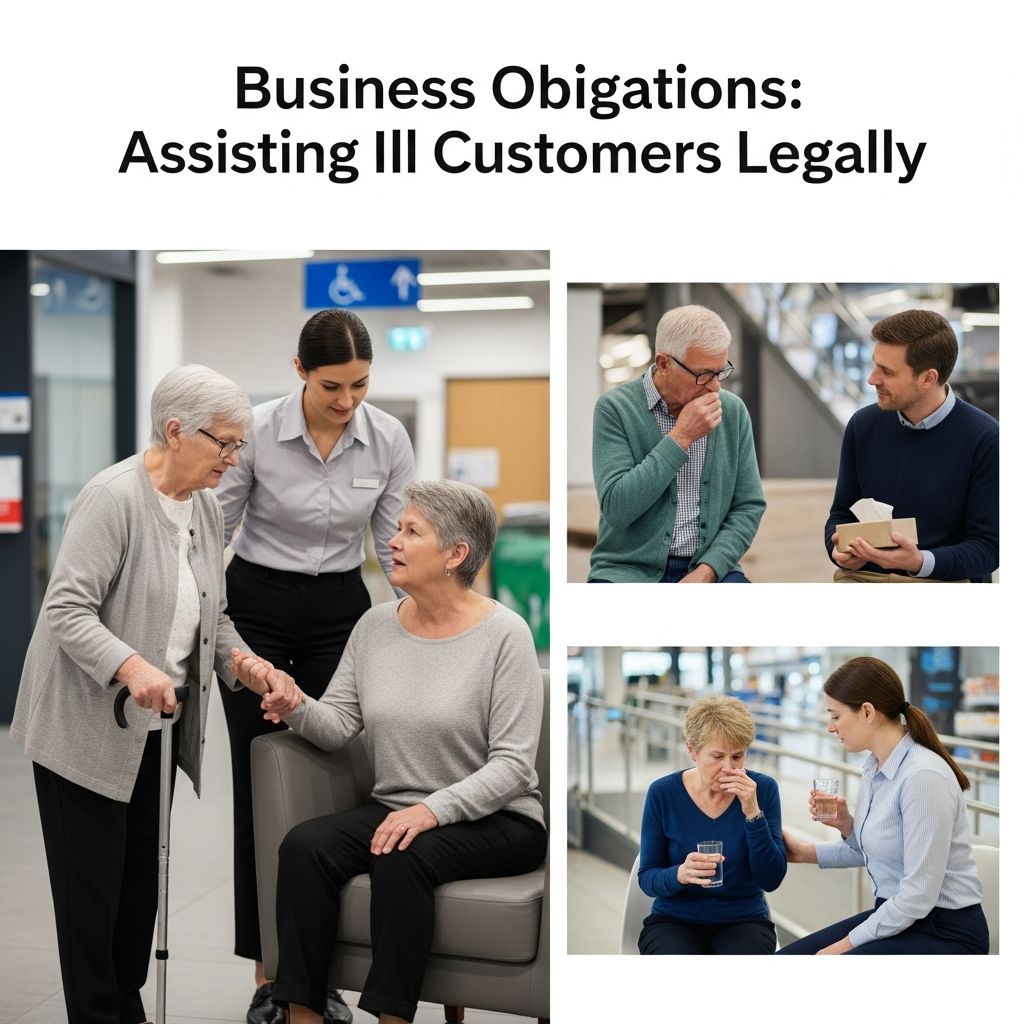
Business owners often encounter situations where a customer suddenly becomes unwell, raising immediate concerns about safety and legal responsibilities. While proprietors must maintain safe premises, they generally lack a legal mandate to provide direct medical assistance unless specific conditions apply. This article examines the nuances of premises liability, exceptions involving heightened duties, and practical steps to manage such incidents effectively.
Core Principles of Premises Liability for Customer Safety
Under U.S. law, particularly in states like Florida, commercial establishments owe visitors a
duty of care
to keep premises reasonably safe from foreseeable harms. This obligation covers hazards such as slippery floors, faulty equipment, or structural defects that could lead to injury. For invitees—customers entering for business purposes—this means owners must inspect properties regularly, promptly address known risks, and warn of unavoidable dangers.To establish liability, an injured party typically proves four elements: a hazardous condition existed, the business knew or should have known about it, no reasonable corrective action was taken, and the negligence directly caused harm. Florida’s comparative negligence doctrine further allows recovery even if the customer shares fault, with damages reduced proportionally.
No Universal Requirement for Hands-On Medical Intervention
A critical distinction exists between maintaining safe environments and acting as first responders. Generally, businesses do not bear a legal duty to rescue or treat ill customers experiencing non-premises-related medical events, such as heart attacks or allergic reactions unrelated to the property. Courts hesitate to impose rescue obligations due to risks of worsening conditions or legal exposure for untrained aid.
This stems from the common law “no duty to rescue” rule, rooted in personal autonomy and fear of liability. Even witnessing distress does not compel intervention unless a special relationship exists, like innkeeper-guest dynamics in hotels.
Exceptions Where Aid Becomes Mandatory
Certain scenarios elevate responsibilities. If a business employee’s negligence directly causes the illness—such as serving contaminated food—owners must respond appropriately, potentially including summoning help. During public health emergencies like pandemics, failure to follow sanitation protocols could breach duty if it leads to customer infections.
- Direct Causation: Illness from defective products or negligent acts triggers liability and aid duties.
- Special Relationships: Hotels or transport services may owe broader care to vulnerable guests.
- Health Crises: Non-compliance with CDC or state guidelines during outbreaks heightens risks.
Health Emergencies and Evolving Business Duties
Pandemics like COVID-19 amplified premises liability by introducing invisible hazards. Businesses reopening post-shutdowns must adhere to health mandates, including masking, distancing, and decontamination, to avoid claims of negligence if patrons contract illnesses. OSHA requires workplaces free from recognized hazards likely causing serious harm, extending to customer areas.
Practical measures include screening entrants, enhancing ventilation, and prohibiting symptomatic staff. Non-compliance could invite lawsuits, though some jurisdictions explored liability shields for compliant operators.
| Element | Description | Example |
|---|---|---|
| Dangerous Condition | Hazard posing foreseeable risk | Wet floor without signs |
| Knowledge | Actual or constructive notice | Spill ignored for hours |
| Failure to Act | No fix or warning | No cleanup or barriers |
| Causation & Injury | Direct link to harm | Slip resulting in fracture |
Good Samaritan Protections: Encouraging Safe Assistance
Many states enact Good Samaritan laws shielding volunteers from liability when rendering emergency aid in good faith, without gross negligence. This incentivizes bystanders, including staff, to call 911 or perform CPR without fear of lawsuits. However, protections vary: some cover businesses if aid is outside normal operations.
Owners should train employees on these laws, emphasizing calling professionals first. Documentation of actions taken protects against claims.
Strategic Responses to Medical Incidents on Premises
When a customer collapses, prioritize these steps:
- Assess Safely: Ensure scene security without endangering yourself or others.
- Call Emergency Services: Dial 911 immediately, providing clear location details.
- Monitor Without Touching: Observe vital signs if trained; avoid untrained interventions.
- Clear Area: Evacuate non-essential personnel.
- Document: Note times, observations, and witness contacts.
Post-incident, review security footage and incident reports to identify premises issues. Consult attorneys if claims arise.
Training Staff for Compliance and Confidence
Proactive education mitigates risks. Mandate annual sessions on:
- Recognizing hazards and reporting protocols.
- Basic first aid and AED use, per Red Cross standards.
- Legal limits on assistance.
- Pandemic response plans.
Certifications build competence, while clear policies define roles, reducing panic-driven errors.
Insurance and Risk Management Essentials
General liability policies often cover premises claims, but exclusions for intentional acts or certain illnesses apply. Riders for pandemics or cyber-related exposures may be needed. Regular audits, alongside robust insurance, form a defense layered approach.
Compare options:
| Policy Type | Coverage Scope | Key Exclusions |
|---|---|---|
| General Liability | Slips, falls, property damage | Intentional harm, employee injuries |
| Umbrella | Excess coverage | Professional services |
| Pandemic Rider | Health outbreak claims | Government-mandated closures |
Frequently Asked Questions (FAQs)
Does my business have to administer CPR to a sick customer?
No, unless you’re a trained medical facility. Good Samaritan laws protect good-faith efforts, but calling professionals is primary.
What if the illness stems from my product?
Yes, you owe a duty to mitigate harm, including aid and remediation.
Are hotels required to help more than retail stores?
Potentially, due to special innkeeper duties for paying guests.
How do pandemics change my obligations?
Follow public health guidelines to avoid negligence claims from infections.
Can customers sue if I don’t intervene?
Rarely, absent a special duty or premises negligence.
Navigating Claims: Steps for Business Owners
If accused of negligence, preserve evidence, notify insurers promptly, and engage counsel experienced in premises law. Investigations often hinge on timelines and knowledge proofs. Settlements or trials turn on thorough documentation.
For injured customers, seek medical records, witness statements, and expert analyses to build cases under state statutes.
In summary, while vigilance in safety is paramount, legal duties circumscribe rescue roles. Knowledge empowers balanced, protective operations.
References
- What Duty of Care are Businesses Responsible For? — Probin Sky Law. 2025-09. https://probinskylaw.com/2025/09/what-duty-of-care-are-businesses-responsible-for/
- What Duty of Care do Business Owners Owe Their Customers During a Pandemic? — Tario & Associates, P.A. 2020. https://www.tariolaw.com/what-duty-of-care-do-business-owners-owe-their-customers-during-a-pandemic/
- Businesses Owe All Customers a Duty of Care — Finlay Law Firm. N.D. https://www.finlaylawfirm.com/businesses-owe-all-customers-a-duty-of-care
- Do Businesses Have the Duty to Protect Customers from Injury? — FTL Injury Law. N.D. https://www.ftlinjurylaw.com/blog/do-businesses-have-the-duty-to-protect-customers-from-injury/
- What is the Business Duty of Care? — Virtus Law. 2017-05-22. https://www.virtuslaw.com/2017/05/22/business-duty-care/
- Client Alert: Is a Business Liable if an Employee or Customer Gets Sick? — Bowditch & Dewey. 2020-04-30. https://www.bowditch.com/2020/04/30/client-alert-is-a-business-liable-if-an-employee-or-customer-gets-sick/
Similar Articles








Read full bio of medha deb




