
How Business Insurance Responds to Riots and Looting
Understand when riots, civil unrest and looting are covered by business insurance, how claims work, and what gaps could leave your company exposed.
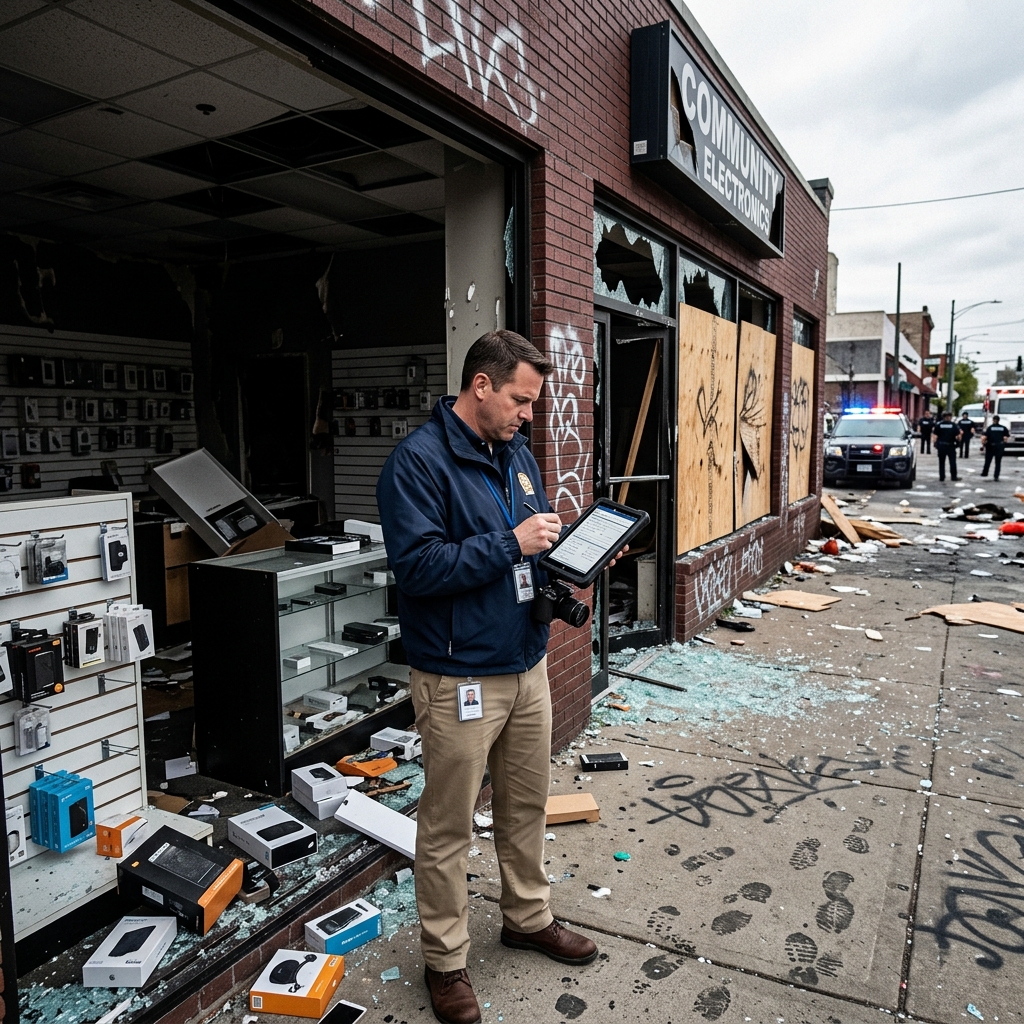
Periods of civil unrest can bring devastating consequences for businesses. Broken windows, looted merchandise, damaged equipment and forced closures can all occur within just a few hours of a riot or large-scale protest. Many business owners want to know whether their commercial insurance policies will help them recover from these losses, and under what conditions coverage applies.
This guide explains how typical business insurance policies treat damage from riots and looting, what types of coverage usually respond, where exclusions may appear, and how you can prepare for and navigate the claims process if your company is affected.
Understanding Civil Unrest as an Insurance Risk
Insurers generally group riots, looting and related events under the broader category of civil commotion or civil unrest. These events may involve large crowds, property damage, vandalism, theft and temporary disruption of public services or government-imposed restrictions. From an insurance standpoint, they are typically treated differently from terrorism or war, but they can still trigger significant losses when they lead to physical damage or forced closures.[10]
Common Events That May Trigger Coverage
- Riots or violent demonstrations that damage buildings or business property.
- Looting of merchandise or equipment during or immediately after a riot or civil commotion.
- Vandalism such as graffiti, broken glass or destroyed fixtures during civil unrest.
- Government orders that temporarily restrict access to an area after a major disturbance, creating business interruption.
Whether these events are covered depends on the exact language of the insurance policy and any exclusions or endorsements that change the default rules.
Key Types of Business Insurance Involved
Most small and mid-sized companies rely on a combination of policies to protect their operations. During riots and looting, several types of insurance can be relevant.
Commercial Property Insurance
Commercial property insurance is usually the primary source of coverage for damage caused by civil unrest. Standard policies typically cover physical loss or damage to insured premises and business property resulting from looting, vandalism and riots, unless the policy explicitly excludes these perils.
Covered items often include:
- The building or unit you own, including doors, windows and exterior surfaces.
- Interior fixtures such as shelving, counters, flooring and built-in equipment.
- Business contents, including inventory, machinery, computers and other assets.
- Improvements you made to a leased space, if insured as part of your policy.
Business Owners Policy (BOP)
Many small businesses purchase a Business Owners Policy (BOP), which bundles property insurance, general liability and sometimes business interruption coverage into a single package. BOPs frequently include riots, civil commotion and vandalism as named perils or covered causes of loss, meaning they ordinarily respond to physical damage from these events.
Business Interruption or Business Income Insurance
Business interruption insurance, sometimes called business income coverage, is designed to replace lost revenue and certain extra expenses when a covered event forces the business to suspend operations. This coverage generally requires direct physical damage to the insured premises caused by a covered peril, such as a riot or vandalism. If looting and damage prevent you from reopening while repairs are underway, business interruption insurance may help cover lost income and continuing expenses like rent and payroll.
Civil Authority Coverage
Many commercial property and business income policies include a provision known as civil authority coverage. This protection may apply when a government body restricts access to an area due to dangerous conditions, such as widespread riots or damage in a business district. If an order issued by civil authorities temporarily blocks customers and employees from reaching your premises, and that order is related to property damage caused by a covered peril, civil authority coverage can provide business income for a limited period, even if your own building is not directly damaged.
General Liability Insurance
General liability insurance focuses primarily on third-party claims for bodily injury or property damage. During riots or looting, the main role of this coverage is usually to protect the business if it is accused of contributing to someone else’s injury or loss, rather than to cover damage to the business’s own property. However, many smaller firms still carry general liability as part of a broader BOP, making it a core component of overall risk management.
Workers’ Compensation Insurance
If employees are injured while protecting property, evacuating customers or simply being present during civil unrest, workers’ compensation insurance may apply. This coverage pays for medical expenses and wage replacement when an injury arises out of and in the course of employment, including injuries sustained during a riot-related incident, as long as they meet the policy’s criteria.
How Commercial Policies Treat Riots and Looting
Most standard commercial property policies either list riots and civil commotion as named perils or cover them under an “all risks” or “special form” approach that includes these events unless specifically excluded. Looting is commonly treated as covered when it occurs at the time and place of a riot or civil commotion.
| Type of Loss | Typical Treatment Under Standard Policies |
|---|---|
| Damage to building exterior (e.g., broken windows) | Generally covered if caused by riot, civil commotion or vandalism. |
| Damage to business contents | Usually covered, including merchandise, equipment and furniture. |
| Looted inventory during a riot | Often covered when looting is tied to a riot or civil commotion at the premises. |
| Lost income due to temporary closure | Covered if business interruption and civil authority provisions apply and requirements are met. |
Important Exclusions and Limitations
Even when riots and civil commotion are generally covered, policies can contain exclusions and limits that significantly affect the outcome of a claim.[10]
War and Terrorism Exclusions
Standard property policies frequently exclude damage arising from war, insurrection or terrorism, or require separate coverage for these risks.[10] While peaceful protests that escalate into riots are usually treated as civil commotion rather than terrorism, insurers may carefully analyze the cause of a particular event. Businesses sometimes need separate terrorism or political violence coverage if they are worried about politically motivated attacks that might be classified differently from civil unrest.[10]
Policy Language and Special Endorsements
Insurance regulators and legal experts consistently emphasize that coverage depends on the specific language in the policy. Some policies may:
- Impose sublimits for glass breakage or theft-related losses.
- Restrict coverage for certain types of property, such as money, securities or fine art.
- Apply waiting periods before business interruption coverage begins.[10]
- Exclude losses that occur after a certain number of days from the initial event.
Because these details vary widely, business owners are urged to review their policies regularly and consult agents, brokers or legal counsel to clarify ambiguous terms.
Deductibles and Coverage Limits
Even when a loss is covered, deductibles and policy limits determine how much compensation the business ultimately receives. Higher deductibles can help reduce premiums but shift more of the initial loss onto the company.[10] Coverage limits for building, contents and business income should be based on realistic replacement and revenue figures, especially in areas that have seen civil unrest in the past.[10]
Steps to Take After Riots or Looting
Government agencies and insurance regulators offer practical guidance for businesses that suffer damage due to civil unrest. Taking organized steps after a loss helps protect safety, preserve coverage and strengthen your claim.
1. Protect Safety and Prevent Further Damage
- Wait until authorities declare the area safe before re-entering any damaged premises.
- Take reasonable actions to secure the property and prevent additional loss, such as boarding up broken windows or locking accessible doors, as long as it is safe to do so.
- Keep receipts and records of emergency expenditures; many policies reimburse reasonable expenses incurred to protect property from further damage.
2. Report the Loss Promptly
- Contact your agent, broker or insurer as soon as possible to notify them of the incident and start the claims process.[10]
- Provide basic details regarding the date, time, location and nature of the damage and any police reports filed.
3. Document Damage Thoroughly
- Photograph and video all visible damage, including building exteriors, interiors and affected inventory.[10]
- Save damaged property whenever feasible so the adjuster can inspect it; if items must be discarded for safety or health reasons, document them before disposal.
- Maintain a list of destroyed or stolen items, including estimated values and purchase dates when available.[10]
4. Track Expenses and Communications
- Keep a log of all expenses incurred as a result of the event, such as cleanup, temporary relocation or security measures.
- Maintain a “claim diary” recording key communications with the insurer, adjusters and agents, including dates, names and summaries of discussions.
5. Cooperate with the Claims Investigation
An adjuster will typically be assigned to evaluate your loss and determine coverage. Cooperating fully with this process, while also carefully reviewing policy terms, helps reach a fair settlement.
Reducing Risk Before Civil Unrest Occurs
While businesses cannot control broader social events, they can take steps to reduce the impact of civil unrest and strengthen their insurance position.[10]
Review and Update Coverage Regularly
- Confirm that commercial property and BOP policies do not exclude riots or civil commotion and that limits accurately reflect current building and contents values.
- Evaluate business interruption and civil authority provisions to understand waiting periods, time limits and documentation requirements.
- Discuss terrorism or political violence coverage with a qualified agent if you have heightened exposure in certain regions or industries.[10]
Strengthen Physical Security
- Install robust locks, security gates and, where appropriate, protective window treatments.
- Use surveillance cameras and alarm systems that can help deter crime and document events for claims purposes.
- Develop emergency plans for staff, including evacuation routes and communication protocols.
Maintain Thorough Records
- Keep updated inventories and asset registers to make it easier to substantiate losses if looting or damage occurs.[10]
- Store critical records and backups in secure, redundant locations.
Frequently Asked Questions About Riots and Looting Coverage
Does business insurance usually cover riots and looting?
In many cases, yes. Standard commercial property policies and BOPs commonly treat riots, civil commotion and vandalism as covered causes of loss, which can include damage caused by looting that occurs during such events. However, individual policy language and exclusions ultimately determine coverage.
Is loss of income covered if my business must close after a riot?
Loss of income may be covered under business interruption or business income coverage, if you carry that protection and the closure is caused by direct physical damage from a covered peril or by a qualifying civil authority order. Waiting periods and time limits often apply.
What if my building is fine but the neighborhood is shut down?
Civil authority coverage may apply when government action prohibits access to an area because of dangerous conditions or property damage caused by a covered peril, even if your building itself is not damaged. The specific requirements and duration of coverage will be stated in your policy.
Are there events related to unrest that are not covered?
Yes. Policies often exclude war, insurrection or certain forms of terrorism, or require separate endorsements for those risks.[10] Some policies also impose limits or exclusions on particular types of property, theft scenarios or long-term business interruption, making careful policy review essential.
What is the most important step I can take today?
The single most important step is to read and understand your current insurance policies with professional assistance when needed. Confirm which perils are covered, identify any exclusions relating to civil unrest, and ensure your limits and deductibles reflect the potential cost of rebuilding and restocking after a major event.
References
- Does Business Insurance Cover Riots and Looting? — Rocket Lawyer. 2020-06-01. https://www.rocketlawyer.com/business-and-contracts/business-operations/liability-risk-management/legal-guide/does-business-insurance-cover-riots-and-looting
- FACT SHEET: Insurance Coverage During Civil Unrest — California Department of Insurance. 2020-06-01. https://www.insurance.ca.gov/01-consumers/140-catastrophes/upload/CDI-Fact-Sheet-Insurance-Coverage-During-Civil-Unrest.pdf
- Civil Unrest Insurance Coverage: Fundamental Issues — Stinson LLP. 2020-06-15. https://www.stinson.com/assets/htmldocuments/Civil%20Unrest%20Insurance%20Coverage%20Fundamental%20Issues.pdf
- How Will Commercial Property Insurance Policies Respond to Riot… — EPIC Insurance Brokers & Consultants. 2020-06-10. https://www.epicbrokers.com/wp-content/uploads/2020/06/EPIC-HowWill-CommericalPropertyRespondtoRiots-WhitePaper.pdf
- FACT SHEET: Insurance Coverage During Civil Unrest — California Department of Insurance. 2020-06-01. https://www.insurance.ca.gov/01-consumers/140-catastrophes/upload/CDI-Fact-Sheet-Insurance-Coverage-During-Civil-Unrest.pdf
- What Insurance Covers a Business From Terrorism and Political Violence? — Insurance.com. 2022-04-01. https://www.insurance.com/small-business-insurance/terrorism-insurance-coverage/
Similar Articles








Read full bio of medha deb




