
Business Bankruptcy: Which Debts Can Be Wiped Out?
Understand which business obligations can be erased in bankruptcy, which survive the case, and how different chapters treat your company’s debts.
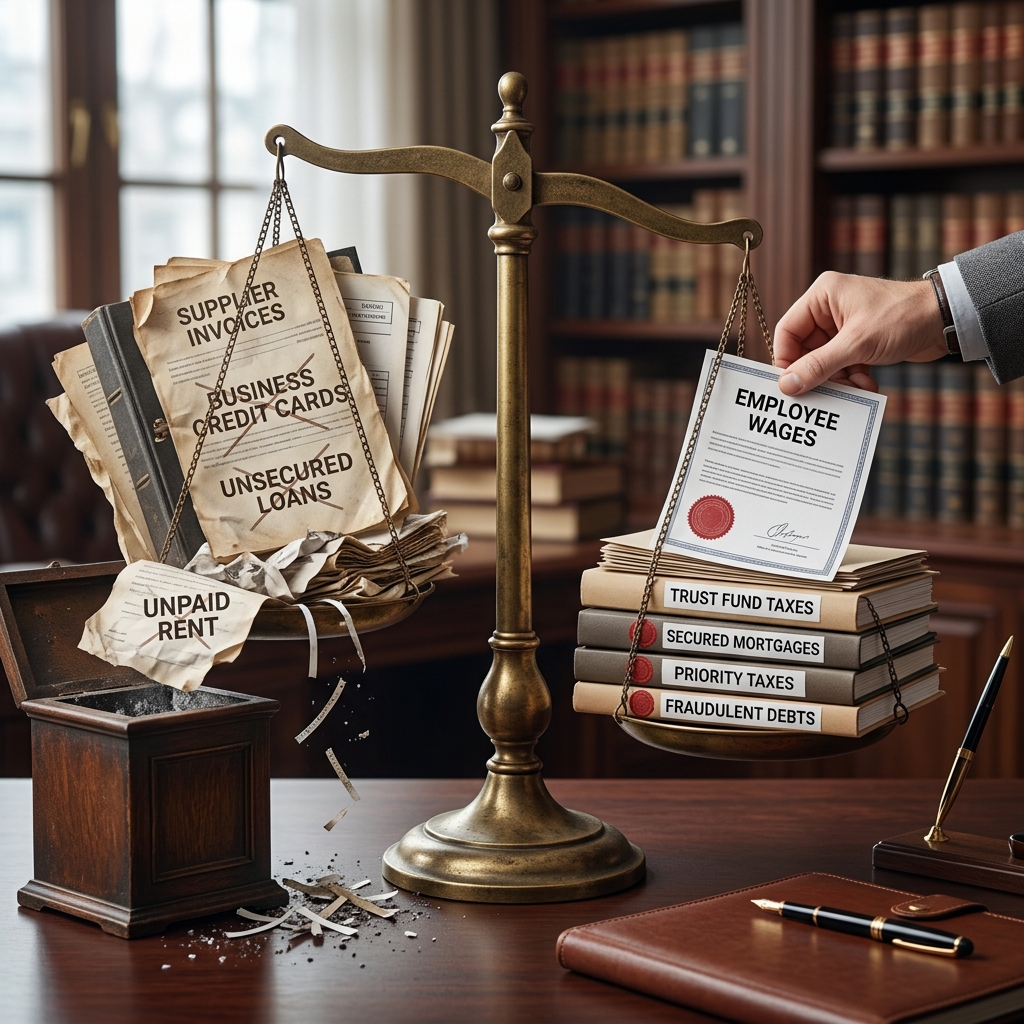
When a business can no longer keep up with its financial obligations, bankruptcy may offer a legal path to relief. A core feature of bankruptcy is the discharge of debt: a court order that eliminates a debtor’s personal liability for certain obligations and permanently stops most collection efforts on those debts. Understanding which business-related debts can be wiped out — and which will survive — is critical for owners deciding whether to file and which chapter to use.
This guide explains how discharge works in different types of bankruptcy, how it applies to corporations and individual owners, and what categories of debts are typically dischargeable or nondischargeable. It focuses on small and mid-sized businesses, where owners often mix personal and business obligations and need clarity before making a major legal and financial decision.
What Does a Bankruptcy Discharge Actually Do?
A bankruptcy discharge is a federal court order that releases the debtor from personal liability for specific debts and bars creditors from taking collection action on those discharged obligations. After discharge:
- The debtor is no longer legally required to pay discharged debts.
- Creditors cannot sue, garnish wages, or otherwise attempt to collect discharged debts.
- Any ongoing attempts at collection on discharged debts generally violate the discharge order and may expose the creditor to sanctions.
However, discharge does not affect every obligation. Certain debts remain legally enforceable despite the bankruptcy, and secured creditors may still enforce valid liens against collateral even after discharge. This distinction matters greatly in business cases, especially where loans are secured by equipment, inventory, or real estate.
Who Is the Debtor: Business Entity vs. Individual Owner
To understand which debts can be wiped out, you first need to know who the legal debtor is. The rules differ significantly depending on whether the filing debtor is:
- A corporation or LLC that legally owns the business;
- A partnership; or
- An individual (such as a sole proprietor) who personally operates the business.
In a corporate or LLC bankruptcy, the business entity is the debtor. The discharge affects the entity’s liability for its debts, but it does not automatically erase personal guarantees or other obligations of owners, officers, or related parties.
In a sole proprietorship or individual case, the owner is the debtor. The discharge can wipe out both business and personal debts for which that individual is personally liable, subject to the limitations in the Bankruptcy Code.
Common Bankruptcy Chapters Used by Businesses
Different chapters of the Bankruptcy Code handle discharge in different ways. For business-related debt, the most relevant chapters are:
| Chapter | Typical Use | Key Discharge Features |
|---|---|---|
| Chapter 7 | Liquidation of individuals or business entities | Individual debtors usually receive a broad discharge of pre-filing debts; corporate entities typically liquidate and cease operations, with no ongoing business. |
| Chapter 11 | Reorganization (or liquidation) for corporations, partnerships, and some individuals with complex debts | Confirmation of a plan generally discharges pre-confirmation debts, subject to statutory exceptions. |
| Chapter 13 | Repayment plan for individuals with regular income | Debts are discharged after completion of plan payments, with some categories dischargeable that are not in Chapter 7. |
Most small businesses either file Chapter 7 for liquidation or Chapter 11 for reorganization. Sole proprietors may also consider Chapter 13 if they have regular income and want to keep operating while repaying some debt.
What Types of Business Debts Are Usually Dischargeable?
The starting point in bankruptcy is that most unsecured business debts can be discharged, and many secured debts can be resolved so that any remaining deficiency balance is wiped out. Bankruptcy law then carves out specific exceptions, often tied to the nature of the debt or debtor misconduct.
Unsecured Business Debts
Unsecured debts are obligations not backed by collateral. In both Chapter 7 and Chapter 11, these are generally dischargeable, including:
- Business credit card balances used for ordinary operating expenses;
- Lines of credit and unsecured business loans;
- Amounts owed to vendors and suppliers for goods and services;
- Professional invoices (e.g., consultants, accountants, marketing firms);
- Lease-related obligations where the lease has been rejected or terminated (such as unpaid rent for commercial space).
For an individual debtor operating as a sole proprietor, these unsecured business debts are typically treated the same way as personal unsecured debts, such as medical bills and consumer credit cards, and they are usually eligible for discharge.
Secured Business Debts and Deficiency Balances
Secured debts are backed by collateral, such as machinery, vehicles, or real estate. Bankruptcy discharge does not automatically erase the lien, but it can remove the debtor’s personal liability for any unpaid balance.
Key concepts include:
- If collateral is surrendered or sold and the sale proceeds do not fully cover the loan, the remaining deficiency balance is usually treated as an unsecured claim and can be discharged.
- Secured creditors can still enforce their liens against the collateral after discharge, unless the lien is removed through the bankruptcy process.
- For businesses reorganizing under Chapter 11, secured debts may be restructured in the plan, potentially altering payment terms while leaving liens in place.
Contract and Lease Obligations
Business contracts and leases often give rise to sizable liabilities. In bankruptcy:
- The debtor may choose to assume or reject executory contracts and unexpired leases (those where material performance is still owed on both sides).
- Rejection of a lease or contract typically converts future obligations into unsecured claims, which are generally dischargeable if not paid in the case.
- Past-due amounts under rejected commercial leases, service agreements, or equipment rentals are often treated as unsecured debts and may be discharged.
Debts That Are Often Not Dischargeable
Congress has identified certain types of debts that are so important or tied to misconduct that they are excepted from discharge. Section 523 of the Bankruptcy Code lists numerous categories that individual debtors cannot wipe out, and some of these are also relevant in cases where business owners are personally liable.
Domestic Support Obligations
Debts for child support, alimony, and similar domestic support obligations are not dischargeable in individual bankruptcy cases. If a business owner personally owes such obligations, they will remain fully collectible after the bankruptcy, regardless of the business’s financial condition.
Certain Tax Debts
Tax obligations receive special treatment. While some older income tax debts can be discharged if strict conditions are met, many tax liabilities survive bankruptcy, particularly recent or trust fund taxes.
Examples of tax-related debts that are often nondischargeable for individuals include:
- Recent income taxes that do not satisfy the statutory age and filing requirements;
- Taxes for which required returns were never filed or were filed late under certain circumstances;
- Trust fund taxes — amounts withheld from employees’ wages for Social Security, Medicare, and income tax that the employer failed to remit.
Businesses and owners should consult tax and bankruptcy professionals for case-specific advice, because the rules are technical and time-dependent.
Debts Arising from Fraud, Embezzlement, and Willful Misconduct
Debts tied to fraud or intentional wrongdoing are prime candidates for nondischargeability. Under section 523(a)(2), (4), and (6), certain obligations can be excluded from an individual’s discharge if the creditor proves its case in bankruptcy court.
Common examples include:
- Loans or trade credit obtained through false representations or omissions;
- Debts stemming from embezzlement, larceny, or misuse of entrusted funds;
- Liability for “willful and malicious” injury to another entity or its property;
- Certain obligations arising from fiduciary breaches by officers or managers.
These debts are not automatically excluded from discharge. Creditors must typically file an adversary proceeding — a lawsuit within the bankruptcy case — asking the court to declare the debt nondischargeable and prove the misconduct.
Other Statutory Exceptions
Additional categories of nondischargeable debt for individual debtors include:
- Certain educational loans and benefit overpayments;
- Debts arising from criminal restitution orders or fines;
- Liability for injuries caused by operating a vehicle while intoxicated.
While these may not be typical business obligations, they can affect business owners who are personally liable for both consumer and business-related debts.
How Chapter 7 and Chapter 11 Handle Business Debts
The chapter you choose has a direct impact on which debts are discharged and when. Below is a simplified comparison focusing on business-related obligations.
| Issue | Chapter 7 (Individual) | Chapter 11 (Business Entity or Individual) |
|---|---|---|
| Scope of discharge | Broad discharge of most pre-filing unsecured debts, including business obligations, subject to nondischargeability exceptions. | Confirmation of plan discharges most pre-confirmation debts; nondischargeable categories under section 523 still apply to individuals. |
| Secured debts | Debtor may surrender collateral; deficiency balances become unsecured and can be discharged. | Secured debts often restructured in the plan; collateral may be retained with modified terms or surrendered, with deficiency treated as an unsecured claim. |
| Business continuity | For individuals, may continue business on a smaller scale after discharge; corporate Chapter 7 usually ends the business. | Designed to allow continued operation while restructuring debts; can also be used for orderly liquidation. |
| Owner guarantees | Individual filing may discharge personal guarantees if not nondischargeable. | Corporate filing does not erase owners’ personal guarantees; owners may need their own cases for relief. |
Strategic Considerations for Small Business Owners
For small business owners, particularly those who have personally signed for loans or leases, deciding whether to file bankruptcy involves both legal and practical considerations. Key questions include:
- What am I personally liable for?
Identify which debts are in the business’s name only and which you have personally guaranteed. Only the debtor’s obligations are eligible for discharge in a given case. - Do I want to close or reorganize?
Chapter 7 is generally a liquidation; Chapter 11 is aimed at reorganization but may be more complex and expensive. - Are there nondischargeable debts?
Substantial tax liabilities, support obligations, or fraud-related claims may survive bankruptcy and require a separate strategy. - How important is collateral to future operations?
If essential equipment or property is pledged as collateral, you need to understand whether it can be retained, refinanced, or surrendered.
Consulting both a bankruptcy attorney and a tax professional is strongly recommended. Bankruptcy outcomes are highly fact-specific, and missteps — such as failing to list a debt or transferring assets inappropriately — can jeopardize the discharge or trigger litigation.
Frequently Asked Questions (FAQs)
1. Can all business debts be discharged in bankruptcy?
No. While many business-related debts, especially unsecured obligations, can be discharged, there are important exceptions. Tax debts, domestic support obligations, and debts arising from fraud or willful misconduct are often nondischargeable for individual debtors. Secured creditors may also continue to enforce liens against collateral even after discharge.
2. If my corporation files bankruptcy, are my personal guarantees wiped out?
Generally, no. A corporate or LLC bankruptcy affects the entity’s debts, not the separate personal obligations of owners or guarantors. Personal guarantees remain enforceable unless the individual files their own case and obtains a discharge that covers those obligations.
3. What happens to unpaid rent under my commercial lease?
In many business bankruptcies, the debtor may reject a commercial lease. Rejection converts future lease obligations to an unsecured claim. Past-due and future rent claims are then handled like other unsecured debts in the case and may be discharged in whole or in part, depending on the chapter and plan.
4. Are business tax debts always nondischargeable?
No. Some tax debts, especially older income taxes that meet specific criteria, can be discharged. However, trust fund taxes and many recent tax obligations are not dischargeable, particularly in individual cases. The exact treatment depends on timing, type of tax, and compliance history.
5. Can a creditor challenge the discharge of a specific business debt?
Yes. Creditors who believe their claims fall within nondischargeable categories — such as fraud, embezzlement, or willful and malicious injury — may file an adversary proceeding asking the bankruptcy court to declare that particular debt nondischargeable. If they prevail, the debtor remains liable for that obligation after the case.
References
- Discharge in Bankruptcy – Bankruptcy Basics — United States Courts. 2024-01-01. https://www.uscourts.gov/court-programs/bankruptcy/bankruptcy-basics/discharge-bankruptcy-bankruptcy-basics
- Which Business Debts are Discharged in Chapter 7 Bankruptcy? — Carelon Wellbeing Legal Support. 2023-06-01. https://hd.carelonwellbeing.com/hd/find-legal-support/resources/bankruptcy/legal-assist/which-business-debts-are-discharged-in-chapter-7-bankruptcy
- The Discharge in Chapter 11 — Bankruptcy Law Basics — Justia. 2023-05-15. https://www.justia.com/bankruptcy/docs/basics/chapter-11/discharge/
- Debts Eligible for Discharge in Chapter 11 Bankruptcy Explained — Elrod, Friedman & Zeldin LLP. 2024-02-20. https://elrolaw.com/blog/what-types-of-debts-are-eligible-for-discharge-in-a-chapter-11-bankruptcy/
- Bankruptcy Discharge: What It Means for Business Creditors — Jimerson Birr. 2026-02-12. https://www.jimersonfirm.com/blog/2026/02/the-bankruptcy-discharge-what-it-means-for-business-creditors/
- Declaring Bankruptcy — Internal Revenue Service. 2024-03-10. https://www.irs.gov/businesses/small-businesses-self-employed/declaring-bankruptcy
- Bankruptcy: Options for Small Businesses in Distress — City Bar Justice Center. 2016-09-01. https://www.citybarjusticecenter.org/wp-content/uploads/2016/09/Small-Business-Bankruptcy-Book.pdf
Similar Articles








Read full bio of Sneha Tete




