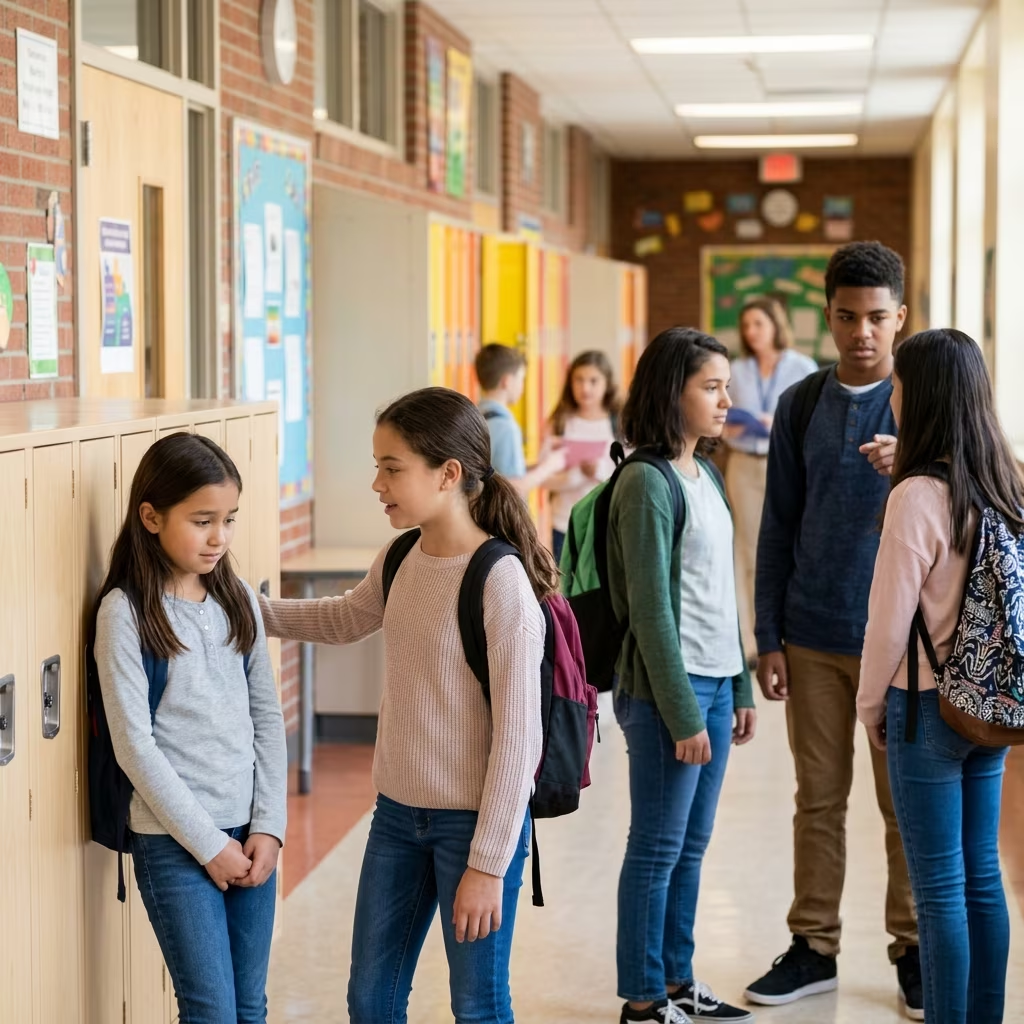
Families and educators in Massachusetts often hear the terms bullying and harassment used together, but under the law they are not identical concepts. Understanding the difference is essential for recognizing serious misconduct, protecting students’ civil rights, and knowing when schools are legally required to act.
This guide explains how Massachusetts law defines bullying in schools, how harassment overlaps with but differs from bullying, and what those distinctions mean in everyday situations. It also offers practical steps for parents, students, and school staff when harmful behavior occurs.
Core Legal Definitions: How the Law Sees Bullying and Harassment
What Counts as Bullying Under Massachusetts Law?
Massachusetts has a specific statute addressing bullying in schools. The law defines bullying as the repeated use of written, verbal, electronic expression, physical acts, or gestures directed at a victim that cause harm or significantly disrupt the educational environment.
Under the state statute, bullying involves conduct that does one or more of the following:
- Causes physical or emotional harm to a student.
- Damages a student’s property.
- Places a student in reasonable fear of harm to themselves or their property.
- Creates a hostile environment at school for the student.
- Infringes on the student’s rights at school.
- Materially and substantially disrupts the education process or the orderly operation of the school.
The law expressly includes cyberbullying—bullying through electronic means such as email, texting, social media, or other online communication.
What Is Harassment in the School Context?
Harassment in schools is typically defined through civil rights and anti-discrimination laws rather than the anti-bullying statute. Harassment generally refers to unwanted, harmful, or humiliating conduct that is based on a protected characteristic, such as race or disability.
Federal civil rights guidance and major research organizations describe harassment in schools as behavior that:
- Is unwelcome, threatening, harmful, or humiliating.
- Can be verbal, written, graphic, electronic, or physical.
- Is based on a student’s membership in a protected class (for example, race, color, national origin, sex, disability, religion, age, or other protected categories).
- Creates a hostile environment that interferes with a student’s ability to participate in or benefit from school programs.
Unlike bullying, harassment under civil rights standards does not always require repeated incidents or targeting of one specific person; a single severe episode can be enough if it is discriminatory and significantly impacts the school environment.
Bullying vs. Harassment: Key Legal Differences
| Feature | Bullying (Massachusetts school law) | Harassment (civil rights context) |
|---|---|---|
| Primary legal basis | State anti-bullying statute for schools. | Federal and state anti-discrimination and civil rights laws. |
| Protected characteristics required? | No. Bullying can be based on anything or nothing at all. | Yes. Must be based on protected traits such as race, sex, disability, etc. |
| Repetition of conduct | Generally requires repeated conduct or behavior likely to be repeated. | Can be a single severe incident if discriminatory and harmful. |
| Focus of analysis | Impact on safety, rights, and learning environment, including fear, harm, or disruption. | Whether conduct creates a hostile environment based on protected status. |
| Legal obligations of schools | Implement prevention and intervention plans; investigate and address bullying and cyberbullying. | Take prompt and effective action to stop discriminatory harassment and remedy its effects. |
How Bullying and Harassment Overlap in Real-Life Situations
In practice, many harmful behaviors in schools involve elements of both bullying and harassment. A student may be repeatedly targeted, physically threatened, and mocked with slurs about their race or disability. That same pattern of conduct can meet the definition of bullying under Massachusetts law and harassment under civil rights law.
Protected Classes and Discriminatory Harassment
Federal civil rights guidance identifies a number of protected classes relevant to school harassment:
- Race and color
- National origin
- Religion
- Sex (which can include sex stereotypes, gender identity, and sexual orientation in many contexts)
- Disability
- Age
When bullying behavior targets a student because of one of these characteristics, it is often considered discriminatory harassment and can trigger additional legal protections and obligations for the school.
Cyberbullying as Harassment
Cyberbullying can also qualify as harassment when it includes discriminatory threats, slurs, or humiliating content directed at a student’s protected status. Because Massachusetts law includes cyberbullying within the definition of bullying, the same online conduct may be both illegal bullying under state law and discriminatory harassment under federal law.
Massachusetts School Responsibilities and Policy Requirements
Bullying Prevention and Intervention Plans
Massachusetts law requires public schools to adopt comprehensive bullying prevention and intervention plans. These plans typically must:
- Define bullying and cyberbullying consistently with the state statute.
- Prohibit bullying, cyberbullying, and retaliation against individuals who report incidents.
- Describe procedures for reporting, investigating, and responding to bullying.
- Include strategies for protecting students who are more vulnerable to being targeted, such as those with disabilities or perceived differences.
The Massachusetts Department of Elementary and Secondary Education provides guidance to schools on implementing these plans and on complying with state law.
Civil Rights Obligations for Harassment
In addition to state anti-bullying requirements, schools that receive federal funding must follow federal civil rights laws enforced by agencies such as the U.S. Department of Education’s Office for Civil Rights. When discriminatory harassment occurs, these laws require schools to:
- Investigate promptly once they know or reasonably should know about potential harassment.
- Stop the harmful conduct, prevent its recurrence, and remedy its effects on the student and the school community.
- Consider appropriate discipline, safety planning, and supportive measures.
Failure to respond adequately to discriminatory harassment can lead to civil rights investigations and potential legal remedies.
Recognizing Harmful Conduct: Practical Warning Signs
Indicators of Bullying
While the legal definitions are specific, parents and educators can watch for practical signs that suggest bullying may be occurring:
- Repeated teasing, name-calling, or exclusion directed at one student.
- Physical aggression, threats, or intimidation in the classroom, on the bus, or online.
- Rumors or embarrassing posts circulating on social media about a student.
- Sudden changes in mood, school performance, or attendance.
- A student expressing fear about going to school or using certain spaces.
Indicators of Harassment
Harassment may show similar patterns, but with a clear link to a protected characteristic:
- Use of racial slurs, insults about religion, or jokes about disability.
- Targeting a student with derogatory comments about gender, gender identity, or sexual orientation.
- Distribution of offensive images or messages mocking a student’s protected status.
- Students or staff minimizing or ignoring discriminatory comments as “just jokes.”
Steps for Parents and Students When Bullying or Harassment Occurs
Document and Report the Behavior
When harmful conduct happens, documentation is crucial. Parents and students can:
- Write down incidents: dates, times, locations, what happened, and who was involved.
- Save electronic evidence: screenshots of texts, social media posts, or emails showing bullying or harassment.
- Report in writing to teachers, counselors, or administrators, following the school’s policy and using any designated reporting forms.
Request Safety and Support Measures
Depending on the severity and frequency of the conduct, parents may ask the school to put in place safety and support measures, such as:
- Adjusting class schedules or seating arrangements.
- Creating no-contact expectations between the aggressor and the target.
- Providing access to counseling or mental health support.
- Ensuring supervision in areas where bullying has occurred.
Consider Additional Legal or Administrative Remedies
If a school does not adequately address bullying or harassment, families may have options beyond the local level, which can include:
- Raising concerns with the school district or school board.
- Filing complaints with state education authorities when state bullying laws are implicated.
- Submitting a civil rights complaint to the U.S. Department of Education’s Office for Civil Rights if discriminatory harassment is involved.
Because these options can carry complex legal implications, families often consult with attorneys experienced in education or civil rights law before pursuing formal complaints or litigation.
Prevention Strategies for Schools: Building Safe and Inclusive Environments
Policy, Training, and Clear Expectations
Research on bullying and harassment in K–12 schools emphasizes that robust prevention involves policy, education, and culture. Effective schools typically:
- Adopt clear codes of conduct that forbid bullying, cyberbullying, and discriminatory harassment.
- Train staff on how to recognize, intervene in, and report bullying and harassment.
- Communicate expectations to students and families through handbooks, websites, and meetings.
Promoting Respect and Inclusion
Preventing bullying and harassment also requires a positive school climate. National psychological and public health guidance suggests that schools:
- Encourage respect for diversity and actively challenge stereotypes.
- Reinforce positive peer interactions and bystander intervention.
- Include social-emotional learning and conflict resolution in the curriculum.
- Engage families and community partners in prevention efforts.
Frequently Asked Questions
Is every instance of name-calling considered bullying?
Not every isolated insult meets the legal definition of bullying. Massachusetts law focuses on repeated conduct that causes harm, fear, or disruption. That said, schools can and often do address disrespectful behavior even when it does not yet meet the legal threshold.
Can a single incident be treated as harassment?
Yes. Under civil rights standards, a single severe act—such as a serious threat or highly degrading attack based on race or disability—can be harassment if it creates a hostile environment or significantly interferes with a student’s ability to learn.
When does bullying become a civil rights issue?
Bullying becomes a civil rights issue when the harmful behavior is linked to a protected characteristic, like race, sex, or disability, and creates a hostile environment. At that point, schools may have obligations under federal anti-discrimination laws in addition to state bullying laws.
Are schools responsible for cyberbullying that happens off campus?
Massachusetts law includes cyberbullying, and schools may be required to act when off-campus online conduct materially and substantially disrupts the learning environment or creates a hostile environment at school. Specific responses depend on the facts and applicable policies.
What should a student do if they are afraid to report bullying?
Students can seek support from a trusted adult such as a counselor, nurse, or teacher and may choose to report anonymously if the school’s policy allows it. Documenting incidents and involving parents or guardians can help ensure the situation is taken seriously.
References
- Massachusetts law about bullying and cyberbullying — Mass.gov. 2024-01-02. https://www.mass.gov/info-details/massachusetts-law-about-bullying-and-cyberbullying
- Part I, Title XII, Chapter 71, Section 37O — Massachusetts General Laws. 2014-09-09. https://malegislature.gov/Laws/GeneralLaws/PartI/TitleXII/Chapter71/Section37O
- Bullying Prevention and Intervention — Massachusetts Department of Elementary and Secondary Education. 2022-08-17. https://www.doe.mass.edu/sfs/bullying/
- What is the Difference Between Bullying and Harassment? — PACER Center. 2023-05-10. https://www.pacer.org/bullying/info/questions-answered/bullying-harassment/
- Bullying, Harassment and Electronic Aggression Prevention — American Psychological Association. 2021-06-15. https://www.apa.org/pi/lgbt/programs/safe-supportive/bullying
- Massachusetts Law About Bullying and Cyberbullying: Student and Family Support — Massachusetts Department of Elementary and Secondary Education. 2022-08-17. https://www.doe.mass.edu/sfs/bullying/
- A Social-Ecological Review of Risk and Protective Factors for Sexual Harassment and Bullying in Schools — MDPI, Behavioral Sciences. 2025-01-05. https://www.mdpi.com/2076-328X/15/1/61