Bullying and the Law: Rights, Rules, and School Responsibilities
Understanding how federal and state laws protect students from bullying and what schools must do to respond.
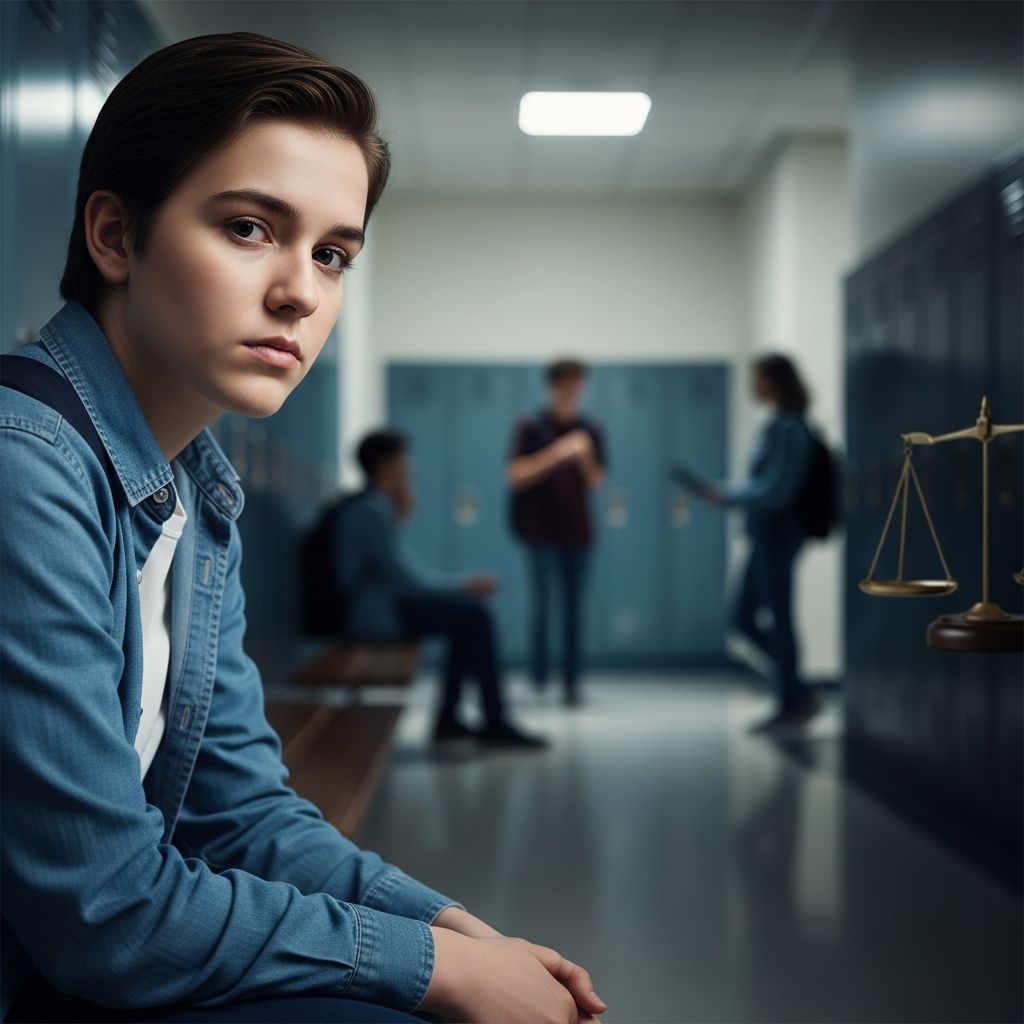
How the Law Defines and Addresses School Bullying
Bullying in schools is more than a behavioral issue—it’s a legal concern that triggers specific obligations for educators and administrators. In the United States, bullying is addressed through a combination of federal civil rights laws and state-level anti-bullying statutes. These laws work together to define what counts as bullying, outline when schools must intervene, and establish consequences for harmful behavior.
At the federal level, there is no single law titled “the anti-bullying law.” Instead, federal protections come from civil rights statutes that prohibit discrimination based on certain characteristics. When bullying is tied to a student’s race, color, national origin, sex, disability, or religion, it can create a discriminatory environment that schools are legally required to stop.
State laws, on the other hand, are more direct. Every state and the District of Columbia has enacted some form of anti-bullying legislation that applies specifically to K–12 schools. These laws typically require school districts to adopt written anti-bullying policies, define prohibited behaviors, and set procedures for reporting, investigating, and responding to incidents.
Key Federal Laws That Protect Students from Harassment
Federal law does not cover every instance of bullying, but it does step in when bullying crosses the line into unlawful harassment. The main federal statutes that apply in school settings include:
- Title VI of the Civil Rights Act of 1964 – Prohibits discrimination based on race, color, or national origin in any program receiving federal funds, including public schools.
- Title IX of the Education Amendments of 1972 – Prohibits sex-based discrimination in education, including sexual harassment and gender-based bullying.
- Section 504 of the Rehabilitation Act of 1973 – Requires schools to provide a free appropriate public education (FAPE) to students with disabilities and prohibits disability-based harassment.
- The Individuals with Disabilities Education Act (IDEA) – Ensures students with disabilities receive special education services and related supports; bullying that interferes with FAPE can trigger IDEA obligations.
- Title II of the Americans with Disabilities Act (ADA) – Prohibits discrimination against individuals with disabilities in public entities, including public schools.
When bullying is based on one of these protected characteristics and is severe, pervasive, or persistent enough to create a hostile environment, federal law requires the school to take prompt and effective action to end it and prevent recurrence.
When Schools Must Act Under Federal Law
Schools are not legally required to intervene in every conflict between students, but they must act when bullying rises to the level of unlawful harassment. The U.S. Department of Education’s Office for Civil Rights (OCR) has made clear that schools have a duty to respond when:
- The behavior is based on a protected characteristic (race, sex, disability, etc.).
- The conduct is serious enough that it interferes with or limits a student’s ability to participate in or benefit from school programs.
- The school knew or should have known about the harassment.
For example, if a student with a learning disability is repeatedly mocked and excluded from group work because of their disability, and this leads to missed instruction and emotional distress, the school may be violating Section 504 or IDEA. Similarly, if a student is targeted with racial slurs and threats that make them afraid to attend school, OCR would expect the school to investigate and take corrective action.
State Anti-Bullying Laws: What They Typically Require
While federal law sets a baseline for when schools must act, state laws provide more detailed rules about how schools should prevent and respond to bullying. Although these laws vary by state, most share several common elements:
- Written anti-bullying policies – School districts must adopt and implement a formal policy that defines bullying and sets out procedures for reporting and investigation.
- Clear definitions – Laws usually define bullying as intentional, repeated behavior that harms or intimidates another student, including physical, verbal, social, and electronic forms.
- Reporting and investigation procedures – Policies must include how students, parents, and staff can report bullying and how schools will investigate complaints.
- Consequences for perpetrators – State laws often require schools to impose disciplinary measures, which can range from counseling and detention to suspension or expulsion.
- Support for victims – Many states require schools to provide support services such as counseling, safety plans, or academic accommodations for students who have been bullied.
- Training and education – Some states mandate that staff receive training on bullying prevention and that students receive age-appropriate instruction on respectful behavior and digital citizenship.
States also differ in whether they require schools to report bullying incidents to a state education agency and whether they allow discipline for off-campus behavior that affects the school environment (such as cyberbullying).
How Schools Are Expected to Respond to Bullying Incidents
When a bullying incident is reported, schools are expected to follow a structured process to ensure a fair and effective response. While exact procedures depend on state law and district policy, a typical response includes:
- Immediate safety assessment – Determine whether the victim or others are in immediate danger and take steps to ensure safety, such as separating students or increasing supervision.
- Prompt investigation – Interview the student who was bullied, the alleged bully, and any witnesses. Review any relevant evidence, such as messages, videos, or written statements.
- Documentation – Keep detailed records of the incident, the investigation, and any actions taken. This is important both for accountability and for tracking patterns over time.
- Appropriate consequences – Apply discipline that is proportionate to the behavior and consistent with the school’s code of conduct and state law.
- Support for the victim – Offer counseling, academic support, or other services to help the student recover and feel safe at school.
- Follow-up and monitoring – Check in regularly to ensure the bullying has stopped and that the victim feels safe. Adjust the response if needed.
Schools must also be careful not to retaliate against students who report bullying or participate in an investigation. Most state laws and federal civil rights protections explicitly prohibit retaliation.
Special Protections for Students with Disabilities
Students with disabilities are especially vulnerable to bullying, and the law provides additional safeguards for them. Under Section 504 and IDEA, schools must ensure that students with disabilities have equal access to education. If bullying interferes with that access, the school has a legal obligation to act.
For example:
- If a student with an IEP or 504 plan is bullied in a way that causes them to miss services (such as refusing to attend speech therapy or counseling), the school must address the bullying and ensure the student can still receive their services.
- If bullying creates a hostile environment that makes it difficult for a student with a disability to learn or participate in school activities, the school must take steps to eliminate the hostile environment and provide any necessary compensatory services.
- Schools may need to revise a student’s IEP or 504 plan to include safety measures, such as a modified schedule, increased supervision, or counseling.
Parents of students with disabilities should document any bullying incidents and communicate with the school about how the behavior is affecting their child’s education and well-being.
What Parents and Students Can Do When Bullying Occurs
When bullying happens, parents and students have important rights and options. Knowing what steps to take can help ensure that the school responds appropriately and that the student is protected.
Key actions include:
- Document everything – Keep a record of dates, times, locations, what happened, who was involved, and any witnesses. Save copies of messages, emails, or social media posts if the bullying is online.
- Report the behavior – Follow the school’s reporting procedures, whether that means talking to a teacher, counselor, or administrator, or submitting a written complaint.
- Request a meeting – Ask to meet with school staff to discuss the incident, the investigation, and what steps the school plans to take.
- Follow up in writing – After meetings or conversations, send a brief email summarizing what was discussed and any agreements made.
- Know when to escalate – If the school does not respond adequately, parents can contact the district’s central office, file a complaint with the state department of education, or, in cases involving discrimination, file a complaint with the U.S. Department of Education’s Office for Civil Rights.
Students should also be encouraged to speak up when they see bullying, support peers who are targeted, and use school reporting systems when they feel safe doing so.
Legal Consequences for Bullies and Schools That Fail to Act
Bullying can have serious legal consequences for both the student who engages in it and the school that fails to respond appropriately.
For students, consequences can include:
- School discipline such as detention, suspension, or expulsion.
- Criminal charges in extreme cases, such as assault, threats, or cyberstalking, depending on state law.
- Civil lawsuits if the bullying causes emotional harm, physical injury, or other damages.
For schools, failure to address bullying that rises to the level of unlawful harassment can lead to:
- Investigations by the U.S. Department of Education’s Office for Civil Rights.
- Loss of federal funding in rare, severe cases.
- Civil lawsuits filed by parents or students, which may result in monetary damages and court-ordered changes to school policies.
Schools that have clear, well-implemented anti-bullying policies and respond promptly and effectively to incidents are much less likely to face legal liability.
Prevention: Building a Culture Where Bullying Is Not Tolerated
While the law sets important rules for how schools must respond to bullying, the most effective approach is prevention. Schools that create a positive, inclusive climate are better able to stop bullying before it starts.
Effective prevention strategies include:
- Implementing evidence-based bullying prevention programs that teach empathy, conflict resolution, and bystander intervention.
- Providing regular training for staff on recognizing, reporting, and responding to bullying.
- Engaging students, parents, and the community in developing and reviewing anti-bullying policies.
- Establishing clear expectations for behavior and consistently enforcing school rules.
- Promoting digital citizenship and responsible use of technology to reduce cyberbullying.
When prevention is combined with strong legal protections and clear procedures for intervention, schools can create safer, more supportive environments for all students.
Frequently Asked Questions
Does the law require schools to stop all bullying?
Federal law does not require schools to stop every minor conflict or isolated incident, but it does require them to act when bullying is based on a protected characteristic and creates a hostile environment that interferes with a student’s education. State laws generally require schools to have policies and procedures to prevent and respond to bullying, but the exact requirements vary by state.
Can schools discipline students for bullying that happens off campus?
In many states, yes. Schools can discipline students for off-campus behavior, including cyberbullying, if it has a substantial connection to the school environment—such as when it disrupts the school, targets other students, or affects the safety and well-being of the school community. State laws and court decisions determine the limits of this authority.
What should I do if my child is being bullied at school?
Document the incidents, report them to the school following its procedures, and request a meeting with school staff. If the bullying is related to a protected characteristic or involves a student with a disability, emphasize how it is affecting your child’s access to education. If the school does not respond adequately, you can escalate the issue to the district, state department of education, or federal civil rights office.
Can a student be expelled for bullying?
Yes, in many cases. State laws and school district policies typically allow for serious disciplinary actions, including suspension and expulsion, for repeated or severe bullying, especially if it involves threats, violence, or cyberbullying. The specific consequences depend on the nature of the behavior and the school’s code of conduct.
Are private schools subject to the same anti-bullying laws as public schools?
Private schools are generally not subject to the same state anti-bullying statutes that apply to public schools, but they may still be covered by federal civil rights laws if they receive federal funding. Private schools are also bound by their own policies and contracts with students and families, and they can face legal liability if they fail to address serious bullying that causes harm.
References
- Bullying Laws: Your Child’s Rights at School — Understood.org. Accessed 2025. https://www.understood.org/en/articles/bullying-laws
- State Anti-Bullying Laws: A Blueprint for Prevention — Public Health Law Research, Temple University. June 2015. https://phlr.temple.edu/sites/phlr/files/documents/Publication%20Documents/PHLRKnowledgeAsset_AntiBullying_Full_9June15.pdf
- Laws, Policies & Regulations — StopBullying.gov, U.S. Department of Health and Human Services. https://www.stopbullying.gov/resources/laws
- Anti-Bullying Laws in the United States — Journal of Adolescent Health, PubMed. 2024. https://pubmed.ncbi.nlm.nih.gov/40878712/
- Office for Civil Rights: Harassment — U.S. Department of Education. https://www2.ed.gov/about/offices/list/ocr/docs/harassment.html
Similar Articles








Read full bio of medha deb