
Building a Strong Employment Case: Evidence and Trial Preparation
A practical guide to gathering, organizing, and presenting evidence effectively in employment lawsuits from pre-suit planning through trial.
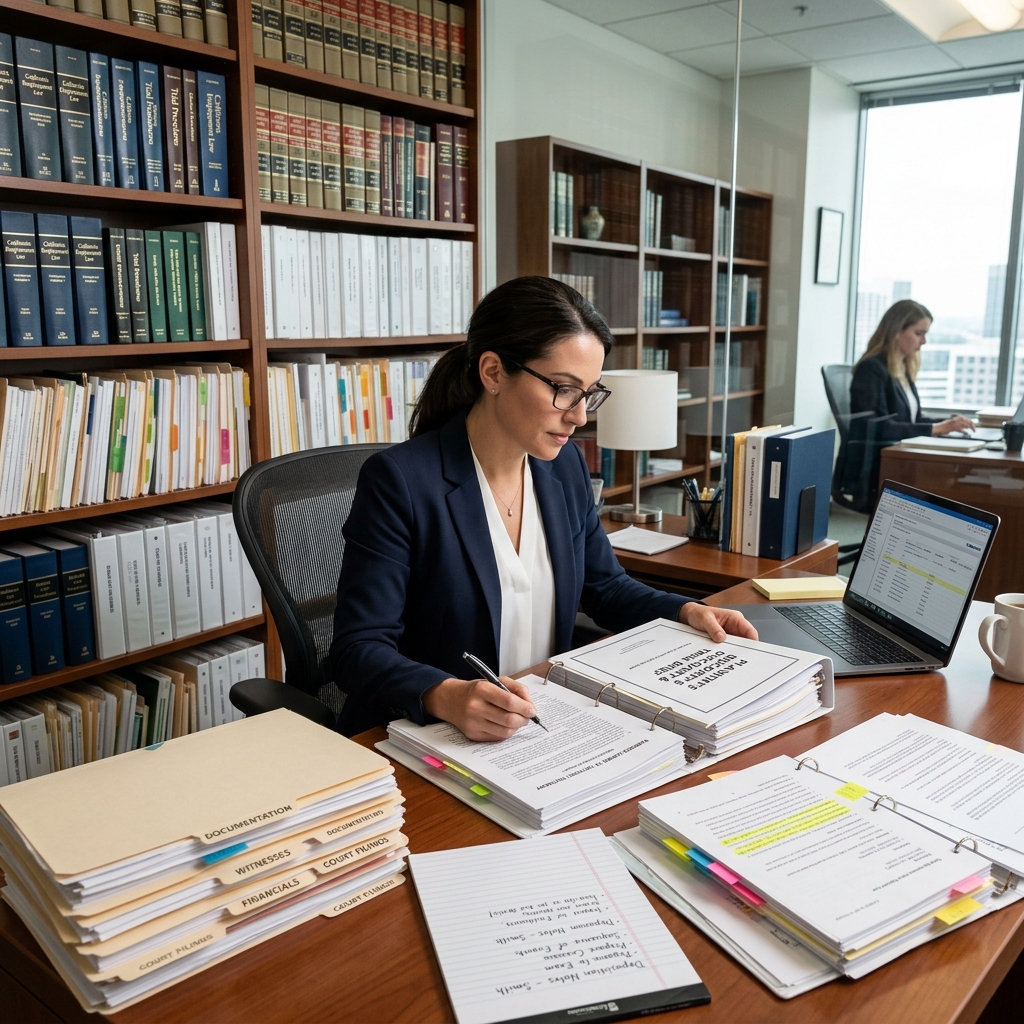
Employment disputes often turn on the strength of the evidence presented to the judge or jury. Emails, policies, witness testimony, and digital records can either support a claim of discrimination, harassment, or retaliation, or reinforce an employer’s defense that its actions were lawful and fair. Understanding how evidence works and how to prepare for trial is critical for employees, employers, and attorneys involved in these cases.
Understanding Evidence in Employment Lawsuits
Evidence in employment litigation includes any information that helps prove or disprove a key fact in the case. Courts focus on relevance—whether a piece of information makes an important fact more or less likely. Evidence may be direct, such as a statement admitting bias, or circumstantial, such as patterns of disciplinary actions that suggest unfair treatment.
Common categories of evidence in employment disputes include:
- Documentary evidence – emails, policies, performance reviews, payroll records, and contracts.
- Digital communications – text messages, internal messaging apps, social media posts, and collaboration platform records.
- Testimonial evidence – statements from the employee, supervisors, coworkers, HR personnel, and expert witnesses.
- Physical and visual evidence – videos, photographs, workplace postings, or physical items showing workplace conditions.
- Official records – Equal Employment Opportunity Commission (EEOC) filings, internal investigation reports, and medical or leave documentation.
Key Types of Evidence in Employment Cases
While every case is unique, certain types of evidence frequently play central roles in employment litigation. Gathering and organizing these materials early helps shape both settlement negotiations and trial strategy.
Workplace Emails and Digital Messages
Internal emails and messaging app conversations often reveal how managers and HR staff discussed performance, complaints, or discipline. These records can show:
- The employer’s stated reasons for actions like termination or demotion.
- Inconsistencies between public explanations and internal discussions.
- Bias or hostility toward protected characteristics, such as race, gender, age, or disability.
For employers, well-documented, consistent emails can support the position that decisions were based on legitimate business reasons and applied uniformly.
Policies, Handbooks, and Training Records
Written policies and employee handbooks are central to many discrimination, harassment, and retaliation claims. In court, these documents help indicate:
- Whether the employer had anti-discrimination and anti-harassment policies in place.
- Whether employees were trained on complaint procedures and workplace expectations.
- How discipline and performance management were supposed to be handled.
Employers often introduce policies and proof of training to show they took reasonable steps to prevent unlawful conduct, while employees may argue those policies were ignored, inconsistently applied, or inadequately enforced.
Performance Reviews and Disciplinary Records
Performance evaluations and disciplinary notices often become critical exhibits. These records can demonstrate:
- A long history of strong performance that conflicts with a sudden claim of poor work.
- Patterns of minor issues being used as a justification for termination after a complaint.
- Whether similar conduct by other employees resulted in different consequences.
Courts frequently examine whether the documentation is consistent over time or appears to shift around the time of the alleged discrimination or retaliation.
Payroll, Scheduling, and Leave Records
Payroll data and schedules help support claims involving unpaid wages, overtime disputes, or changes in hours. Leave records and accommodation requests are vital in disability and family leave cases. These records can show:
- Who worked overtime and whether they were paid properly.
- Whether leave requests were granted or denied consistently.
- Timing between protected activity (e.g., filing a complaint or requesting medical leave) and adverse actions.
Witness Testimony and “Me Too” Evidence
Testimony from coworkers and former employees can corroborate or challenge the key narrative. Some cases involve so-called “me too” evidence, where other employees testify about similar experiences with harassment or discrimination by the same decision-makers.
Courts sometimes admit this type of testimony when it helps show a broader atmosphere of discrimination or a pattern of biased decisions, though judges may limit it to avoid prejudice or confusion.
External Records and Agency Filings
In many discrimination cases, employees first file a charge with a government agency such as the EEOC or a state civil rights commission. Responses to these charges and investigation records may later be used in court to show:
- How the employer explained its actions to the agency.
- Any findings of cause or no cause by the agency.
- Whether internal explanations differed from official responses.
Collecting and Preserving Evidence Safely
Effective trial preparation begins long before a case reaches the courtroom. Both employees and employers need strategies to preserve relevant information and avoid spoliation (destruction or alteration of evidence), which can lead to sanctions or adverse inferences at trial.
Practical Steps for Employees
Employees considering a claim should focus on preserving evidence they lawfully have access to. Consider the following steps before or shortly after consulting an attorney:
- Create a time-stamped log of key incidents, noting dates, locations, people involved, and a brief description.
- Save personal copies of performance reviews, offer letters, and other documents provided directly to you.
- Avoid deleting messages related to your employment, including texts and personal emails.
- Do not take confidential data or violate company policies when preserving information; consult counsel if unsure.
Preservation Duties for Employers
Once an employer reasonably anticipates litigation, it typically must issue a litigation hold to prevent deletion of relevant records. Steps often include:
- Notifying key custodians (HR, managers, IT) to preserve emails, messages, and files.
- Suspending routine deletion or overwriting policies for relevant systems.
- Identifying and preserving data from laptops, phones, cloud accounts, and HR platforms.
- Documenting preservation efforts to demonstrate good faith compliance.
Managing Digital Evidence
Modern employment cases frequently involve large volumes of digital information, including email, chat logs, collaboration documents, and metadata. Using e-discovery tools and structured workflows helps litigation teams:
- Search and filter large datasets for key terms and custodians.
- Tag documents by issue (e.g., discipline, complaints, performance).
- Track which exhibits will be used with which witnesses at trial.
From Discovery to Trial: Organizing Your Case
Discovery—the formal exchange of information between the parties—shapes how the evidence will be used at trial. Effective organization during discovery reduces surprises and supports a coherent trial narrative.
| Phase | Main Tasks | Purpose |
|---|---|---|
| Early Case Assessment | Review initial documents, interview key witnesses, identify claims and defenses. | Determine case strengths, weaknesses, and settlement posture. |
| Discovery | Serve requests for documents, interrogatories, and take depositions. | Gather facts, lock in testimony, and obtain internal communications. |
| Pretrial Motions | File motions on legal issues and evidentiary challenges. | Shape what evidence the jury will be allowed to hear. |
| Trial Preparation | Organize exhibits, prepare witnesses, craft opening and closing statements. | Build a compelling, legally sound story for the courtroom. |
Preparing Witnesses for Employment Trials
Witness credibility and clarity often influence the outcome of an employment case as much as the documents themselves. Trial teams need to prepare both friendly and adverse witnesses carefully.
Employee and Plaintiff Witnesses
For employees bringing claims, preparation typically includes:
- Reviewing key documents and prior statements, such as agency charges or deposition transcripts.
- Discussing the central themes of the case and what must be proven.
- Practicing clear, consistent descriptions of events, timelines, and decision-makers.
- Anticipating difficult cross-examination questions about performance, discipline, or conflicting evidence.
Employer and Management Witnesses
Managers, HR representatives, and other employer witnesses also require focused preparation:
- Reviewing policies, investigation reports, and decisions they made.
- Understanding the legal elements of the claims and defenses, such as what constitutes retaliation or hostile environment.
- Practicing answers to questions about consistency of discipline and handling of complaints.
- Preparing to explain the business reasons for actions taken, without appearing evasive or hostile.
Expert Witnesses
In some cases, expert witnesses may testify about topics such as economic damages, statistical patterns in employment decisions, or psychological harm. Trial preparation for experts typically involves:
- Ensuring their methodology and opinions meet evidentiary standards.
- Aligning expert testimony with the broader case narrative.
- Preparing clear presentations of complex data for a lay jury.
Crafting a Trial Strategy Around Evidence
Once evidence has been gathered and analyzed, trial teams must decide how to present it in a way that is persuasive and legally admissible. This includes both strategic decisions and detailed planning.
Defining Themes and Storylines
Employment trials often hinge on competing stories: for example, whether the case is about legitimate performance management or masked discrimination. Effective themes:
- Connect key facts to the legal elements of the claims and defenses.
- Use a timeline to show cause-and-effect relationships, such as complaint followed by adverse action.
- Stay consistent across opening statement, witness examinations, and closing argument.
Organizing Exhibits for Maximum Impact
Exhibit management is a practical but crucial part of trial preparation. Teams typically:
- Create a comprehensive exhibit list, marking which documents support each claim or defense.
- Prepare visual aids, such as charts or timelines, to help the jury understand complex sequences of events.
- Plan the order of document introduction to avoid confusion and repetition.
Handling Adverse and Damaging Evidence
Almost every employment case contains unfavorable facts or documents. Effective trial preparation includes strategies for:
- Contextualizing negative performance reviews or complaints against the plaintiff.
- Showing that similar incidents did not result in discipline for other employees, or that criticisms reflect bias.
- Addressing inconsistencies candidly rather than appearing to conceal them.
What Happens in the Courtroom?
Understanding the structure of trial helps parties appreciate how evidence will be presented and evaluated. While procedures vary by jurisdiction, most employment trials follow a similar pattern.
- Jury Selection (Voir Dire) – The court and attorneys question potential jurors to uncover biases and select a fair panel.
- Opening Statements – Each side outlines the evidence they plan to present and the story it will support.
- Plaintiff’s Case-in-Chief – The employee’s counsel calls witnesses, introduces exhibits, and may present expert testimony.
- Defense Case-in-Chief – The employer’s counsel presents its witnesses, policies, and alternative explanations for disputed events.
- Rebuttal Evidence – Limited additional evidence may respond to matters raised by the other side.
- Closing Arguments – Each side explains how the evidence supports their legal position and asks the jury for a particular verdict.
- Jury Instructions and Deliberation – The judge instructs the jury on the law, and the jury deliberates based on the admitted evidence.
Frequently Asked Questions
What is the most important type of evidence in an employment case?
There is no single “most important” type of evidence; success often depends on how documents, testimony, and timelines support a consistent legal theory. Still, internal emails, performance records, and witness testimony from supervisors and coworkers are frequently pivotal.
Can social media posts be used as evidence?
Yes. Public social media content and sometimes private messages can be used in employment litigation if they are relevant and properly obtained. Courts may consider posts about workplace events, performance, or attitudes toward protected groups when deciding discrimination or retaliation claims.
How do courts decide whether to allow “me too” testimony?
Judges typically balance the probative value of “me too” evidence against potential prejudice or confusion. When testimony from other employees shows a pattern of similar conduct by the same decision-makers and relates closely to the issues in the case, courts are more likely to admit it.
What should I do if my employer isn’t producing key documents during discovery?
Attorneys often start with meet-and-confer efforts to resolve disputes about missing evidence. If that fails, they may file motions asking the court to compel production, and judges can order documents to be produced or impose sanctions if parties do not comply with discovery obligations.
Do all employment cases go to trial?
No. Many cases settle or are resolved through motions before trial. However, meticulous evidence collection and trial preparation remain essential because strong evidence improves settlement leverage and positions parties better if the case proceeds to the courtroom.
References
- Evidence in Employment Litigation: Preparing for Trial — Super Lawyers. 2022-08-16. https://www.superlawyers.com/resources/employment-litigation/evidence-in-employment-litigation-preparing-for-trial/
- Trial Preparation Checklist for Litigation Teams — Everlaw. 2023-06-01. https://www.everlaw.com/blog/ediscovery-best-practices/trial-preparation-complete-guide/
- Trying Your First Employment Law Case — American Bar Association, Labor and Employment Law Section. 2024-03-01. https://www.americanbar.org/groups/labor_law/resources/magazine/2024-spring/trying-your-first-employment-law-case/
- Finding and Using Evidence to Win Your Employment Case — Advocate Magazine. 2023-03-01. https://www.advocatemagazine.com/article/2023-march/finding-and-using-evidence-to-win-your-employment-case
- Introducing Propensity Evidence in Employment Discrimination Cases — Boston Employment Attorney Blog. 2018-10-10. https://www.bostonemploymentattorneyblog.com/employment-discrimination-claims-and-the-admissibility-of-me-too-or-propensity-evidence/
- Trial in Employment Law Cases: What to Expect — Bohm Law. 2020-01-15. https://bohmlaw.com/trial/
Similar Articles








Read full bio of medha deb




