
Building Age-Inclusive Workplaces: Law, Risk, and HR Strategy
Learn how employment laws, HR practices, and culture work together to prevent age discrimination and support workers of all generations.
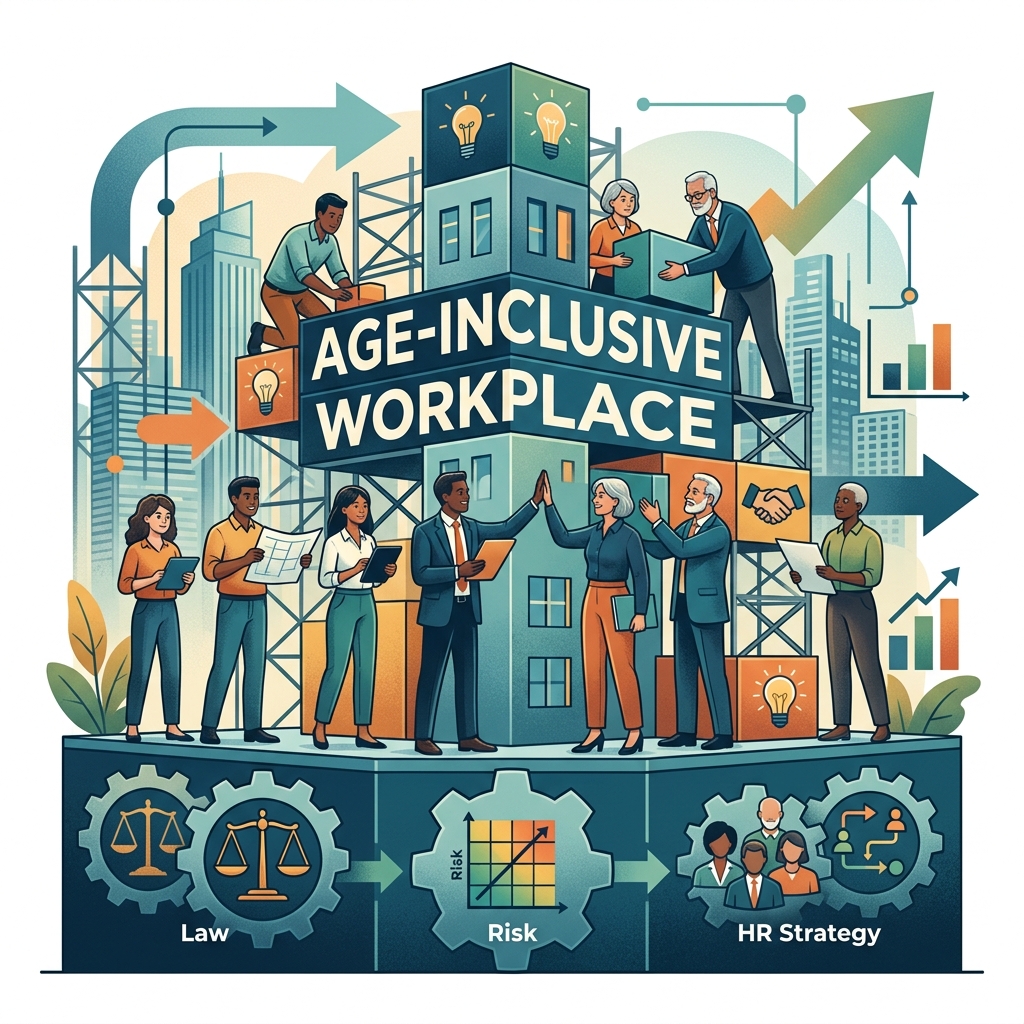
Age discrimination and ageism are increasingly visible risks in modern organizations, especially as workforces become more multigenerational. In the United States, employers must comply with federal and state protections for older workers while also managing cultural bias and structural barriers that affect employees of all ages. This article explains the legal framework, common risk areas, and strategic HR practices needed to build a truly age-inclusive workplace.
Understanding Age Discrimination and Ageism
Age discrimination occurs when an applicant or employee is treated less favorably because of age in any aspect of employment, from hiring and pay to promotion and termination. By contrast, ageism refers to stereotypes, prejudice, and assumptions about people based on age, which may or may not rise to the level of unlawful discrimination.
Age bias can affect both older and younger workers, but U.S. federal law focuses specifically on protecting workers age 40 and over. Common examples include:
- Rejecting qualified candidates because they seem “too experienced” or “close to retirement”
- Favoring younger workers for high-visibility projects or leadership tracks
- Using jokes or comments that imply older employees are slow, inflexible, or technologically inept
- Pressuring long-tenured workers to accept buyouts or early retirement
Even when these behaviors are subtle, they create legal risk and undermine the ability of organizations to fully leverage the skills of a multigenerational workforce.
The Core Federal Protections: ADEA and Related Rules
The principal federal law governing age discrimination in employment is the Age Discrimination in Employment Act of 1967 (ADEA). It is enforced by the U.S. Equal Employment Opportunity Commission (EEOC). Under the ADEA:
- Covered employers may not discriminate against individuals age 40 or older because of their age in any aspect of employment.
- Protection applies to employment actions such as hiring, firing, pay, job assignments, training, promotion, layoff, and benefits.
- Harassment based on age is illegal when it is severe or pervasive enough to create a hostile work environment or result in an adverse employment decision.
- Retaliation against individuals who complain about age discrimination or participate in investigations is prohibited.
The ADEA generally covers private employers with 20 or more employees, employment agencies, labor organizations, and state and local government employers. Some federal rules are supplemented by additional protections, such as requirements around waivers of rights and benefits for older workers, but the ADEA is the foundation.
What Counts as an Adverse Employment Action?
Age discrimination can arise in many decision points across the employee lifecycle. Examples of adverse employment actions include:
- Refusing to hire or promoting a younger candidate instead of a qualified older applicant
- Terminating or laying off older workers disproportionately, without neutral justification
- Reducing pay or benefits in ways that primarily affect older employees
- Assigning less desirable schedules or tasks to employees because of their age
Under EEOC guidance, an employment policy that appears neutral but has a negative impact on workers age 40 or older can be unlawful if it is not based on a reasonable factor other than age (RFOA).
State and Local Laws: Wider Age Protections
While ADEA sets a federal baseline, many states adopt broader age protections. For example, some state fair employment laws protect workers younger than 40 or address additional contexts such as licensing or retirement benefits. State agencies also investigate complaints and may impose remedies.
Key state-level features can include:
- Coverage for workers 18 and older or for all workers, not just those 40+
- Additional protection in licensing, vocational training, or public contracting contexts
- Longer or shorter deadlines for filing administrative complaints
Because state rules vary, employers with operations in multiple jurisdictions should map requirements for each location and harmonize corporate policies to meet the strictest applicable standard.
Harassment and Age-Based Hostile Work Environments
Age harassment is not limited to overt insults. Persistent age-based jokes, comments, or unfair treatment can accumulate and create a hostile work environment. Under EEOC guidance, it is unlawful to harass someone because of age when conduct is frequent or severe enough to create an intimidating, offensive, or hostile environment or to result in a tangible employment action.
Examples of problematic behavior include:
- Repeatedly referring to an older colleague as “the dinosaur” or “fossil”
- Openly speculating about when an older employee will retire
- Ridiculing older workers when new technologies are introduced
- Excluding older employees from social events or informal networks because they are considered “out of touch”
Harassment may be perpetrated by supervisors, coworkers, or even customers, and employers can be held responsible if they fail to take prompt, effective action after learning of the behavior.
How Age Discrimination Claims Are Evaluated
In many jurisdictions, complainants must show evidence that age was a determining factor in an adverse action. A typical framework involves demonstrating:
- The individual is 40 or older.
- They were qualified for the position or satisfactorily performing their job.
- They suffered an adverse employment action (such as termination or non-promotion).
- A younger worker was selected or treated more favorably in similar circumstances.
If these elements are met, the burden shifts to the employer to articulate a legitimate, non-age-based reason for the decision. The employee may then try to show that this explanation is pretextual, meaning it is a cover for true age-based motives.
Forms of Evidence in Age Cases
Evidence of age discrimination can be direct or circumstantial. Common sources include:
- Direct statements about age made in decision-making contexts (e.g., “We need younger energy in leadership”)
- Emails, chat messages, or performance notes referencing age stereotypes
- Statistical patterns showing downsizing or non-promotion concentrated among older employees
- Inconsistent explanations for adverse actions, especially when documentation conflicts with stated performance issues
HR professionals should treat age-related comments and patterns as signals that warrant investigation and, if necessary, corrective action.
Filing Complaints and Enforcement Pathways
Workers who believe they have been discriminated against based on age can pursue remedies through federal and state channels. At the federal level, they may file a charge of discrimination with the EEOC, which investigates complaints, attempts conciliation, and can authorize lawsuits or intervene in cases.
Many states have their own human rights or civil rights agencies that enforce local age discrimination laws, often with specific deadlines for filing complaints. For instance, some states provide around 300 days to file with a state division of equal rights. Others have longer periods or additional steps, such as obtaining a notice of right to sue.
| Stage | Key Actions |
|---|---|
| Internal reporting | Employee reports concerns to HR or through a complaint hotline; employer investigates and responds. |
| Administrative filing | Charge filed with EEOC or state agency; investigation, potential mediation or conciliation. |
| Right-to-sue process | In some jurisdictions, a notice of right to sue is issued before litigation. |
| Civil lawsuit | Employee may bring suit in court seeking remedies such as back pay, front pay, and other damages. |
HR Compliance: Building Age-Neutral Policies and Practices
Legal compliance requires more than avoiding overt age bias. HR leaders should systematically review policies and processes to ensure they are age-neutral and applied consistently. Key areas of focus include recruitment, performance management, training, and restructuring decisions.
Age-Neutral Recruitment and Hiring
Hiring practices often carry hidden age signals. To promote fairness and reduce risk, organizations can:
- Use standardized interview questionnaires that focus on job-related competencies rather than age-coded assumptions.
- Remove age-related language from job postings (e.g., “digital native”, “recent graduate”) that may discourage older applicants.
- Refrain from requesting graduation dates or other information that reveals age unless strictly necessary.
- Train recruiters and hiring managers to recognize subtle age bias and focus on skills and performance.
Fair Performance Management and Promotion
Performance systems that rely heavily on subjective judgments can conceal age bias. HR can improve equity by:
- Implementing clear, documented criteria for evaluating performance and readiness for promotion.
- Ensuring reviews focus on results and behaviors rather than perceived “energy” or “fit” tied to age stereotypes.
- Monitoring promotion and ratings data by age group to identify unexplained disparities.
When restructuring or layoffs are necessary, organizations should rely on neutral, documented factors and conduct impact analyses to check whether older workers are disproportionately affected without legitimate justification.
Inclusive Training, Reskilling, and Development
Training and development should be accessible across age groups. Age-inclusive organizations:
- Offer reskilling and upskilling programs to all employees, regardless of age.
- Communicate that learning and career growth are expected and supported at every career stage.
- Encourage cross-generational mentoring, pairing experienced employees with younger colleagues to share both technical and institutional knowledge.
Limiting high-potential programs or leadership development opportunities to younger workers can reinforce ageist assumptions and create legal risk if older employees are systematically excluded.
Designing an Age-Inclusive Culture
Compliance-focused measures are essential but insufficient on their own. A genuinely age-inclusive workplace culture treats age as one dimension of diversity, equity, and inclusion. Leaders and HR practitioners should consciously challenge stereotypes that frame age as a barrier rather than an asset.
Effective cultural practices include:
- Leadership messaging: Executives highlight the value of experience and multigenerational collaboration in internal communications.
- Inclusive language: Company materials avoid language that glorifies youth or implies older workers are a burden.
- Recognition systems: Awards and appreciation programs celebrate contributions at all career stages.
These steps reinforce the message that workers are valued for their skills, outcomes, and integrity—rather than their birth year.
Risk Management: Monitoring, Auditing, and Corrective Action
From a risk perspective, age discrimination carries financial, reputational, and operational costs. Lawsuits can result in back pay, front pay, and other damages, while investigations may lead to remedial orders and monitoring requirements. Proactive risk management helps minimize exposure.
Core risk management tools include:
- Data monitoring: Track hiring, promotion, and separation patterns by age group to identify potential issues.
- Regular policy audits: Review policies and handbooks periodically to ensure age-neutral language and equitable impact.
- Complaint process assessments: Verify that employees understand how to report concerns and feel safe using those channels.
- Prompt corrective action: When age-related problems are identified, respond quickly with training, discipline, or process changes.
Legal counsel and experienced HR professionals play a critical role in designing these controls and responding to incidents effectively.
Frequently Asked Questions About Age Discrimination
Is it always illegal to consider age in employment decisions?
Under federal law, it is unlawful to treat workers age 40 or older less favorably because of age in any aspect of employment. Some narrow exceptions exist (for example, where age is a bona fide occupational qualification), but these are rare and interpreted narrowly. Employers should generally avoid using age as a decision factor.
Can employers favor older workers over younger workers?
Federal law does not prohibit employers from favoring older workers over younger workers, even when both are over 40. However, state laws may differ, and employers must avoid practices that disadvantage protected groups in ways that conflict with applicable statutes.
What should employees do if they experience age-based harassment?
Employees should document incidents, including dates, participants, and content of comments or actions, and report concerns through internal complaint channels such as HR or ethics hotlines. If issues persist or internal responses are inadequate, they may consider filing a charge with the EEOC or a relevant state agency.
How can small employers manage age discrimination risk?
Even organizations with fewer than 20 employees, which may not be covered by the ADEA, are often subject to state or local laws. Small employers can mitigate risk by adopting clear anti-discrimination policies, providing training, documenting decisions, and consulting local legal guidance on age protections.
Are jokes about age always unlawful?
Isolated, offhand jokes may not meet the legal threshold for a hostile work environment. However, frequent or severe age-related jokes, especially when combined with adverse actions, can support claims of unlawful harassment. From a culture and risk perspective, employers should discourage age-based humor and encourage respectful communication.
Strategic Takeaways for Employers and HR Leaders
Preventing age discrimination requires an integrated approach that blends legal compliance, data-driven risk management, and intentional culture-building. Organizations that succeed in this area tend to:
- Understand the requirements of the ADEA and relevant state laws and embed them into policies.
- Train managers and staff to recognize age bias and respond appropriately.
- Continuously monitor workforce decisions for disproportionate impact on specific age groups.
- Invest in inclusive practices that support learning, advancement, and respect for employees of all generations.
By treating age as a critical dimension of diversity, organizations not only reduce legal risk but also strengthen their ability to retain institutional knowledge, foster innovation through mixed-age teams, and reflect the demographic reality of the communities they serve.
References
- Age Discrimination — U.S. Equal Employment Opportunity Commission. 2023-05-15. https://www.eeoc.gov/age-discrimination
- Age Discrimination in the Workplace — Wisconsin Department of Workforce Development, Equal Rights Division. 2022-08-10. https://dwd.wisconsin.gov/er/civilrights/discrimination/age.htm
- HR Laws that Prevent Ageism in the Workplace: Signs and Solutions — Tulane University Law School (Online). 2023-04-03. https://online.law.tulane.edu/blog/ageism-in-the-workplace
- Age Discrimination Laws in Employment — Justia. 2021-11-01. https://www.justia.com/employment/employment-discrimination/age-discrimination/
- Age Discrimination Attorney — California Civil Rights Law Group. 2022-06-21. https://www.civilrightsca.com/discrimination/age-discrimination/
Similar Articles








Read full bio of Sneha Tete




