
Building a Strong Car Insurance Claim After a Crash
Learn how to document a car accident, work with insurers, and protect your rights so your auto insurance claim has the best chance of success.
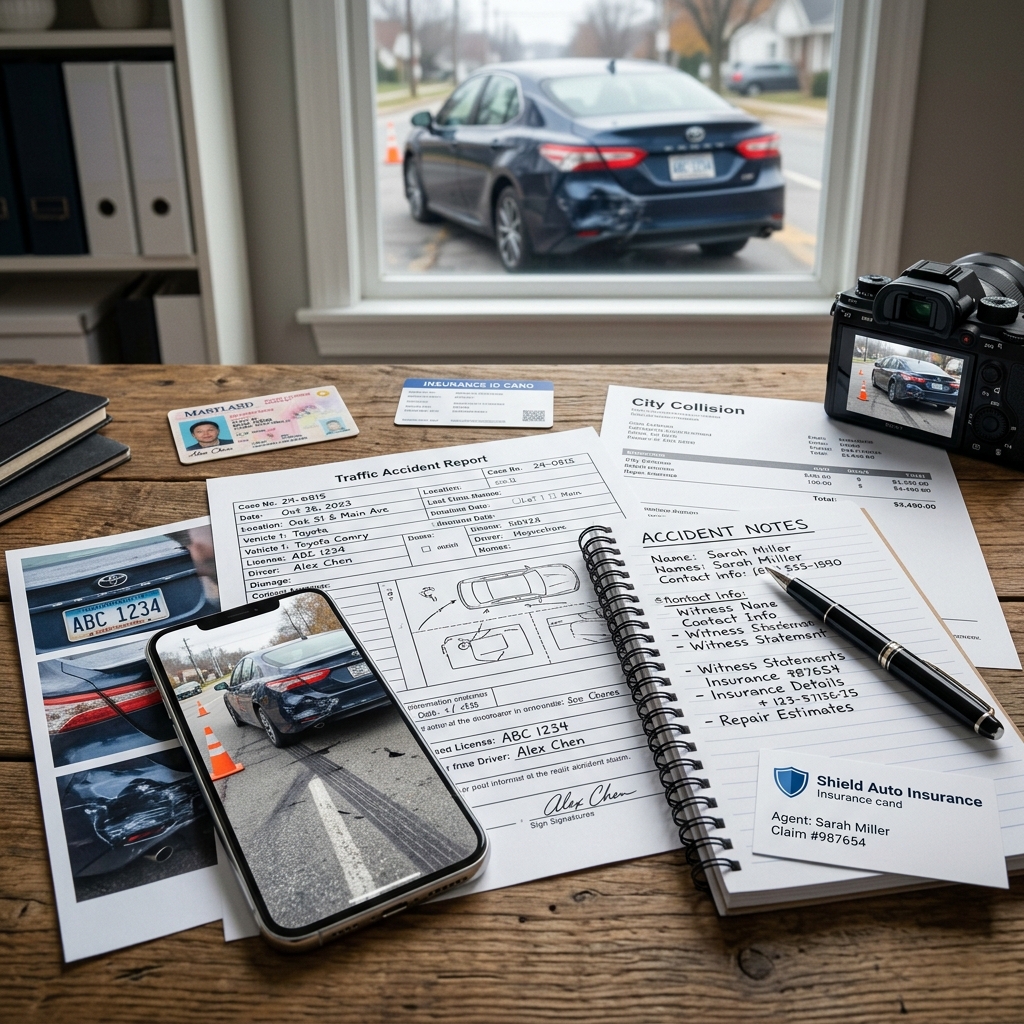
After a car crash, many drivers focus on immediate safety and vehicle damage, but the steps you take in the first hours and days also shape how smoothly your insurance claim will go. From gathering evidence at the scene to understanding the difference between first-party and third-party claims, careful planning can help you secure fair payment for your losses.
This guide walks through what insurers typically need, how to organize your information, and how to protect your legal and financial interests while your claim is processed.
Why Your First Steps After a Crash Matter for Your Claim
Insurers rely heavily on documentation to decide who was at fault, how the crash happened, and what damages they will pay. The evidence you collect early on is often more persuasive than memories weeks later.
- Details fade quickly: People forget exact speeds, road conditions, or positions of vehicles soon after an accident.
- Physical evidence changes: Skid marks, debris, and weather conditions may not be visible even a day later.
- Paper trails support your story: Police reports, medical records, and photos give insurers objective information to review.
Being methodical early makes the claims process faster and may reduce disputes about responsibility and payment.
Immediate Safety and Legal Responsibilities
Before thinking about insurance, you must address safety and legal reporting requirements. These steps also create important records for your claim.
Prioritize Safety
- Check yourself and passengers for injuries and call emergency services if anyone might be hurt.
- If vehicles are operable and it is safe, move them out of traffic to reduce the risk of additional collisions.
- Turn on hazard lights and use cones or flares if available to alert other drivers.
Contact Law Enforcement When Required
In many jurisdictions, you must report accidents involving injury, death, or significant property damage to the police or other authorities.[10]
- Call the police and follow instructions at the scene.
- Provide factual information about what happened but avoid speculating or assigning blame.
- Ask how to obtain a copy of the accident or police report; insurers often request this document.
Some states also require accident reports to be filed with the motor vehicle agency if damage or injury meets certain thresholds.
Information Insurers Typically Need After an Accident
Whether you file a claim with your own insurer or another driver’s insurer, they need enough detail to verify the crash, determine fault, and estimate damages.
Core Data About the Crash
- Date, time, and exact location of the accident.
- Weather, lighting, and road conditions at the time.
- Direction of travel, lane position, and approximate speeds of all vehicles.
- Description of how the collision occurred (for example, rear-end at intersection, sideswipe in adjacent lane).
People and Vehicles Involved
- Names, addresses, and phone numbers of all drivers and passengers.
- Driver’s license numbers and issuing states, if available.
- License plate numbers and vehicle identification numbers (VINs), if practical.
- Insurance company names and policy numbers for each vehicle involved.
Witness Information
- Names and contact details for any bystanders who saw the crash or its aftermath.
- Brief notes on what each witness says they observed, if they are willing to share.
Documenting the Accident Scene for Your Claim
Insurers frequently use photos, videos, and written notes from the scene to verify how the crash happened and to cross-check statements from drivers and witnesses.
Photographs and Videos
- Vehicle damage: Capture all sides of each vehicle, close-ups of damage, and wider shots showing the positions of vehicles relative to the road.
- Scene context: Photograph traffic signs, signals, lane markings, and any obstructions or hazards.
- Skid marks and debris: These can help reconstruct how and where impact occurred.
- Visible injuries: With consent, document bruises, cuts, or other injuries that may change in appearance over time.
Written Notes
Shortly after the accident, write down your own account while details are fresh.
- The sequence of events in the moments before, during, and after impact.
- Any specific statements made by other drivers or witnesses.
- Conditions like heavy rain, fog, or glare that might not be obvious in photos.
Key Documents to Preserve
- Police or accident reports and incident numbers.
- Tow receipts, roadside assistance records, or repair shop intake forms.
- Correspondence with insurance representatives, including emails and letters.
Starting the Insurance Claim: Who You Call and When
Insurers generally recommend reporting the accident as soon as reasonably possible, even if you are not certain who is at fault.
First-Party vs. Third-Party Claims
| Type of Claim | Who You File With | Common Uses |
|---|---|---|
| First-party claim | Your own insurance company | Collision or comprehensive coverage, medical payments, no-fault personal injury benefits. |
| Third-party claim | Other driver’s insurance company | Seeking payment when another driver is allegedly at fault for property damage and/or bodily injury. |
Depending on your coverage, you may file with your insurer, the other driver’s insurer, or both.
Information to Have Ready When You Call
- Your policy number and vehicle details.
- Accident date, time, location, and basic description of what occurred.
- Names and contact information for other involved parties and witnesses.[10]
- Police report number and the agency that responded, if any.
When speaking with your insurer, take notes on whom you spoke with, the date, and any claim numbers or instructions given.
Medical Care and Records: Supporting Injury Claims
For injury-related claims, medical documentation is as important as vehicle damage photos. It supports both the existence and severity of your injuries.
Why Prompt Medical Attention Matters
- Some injuries, such as whiplash or internal injuries, may not be obvious immediately but can worsen without treatment.
- Prompt exams create a clear timeline linking your symptoms to the crash, which insurers use to evaluate causation.
- Delays in seeking care may raise questions about whether the accident caused the injuries or whether they were pre-existing.
Key Medical Records to Keep
- Emergency room, urgent care, and doctor visit records.
- Diagnostic imaging reports (X-rays, CT scans, MRIs).
- Physical therapy and rehabilitation notes.
- Prescriptions and receipts for over-the-counter medications used for accident-related symptoms.
If your state uses a no-fault system for certain injuries, you may need to file written notice of claim within specific timelines to preserve benefits.
Understanding Damages: What Your Claim Can Cover
Auto insurance policies categorize coverage differently, and the type of claim you file affects what damages may be paid.
Common Categories of Losses
- Vehicle repairs or replacement: Costs to fix or replace your car, often under collision or property damage coverage.
- Medical expenses: Emergency treatment, follow-up care, rehabilitation, and sometimes related transportation costs.
- Rental vehicle or loss of use: Payment for a rental car or compensation for the time you are without your vehicle.
- Bodily injury liability claims: If another driver is at fault, their liability coverage may pay for your injuries and related losses.
Factors That Influence Payment
- The coverage limits in applicable policies.
- Deductibles you must pay before coverage applies.
- Legal rules on fault and contributory negligence in your state.
- Quality and completeness of your documentation.
Working With Insurance Adjusters
Soon after you report the accident, an insurance adjuster may contact you to discuss the claim, review evidence, and estimate damages.
What Adjusters Do
- Review statements from drivers and witnesses.
- Study police reports and photos of the scene.
- Inspect vehicle damage or use repair estimates from shops.
- Evaluate medical records and bills for injury claims.
Practical Tips for Communicating with Adjusters
- Stay factual and avoid exaggeration or speculation about the cause of the crash.
- Keep copies of all documents you send and note dates and methods of delivery.
- Politely ask for clarification if you do not understand a request or decision.
- Consider independent legal advice if settlement offers seem inadequate or liability is disputed.[10]
Legal Time Limits and When to Seek Legal Help
Even if your claim is primarily handled by insurers, underlying legal deadlines can affect your rights to pursue lawsuits if settlement negotiations fail.
Statutes of Limitations
Every state sets time limits for filing lawsuits related to bodily injury or property damage. For example, some jurisdictions require injury claims to be filed within two years of the accident and property damage claims within a longer period.
If you miss these deadlines, you may lose the right to pursue court action, even if you have an open insurance claim.
When to Talk to an Attorney
- Serious or permanent injuries with long-term medical needs.
- Disputes about who was at fault or whether injuries are accident-related.
- Multiple vehicles or complex scenarios (commercial vehicles, government entities).
- Settlement offers that do not appear to cover medical costs and other losses.
Organizing Your Claim: A Simple Checklist
Using a checklist can help you keep track of steps and documents from the day of the crash through final settlement.
- At the scene: Safety, police contact, exchanging information, photos, and initial notes.
- Within the first few days: Notify insurers, seek medical care, start a folder for all records and receipts.
- During the claim: Respond promptly to adjuster requests, review repair estimates, track medical progress and costs.
- Before settlement: Confirm you understand what is being paid, what rights you are releasing, and whether serious future costs are considered.[10]
Frequently Asked Questions
Do I have to report every accident to my insurer?
Many insurers encourage policyholders to report any accident, even minor ones, because unseen injuries or damages may appear later and some policies require timely notice for coverage to apply.[10]
Can I file a claim with the other driver’s insurance instead of my own?
If another driver appears to be at fault, you may have the option to file with their insurer (a third-party claim) or with your own, depending on your coverage. Regulations and options vary by state and policy terms.
Do I need a police report to open a claim?
Insurers can usually open a claim without a police report, but official documentation may strengthen your case—especially when there are disputes about fault or serious injuries.
What if I start feeling pain days after the accident?
Delayed symptoms are common after collisions. Seek medical evaluation as soon as you notice new pain or limitations and inform your insurer, so your medical records accurately show when symptoms began.
How long will the claims process take?
Timelines vary widely based on investigation needs, injury complexity, and repair issues. Simple property damage claims may resolve quickly, while serious injury claims can take months or longer while medical treatment continues and damages are fully understood.
References
- Insurance Claims After an Accident: The Basics — FindLaw. 2024-05-01. https://www.findlaw.com/injury/accident-injury-law/insurance-claims-after-an-accident-the-basics.html
- What to Do After a Car Accident — Progressive. 2023-08-15. https://www.progressive.com/answers/what-to-do-after-car-accident/
- Filing Claims Under Your Own Policy — New York State Department of Financial Services. 2022-11-10. https://www.dfs.ny.gov/consumers/auto_insurance/filing_claims_under_your_own_policy
- What to Know About Your Insurance After a Car Accident — District of Columbia Department of Insurance, Securities and Banking. 2022-06-20. https://disb.dc.gov/page/what-know-about-your-insurance-after-car-accident
- What to Do After a Car Accident — GEICO. 2023-04-05. https://www.geico.com/claims/after-an-accident/
- What to do after a car accident: a step-by-step guide — Allstate. 2023-01-12. https://www.allstate.com/resources/car-insurance/in-case-of-a-car-accident
- Filing a Claim with Another Driver’s Insurance Company — Illinois Department of Insurance. 2022-09-30. https://idoi.illinois.gov/consumers/consumerinsurance/auto/filing-an-auto-claim-with-anothers-insurance-company.html
Similar Articles








Read full bio of medha deb




