
Breathalyzer Tests: Rights, Accuracy, and DUI Defense
Understand how breathalyzer tests work, how reliable they really are, and what legal rights and defense options you have in a DUI or DWI case.
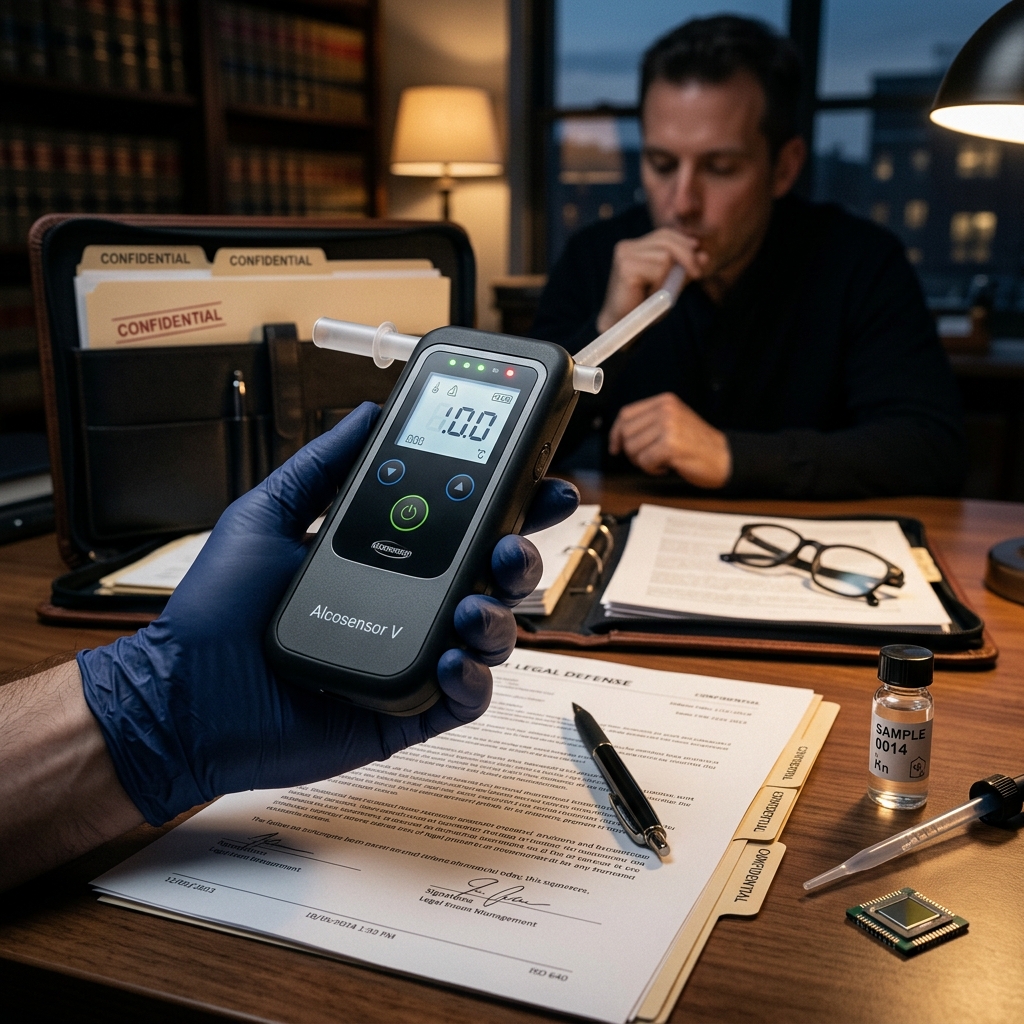
Breathalyzer tests are one of the most common tools police use to investigate suspected drunk driving, but they are not as simple or infallible as many people believe. Understanding how these devices work, when you may be required to take a test, and how the results can be challenged is essential if you are facing a DUI (driving under the influence) or DWI (driving while intoxicated) charge.
This guide explains the different types of breath tests, discusses accuracy and reliability concerns, outlines how implied consent laws operate, and explores key defense strategies that may be available in a DUI or DWI case.
1. What a Breathalyzer Test Actually Measures
Breathalyzer devices do not directly measure the amount of alcohol in your blood. Instead, they measure alcohol in your breath and then convert that measurement to an estimated blood alcohol concentration (BAC). This conversion is based on an assumed relationship between alcohol present in deep lung air and alcohol in the bloodstream.
In many jurisdictions, the law defines intoxication by a specific BAC threshold. For example, in Texas you are considered legally intoxicated at a BAC of 0.08%, although you can still be charged if alcohol or drugs impair your driving at lower levels. Breath tests are used as a proxy for BAC to determine whether you have reached or exceeded that legal limit.
- Breath Alcohol Content (BrAC): The amount of alcohol in a sample of breath, often expressed as grams of alcohol per a fixed volume of breath (e.g., per 210 liters).
- Blood Alcohol Concentration (BAC): The amount of alcohol in your blood, usually expressed as a percentage (e.g., 0.08% means 0.08 grams of alcohol per 100 milliliters of blood).
- Conversion Process: Breathalyzer machines use a scientifically derived ratio between breath alcohol and blood alcohol to estimate BAC, but this ratio can vary among individuals.
2. Types of Breath Tests in DUI and DWI Investigations
Not all breath tests are treated equally under the law. A critical distinction exists between roadside screening devices and evidential breath testing machines used at a station or testing facility.
| Type of Device | Typical Use | Reliability | Use in Court |
|---|---|---|---|
| Portable breath test (PBT/PAS) | Roadside screening to help decide whether to arrest a driver. | Less precise, more susceptible to environmental and handling errors. | Commonly used for probable cause, often not admissible as proof of BAC at trial. |
| Evidential breath test (EBT) | Station-based testing after arrest to obtain a formal BAC reading. | More strictly regulated and periodically calibrated for accuracy. | Usually admissible as evidence of BAC if protocols are followed. |
In many states, the roadside device is specifically designated as a preliminary test. It helps officers decide whether they have enough information to arrest but is not considered reliable enough by itself to prove intoxication at trial. The station-based evidential machine is used to generate the BAC result that prosecutors rely on in court.
3. How Breathalyzer Devices Work
Breathalyzer technology varies somewhat between models, but most law enforcement devices rely on either infrared spectroscopy or electrochemical (fuel cell) analysis to detect alcohol in a breath sample. Regardless of the specific method, the basic process is similar:
- The driver is instructed to provide a deep lung breath, usually by blowing steadily into a mouthpiece attached to the device.
- The device analyzes the sample for the presence of ethanol and calculates the alcohol concentration in the breath.
- The machine uses an assumed breath-to-blood ratio to estimate BAC.
- The result is displayed and often stored electronically, along with the date, time, and sometimes calibration and testing information.
Because breath tests are indirect measurements, they rely heavily on correct calibration, proper maintenance, accurate programming, and adherence to standardized testing procedures to produce reliable results.
4. Implied Consent Laws and the Question of Refusal
Every U.S. state has some form of implied consent law. In general, these laws state that by driving on the public roads, you implicitly agree to submit to a chemical test (usually blood, breath, or urine) if lawfully arrested for suspected DUI. Refusing such a test can lead to automatic administrative penalties, regardless of whether you are ultimately convicted of DUI.
Although specifics differ by jurisdiction, typical features of implied consent laws include:
- Lawful arrest requirement: Most states require that you be lawfully arrested for DUI before an evidential breath test can be demanded.
- Mandatory test or consequences: Refusal usually leads to an automatic driver’s license suspension that is longer than the suspension for a first-time DUI conviction in some states.
- Admissibility of refusal: In many jurisdictions, prosecutors can tell the jury that you refused testing, allowing them to suggest you were trying to hide intoxication.
- Separate administrative process: License suspensions for refusal are often handled by a motor vehicle agency in a separate hearing, independent of the criminal case.
Some states allow drivers to choose among breath, blood, or urine tests, while others mandate a specific test type. In many cases, there is no legal right to refuse an evidential breath test once lawfully requested, although you can physically decline and face administrative penalties for doing so.
5. Accuracy and Reliability Concerns
Breathalyzer devices are widely used, but they are not error-proof. Issues can arise from both the machine and the person administering the test. The U.S. National Highway Traffic Safety Administration (NHTSA) stresses the importance of regular calibration, operator training, and standardized procedures to maintain reliability. When these safeguards fail, the results may be inaccurate or legally questionable.
5.1 Machine-Related Problems
- Calibration errors: Breathalyzers must be periodically checked against known alcohol standards to ensure they give accurate readings. Improper calibration can lead to inflated or invalid results.
- Maintenance lapses: Devices require routine maintenance; missing or incomplete records can cast doubt on whether the machine was functioning properly at the time of the test.
- Software or hardware malfunctions: Faulty sensors, outdated software, or other technical issues can affect readings.
5.2 Human Error and Protocol Violations
- Improper observation period: Many protocols require officers to observe the driver for a set period (often around 15 minutes) before the test to ensure they do not eat, drink, vomit, or burp, which could introduce mouth alcohol and distort the result.
- Incorrect instructions: If the person is not properly instructed to provide a continuous deep breath, the sample may not represent deep lung air.
- Incomplete documentation: Failure to record key details, such as the timing of the test, device serial numbers, or operator certifications, can undermine the evidential value of the result.
5.3 Individual and Environmental Factors
- Medical conditions: Certain conditions, such as gastroesophageal reflux disease (GERD) or uncontrolled diabetes, can produce substances in the breath that mimic alcohol or alter test results.
- Residual mouth alcohol: Alcohol or alcohol-containing products in the mouth (for example, mouthwash) can temporarily raise readings until they dissipate.
- Ambient substances: Strong fumes from products like solvents or certain chemicals can interfere with some devices.
Because of these potential issues, courts and defense attorneys often scrutinize breath test results closely, especially when the reported BAC is just above the legal limit.
6. Role of Breath Tests in a DUI or DWI Case
Breathalyzer results are rarely the only evidence in a DUI or DWI prosecution. An investigation typically includes observations of driving behavior, personal contact with the driver, and pre-arrest screening tests. Breath test results are then used to support or reinforce these earlier observations.
Common elements in a drunk-driving investigation include:
- Vehicle in motion: The officer notes how the vehicle is being driven—swerving, speeding, or failing to maintain a lane.
- Personal contact: During the stop, the officer observes the driver’s speech, appearance, odor of alcohol, and coordination.
- Field sobriety tests: Standardized roadside tests, such as walking heel-to-toe or standing on one leg, are used to assess impairment.
- Breath testing: A preliminary roadside test may be used first, followed by an evidential breath test after arrest.
A high BAC based on a properly administered evidential test can significantly strengthen the prosecution’s case. Yet, if the test is flawed or protocols were not followed, the defense may seek to exclude or challenge the result, reducing its impact.
7. Legal Penalties Connected to Breath Test Results
Breathalyzer readings can influence both criminal penalties and administrative consequences. If the evidential test shows a BAC at or above the legal limit, prosecutors often rely on that figure to pursue a per se DUI or DWI charge—meaning the BAC alone establishes the offense, regardless of driving behavior.
Penalties vary by state but often include:
- Fines and costs: Monetary penalties that increase with repeat offenses.
- Jail or prison time: Ranging from short jail terms for first offenses to multi-year prison sentences for serious or repeat violations.
- License suspension: Loss of driving privileges for months or years, with longer terms for repeat offenders or refusals.
- Additional sanctions: Requirements such as ignition interlock devices, alcohol education programs, or probation conditions.
Where implied consent applies, refusing a breath test can itself trigger a separate license suspension, sometimes longer than the suspension for a first-time DUI conviction. The refusal penalty typically applies even if the criminal case is later reduced or dismissed.
8. Challenging Breathalyzer Evidence
A significant portion of DUI and DWI defense work involves examining whether breath test results were generated and handled correctly. Courts generally expect prosecutors to show that the device was properly maintained, the operator was trained, and the test followed accepted protocols.
8.1 Common Defense Strategies
- Questioning reliability: Demonstrating that the breathalyzer was known to be unreliable or had a history of issues can undermine confidence in the reading.
- Calibration and maintenance challenges: If calibration records are missing, incomplete, or show irregularities, defense counsel may argue that the machine was not legally adequate for evidential use.
- Procedural errors: Violations of required observation periods, improper instructions, or failure to follow standardized testing procedures can be grounds to suppress or discount the results.
- Medical and physiological arguments: Evidence that a medical condition or other factor likely distorted the breath reading may reduce its weight.
- Alternative explanations: Showing that behavior attributed to intoxication could stem from fatigue, nervousness, or medical issues can help contextually weaken the breath test’s persuasive impact.
8.2 Administrative Hearings vs. Criminal Trials
Breath test issues often arise in two distinct arenas:
- Administrative hearing: Focused on whether your license should be suspended because of a high BAC or test refusal. Rules of evidence may be more flexible, but breath test documentation is still important.
- Criminal trial: Focused on whether you committed DUI or DWI. Here, the defense may seek to exclude the breath test or convince the jury that the result should be given little weight.
A successful challenge in either forum can reduce the overall impact of the breath test on your case, although the specific legal standards differ.
9. Practical Tips for Drivers
If you are stopped on suspicion of impaired driving, your decisions regarding breath testing can have lasting consequences. Laws differ by state, so it is important to consult a local attorney about your specific situation, but general considerations include:
- Be aware that refusing an evidential breath test after a lawful arrest often leads to automatic license suspension under implied consent laws.
- Understand that roadside preliminary breath tests are frequently used to establish probable cause rather than serve as trial evidence.
- Recognize that even if you are below 0.08%, you can be charged if drugs or alcohol impair your ability to drive safely.
- Seek legal advice promptly if you are arrested or asked to take an evidential test; early counsel can help protect your rights.
10. Frequently Asked Questions (FAQs)
10.1 Can I refuse a breathalyzer test?
In most states, you can physically refuse a breath test, but doing so after a lawful arrest usually triggers an automatic driver’s license suspension under implied consent laws. Some states treat refusal as a separate offense, and prosecutors may be allowed to tell the jury that you refused testing.
10.2 Are roadside breath tests as accurate as station tests?
No. Roadside preliminary breath tests are generally considered less precise and more vulnerable to error than station-based evidential breath tests. Many jurisdictions use preliminary devices only to help decide whether to arrest a driver, not to prove intoxication in court.
10.3 Can medical conditions affect breathalyzer results?
Yes. Certain medical conditions and bodily processes can influence breathalyzer readings. For example, conditions that cause acid reflux or ketosis may introduce substances into the breath that resemble alcohol or otherwise affect the measurement. These factors can be relevant in a defense challenge.
10.4 Is a high breath test result enough to convict me?
A high breath test result is powerful evidence, but it is not the only factor in a DUI or DWI case. The defense can challenge the reliability and admissibility of the result, and prosecutors still must prove all elements of the offense beyond a reasonable doubt. Other evidence, such as driving behavior and field sobriety performance, also plays a role.
10.5 What should I do if I am facing charges based on a breath test?
Because breath tests involve technical, legal, and scientific issues, consulting an experienced DUI or DWI defense attorney is strongly recommended. Counsel can review calibration and maintenance records, evaluate whether protocols were followed, and advise on the best strategy for your case.
References
- Countermeasures That Work: Alcohol-Impaired Driving – Enforcement and Alcohol Measurement Devices — National Highway Traffic Safety Administration (NHTSA). 2023-05-01. https://www.nhtsa.gov/book/countermeasures-that-work/alcohol-impaired-driving/countermeasures/enforcement/alcohol
- Breath Alcohol Tests in DUI Cases — Nolo Legal Encyclopedia. 2023-04-10. https://www.nolo.com/legal-encyclopedia/dui-breath-alcohol-tests.html
- Impaired Driving and Penalties — Texas Department of Transportation (TxDOT). 2024-01-15. https://www.txdot.gov/safety/driving-laws/impaired-driving.html
- DUI Breathalyzer, Blood, and Roadside Tests — Arizona Criminal Defense Lawyer Blog. 2022-11-20. https://www.arizonacriminaldefenselawyer.com/practice-areas/dui/dui-defense/dui-breathalyzer-blood-and-roadside-tests/
- Evidential Breath Test — Bay Area DUI Defense. 2021-09-01. https://www.bayareaduidefense.com/dui_investigation/chemical_testing/breath_test.html
- Understanding DWI Investigations — American Bar Association. 2020-06-30. https://www.americanbar.org/groups/judicial/resources/highway-justice/understanding-dwi-investigations/
- How a Breath Test Can Impact Your Texas DWI Case — DFW Defenders. 2022-08-18. https://www.dfwdefenders.com/how-a-breath-test-can-impact-your-texas-dwi-case
Similar Articles








Read full bio of medha deb




