Payday loans promise fast cash to cover urgent expenses, but they often create a long-lasting debt problem that is difficult to escape. These short-term, high-cost loans can lead to repeat borrowing, aggressive collection practices, and serious financial distress if they are not handled carefully. Understanding how payday loans work, what your legal options are, and what steps you can take to manage or eliminate the debt is essential to protecting yourself and your finances.
What Makes Payday Loans So Dangerous?
A payday loan is typically a small, short-term loan intended to tide you over until your next paycheck. In exchange for that quick access to cash, lenders charge very high fees and interest rates, often due within two weeks to a month. While this may sound manageable, several features of payday loans make them particularly risky.
- Extremely high costs: Annual percentage rates (APR) on payday loans can exceed 400%, far higher than most credit cards or personal loans.
- Short repayment windows: Borrowers usually must repay the full amount plus fees in one lump sum by their next payday, leaving little room for error.
- Rollovers and renewals: Many borrowers cannot afford full repayment and choose to roll the loan over or take out another payday loan, triggering new fees and deeper debt.
- Direct access to bank accounts: Lenders often require a post‑dated check or authorization to debit your account, increasing the chance of overdrafts and fees if funds are insufficient.
- Limited credit benefit: Most payday lenders do not report on‑time payments to credit bureaus, so the loan does not help build credit, but missed payments can still harm your credit when sent to collections.
Consumer protection agencies have repeatedly warned that these design features create inherent debt traps, especially for low‑income borrowers who are already financially stretched.
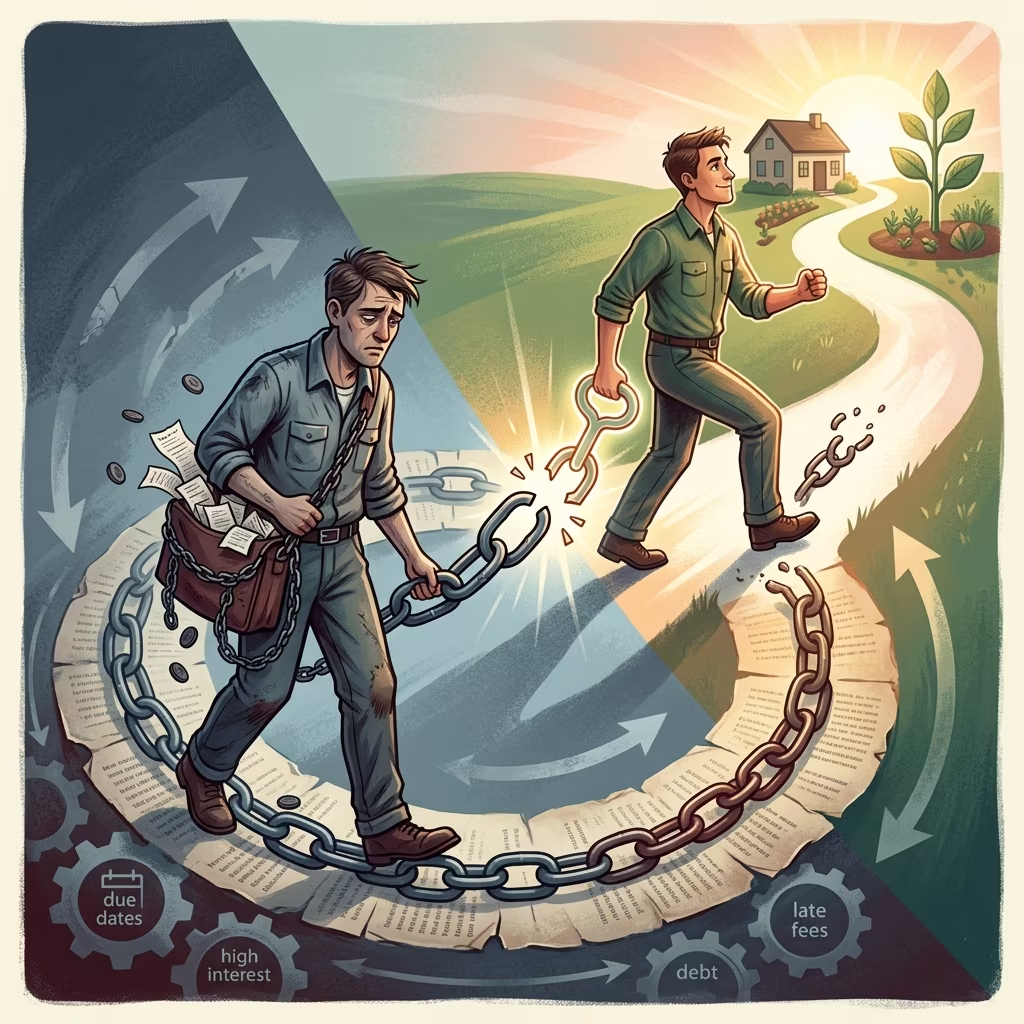
How the Payday Loan Debt Cycle Starts
The debt cycle usually begins with a shortfall: an unexpected car repair, medical bill, or utility payment that you cannot cover with your current paycheck and savings. Instead of using a lower‑cost credit option or negotiating with creditors, you may turn to a payday lender because the approval is fast and requirements are minimal.
Once the initial loan is in place, the problem tends to build:
- You repay the loan plus fees and now have less income left for next month’s essentials.
- Because your budget is tighter, you again struggle to cover basics and consider another payday loan.
- Rollovers and repeat borrowing accumulate more fees, sometimes hundreds of dollars on an original loan of only a few hundred.
- Eventually, you may fall behind on other bills, overdraft your bank account, or miss payments, creating a broader financial crisis.
This pattern is so common that federal and nonprofit organizations describe payday loans as predatory lending products, designed in ways that make long‑term repayment unlikely for many borrowers.
Recognizing Warning Signs of a Payday Loan Debt Trap
To protect yourself, it helps to recognize early signals that payday loan use is turning into a serious problem:
- You have taken out more than one payday loan in the past year.
- You regularly roll over or renew loans instead of paying them off fully.
- You delay paying rent, utilities, or food expenses to keep up with loan fees.
- You are incurring overdraft fees because the lender pulls funds from your bank account when there is not enough money.
- You feel forced to take a new loan to pay off an old one, creating a chain of borrowing.
If any of these situations apply, it is important to act quickly. The longer the cycle continues, the more expensive and stressful it becomes.
Your Legal Rights and Protections
Even if you are struggling with payday loan debt, you still have legal rights. Understanding those rights can help you avoid further harm and negotiate better outcomes with lenders.
State Regulation of Payday Loans
Payday lending laws vary widely by state. Some states cap interest rates, limit loan amounts, or restrict repeat borrowing. Others severely restrict or ban payday lending altogether. These laws affect what fees can be charged, how loans must be disclosed, and whether extended repayment options must be offered.
| State Approach | Typical Protections |
|---|---|
| Strict limits or bans | Interest rate caps, loan size limits, affordability checks, or outright prohibition of high-cost payday lending. |
| Moderate regulation | Disclosure rules, limits on rollovers, and sometimes mandatory extended repayment plans. |
| Minimal regulation | More freedom for lenders; borrowers rely largely on general consumer protection and contract law. |
Because rules differ, you should review your state’s consumer finance laws or consult a local legal aid office for precise guidance before making decisions.
Extended Repayment Plans
If you cannot repay your payday loan on time, one of the main options is requesting an extended repayment plan from the lender. This arrangement allows you to repay the loan in smaller installments over a longer period instead of one lump sum. In some states, extended plans may be offered without additional fees; in others, lenders may charge extra depending on local law.
Key points about extended repayment plans:
- Availability depends on your state’s law and the lender’s internal policies.
- You must typically contact the lender before the loan is due or immediately after missing a payment.
- Getting the terms in writing is crucial so you know the schedule and total cost.
Stopping Automatic Payments
If a lender is set to withdraw funds from your bank account and you cannot afford the payment, you may be able to stop the transaction. Banks usually allow customers to cancel direct debits, standing orders, or checks before they are processed, though deadlines apply. For continuous payment authorities linked to a debit card, you can instruct your bank or card issuer to block further withdrawals.
Stopping automatic payments can prevent overdraft fees and give you time to negotiate a new payment plan, but you still owe the debt. It should be combined with communication to the lender and a clear plan for resolving the loan.
Bankruptcy and Payday Loans
In severe cases where overall debts are unmanageable, bankruptcy may be a last‑resort option. In a typical consumer bankruptcy, most payday loans are treated as unsecured debt, similar to credit cards or medical bills. They are often dischargeable, meaning you may no longer be legally required to repay them after the bankruptcy is completed.
However, there are important considerations:
- If the loan was obtained through fraud, a creditor may challenge its discharge.
- In Chapter 7 bankruptcy, qualifying unsecured debts can be wiped out, but timing and eligibility rules apply.
- In Chapter 13, payday loans are included in a court‑approved repayment plan, and remaining balances may be discharged at the end of the plan.
Bankruptcy has serious long‑term consequences for credit and finances, so professional legal advice is essential before considering this path.
Practical Strategies to Escape Payday Loan Debt
Legal protections are only part of the solution. To break the payday loan cycle, you also need a clear financial plan. The following steps combine guidance from consumer finance authorities and credit experts.
1. Contact Your Lender Immediately
If you are in danger of missing a payment or already have, reach out to the lender as soon as possible. Many official consumer resources emphasize early communication as the first step.
- Explain your situation calmly and clearly.
- Ask about extended repayment plans and whether they can waive additional fees.
- Request written confirmation of any revised terms.
Documenting all conversations and keeping copies of emails or letters can help if disputes arise later.
2. Consider Safer Credit Alternatives
If you must borrow to pay off a payday loan, choosing a lower‑cost option can substantially reduce interest and fees.
- Personal loans or credit union loans: Many banks and credit unions offer small loans with far lower APRs than payday lenders.
- Payday alternative loans (PALs): Certain credit unions offer regulated small‑dollar loans specifically designed as safer substitutes for payday loans.
- Debt consolidation loans: You can combine multiple high‑interest debts into one personal loan with a more manageable rate and fixed payments.
- Support from family or friends: Though not always available, borrowing interest‑free or at a low rate within your personal network may be less risky than a new payday loan.
Before taking any new loan, compare total costs and ensure the monthly payment fits realistically within your budget.
3. Work With a Certified Credit Counselor
Nonprofit credit counseling agencies can help you assess your finances, create a budget, and explore debt management plans (DMPs). Under a DMP, you make one monthly payment to the counseling agency, which then pays your creditors and may negotiate lower rates or reduced fees.
Advantages of working with a counselor include:
- Objective advice on whether consolidation or a DMP is appropriate.
- Assistance negotiating with multiple creditors.
- Education that helps prevent future debt problems.
4. Stabilize Your Budget
Escaping payday loan debt requires addressing the underlying budget gap that led to borrowing in the first place. Credit experts recommend building a simple, realistic spending plan and adjusting income and expenses where possible.
- List all sources of income and all monthly obligations.
- Prioritize essentials: housing, utilities, food, basic transportation.
- Cut or reduce nonessential expenses, at least temporarily.
- Look for ways to increase income, such as extra hours or side work.
Even small changes, like reducing subscriptions or negotiating lower utility payments, can free up money that helps you pay down high‑cost debt faster.
5. Protect and Rebuild Your Credit
Payday loans typically do not help your credit score, but unpaid loans that enter collections can significantly damage it. Focusing on credit health reduces the likelihood that you will rely on payday lenders again.
- Set up automatic payments for other debts and bills to avoid late fees and negative marks.
- Monitor your credit reports and scores regularly.
- Consider credit‑builder products like secured credit cards or credit‑builder loans that report positive payment history.
Improved credit can make you eligible for safer, lower‑cost borrowing options in the future.
Preventing Future Payday Loan Problems
Once you have escaped the immediate payday loan crisis, preventing a repeat is crucial. This involves a combination of financial habits and awareness of predatory lending tactics.
- Build an emergency fund: Aim to save gradually for unexpected expenses so you are less tempted by high‑cost loans.
- Use mainstream financial products: When possible, rely on bank or credit union services, which are typically more regulated and transparent.
- Be cautious with quick‑cash offers: Any lender promising instant approval with minimal information should be scrutinized carefully.
- Read all terms: Look for hidden fees, automatic rollover clauses, or aggressive collection provisions in any loan agreement.
Consumer advocacy organizations stress that regulations alone cannot fully eliminate risk. Informed, cautious borrowing decisions are your best long‑term protection.
Frequently Asked Questions About Payday Loan Debt
Can I be jailed for not paying a payday loan?
In most circumstances involving consumer debt, failure to repay a payday loan is a civil matter, not a criminal one. While lenders may pursue collection or sue for repayment, they generally cannot have you jailed simply for not paying. If a lender threatens criminal prosecution over standard nonpayment, this is a serious warning sign of abusive or misleading practices.
What should I do if my lender refuses an extended repayment plan?
If your lender will not offer an extended plan and you still cannot pay, consider speaking with a nonprofit credit counselor or legal aid attorney. Official consumer finance agencies recommend seeking professional advice in these scenarios and, if necessary, submitting a formal complaint to the relevant regulatory authority.
Will consolidating my payday loans hurt my credit?
Taking out a consolidation loan may involve a credit check, which can cause a small, temporary dip in your score. Over time, however, if you make all payments on time and reduce your overall debt, consolidation can improve your credit profile compared with staying in high‑cost payday loans that risk collections.
Is there government assistance specifically for payday loan debt?
There are no widely available government programs dedicated solely to paying off payday loans. Instead, public resources focus on counseling, legal aid, and regulation of lenders. You may find help through local legal services, nonprofit counseling agencies, or state consumer protection offices rather than direct payoff programs.[10]
How do I choose a reputable credit counselor?
Look for nonprofit agencies accredited by recognized organizations and avoid counselors who guarantee quick fixes or request large upfront fees. Many reputable agencies provide initial consultations at low or no cost and follow standards set by national counseling associations.
References
- How Do I Get Out of Payday Loan Debt? — Experian. 2022-03-15. https://www.experian.com/blogs/ask-experian/how-do-i-get-out-of-payday-loan-debt/
- What can I do if I can’t repay my payday loan? — Consumer Financial Protection Bureau. 2023-06-06. https://www.consumerfinance.gov/ask-cfpb/what-can-i-do-if-i-cant-repay-my-payday-loan-en-1601/
- Avoiding the Debt Cycle: Problems with Payday Loans — UnidosUS. 2014-04-03. https://unidosus.org/blog/2014/04/03/avoiding-debt-cycle-problems-payday-loans/
- Payday Loans and Bankruptcy: What You Need to Know — Gina McDonald Law. 2021-09-10. https://www.ginamcdonaldlaw.com/blog/payday-loans-and-bankruptcy-what-you-need-to-know/
- Understanding the Biggest Disadvantages of Payday Loans — Abilene Teachers Federal Credit Union. 2023-02-01. https://www.atfcu.org/blogs/understanding-the-biggest-disadvantages-of-payday-loans
- Payday Loans: What They Are, How They Work & Managing Debt — National Debtline. 2022-08-10. https://nationaldebtline.org/get-information/guides/payday-loans-ew/
- Lured into Debt: How Payday Loans and Paycheck Apps Exacerbate Financial Struggles — Howard University COAS. 2023-04-12. https://coascenters.howard.edu/lured-debt-how-payday-loans-and-paycheck-apps-exacerbate-financial-struggles-underserved