
Breaking a Lease in New York: Tenant Rights Guide
Discover your legal options for ending a rental lease early in New York without facing severe penalties.
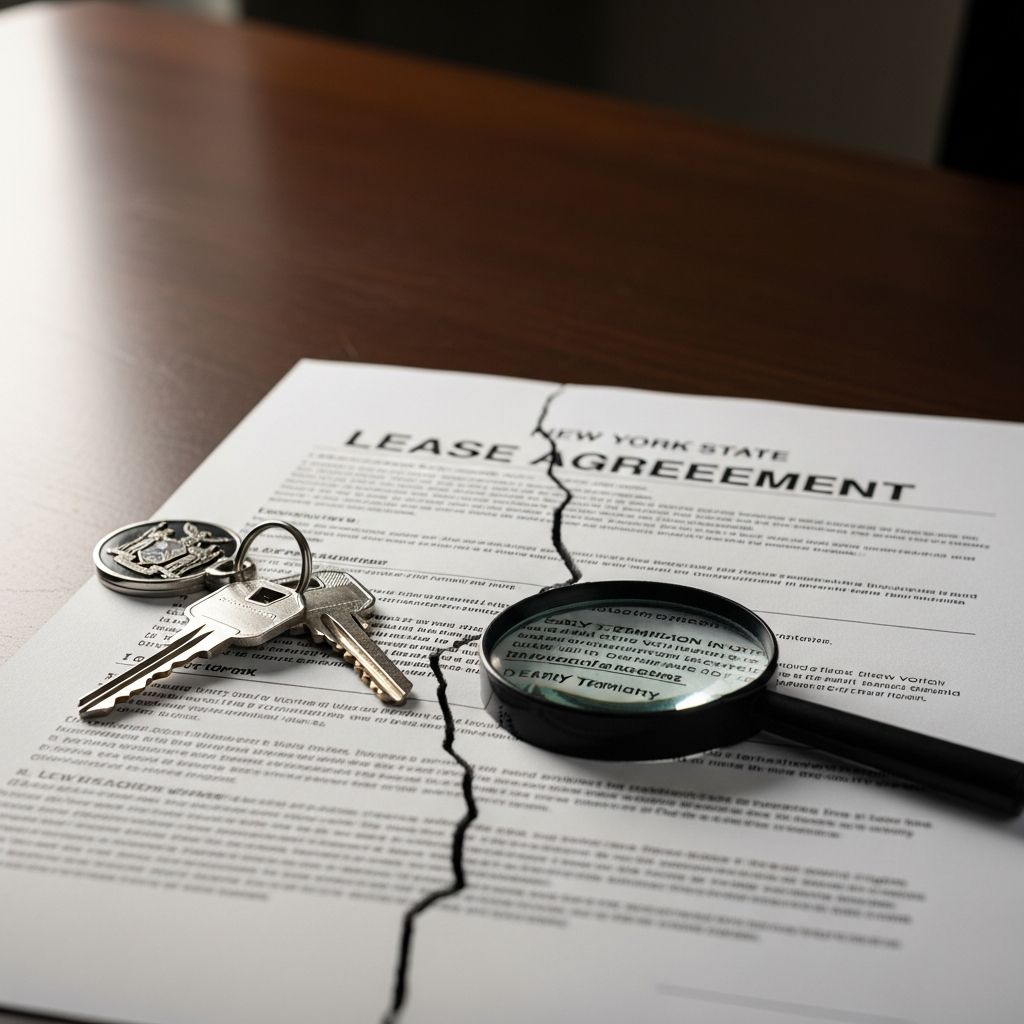
Renting an apartment in New York comes with clear obligations under a fixed-term lease, typically lasting one year. Tenants must generally pay rent through the full term, but state laws provide exceptions allowing early termination without full liability for remaining rent. These protections cover scenarios like unsafe living conditions, personal safety threats, and mandatory relocations.
Core Principles of Lease Agreements in New York
A rental lease binds both tenant and landlord for the agreed duration. Landlords cannot unilaterally alter terms like rent increases or force early departure without cause, such as nonpayment or lease violations. For nonpayment, landlords must issue a 14-day notice to pay or quit before pursuing eviction (N.Y. Real Prop. Acts Law § 711(2)). Holdover tenants in New York City receive at least 30 days’ notice under N.Y. Real Prop. Law § 232-a.
Early departure, known as breaking the lease, triggers tenant responsibility for rent until the term ends—unless legally excused. However, New York landlords must mitigate damages by actively seeking a replacement tenant (Real Property Law § 227-e). This duty, effective since July 2019, limits tenant exposure once a new occupant is found.
Legal Justifications for Early Lease Termination
New York law outlines specific circumstances where tenants can exit without owing the full remaining rent. These protections prioritize habitability, safety, and life changes.
Unsafe or Uninhabitable Conditions
Landlords must maintain rentals fit for human habitation per Real Property Law § 235-b. Failures like absent heat, severe leaks, mold, or pest infestations constitute constructive eviction if the landlord ignores repair requests. Tenants should document issues via photos, emails, and inspections, then vacate if unresolved. Courts often rule in favor of tenants proving these conditions rendered the unit unlivable.
Domestic Violence Victim Protections
Victims of domestic violence, or household members, gain early termination rights under Real Property Law § 227-c. Tenants must provide written notice and documentation, such as a court order of protection or police report, confirming safety risks if remaining. This allows lease end without further rent liability.
Senior Housing Transitions
Tenants aged 62 or older unable to live independently qualify for early exit under N.Y. Real Prop. Law § 227-a. This applies when moving to nursing homes or senior housing. Proper notice to the landlord activates the protection.
Military Service Obligations
Active-duty military personnel can terminate leases with written notice, effective 30 days after the next rent due date, regardless of remaining term. No additional penalties apply if orders require relocation.
Landlord Harassment and Privacy Breaches
Repeated illegal entries, utility shutoffs, lock changes, or retaliatory actions may justify constructive eviction. Tenants must log incidents with dates, communications, and evidence to support claims in court.
Potential Repercussions of Unauthorized Early Departure
Without a valid legal reason, breaking a lease invites consequences. Landlords may pursue unpaid rent, early termination fees stipulated in the lease, or security deposit deductions for damages and cleaning. Unresolved debts can lead to lawsuits, eviction records harming future rentals, and credit damage if reported.
| Consequence | Description | Mitigation Option |
|---|---|---|
| Financial Liability | Owe rent until new tenant found | Landlord’s duty to re-rent |
| Security Deposit Loss | Deducted for unpaid rent/damages | Itemized statement required |
| Legal Action | Lawsuit for breach | Negotiate or sublet |
| Credit/Rental History | Negative reports | Pay debts promptly |
Landlord Duties When Tenants Vacate Early
Upon tenant departure, landlords must make reasonable efforts to re-rent promptly, crediting payments from new tenants against the original obligation. They cannot charge full remaining rent indefinitely. Security deposit returns require itemized deductions per state law. Failure to mitigate exposes landlords to tenant counterclaims.
Strategic Steps to Minimize Risks
Proactive measures can ease early termination:
- Review Lease Thoroughly: Check for early termination clauses, subletting permissions, or fees.
- Negotiate with Landlord: Propose a mutual agreement, perhaps with a replacement tenant.
- Sublet or Assign: In buildings with four+ units, tenants have sublet rights; landlords must respond within 30 days.
- Document Everything: Maintain records of communications, conditions, and payments.
- Seek Legal Aid: Consult tenant organizations or attorneys for rent-regulated units.
Avoid winter breaks if possible, as re-renting proves harder. Offering to find a replacement strengthens your position.
Special Considerations for Rent-Regulated Apartments
Rent-stabilized or controlled tenants enjoy added protections. Landlords must provide executed leases within 30 days (NY AG Guide). Early termination follows general rules but may involve housing court for disputes.
Frequently Asked Questions
Can I break my lease in New York just because I want to move?
No, without legal grounds, you remain liable for rent until mitigated. Landlords must re-rent, but you pay interim.
What notice is required for domestic violence termination?
Written notice plus victim documentation, like a protective order.
Does my landlord have to fix habitability issues before I can leave?
Yes, notify in writing; if ignored, constructive eviction applies.
How long after I leave must the landlord find a new tenant?
Reasonable efforts required; no fixed timeline, but good faith expected.
Can I sublet to avoid breaking the lease?
Yes, with landlord approval in eligible buildings; denial must be reasonable.
Protecting Your Financial and Legal Interests
Before acting, weigh options: subletting, assignment, or buyout negotiations often prove less costly than litigation. For vulnerable tenants—seniors, victims, military—state laws prioritize swift, penalty-free exits. Always prioritize documentation to substantiate claims.
In disputes, New York courts emphasize fairness: tenants’ habitability rights balance landlords’ contract enforcement. Housing court handles most cases, where judges scrutinize mitigation efforts and condition evidence.
Tenants facing pressure should contact the New York Attorney General’s tenant rights hotline or local legal services. Proactive communication with landlords frequently yields amicable resolutions, preserving rental histories.
Understanding these frameworks empowers renters to navigate changes confidently, minimizing disruptions in New York’s competitive market.
References
- Breaking a Lease in New York: Landlord/Tenant Guide 2024 — TurboTenant. 2024. https://www.turbotenant.com/rental-lease-agreement/new-york/laws/breaking-a-lease/
- Does New York law allow a residential tenant to break a rental lease? — NY Courts Ask a Law Librarian. Accessed 2026. https://askalawlibrarian.nycourts.gov/legalresearch/faq/401798
- Tenant’s Right to Break a Rental Lease in New York — Nolo. Accessed 2026. https://www.nolo.com/legal-encyclopedia/tenants-right-break-rental-lease-new-york.html
- How to Legally Break a Lease in New York Without Major Penalties — Kohan Law Group. Accessed 2026. https://kohanlawgroup.com/how-to-legally-break-a-lease-in-new-york-without-major-penalties/
- Residential Tenants’ Rights Guide — New York Attorney General. Accessed 2026. https://ag.ny.gov/sites/default/files/tenants_rights.pdf
Similar Articles








Read full bio of Sneha Tete


