
The Landmark Brandt Trial and the Fight for Trans Healthcare
An in-depth analysis of the Arkansas federal trial that became a defining battleground for youth medical autonomy.
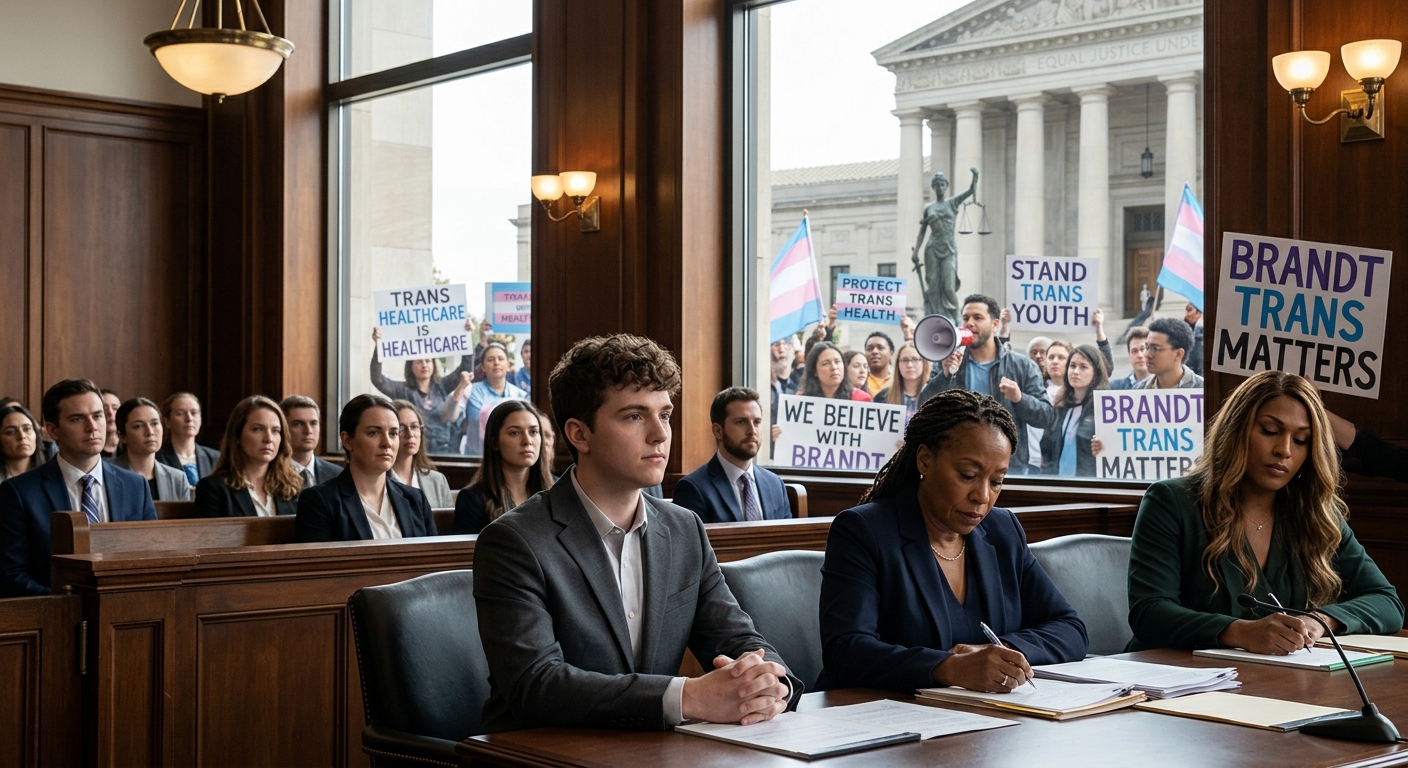
Navigating the Legal Landscape of Transgender Healthcare
The legal battle over the rights of transgender youth to access specialized medical care has rapidly evolved into one of the most fiercely debated civil rights issues of the 21st century. At the absolute epicenter of this nationwide conflict was the state of Arkansas. In the spring of 2021, Arkansas became the first state in the United States to pass a comprehensive, statewide ban on gender-affirming healthcare tailored specifically for minors. This legislation, officially titled Act 626 but widely known as the “Save Adolescents from Experimentation (SAFE) Act,” sparked an immediate and intense legal response. The ensuing confrontation culminated in the landmark federal trial Brandt v. Rutledge.
This unprecedented trial served as a crucial testing ground. It was the first time that comprehensive evidentiary records, witness testimonies, and constitutional theories regarding youth medical bans were scrutinized in a federal courtroom. By dissecting the arguments presented in Brandt v. Rutledge, legal scholars, policymakers, and civil rights advocates can better understand the complex intersection of medical science, parental autonomy, and constitutional law.
Understanding the Scope of Arkansas Act 626
To grasp the gravity of the Brandt trial, it is essential to examine the specific prohibitions enacted by the Arkansas General Assembly. Act 626 was designed to strictly prohibit healthcare professionals within the state from providing what the legislature termed “gender transition procedures” to any individual under the age of 18.
- Medical Prohibitions: The law strictly forbade the prescription and administration of puberty-delaying medications and cross-sex hormone replacement therapy (HRT) when utilized specifically for the treatment of gender dysphoria in pediatric patients. It also banned gender-affirming surgical interventions, though medical experts note such surgeries are exceedingly rare for minors.
- Targeted Application: Crucially, the legislation did not ban these treatments outright; rather, it banned their application exclusively for transgender youth. For example, a physician could legally prescribe testosterone to a cisgender male adolescent experiencing a delayed onset of puberty, but the exact same medication was criminalized if prescribed to a transgender male adolescent.
- The Gag Rule: Beyond the direct prohibition of medical interventions, Act 626 contained a stringent referral ban. Healthcare professionals were explicitly forbidden from referring a minor patient to any other medical provider—even a specialist located in a state where the care remained perfectly legal—for gender-affirming treatments.
Under the parameters of the Act, any violations were classified as “unprofessional conduct.” This classification subjected doctors to severe disciplinary action, including the potential revocation of their medical licenses, and empowered the State Attorney General to enforce strict compliance through aggressive legal action.
The Medical Consensus on Youth Gender Dysphoria
A central pillar of the plaintiffs’ argument in the Brandt litigation rested on the stark contrast between the state legislature’s political claims and the overwhelming consensus of the mainstream medical community. During the extensive eight-day bench trial, numerous expert witnesses detailed the rigorous, evidence-based standards that guide the treatment of pediatric gender dysphoria.
Major medical and psychological associations uniformly recognize gender-affirming care as medically necessary and potentially life-saving. Organizations supporting this consensus include:
- The American Medical Association (AMA)
- The American Academy of Pediatrics (AAP)
- The Endocrine Society
- The World Professional Association for Transgender Health (WPATH)
The established standard of care does not involve rushed or reckless interventions. Instead, it requires comprehensive, multidisciplinary biopsychosocial assessments. For prepubescent children, the standard of care involves entirely social transition, with no medical interventions recommended. For adolescents beginning puberty, treatment may initially include puberty suppression (GnRH analogues). This fully reversible step temporarily pauses the physical changes of puberty, providing the youth and their families critical time to explore their gender identity in a therapeutic setting without the immense distress of developing permanent, incongruent secondary sex characteristics.
For older adolescents who demonstrate persistent, well-documented gender dysphoria and possess the cognitive maturity to provide informed consent alongside their legal guardians, partially reversible hormone therapy may be considered. Medical experts testifying at the trial meticulously dismantled the state’s narrative that these treatments are experimental. They provided extensive peer-reviewed data demonstrating that access to appropriate, individualized care is strongly associated with significantly reduced rates of severe anxiety, clinical depression, and suicidality among transgender youth.
The Constitutional Battlegrounds
The legal challenge mounted by the four minor plaintiffs, their deeply concerned parents, and dedicated medical providers relied on three distinct constitutional arguments, invoking both the Fourteenth and First Amendments of the United States Constitution.
The Equal Protection Clause
The absolute cornerstone of the plaintiffs’ case was the assertion that Act 626 violated the Equal Protection Clause of the Fourteenth Amendment. The plaintiffs argued that by legally permitting certain medical treatments (like hormone therapy) for cisgender minors while strictly criminalizing the exact same treatments for transgender minors, the state was engaging in unlawful discrimination based heavily on sex and transgender status.
This dynamic forced the federal court to grapple with the appropriate level of judicial scrutiny. The plaintiffs successfully argued at the trial level that the law required “heightened scrutiny.” Under this rigorous standard, the state had the substantial burden of proving that the ban served an important governmental objective and that the discriminatory means employed were substantially related to achieving that specific objective. The trial court found that the state utterly failed to meet this high evidentiary bar, noting that the legislative rationale was largely rooted in generalized fears rather than empirical medical science.
The Due Process Clause
The Fourteenth Amendment also guarantees certain fundamental liberties that cannot be infringed upon without due process of law. One such liberty, long recognized by American jurisprudence, is the fundamental right of parents to direct the care, upbringing, and medical treatment of their children. The families participating in the lawsuit compellingly argued that Act 626 unconstitutionally stripped parents of the right to make informed, highly personal medical decisions for their children in close consultation with licensed doctors.
The First Amendment
Furthermore, the physicians involved in the lawsuit challenged the referral ban under the First Amendment. They argued that preventing a doctor from advising a patient about all safely available medical treatment options and referring them to appropriate out-of-state specialists constituted an unconstitutional state-imposed “gag rule.” They maintained that this heavily infringed upon their freedom of speech and directly violated their ethical, Hippocratic obligations to prioritize the health and well-being of their patients.
Evidentiary Findings and the Courtroom Experience
While the complex legal doctrines provided the necessary structural framework for the trial, the human element proved to be its most compelling and emotionally resonant feature. The federal court heard deeply personal, harrowing testimonies from the affected families. Parents recounted their initial apprehensions regarding medical interventions, their extensive consultations with specialized medical professionals, and the profound, life-altering relief of watching their children psychologically thrive after finally receiving appropriate care.
Conversely, the defense presented state-selected expert witnesses who attempted to question the long-term efficacy and overall safety of the established medical treatments. However, United States District Judge James M. Moody Jr. ultimately found the plaintiffs’ experts to be highly credible, factually accurate, and heavily grounded in robust clinical experience. In stark contrast, the court frequently found the state’s witnesses to lack relevant, direct clinical experience treating adolescents with gender dysphoria.
In June 2023, Judge Moody delivered a decisive and historic 80-page ruling permanently striking down Act 626. He systematically concluded that the state law violated the Equal Protection Clause, the Due Process Clause, and the First Amendment. The court determined that the treatments were demonstrably medically necessary, that the medical risks were highly manageable and comparable to countless other pediatric interventions, and that the state’s comprehensive ban was motivated more by ideological animus than by a genuine, evidence-based interest in protecting children’s health.
The Appellate Journey and the Supreme Court Pivot
The sweeping victory in the district court, while deeply significant for the plaintiffs, was ultimately just one chapter in a protracted, multi-year legal saga. The State of Arkansas immediately appealed the ruling to the United States Court of Appeals for the Eighth Circuit, transforming the case title to Brandt v. Griffin (reflecting the state’s new Attorney General). This lengthy appellate process vividly demonstrated the deep ideological and judicial divides fracturing the country regarding LGBTQ+ civil rights and medical autonomy.
The Arkansas case certainly did not occur in a political vacuum. It inadvertently served as both a template and a political catalyst as dozens of other states—including Tennessee, Texas, Idaho, and Florida—rushed to enact their own sweeping bans on gender-affirming care. This rapid legislative cascade resulted in a deeply fractured, chaotic legal landscape where the fundamental constitutional rights of transgender youth depended almost entirely on their geographic state of residence.
This mounting circuit split and the escalating frequency of state-level bans ultimately necessitated definitive intervention by the United States Supreme Court. The complex legal theories that were so heavily debated and scrutinized in the Arkansas trial laid the intellectual groundwork for the Supreme Court’s eventual review of identical legislation. This culminated in the landmark 2025 decision United States v. Skrmetti, which addressed Tennessee’s remarkably similar ban. In that pivotal ruling, the Supreme Court’s conservative majority altered the legal landscape by holding that state bans on gender-affirming care do not intrinsically violate the Equal Protection Clause. By applying a highly deferential “rational basis” review rather than the “heightened scrutiny” utilized by Judge Moody in Arkansas, the high court significantly complicated the trajectory of federal cases like Brandt, forcing civil rights advocates to increasingly rely on distinct state constitutional protections rather than federal guarantees.
Comparison of Key Early Gender-Affirming Care Bans
The following table outlines how the original Arkansas legislation compared to other early adopting states and tracks their respective legal trajectories in the federal court system.
| State | Primary Legislation | Year Enacted | Legal Trajectory & Status |
|---|---|---|---|
| Arkansas | Act 626 (SAFE Act) | 2021 | Permanently enjoined at trial in Brandt (2023); appellate status deeply impacted by subsequent shifting federal precedent. |
| Tennessee | Senate Bill 1 | 2023 | Challenged extensively but ultimately upheld by the U.S. Supreme Court in United States v. Skrmetti (2025). |
| Florida | SB 254 / Board Rules | 2023 | Faced intense federal litigation; subject to complex, ongoing appeals regarding both minor and adult care restrictions. |
| Idaho | House Bill 71 | 2023 | Preliminary injunction was heavily narrowed by the U.S. Supreme Court, allowing broad enforcement against most minors. |
Frequently Asked Questions (FAQs)
What was the ultimate ruling in the initial Brandt trial?
In June 2023, after thoroughly reviewing the extensive evidentiary record, U.S. District Judge James M. Moody Jr. ruled that Arkansas Act 626 was unconstitutional. He determined that the sweeping ban blatantly violated the Equal Protection Clause, the Due Process Clause, and the First Amendment, issuing a permanent injunction against the state’s enforcement of the law.
Why do major medical organizations strongly support gender-affirming care?
Institutions like the AMA and AAP support gender-affirming care because decades of peer-reviewed clinical research and observational studies demonstrate its efficacy. When properly administered following rigorous psychological evaluations and multidisciplinary assessments, these individualized treatments significantly alleviate the severe distress of gender dysphoria and drastically reduce the exceptionally high risks of clinical depression and suicide among transgender youth.
What is the difference between rational basis and heightened scrutiny?
These are standards used by courts to evaluate constitutional challenges. “Rational basis” is a highly deferential standard where a law is upheld if there is any reasonably conceivable legitimate state interest. “Heightened scrutiny” (or intermediate scrutiny) is a much stricter standard applied to laws involving sex discrimination; it requires the state to prove the law serves an important objective and that the methods used are substantially related to that goal. The debate over which standard applies has been central to transgender healthcare litigation.
How did the Supreme Court’s Skrmetti ruling impact cases like Brandt?
The 2025 Supreme Court ruling in United States v. Skrmetti determined that state bans on gender-affirming care do not automatically trigger heightened scrutiny under the federal Equal Protection Clause. By establishing that such laws generally only need to pass rational basis review, the Supreme Court made it significantly harder for plaintiffs to defeat these bans solely using federal Fourteenth Amendment claims, fundamentally altering the trajectory of the Brandt appeals and shifting future litigation toward state-level constitutions.
References
- Brandt v. Rutledge, 677 F.Supp.3d 877 — United States District Court for the Eastern District of Arkansas. 2023-06-20. https://www.govinfo.gov/app/details/USCOURTS-ared-4_21-cv-00450
- Advocating for the LGBTQ community — American Medical Association. 2026-06-01. https://www.ama-assn.org/delivering-care/population-care/advocating-lgbtq-community
- AMA strengthens its policy on protecting access to gender-affirming care — Endocrine Society. 2023-06-12. https://www.endocrine.org/news-and-advocacy/news-room/2023/ama-strengthens-its-policy-on-protecting-access-to-gender-affirming-care
- What are the Implications of the Skrmetti Ruling for Minors’ Access to Gender Affirming Care? — KFF. 2025-06-18. https://www.kff.org/policy-watch/what-are-the-implications-of-the-skrmetti-ruling/
Similar Articles








Read full bio of medha deb


