
The Intersection of Bodily Autonomy and Racial Equity
How the fight for reproductive justice requires dismantling systemic racism.
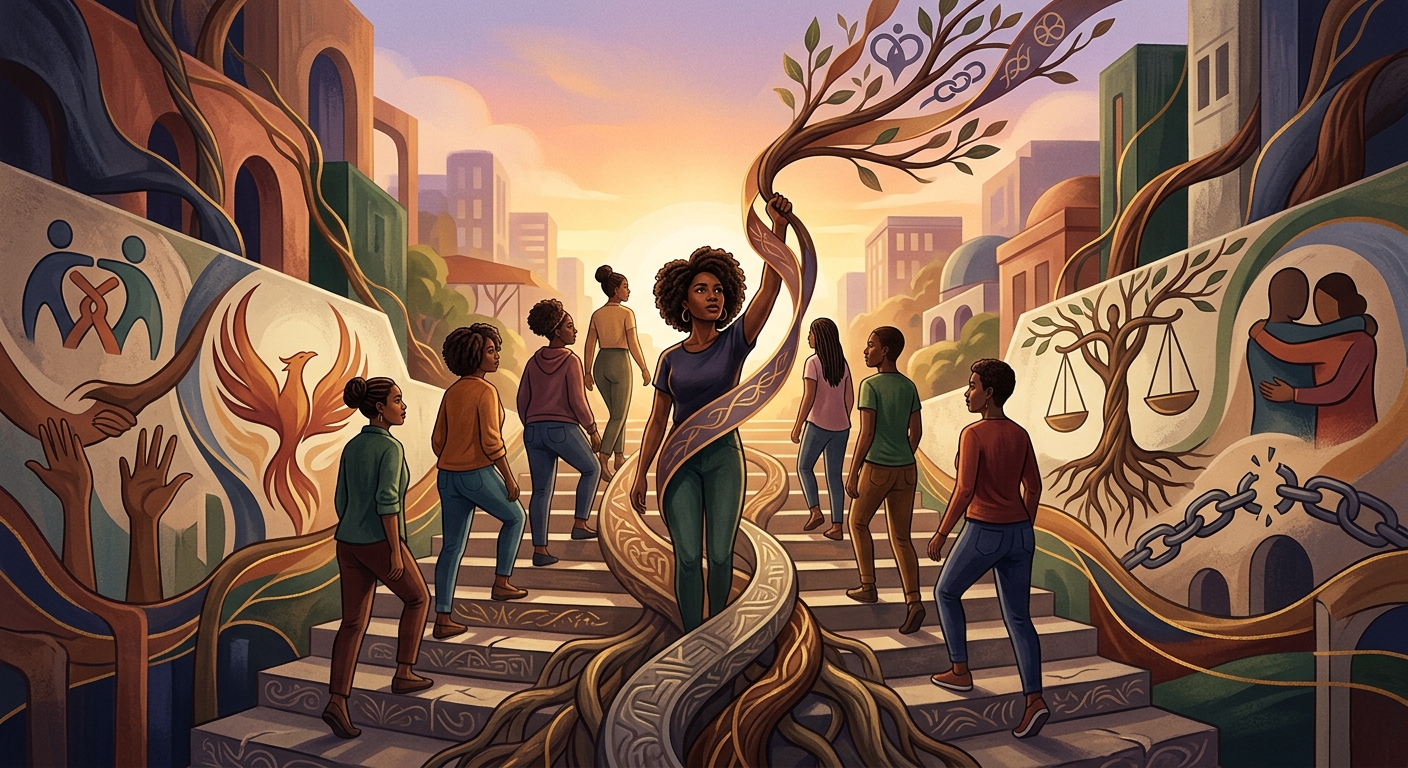
The Intersecting Struggles: Racial Equity and the Pursuit of Bodily Autonomy
The discourse surrounding bodily autonomy in the United States has frequently been confined to narrow legal battles over individual privacy, constitutional interpretations, and healthcare access. However, true bodily autonomy cannot be fully understood, nor fully achieved, without examining it through the critical lens of racial equity. For decades, the mainstream conversation has often overlooked how systemic racism fundamentally alters an individual’s ability to make uncoerced decisions about their own body, their family, and their future. Recognizing bodily autonomy as a comprehensive civil liberties issue requires moving beyond single-issue advocacy and embracing a more holistic, intersectional framework.
This intersectional approach acknowledges that historical injustices, economic disparities, and discriminatory institutional practices create unequal landscapes where marginalized communities are routinely stripped of their agency. Legal frameworks frequently fall short when they ignore the socio-economic dimensions of healthcare. A theoretical right means very little if systemic barriers prevent its exercise. To advocate for true freedom of choice is to advocate for the dismantling of the systemic barriers that make those choices impossible for some while guaranteeing them for others. Anti-racism is not merely about improving interpersonal interactions; it involves actively dismantling laws, norms, and infrastructures that subtly perpetuate inequality. When we understand that racial equity and bodily autonomy are inextricably linked, we begin to see that protecting these rights is not just a matter of clinical healthcare policy, but a foundational pillar of human rights and anti-racist advocacy.
Redefining the Framework: The Birth of Reproductive Justice
To deeply comprehend the intersection of racial equity and bodily autonomy, it is essential to understand the conceptual framework of “reproductive justice.” This term was not born in a corporate boardroom, a traditional political think tank, or a predominantly white feminist organization. Instead, it was coined in 1994 by a group of Black women who recognized the glaring omissions and blind spots in the mainstream women’s rights movement. Prior to this pivotal moment, the dominant narrative focused almost exclusively on the legal right to access abortion and contraception—often framed simply as being “pro-choice.” While these specific legal rights are undeniably critical, the rhetoric failed to encapsulate the lived realities of women of color, Indigenous women, and low-income individuals who faced an entirely different set of compounding systemic threats.
Drawing intellectual inspiration from earlier intersectional frameworks like the Combahee River Collective, the founders of the reproductive justice movement—who later formed the SisterSong Women of Color Reproductive Justice Collective—established a comprehensive human rights framework built on three primary pillars .
- The right to not have children: Maintaining personal bodily autonomy through unhindered access to contraception and abortion.
- The right to have children: Ensuring that individuals can choose to grow their families without facing state-sponsored coercion, forced sterilization, or discriminatory medical practices.
- The right to parent: The ability to raise the children one has in safe, sustainable, and thriving communities, free from state violence and environmental harm .
This expanded definition shifts the entire paradigm from a mere legal “choice” to a broader question of material “access” and “environment.” It argues forcefully that the legal right to a medical procedure is functionally meaningless if a person cannot afford it, cannot access a clinic due to geographic or economic barriers, or lives in a community plagued by environmental toxins. Furthermore, the framework highlights that advocating for the right to birth a child must be coupled with advocating for that child’s right to grow up free from state violence, extreme poverty, and systemic marginalization. By centering the most vulnerable populations, the reproductive justice framework offers a complete vision of what true liberation looks like—one where racial, economic, and health equities are inherently unified.
The Historical Shadow of Coercion and Control
The absolute necessity of a racially conscious approach to bodily autonomy becomes painfully clear when examining the United States’ dark history of reproductive coercion. For marginalized communities, state intervention in family planning has historically not been about expanding choices or empowering individuals, but about exerting demographic and social control. The American eugenics movement of the 20th century serves as a stark, horrifying reminder of how public health policies and pseudo-scientific theories can be weaponized against vulnerable populations.
Throughout the 1900s, federally and state-funded sterilization programs aggressively targeted individuals deemed “undesirable” or “unfit” to reproduce by those in power . These discriminatory practices disproportionately impacted Black, Indigenous, Latina, and low-income women, as well as individuals with physical and cognitive disabilities. Under the guise of public health, crime reduction, and societal improvement, thousands of women were subjected to forced or coerced sterilizations. These life-altering procedures were frequently performed without the patients’ knowledge or informed consent. In many documented instances, such as the notorious “Mississippi appendectomies,” sterilization was performed secretly during other routine medical operations. In other cases, giving up reproductive capacity was mandated as a coercive condition for receiving vital government assistance . This systemic violation of bodily autonomy was a deliberate attempt to manage the demographics of the nation and control the reproductive futures of communities of color.
The legacy of these severe abuses extends far beyond the historical record; it has cultivated a deep, enduring, and entirely justified medical mistrust within marginalized communities. When the medical establishment has historically functioned as an arm of state oppression, the relationship between patients of color and modern healthcare providers remains inherently fraught. This history underscores exactly why the reproductive justice framework insists on the right to have children as fiercely as the right not to. For women of color, asserting the right to safely carry a pregnancy to term and build a thriving family is a profound act of resistance against a system that has long attempted to deny them that very right. Confronting and understanding this historical trauma is an absolute prerequisite for any modern policy aimed at achieving racial and reproductive equity.
The Modern Crisis: Systemic Barriers in Maternal Healthcare
While explicit, state-mandated forced sterilization programs have largely been outlawed, severe racial disparities in reproductive healthcare persist in highly lethal ways today. The most glaring and tragic manifestation of this ongoing crisis is the deeply unequal landscape of maternal mortality. Despite being one of the wealthiest nations in the developed world, the United States struggles with an alarming maternal health crisis that disproportionately and consistently claims the lives of Black birthing people.
According to comprehensive 2024 data released by the Centers for Disease Control and Prevention (CDC), the maternal mortality rate for Black non-Hispanic women was a staggering 44.8 deaths per 100,000 live births . This rate is significantly higher—often over three times as high—as the rate for White non-Hispanic women, which stood at 14.2 . Public health experts, sociologists, and medical researchers have repeatedly demonstrated that these devastating disparities cannot be explained away by differences in income, education levels, or individual lifestyle choices. Even when controlling for socio-economic status, highly educated, middle-class Black women experience vastly worse maternal health outcomes than white women with less education and lower incomes.
The root causes of this deadly crisis are deeply embedded in systemic racism and implicit bias within the healthcare system itself. The concept of “weathering”—a pivotal term coined by public health researcher Dr. Arline Geronimus—describes the severe physical toll that chronic exposure to systemic racism and socio-economic disadvantage takes on the bodies of marginalized individuals. This chronic, relentless stress accelerates biological aging and drastically increases the risk of dangerous pregnancy complications like preeclampsia. Furthermore, implicit biases in clinical settings often lead to the tragic dismissal of Black women’s pain and urgent medical concerns. When a patient’s symptoms are ignored, minimized, or under-treated due to deeply ingrained racial prejudices, the results are frequently fatal. Additionally, healthcare infrastructure often lacks adequate resources in predominantly Black and brown neighborhoods, creating “maternity care deserts” where emergency obstetric care is simply unreachable. Addressing this modern crisis requires more than just medical innovation; it demands a fundamental overhaul of how healthcare is delivered, prioritizing rigorous anti-racist training, equitable resource distribution, and strict institutional accountability for disparate health outcomes.
The Right to Parent in Peace: A Civil Liberties Imperative
The third foundational pillar of the reproductive justice framework—the right to parent children in safe, sustainable, and nurturing communities—illuminates the profound, often overlooked intersection between bodily autonomy and the criminal justice system. For many white, affluent families, the basic ability to raise a child in a physically and environmentally safe environment is taken for granted as a baseline reality. However, for communities of color, multifaceted systemic inequality frequently threatens the integrity, stability, and safety of the family unit.
Over-policing, mass incarceration, and an inequitable child welfare system function as massive, structural barriers to reproductive justice. When neighborhoods of color are disproportionately targeted by aggressive law enforcement tactics, parents are forced to raise their children under the constant, suffocating threat of state-sanctioned violence. The agonizing fear that a routine traffic stop, a mental health crisis, or a simple walk through the neighborhood could result in the death or unjust imprisonment of a child or parent is a severe, daily violation of the right to parent in peace.
Moreover, the modern child welfare and foster care system has historically, and currently, disproportionately targeted Black and Indigenous families. This system frequently conflates the unavoidable symptoms of poverty—such as housing instability or food insecurity—with intentional parental neglect. The frequent, traumatic separation of children from their parents in marginalized communities closely mirrors historical practices of family separation and serves as a modern mechanism for disrupting and destabilizing communities of color. Furthermore, environmental racism plays a crucial role. Zoning laws frequently place toxic industrial facilities, highways, and waste sites directly adjacent to communities of color, directly impacting pregnancy outcomes, infant mortality, and long-term child development. A true anti-racist agenda recognizes that fighting for bodily autonomy means fiercely fighting against any state action or environmental hazard that unjustly tears families apart or poisons their communities.
Forging a Path Forward: An Integrated Anti-Racist Agenda
Achieving true reproductive and racial equity requires an integrated, courageous policy agenda that directly addresses the multifaceted nature of systemic oppression. Advocacy can no longer afford to operate in isolated silos. Policymakers, healthcare providers, civil rights advocates, and community leaders must collaborate strategically to dismantle the structural barriers that deny marginalized communities their inherent bodily autonomy.
This means actively and financially investing in community-based maternal health models, such as drastically expanding Medicaid coverage and providing robust funding for doulas and midwives who can provide culturally competent, continuous care. It requires implementing mandatory, rigorously evaluated anti-bias training and strict accountability measures across all levels of the medical and nursing professions. Furthermore, it necessitates broader, sweeping systemic reforms, including aggressively divesting from punitive criminal justice models and investing those resources heavily into the social determinants of health—such as affordable housing, high-quality public education, and stringent environmental protections. Only by treating bodily autonomy and racial equity as entirely inseparable, unified goals can we build a just society where every individual has the power, resources, and freedom to control their own destiny, free from coercion and systemic violence.
Frequently Asked Questions (FAQs)
What is the primary difference between reproductive rights and reproductive justice?
Reproductive rights generally focus on the narrow legal right to access specific medical services, most notably contraception and abortion. Reproductive justice is a much broader, intersectional human rights framework created by women of color in 1994. It encompasses those essential legal rights but goes further to address the complex social, economic, and systemic barriers that prevent individuals from actually accessing those services. Importantly, it also explicitly champions the right to have children and the right to parent them in safe, sustainable environments.
How exactly does systemic racism impact maternal health outcomes?
Systemic racism impacts maternal health through both broad institutional failures and direct interpersonal interactions. Institutionally, discriminatory policies limit access to high-quality prenatal care, nutritious food, and environmentally safe living conditions (often resulting in maternity care deserts). Interpersonally, implicit biases among medical professionals frequently result in the pain, symptoms, and concerns of Black and Indigenous patients being ignored or dismissed. This combination of chronic stress (weathering) and inadequate medical response leads to drastically higher rates of preventable complications and maternal mortality.
Why is the criminal justice system considered a reproductive justice issue?
The reproductive justice framework explicitly includes the fundamental right to parent children in safe, supportive communities. Disproportionate policing, the crisis of mass incarceration, and a highly inequitable child welfare system frequently separate families of color. These systems create hostile environments where parents cannot guarantee the physical safety, emotional well-being, or future of their children, thereby severely violating their fundamental human rights and their bodily autonomy as parents.
References
- Maternal Mortality Rates in the United States, 2024 — Centers for Disease Control and Prevention (CDC) / National Center for Health Statistics. 2026-03-04. https://doi.org/10.15620/cdc/174651
- Reproductive Justice — SisterSong Women of Color Reproductive Justice Collective. 2024. https://www.sistersong.net/reproductive-justice
- Forced sterilization of women as discrimination — National Institutes of Health (NIH) / PMC. 2017-07-14. https://www.ncbi.nlm.nih.gov/pmc/articles/PMC5713210/
Similar Articles








Read full bio of Sneha Tete


