
Blood Alcohol Levels and DUI: What Every Driver Should Know
Learn how blood alcohol content is measured, how it affects your body, and why even small amounts can lead to serious DUI consequences.
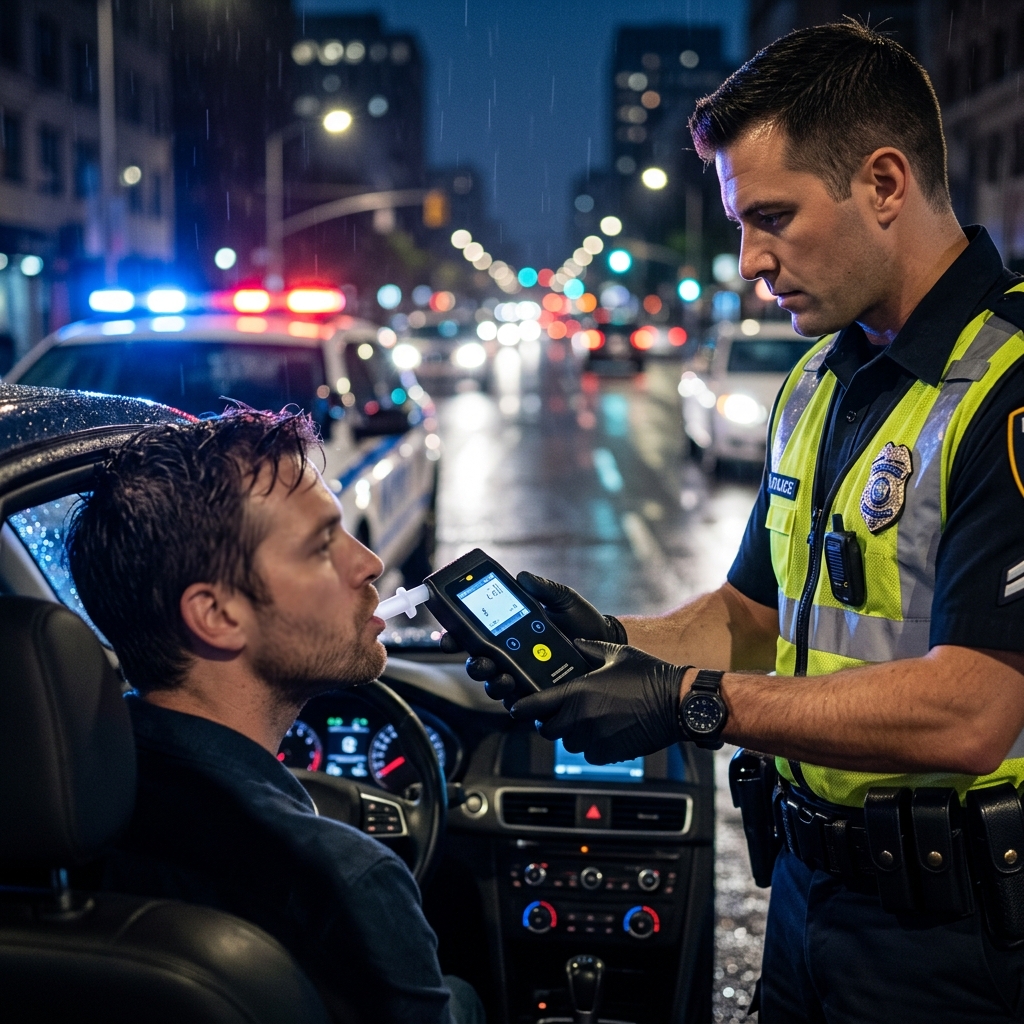
Blood alcohol content, commonly called BAC, plays a central role in drunk driving laws and DUI prosecutions across the United States. Understanding how BAC is measured, how it affects your body, and how it connects to legal limits can help you make safer decisions and avoid serious legal consequences.
What Is Blood Alcohol Content (BAC)?
Blood Alcohol Content (BAC) is a scientific measure of the amount of alcohol in your bloodstream, expressed as a percentage. For example, a BAC of 0.08% means that 0.08% of your blood, by volume, is alcohol.
Alcohol (ethanol) is absorbed into your blood after you drink beer, wine, liquor, or any alcoholic beverage. Once in the bloodstream, it travels throughout your body and affects your brain, organs, and nervous system.
How BAC Is Typically Expressed
- Percentage: The most common format, such as 0.02%, 0.05%, or 0.08%.
- Grams per deciliter (g/dL): Used in many official and medical contexts, such as 0.08 g/dL.
- Range values: Medical and educational resources often describe typical effects in ranges (for example, 0.01–0.05%).
Key Factors That Influence BAC
Two people can drink the same amount of alcohol and end up with very different BAC readings. Several factors influence how quickly and how high BAC rises:
- Number of drinks – More alcohol equals higher BAC.
- Rate of drinking – Drinking several drinks quickly raises BAC faster than spacing them out.
- Body weight – Smaller individuals typically reach higher BAC levels with fewer drinks.
- Biological sex – Average body composition and metabolism differences affect BAC.
- Food intake – Drinking on an empty stomach usually leads to a faster BAC increase.
- Other substances – Medications or drugs can interact with alcohol and change impairment levels.
How BAC Is Measured in DUI Cases
When law enforcement suspects impaired driving, they may use chemical tests to estimate or measure your BAC. These tests can be performed at the roadside, at a police station, or in a medical setting.
Common Types of BAC Tests
- Breath tests – Devices estimate BAC by measuring alcohol in exhaled air. Roadside preliminary tests are often screening tools, while evidentiary breath tests are used as formal evidence.
- Blood tests – A health professional draws a blood sample that is analyzed to determine the exact alcohol concentration.
- Urine tests – Less commonly used for BAC but may be used in certain circumstances or to detect other substances.
A blood alcohol test can typically detect alcohol in the bloodstream for up to about 12 hours after drinking, although impairment may begin and end earlier depending on the person and circumstances.
Blood Test Procedure Overview
For a blood test, a healthcare professional usually:
- Inserts a small needle into a vein in your arm.
- Collects a sample of blood into a vial or tube.
- Labels and sends the sample to a laboratory for analysis.
The procedure is typically quick, often lasting less than five minutes.
Legal BAC Limits and DUI Charges
Every U.S. state has laws that set maximum BAC levels for driving. Exceeding these limits generally creates a presumption that the driver is impaired and can lead to a DUI (Driving Under the Influence) or similar charge.
Standard Legal Limits for Drivers
| Driver Category | Typical Legal BAC Limit | Notes |
|---|---|---|
| Drivers age 21 and over | 0.08% BAC | Most states use 0.08% as the legal threshold for a DUI. |
| Commercial drivers | 0.04% BAC | Lower limit reflects higher safety expectations for professional drivers. |
| Drivers under 21 | 0.01% or similar | Many states apply “zero tolerance” policies for underage drivers. |
While most states set 0.08% as the limit for adult drivers, at least one state has chosen a stricter standard. For example, Utah uses 0.05 g/dL as its legal limit for driving.
Per Se DUI vs. Impairment-Based DUI
In many jurisdictions, there are two broad ways a driver can be found to be driving under the influence:
- Per se DUI – Occurs when a driver’s BAC meets or exceeds the legal limit (for example, 0.08%). Simply reaching this level can be enough to support a DUI charge, regardless of observed driving behavior.
- Impairment-based DUI – A driver may be charged with DUI even with a lower BAC if evidence shows their ability to drive safely was impaired by alcohol or other substances.
Additionally, impaired driving laws often cover more than alcohol. Driving under the influence of illicit drugs, prescription medications, or combinations of substances can also result in criminal charges.
How Increasing BAC Affects Your Body and Driving Ability
As BAC rises, alcohol’s effects on the brain and body become more pronounced. Even relatively low levels can affect judgment and reaction time, which are critical for safe driving.
Approximate Effects by BAC Range
| BAC Range | Typical Effects | Driving Risk |
|---|---|---|
| 0.01–0.05% | Mild relaxation, reduced alertness, slight loss of judgment. | Subtle declines in reaction time and attention; driving becomes more risky. |
| 0.05–0.07% | Reduced coordination, impaired judgment, difficulty tracking moving objects. | Significant increase in crash risk; many safety experts recommend avoiding driving at this level. |
| 0.08–0.10% | Clear impairment of motor skills, slower reaction time, difficulty controlling speed. | Illegal to drive in most states; associated with substantially higher crash risk. |
| 0.10–0.15% | Substantial impairment, slurred speech, blurred vision, problems with balance. | Driving is extremely dangerous; accidents and injuries become increasingly likely. |
| 0.15% and above | Severe impairment, potential for blackouts, vomiting, or loss of consciousness. | Very high risk of serious or fatal crashes; medical emergency may occur at very high levels. |
At extremely high BAC levels, such as above 0.30%, the risk of coma, respiratory failure, and death increases dramatically.
Why “Feeling Fine” Can Be Misleading
Many people assume they can judge their own impairment based on how they feel, but BAC and impairment do not always match subjective perception. Alcohol can give a false sense of confidence and reduce awareness of risk.
- You may feel capable of driving while your coordination and reaction time are significantly reduced.
- Judgment impairment can lead to underestimating how much you have had to drink.
- At higher BACs, memory gaps and altered perception make self-assessment even less reliable.
Special Categories of Drivers and Stricter Limits
Certain groups of drivers face stricter BAC limits because the potential consequences of impaired driving are particularly severe.
Commercial Drivers
Drivers operating commercial vehicles, such as trucks and buses, are usually held to a 0.04% BAC limit. This reflects the larger size and weight of commercial vehicles and the greater responsibility associated with transporting goods or passengers.
Underage Drivers and Zero-Tolerance Policies
In many states, drivers under 21 are subject to zero-tolerance rules. Under these policies:
- Any measurable BAC (often 0.01% or slightly higher) can trigger penalties.
- Consequences can include license suspension, fines, and mandatory education or treatment.
- The aim is to discourage underage drinking and prevent crashes involving young drivers.
Practical Tips to Avoid DUI Problems
Because BAC is affected by many factors and can rise more quickly than expected, planning ahead is crucial.
Safe Planning Strategies
- Use a designated driver – Choose someone who will not drink alcohol at all.
- Rely on taxis or ride-share – Arrange alternative transportation before drinking.
- Do not rely on personal judgment alone – Feeling alert does not guarantee safe BAC levels.
- Be cautious with mixed substances – Combining alcohol with medications or drugs can dramatically increase impairment.
- Know local laws – Legal limits and penalties vary; understanding them can help you make informed decisions.
Frequently Asked Questions About BAC and DUI
1. How long does alcohol stay in my bloodstream?
A blood alcohol test can typically detect alcohol for up to about 12 hours after your last drink. However, your level of impairment may decrease sooner as your body metabolizes the alcohol. The exact timing depends on your metabolism, the amount consumed, and other individual factors.
2. Can I be charged with DUI if my BAC is below 0.08%?
Yes. In many jurisdictions, a driver can be charged with DUI if there is evidence that alcohol or other substances impaired their ability to drive safely, even if their BAC is below the standard legal limit. This is especially true for underage drivers or commercial drivers, who are subject to lower BAC thresholds.
3. Are breath tests as accurate as blood tests?
Breath tests are widely used and can provide reasonably accurate estimates of BAC, particularly when performed on properly calibrated evidentiary devices. However, blood tests are generally regarded as more precise because they directly measure the alcohol concentration in blood.
4. Does drinking coffee or taking a cold shower reduce my BAC?
No. While these actions may make you feel more awake, they do not speed up alcohol metabolism or reduce BAC. Only time allows your body to process and eliminate alcohol from your bloodstream.
5. Can prescription or over-the-counter medications lead to a DUI?
Yes. Impaired driving laws often cover prescription drugs, over-the-counter medications, and other substances if they affect your ability to operate a vehicle safely. Combining these substances with alcohol can further increase impairment and legal risk.
References
- Blood Alcohol Level: MedlinePlus Medical Test — U.S. National Library of Medicine. 2024-01-16. https://medlineplus.gov/lab-tests/blood-alcohol-level/
- Blood Alcohol Content (BAC): What It Is & Levels — Cleveland Clinic. 2023-09-06. https://my.clevelandclinic.org/health/diagnostics/22689-blood-alcohol-content-bac
- Blood Alcohol Content — University of Toledo. 2022-01-10. https://www.utoledo.edu/studentaffairs/counseling/selfhelp/substanceuse/bac.html
- Understanding Blood Alcohol Content (BAC) — College of Saint Benedict and Saint John’s University Well-Being Center. 2021-08-15. https://www.csbsju.edu/well-being-center/health-promotion/alcohol-guide/understanding-blood-alcohol-content-bac/
- The ABCs of BAC — National Highway Traffic Safety Administration. 2005-07-01. https://www.nhtsa.gov/sites/nhtsa.dot.gov/files/809844-theabcsofbac.pdf
- How BAC Levels Can Legally Affect DUI Cases — Justia. 2023-05-12. https://www.justia.com/criminal/drunk-driving-dui-dwi/handling-a-dui-stop/bac-levels/
- Impaired Driving — Centers for Disease Control and Prevention. 2023-07-06. https://www.cdc.gov/impaired-driving/about/index.html
Similar Articles








Read full bio of medha deb




