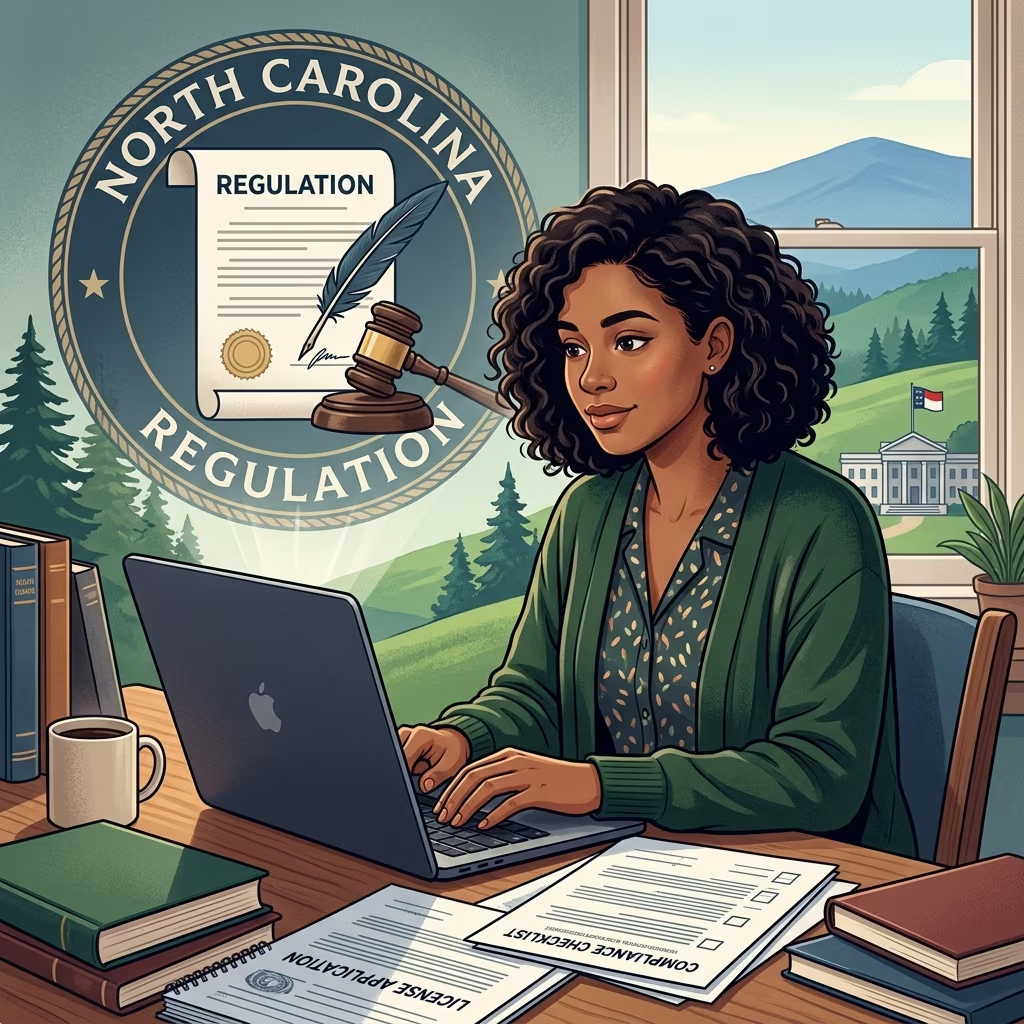
Blogging often begins as a personal hobby, but it can quickly grow into a genuine business: affiliate links, sponsored posts, paid subscriptions, online courses, or consulting services. Once money changes hands, especially on a consistent basis, state law may treat the blogger as a business owner rather than a casual writer. In North Carolina, this distinction can trigger licensing, tax, and regulatory obligations that surprise many online creators.
This article explains how North Carolina can treat a monetized blog as a regulated business activity, why licensing historically mattered in the state, how the legal landscape has recently changed, and what practical steps bloggers and other digital entrepreneurs should take to stay compliant.
From Hobbyist to Entrepreneur: When a Blog Becomes a Business
Not every blog is a business. However, certain patterns of activity push an online creator into the realm of commercial enterprise under state and federal law. Understanding where that line is helps determine whether licensing or other formal requirements apply.
Common Signals That Your Blog Is a Business
- Regular income streams from ads, affiliate marketing, sponsorships, or paid posts.
- Sale of goods or services such as ebooks, digital courses, coaching sessions, or merchandise.
- Business-like behavior, including marketing efforts, branding strategy, and customer support.
- Intent to profit, demonstrated by investment in tools, advertising, or outsourcing tasks.
- Formal structure, such as forming an LLC or registering a trade name.
For tax purposes, the Internal Revenue Service generally expects individuals who consistently earn income and operate in a business-like manner to report that activity as self-employment, not as occasional hobby income. The IRS specifically looks at factors like profit motive, continuity, and professional conduct when distinguishing a hobby from a trade or business.
Why Legal Classification Matters
Once your blog is treated as a business, you may face obligations such as:
- Registering a business entity (e.g., LLC) or using a “doing business as” (DBA) name.
- Obtaining federal and state tax IDs for payroll and sales tax purposes when applicable.
- Complying with consumer protection rules and advertising regulations.
- Considering local permits or state-level licensing in certain industries.
In North Carolina, these obligations intersect with state laws governing business licenses and the now-repealed professional privilege license system, which historically applied broadly to individuals engaging in business activities.
North Carolina’s Approach to Business Licensing
Unlike some states, North Carolina does not issue a single, universal “general business license” for all enterprises. Instead, the state uses a combination of entity registration, tax requirements, and profession-specific licenses.
Entity Registration and Basic Compliance
When a blogger begins operating as a business, the first layer of compliance usually involves the basics of starting a company in North Carolina:
- Choosing a legal structure (e.g., sole proprietorship, LLC, corporation).
- Filing formation documents with the North Carolina Secretary of State, if forming an LLC or corporation.
- Registering for state tax accounts if hiring employees or collecting sales tax.
- Obtaining an Employer Identification Number (EIN) from the IRS for tax reporting.
Legal advisers often highlight that failing to formalize a business structure can expose the owner’s personal assets and complicate tax reporting.
No General Business License, But Many Targeted Ones
North Carolina relies on profession-specific licensing rather than a one-size-fits-all permit. For example, contractors, real estate brokers, healthcare providers, and other regulated occupations must obtain licenses from relevant boards.
Even though a typical lifestyle or health blogger is not obviously operating as a contractor or real estate professional, they might cross into regulated territory if they:
- Offer services that resemble professional advice (e.g., personalized diet planning or fitness programs).
- Use titles or representations that imply professional licensure (such as “nutritionist” or “trainer”) without holding required credentials.
- Provide online education in areas subject to specific regulatory oversight.
The Privilege License: A Broad Requirement That Has Been Repealed
For decades, North Carolina had an additional requirement: the professional privilege license. Under earlier statutes, many individuals practicing a profession or engaging in business activities in the state had to obtain a privilege license and pay an associated tax.
What the Privilege License Used to Mean
The privilege license functioned as a statewide permission and revenue mechanism that applied across a broad range of professions, including doctors, engineers, photographers, accountants, and more.
While ordinary bloggers were not specifically named, the statute’s broad language covered “engaging in business activities,” which could arguably include certain online enterprises that operate as professional services.
| Profession | Regulatory Focus |
|---|---|
| Physicians, dentists, veterinarians | Health and safety of patients |
| Engineers, architects, land surveyors | Public infrastructure and building integrity |
| Real estate brokers | Consumer protection in property transactions |
| Photographers and other professionals | Broad category of business activities |
2024 Reform: Narrowing the Privilege License Requirement
Effective July 1, 2024, North Carolina significantly changed the landscape for the privilege license. The state eliminated the requirement for most professionals, retaining it only for loan and finance companies.
Key consequences of this reform include:
- Most professionals no longer need a privilege license to operate in North Carolina.
- Bloggers and content creators are largely unaffected by privilege licensing post-2024, since most individual professional categories have been removed from the law.
- Businesses still must maintain standard registrations and tax compliance despite the repeal of the privilege license.
While this change makes it easier for many professionals to work without a separate privilege license, it does not abolish other licensing systems or business obligations. Bloggers who operate as businesses still need to pay attention to entity registration, tax rules, and profession-specific regulations.
Licensing Beyond Privilege: When Content Looks Like a Regulated Service
The most complex question for bloggers is not the privilege license, but whether their activities resemble regulated professional services—such as nutrition counseling, mental health therapy, financial advising, or legal practice. These fields are regulated to protect consumers, and operating in them without proper credentials can carry legal risks.
Professional Services and Online Content
Consider a blogger who writes extensively about diet, exercise, or alternative health approaches. General information and personal stories typically fall into the category of free speech. However, problems can arise when the blogger:
- Provides individualized plans or diagnoses rather than general information.
- Charges for one-on-one consultations framed as professional advice.
- Uses titles regulated by state boards (e.g., claiming to be a licensed nutritionist or therapist).
North Carolina, like other states, regulates certain professions through licensing boards. The state also maintains mechanisms to approve or license postsecondary degree programs offered by nonpublic institutions, especially in online and distance learning formats.
If a blogger begins offering structured educational programs that resemble degree-granting activities or professional training, they may need to consider whether those offerings fall under North Carolina’s licensure framework for educational institutions.
Educational Licensure and Online Courses
The University of North Carolina system oversees state authorization for certain nonpublic and out-of-state institutions that provide postsecondary degree programs to North Carolina residents.
Important points for online course creators include:
- Degree-granting programs or formal postsecondary instruction may require licensure or participation in interstate reciprocity agreements such as NC-SARA.
- Non-degree, purely informal courses are less likely to trigger institutional licensure, but operators should still review applicable regulations.
- Religious education programs are exempt from some licensure requirements under North Carolina statute.
For a typical blogger selling a non-credit course or a short online workshop, institutional licensure may not apply. However, the more their offering resembles a formal educational program or a regulated professional training, the more important it becomes to seek legal advice about applicable requirements.
Practical Compliance Tips for Bloggers in North Carolina
Bloggers who earn money from their content and live or operate in North Carolina should treat their activities as a small business and adopt basic compliance practices. The goal is not to stifle creativity, but to avoid regulatory surprises and potential legal exposure.
1. Clarify Your Business Model
- List all revenue sources: ads, sponsorships, affiliate links, digital products, consulting.
- Identify whether you provide general information or individualized advice.
- Determine whether any services resemble regulated professional activities (health, finance, law, education).
Understanding your own business model helps you recognize which legal frameworks apply.
2. Formalize Your Business Structure
A North Carolina planning and business law resource emphasizes that new business owners should avoid the mistake of operating informally without a proper structure.
- Consider forming an LLC to limit personal liability and establish clearer separation between personal and business assets.
- Register your entity with the Secretary of State when required.
- Maintain basic corporate formalities such as separate bank accounts and records.
3. Check for Profession-Specific Licensing
Even though the general privilege license requirement has been sharply limited, North Carolina still licenses specific professions.
- If you offer services related to contracting, real estate, health, or other regulated fields, confirm licensing requirements with the relevant board.
- Avoid using titles or labels that imply licensure unless you hold the appropriate credentials.
- Distinguish clearly between informational content and professional practice.
4. Address Contracts, Disclaimers, and Policies
Legal planning resources for North Carolina businesses emphasize the importance of well-drafted agreements and clear documentation.
- Terms of use: Define acceptable use of your site, intellectual property rights, and limitations of liability.
- Privacy policy: Explain how you collect, use, and protect personal data, especially if you gather email addresses or analytics information.
- Disclaimers: Clarify that your content is informational and not individualized professional advice when appropriate.
- Client agreements: If you offer paid services or coaching, use contracts that outline scope, fees, and responsibilities.
5. Maintain Insurance and Risk Management
North Carolina business guidance often highlights the value of obtaining proper insurance coverage.
- Consider general liability insurance for your business operations.
- Explore professional liability coverage if you provide advice in areas that could expose you to claims.
- Use risk management practices—such as clear documentation, disclaimers, and conservative claims—to reduce potential disputes.
Illustrative Scenarios for North Carolina Bloggers
To make these concepts more concrete, the following examples show how different blogging models might interact with North Carolina’s regulatory framework.
Scenario A: Advertising-Only Lifestyle Blog
- The blogger posts recipes, travel stories, and product reviews.
- Income comes solely from display ads and affiliate links.
- No individualized consulting or professional services are offered.
In this scenario, the blogger is running a business but likely faces only standard obligations: entity formation, tax compliance, and adherence to advertising and consumer protection laws. Profession-specific licensing is generally not implicated, and the privilege license reform means no separate professional privilege license is required.
Scenario B: Health and Nutrition Coaching Blog
- The blogger writes about dietary approaches and sells one-on-one nutrition coaching packages.
- They market themselves using titles that suggest professional expertise.
- They offer personalized plans to clients in North Carolina.
This model may intersect with regulated health professions, depending on how services are described and delivered. The blogger needs to evaluate whether state licensing for nutritionists or other health providers applies, and whether any educational offerings resemble regulated training or degree programs.
Scenario C: Online Course Creator with Structured Programs
- The blogger builds a multi-module online program with assessments and certificates.
- They market the program as career preparation or advanced professional training.
- Some students are North Carolina residents.
If the program begins to look like postsecondary education, North Carolina’s state authorization framework may come into play for institutions delivering degree-related or formal educational content.
Frequently Asked Questions (FAQs)
Do I need a general business license in North Carolina to run my blog?
North Carolina does not issue a universal general business license. However, you may need to register your business entity, comply with tax obligations, and obtain profession-specific licenses if your blog activities fall into regulated fields.
Does the repeal of the privilege license mean bloggers have no licensing concerns?
The repeal of most professional privilege licenses reduces one layer of regulation for many professionals, but it does not eliminate business registration, tax responsibilities, or profession-specific licensing. Bloggers should still evaluate whether their services resemble regulated professional practice.
If I sell an online course through my blog, can that trigger educational licensure requirements?
Simple non-credit courses typically do not require institutional licensure, but degree-granting programs or formal postsecondary education for North Carolina students may fall under state authorization rules. Course creators should review UNC System guidance and seek legal advice if their offerings resemble formal education.
Is general information about health or finance treated the same as professional advice?
General educational content is usually protected speech, but individualized advice—especially when marketed as professional services—can implicate licensing rules. The distinction between general information and client-specific advice is critical for compliance.
What initial steps should I take if my blog is earning consistent income?
First, clarify your business model and revenue streams. Then, consider forming a business entity, registering with the state where required, confirming any profession-specific licensing, and implementing basic contracts, policies, and insurance to manage risk.
References
- State Authorization Unit — University of North Carolina System. 2024-01-01. https://www.northcarolina.edu/offices-and-services/academic-affairs/licensure-department/
- North Carolina Privilege License Requirement Update — Harbor Compliance. 2024-06-01. https://www.harborcompliance.com/blog/north-carolina-privilege-license-requirement-update/
- Avoiding Legal Pitfalls When Starting Your Business in North Carolina — NC Planning. 2023-05-10. https://ncplanning.com/blog/avoiding-legal-pitfalls-when-starting-your-business-in-north-carolina/
- Understanding Business Licenses and Permits in North Carolina — Legacy Law Group NC. 2022-11-01. https://legacylawgroupnc.com/blog/f/understanding-business-licenses-and-permits-in-north-carolina
- Victory! North Carolina Breaks Down Barriers to Work — Goldwater Institute. 2023-09-15. https://www.goldwaterinstitute.org/victory-north-carolina-breaks-down-barriers-to-work/