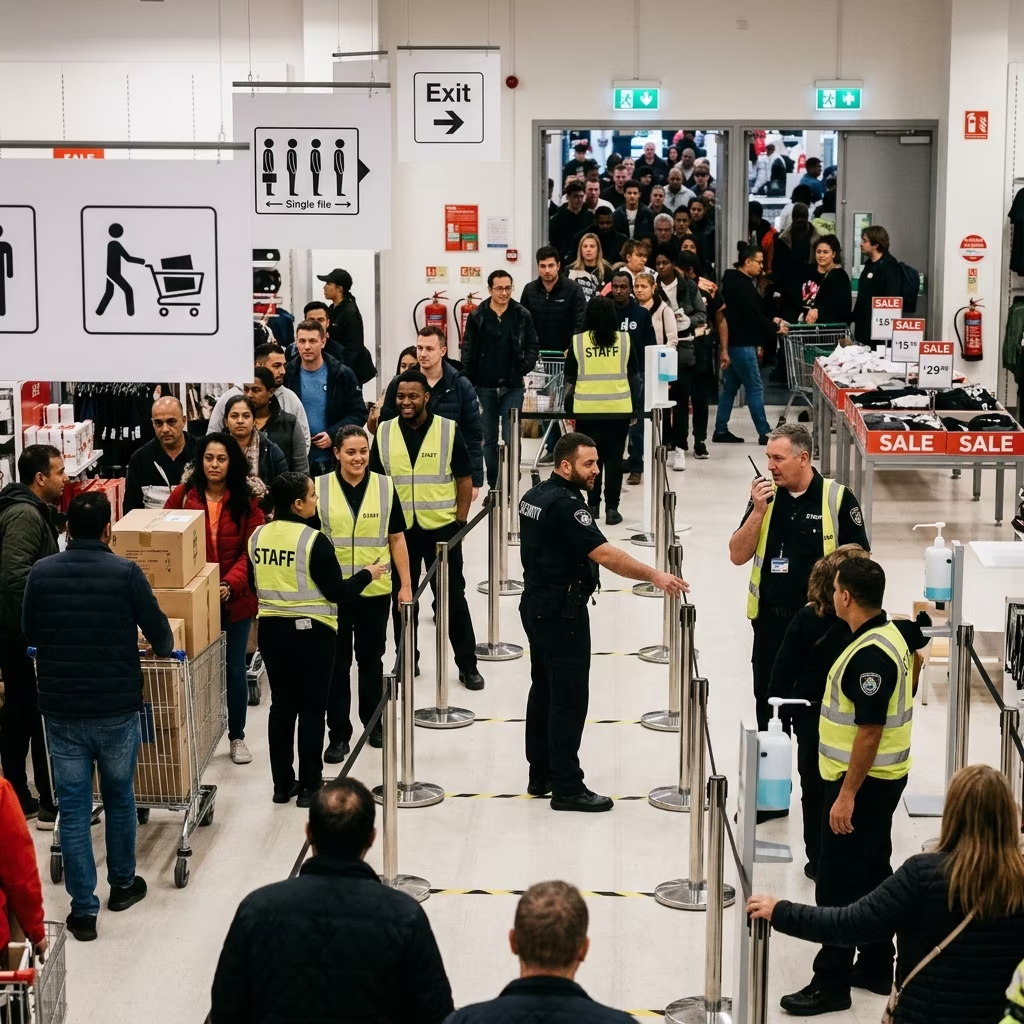
Black Friday can bring a surge of customers, long lines, and tense situations that raise safety risks for both workers and shoppers. Retail employers are expected to plan ahead so crowded sales events do not become preventable injury events.
OSHA has long urged retailers to use crowd management practices during major shopping periods, including controlling entrances, keeping exits clear, and training employees to respond to emergencies. Those ideas remain the foundation of a safer holiday rush.
Why the Holiday Rush Creates Real Workplace Hazards
Large promotional events change the normal rhythm of a store. People arrive early, move quickly, and often compete for limited merchandise. In that environment, small breakdowns in planning can create large risks.
Common hazards include slipping or tripping in congested aisles, being pushed in a crowd, blocked exits, delays in responding to emergencies, and confrontations between shoppers. Employees can also be hurt while opening registers, directing traffic, stocking shelves, or managing customer lines.
Retail safety planning matters because the danger is not limited to shoppers. Workers are the people who must stand in the middle of the rush, handle confused customers, and respond when an issue escalates.
Build a Crowd Management Plan Before the Sale Begins
A written crowd management plan gives a store a framework for handling predictable pressure. OSHA guidance emphasizes that retailers should not wait until the doors open to figure out how traffic will be managed.
At a minimum, a plan should define who is in charge, where people enter, where they line up, how many customers can be inside at once, and what employees should do if the situation becomes unsafe.
- Assign supervisors to direct crowd response.
- Set a maximum occupancy limit and enforce it.
- Map entrance and exit points clearly.
- Use barriers or rope lines to organize queues.
- Prepare a process for pausing entry when the store is full.
- Coordinate with security personnel or local police when needed.
Planning also helps managers avoid improvising under pressure. A team that has already rehearsed its roles is better prepared to make decisions quickly and consistently.
Control the Flow of People, Not Just the Size of the Crowd
One of the most effective safety steps is controlling how customers move before they enter the store. If the line begins immediately at the front door, pressure can build in a tight area and create dangerous surges.
Retailers should place barricades or rope lines far enough from the entrance to keep pathways open and reduce jostling. Signage should explain where to line up, which door to use, and how entry will work once the sale starts.
Inside the store, aisles should remain wide enough for people to pass without squeezing through each other. Stock carts, promotional displays, and seasonal fixtures should never block movement or trap customers near a single exit.
| Area | Safety Objective | Practical Measure |
|---|---|---|
| Store entrance | Prevent crowd compression | Place barriers away from the doorway |
| Sales floor | Reduce congestion | Keep aisles open and remove obstructions |
| Checkout area | Organize waiting customers | Use marked lines and visible direction signs |
| Exit routes | Preserve escape paths | Keep exits unlocked and unobstructed |
Simple traffic control can prevent the kind of disorder that leads to falls, panic, or panic-related injuries.
Keep Emergency Exits Open and Easy to Reach
Clear exits are not optional during high-volume retail events. If customers or employees cannot move out quickly, a minor incident can become a major emergency.
Exit doors should remain unlocked and unobstructed. Hallways, back rooms, and service corridors should never be used as temporary storage areas during the sales rush. Managers should inspect these areas before opening and again throughout the day.
Staff should also know which exits remain available if a main door becomes inaccessible. When possible, emergency routes should be posted in employee-only areas and reviewed in pre-shift briefings.
Good exit planning is especially important if a store uses temporary decorations, stacked merchandise, or special event layouts that alter normal traffic patterns.
Train Employees for the Problems Black Friday Predictably Creates
Retail employees need more than general customer service training during major sales events. They need practical instruction on how to keep order, identify hazards, and escalate problems quickly.
Training should explain how to recognize overcrowding, how to communicate calmly with impatient shoppers, when to call for help, and how to stop entry when the maximum occupancy level has been reached. Staff should also know how to respond if a customer falls, becomes aggressive, or refuses directions.
- Teach de-escalation techniques for tense interactions.
- Review the location of first-aid supplies and emergency exits.
- Explain when to contact supervisors, security, or emergency responders.
- Run short drills before the sale period begins.
- Give workers permission to report hazards immediately.
Training should be brief enough to remember and specific enough to use. The goal is not to turn employees into crowd-control experts overnight, but to make sure they understand the store’s plan and their role in it.
Use Security and Staffing Levels That Match the Event
Large sales often require extra help. A normal staffing pattern may be fine on a typical weekday but insufficient when hundreds of customers arrive at once.
Retailers should consider adding trained security personnel, managers, or other crowd-control staff in advance of the rush. These workers can monitor entrances, reinforce policies, and help keep traffic from becoming chaotic.
When stores know that a product release or special promotion may cause a surge, they should coordinate staffing with the expected volume rather than waiting to see what happens. Staffing decisions should account not only for customer service needs but also for safety oversight.
In some settings, coordination with local police or first responders is also appropriate, especially where past events have drawn unusually large crowds or created public safety concerns.
Communicate Clearly With Shoppers Before They Enter
Many Black Friday problems begin with confusion. Customers are more likely to push, cut lines, or ignore directions when they do not understand how the sale works.
Clear communication can reduce that uncertainty. Retailers should post opening times, line-up procedures, occupancy limits, and entry instructions in places where shoppers can see them before they reach the door. Employees should repeat these instructions calmly and consistently.
Stores can also reduce pressure by explaining where hot items are located, how checkout will operate, and what happens if a product sells out. The more predictable the process feels, the less likely customers are to react aggressively.
Communication should begin early. Once a crowd has already formed at the entrance, it is harder to correct confusion without creating frustration.
Prepare for Emergencies, Not Just Busy Sales
Black Friday planning should include emergency procedures, not only crowd management. A fire alarm, medical issue, power outage, or aggressive altercation can happen during peak traffic and require a fast response.
Managers should know who will call emergency services, who will direct customers, and who will check that exits remain open. Employees should understand that once first responders arrive, their instructions take priority over store routines.
Emergency planning should cover at least the following issues:
- Who communicates with emergency personnel.
- How the store will announce an evacuation or shelter-in-place order.
- How to assist injured customers or employees.
- How to keep staff from re-entering dangerous areas.
- How to document the event afterward.
Emergency procedures are most useful when they are simple, visible, and practiced before the busiest day of the season arrives.
Protect Employees After an Injury Happens
Even with strong precautions, workplace injuries can still occur. When they do, employers must respond quickly and support the injured worker with appropriate medical care and reporting steps.
Employees who are hurt while working may be entitled to compensation for medical costs and lost wages under workers’ compensation systems, which generally cover job-related injuries without requiring proof that the employer intended harm. That makes prevention important, but response just as important once an injury occurs.
After an incident, employers should secure the area, document what happened, preserve witness accounts, and review whether crowd-control measures failed. A meaningful investigation can reveal whether additional training, staffing, or physical controls are needed before the next event.
Practical Steps Retailers Can Put in Place Right Away
Some of the most effective safety measures are inexpensive and easy to implement. The key is doing them early enough to matter.
- Walk the sales floor and identify bottlenecks.
- Check that exit paths are unobstructed.
- Review occupancy limits with supervisors.
- Place directional signs before the crowd forms.
- Schedule extra workers for line management.
- Confirm who will contact emergency responders if needed.
A store that handles crowd control as part of normal planning is less likely to face avoidable injuries, confused employees, or dangerous bottlenecks at the door.
Frequently Asked Questions
What is the main OSHA concern during Black Friday sales?
The main concern is that crowd pressure can create unsafe conditions for workers and customers, including blocked exits, falls, crush injuries, and delayed emergency response.
Do retailers need a formal plan for crowd control?
Retailers are strongly encouraged to use a crowd management plan that addresses entrances, occupancy, signage, staffing, emergency procedures, and exit access.
Why are unlocked exits so important?
Unlocked exits allow people to leave quickly if a fire, altercation, or other emergency occurs. Locked or blocked exits can make a dangerous situation much worse.
Should employees receive special training before major sales events?
Yes. Employees should be trained on crowd management, de-escalation, emergency procedures, and how to report hazards immediately.
Can extra signage really make a difference?
Yes. Clear signage reduces confusion, helps shoppers move in the right direction, and lowers the chance of crowd surges at the entrance or checkout area.
References
- US Labor Department’s OSHA sends reminder to retail associations — Occupational Safety and Health Administration. 2013-11-18. http://www.osha.gov/news/newsreleases/osha-national-news-release/20131118
- ‘Tis the (Retail) Season, Part I: OSHA’s Tips for a Safe Black Friday — Ogletree Deakins. 2013-11-25. https://ogletree.com/insights-resources/blog-posts/tis-the-retail-season-part-i-oshas-tips-for-a-safe-black-friday/
- Black Friday Safety: OSHA Laws for Holiday Crowds — FindLaw. 2026-07-09. https://www.findlaw.com/employment/workplace-safety/black-friday-safety.html
- OSHA Warns Retailers It Expects Better Than Business as Usual on Black Friday — Workforce Bulletin. 2013-11-25. https://www.workforcebulletin.com/osha-warns-retailers-it-expects-better-than-business-as-usual-on-black-friday
- Keeping People Safe this Thanksgiving and Black Friday — National Safety Council. 2024-11-01. https://www.nsc.org/safety-first/keeping-people-safe-thanksgiving-black-friday