
Biometric Authentication vs Passwords: Making the Switch
Explore whether biometric authentication offers genuine security advantages over traditional passwords.
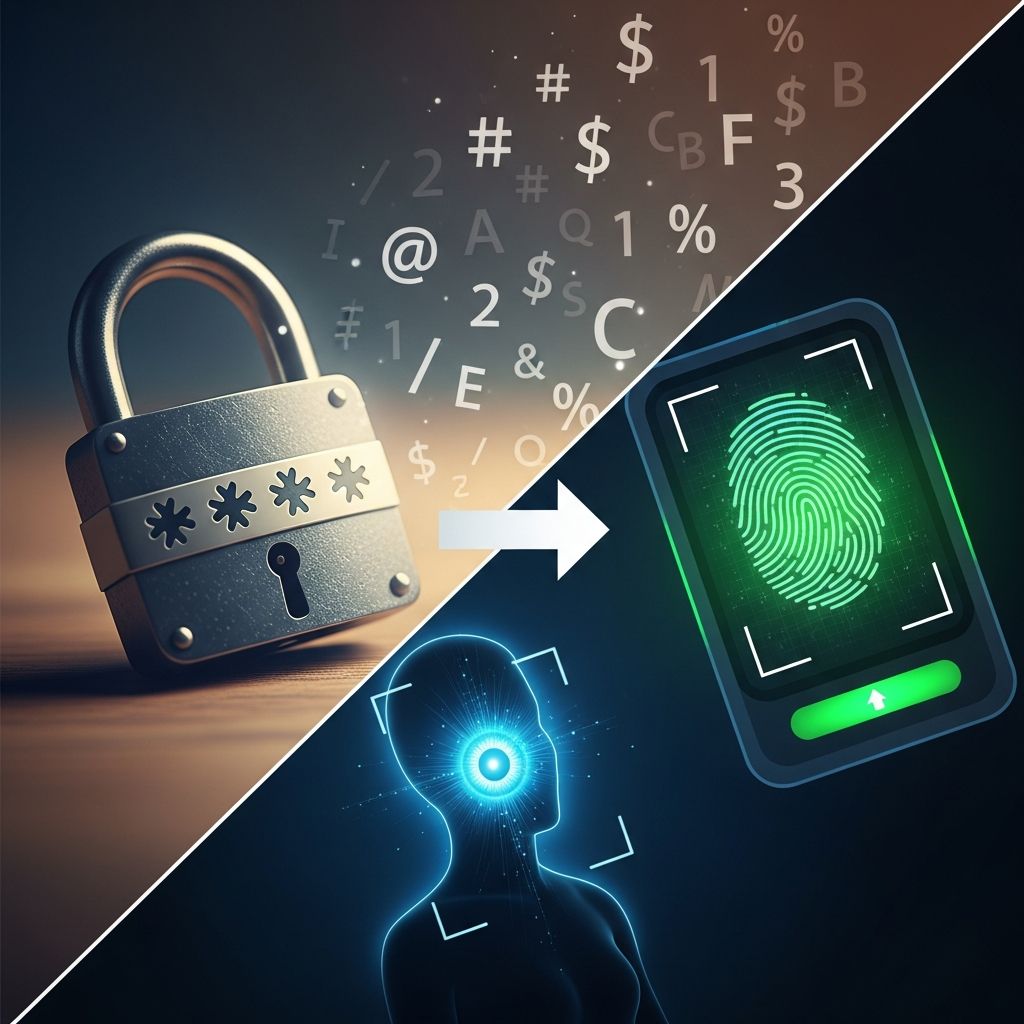
The evolution of digital security has prompted organizations and individuals to reconsider how they protect sensitive information and verify identity. For decades, passwords have served as the primary defense mechanism against unauthorized access. However, emerging biometric technologies—including facial recognition, fingerprint scanning, and iris identification—now offer compelling alternatives that promise enhanced security with improved user convenience. The question facing security professionals and everyday users alike is whether these advanced identification methods truly represent a significant upgrade or if they simply trade one set of vulnerabilities for another.
Understanding the Fundamental Differences in Authentication Approaches
Authentication systems operate on a core principle: verifying that users are who they claim to be before granting access to systems, devices, or information. Traditional passwords accomplish this through something you know—a sequence of characters that theoretically only the legitimate user has memorized. Biometric authentication, by contrast, relies on something you are—unique physical or behavioral characteristics that remain consistent throughout your life.
This fundamental distinction creates divergent security profiles for each approach. Passwords depend entirely on secrecy; if someone discovers your password, the security mechanism fails completely. Biometric systems depend on the difficulty of replicating unique biological traits. A fingerprint or facial pattern cannot be easily copied or transferred between individuals, creating a theoretical advantage over knowledge-based credentials.
Security Advantages of Biometric Technology
Biometric authentication systems offer several compelling security benefits that address documented weaknesses in password-based systems.
Elimination of Reproducibility Vulnerabilities
Unique biological signatures prevent common attack vectors. Password systems face consistent assault through brute force attacks, where attackers systematically attempt thousands or millions of password combinations seeking unauthorized entry. Dictionary attacks exploit users’ tendency to select passwords based on familiar words and patterns. Biometric systems inherently resist these approaches because fingerprints, facial geometry, and iris patterns are statistically unique to each individual. The mathematical probability of randomly matching someone’s biometric data approaches zero, effectively neutralizing entire categories of automated attacks.
This uniqueness extends beyond simple difficulty; it represents a fundamental difference in attack surface. A compromised password might be shared across multiple accounts, amplifying the damage. A biometric identifier, being non-transferable, cannot be easily reused in different contexts or shared between users.
Reduction of Human Authentication Error
Users frequently undermine password security through their own behavior. Passwords get written down on sticky notes, reused across multiple accounts, shared via email, or selected based on predictable patterns like birthdays or sequential numbers. These human factors remain among the most common causes of successful unauthorized access. Biometric authentication sidesteps these vulnerabilities by removing human choice from the authentication process. Users cannot forget their fingerprint or accidentally type their facial features incorrectly, eliminating an entire category of self-inflicted security failures.
Enhanced Accountability and Audit Capabilities
Organizations implementing biometric systems gain improved ability to track and verify user actions. By uniquely binding specific transactions or system access events to individual biometric identifiers, companies can establish clearer audit trails. This capability proves particularly valuable in regulated industries such as finance, healthcare, and government, where demonstrating accountability and preventing fraudulent behavior are critical compliance requirements.
Significant Risks and Vulnerabilities in Biometric Systems
Despite theoretical advantages, biometric authentication introduces substantial practical security and privacy challenges that deserve serious consideration.
The Immutability Problem
Compromised biometric data cannot be reset like a password. This represents perhaps the most fundamental vulnerability distinguishing biometric systems from traditional credentials. If your password is stolen, you simply change it to a new one. If your biometric data is compromised—through a database breach, image capture, or other means—no straightforward remedy exists. Your fingerprints, facial features, and iris patterns remain unchanged throughout your life. A malicious actor possessing copies of your biometric data could potentially use them indefinitely, creating long-term identity theft and fraud risks that extend far beyond the initial compromise.
The permanence of this vulnerability creates cascading risks across systems. When a centralized database stores millions of fingerprints or facial scans, a single breach exposes users to lifetime threats rather than temporary vulnerabilities requiring password changes.
Storage and Transmission Security Challenges
Protecting biometric data throughout its entire lifecycle presents technical challenges often underestimated by organizations implementing these systems. Biometric information must be captured through cameras or sensors, transmitted to processing systems, compared against stored templates, and archived for future authentication attempts. Each transition point in this chain represents a potential vulnerability.
Inadequate encryption protocols, poor storage practices, or insecure transmission channels can expose highly sensitive personal data. The more complex and distributed the biometric authentication system, the greater the potential for security gaps. Centralized repositories of biometric data create massive targets for sophisticated attackers, as a single successful breach compromises millions of individuals’ immutable biological identifiers.
Spoofing and Presentation Attacks
Despite their sophistication, biometric systems remain vulnerable to spoofing attempts where attackers present fabricated or stolen biometric samples to fool authentication systems. Fingerprint sensors can be fooled with high-quality artificial fingerprints created from surface scans. Facial recognition systems may be deceived through photographs, videos, or increasingly convincing deepfake technology. Voice authentication can be compromised with high-quality audio recordings or synthesis.
Modern defenses such as liveness detection—which verifies that biometric samples come from actual people rather than artifacts—represent important countermeasures. However, these safeguards add complexity and can sometimes compromise user experience by requiring additional verification steps. The continuing evolution of spoofing techniques means security providers must constantly update defenses, creating an ongoing arms race with attackers.
Privacy Concerns and Function Creep
Biometric data represents uniquely personal and sensitive information. Facial recognition systems can enable surveillance and tracking with minimal user awareness. Fingerprint databases created for one purpose might be repurposed for law enforcement investigation without individual consent. Voice authentication systems might identify individuals in crowds or cross-reference against other databases containing voice samples.
Function creep—where data collected for a specific, approved purpose gets used for entirely different applications—represents a significant privacy risk in biometric systems. Once comprehensive databases of facial images or fingerprints exist, pressure mounts to use them for purposes far beyond original intent. Government agencies might access private sector biometric databases. Marketing companies might attempt to identify consumers in public spaces. These possibilities create legitimate privacy concerns extending beyond traditional security considerations.
Comparative Risk Analysis: When to Use Each Approach
| Security Factor | Password Systems | Biometric Systems |
|---|---|---|
| Vulnerability to Brute Force Attacks | High | Very Low |
| Dependency on User Behavior | High | Low |
| Recovery Options After Compromise | Easy (Reset Password) | Difficult or Impossible |
| Susceptibility to Spoofing | Moderate | Moderate to High |
| Privacy Risks from Data Collection | Low | High |
| User Convenience | Moderate | High |
| Risk of Unauthorized Sharing | Moderate | Very Low |
Implementing Robust Multi-Factor Authentication Strategies
Rather than choosing exclusively between passwords and biometrics, the most effective security approaches combine multiple authentication factors. Multi-factor authentication (MFA) systems that incorporate both biometric verification and traditional credentials create more comprehensive protection than either method alone.
A practical implementation might require users to authenticate with a password or PIN combined with biometric verification, ensuring that even if one factor is compromised, the second remains protective. Alternatively, organizations might use biometric verification as a primary authentication method while maintaining secure backup authentication paths using tokens or recovery codes, providing resilience if biometric systems fail or become compromised.
Effective security strategies include several key components:
- Implementing liveness detection and anti-spoofing measures that verify biometric samples originate from actual people rather than photographs or videos
- Encrypting biometric data both during transmission and in storage using current cryptographic standards
- Maintaining decentralized biometric storage where possible, keeping sensitive data on user devices rather than centralized databases
- Establishing comprehensive audit trails that track all biometric authentication attempts and data access
- Developing clear policies governing biometric data collection, usage, retention, and deletion
- Providing secure recovery options allowing users to regain access if biometric systems fail
- Conducting regular security assessments to identify and address emerging vulnerabilities
Practical Considerations for Organizations and Individuals
The decision to implement biometric authentication depends heavily on specific context, threat model, and regulatory requirements. Organizations handling highly sensitive data might determine that the convenience benefits of biometric systems do not justify their unique risks, particularly concerning immutable data compromise. Financial institutions, government agencies, and healthcare organizations handling protected information often find that password-based systems combined with multi-factor authentication provide adequate protection while preserving recovery options.
Conversely, consumer-facing applications with massive user bases might benefit substantially from biometric authentication. Smartphone unlocking through facial recognition or fingerprint scanning offers genuine security improvements over PIN codes while dramatically improving user experience. Mobile payment systems using biometric verification provide reasonable security for relatively lower-value transactions.
Individuals should evaluate biometric authentication based on the sensitivity of protected information and their comfort level with data privacy implications. Enabling facial recognition to unlock your personal smartphone represents different risk calculations than providing facial scans to government agencies or commercial databases.
Future Developments and Emerging Technologies
Biometric technology continues evolving rapidly. Advanced artificial intelligence systems now enhance biometric security through improved liveness detection that distinguishes between genuine and spoofed samples with increasing accuracy. Multi-modal biometric systems that combine multiple verification types—requiring facial recognition AND fingerprint verification, for instance—offer enhanced security by making attacks dramatically more difficult.
Privacy-preserving approaches are also emerging, including on-device biometric processing where authentication occurs locally on users’ devices rather than transmitting biometric data to centralized servers. These approaches reduce data collection risks while maintaining security benefits.
Regulatory frameworks are evolving as well. Legal requirements around biometric data handling, consumer consent, and privacy protection continue developing, particularly in jurisdictions with stringent privacy regulations. Organizations implementing biometric systems must remain aware of these developing legal requirements.
Frequently Asked Questions
Q: Can biometric data be used alongside passwords in multi-factor authentication?
A: Yes, biometric data works effectively as one factor in multi-factor authentication systems. Combining biometric verification with passwords or other credentials creates stronger overall security than either method alone.
Q: What happens if someone steals my biometric data?
A: Unlike passwords, biometric data cannot be changed if compromised. This represents the most significant vulnerability of biometric systems. To mitigate this risk, organizations should implement strong encryption, secure storage practices, and limited data retention policies.
Q: Are facial recognition systems more secure than fingerprint systems?
A: Security levels depend on implementation quality and specific safeguards employed. Both systems have strengths and vulnerabilities; neither is universally superior. Facial recognition offers convenience but faces challenges from spoofing attacks using photographs or deepfakes. Fingerprint systems are more resistant to certain spoofing techniques but may be less convenient for contactless authentication.
Q: Should I enable biometric authentication on my personal devices?
A: For personal devices like smartphones, biometric authentication generally offers improved security compared to weak PINs or no locking mechanism, with reasonable convenience benefits. Consider enabling it unless you have specific privacy concerns about the service provider.
Q: Can biometric systems replace passwords entirely?
A: While biometric systems offer advantages, security experts recommend maintaining multiple authentication options. Providing backup authentication methods (recovery codes, tokens, or fallback PINs) ensures users aren’t locked out if biometric systems fail or become compromised.
Q: How can organizations ensure biometric data remains secure?
A: Organizations should implement encryption throughout data handling, maintain audit trails, conduct regular security assessments, limit data retention, provide transparent privacy policies, and consider decentralized storage approaches keeping biometric data on user devices rather than central databases.
References
- Biometric Authentication Benefits and Risks — Identity Management Institute. https://identitymanagementinstitute.org/biometric-authentication-benefits-and-risks/
- Using biometrics — National Cyber Security Centre (NCSC). https://www.ncsc.gov.uk/collection/device-security-guidance/policies-and-settings/using-biometrics
- Biometric Authentication—Benefits and Risks (2024) — Sumsub. https://sumsub.com/blog/biometric-authentication-benefits-risks/
- Biometric Security Pros and Cons in Cyber Protection — Keepnet Labs. https://keepnetlabs.com/blog/what-is-biometric-security-strengths-and-weaknesses
- Risks & Benefits of Biometrics in Security — Software Secured. https://www.softwaresecured.com/post/risks-and-benefits-of-biometrics-in-security
Similar Articles








Read full bio of Sneha Tete


