
Bicycle Accident Response: Legal Steps and Rights
Navigate bicycle accidents with confidence: Essential legal guidance for injury victims.
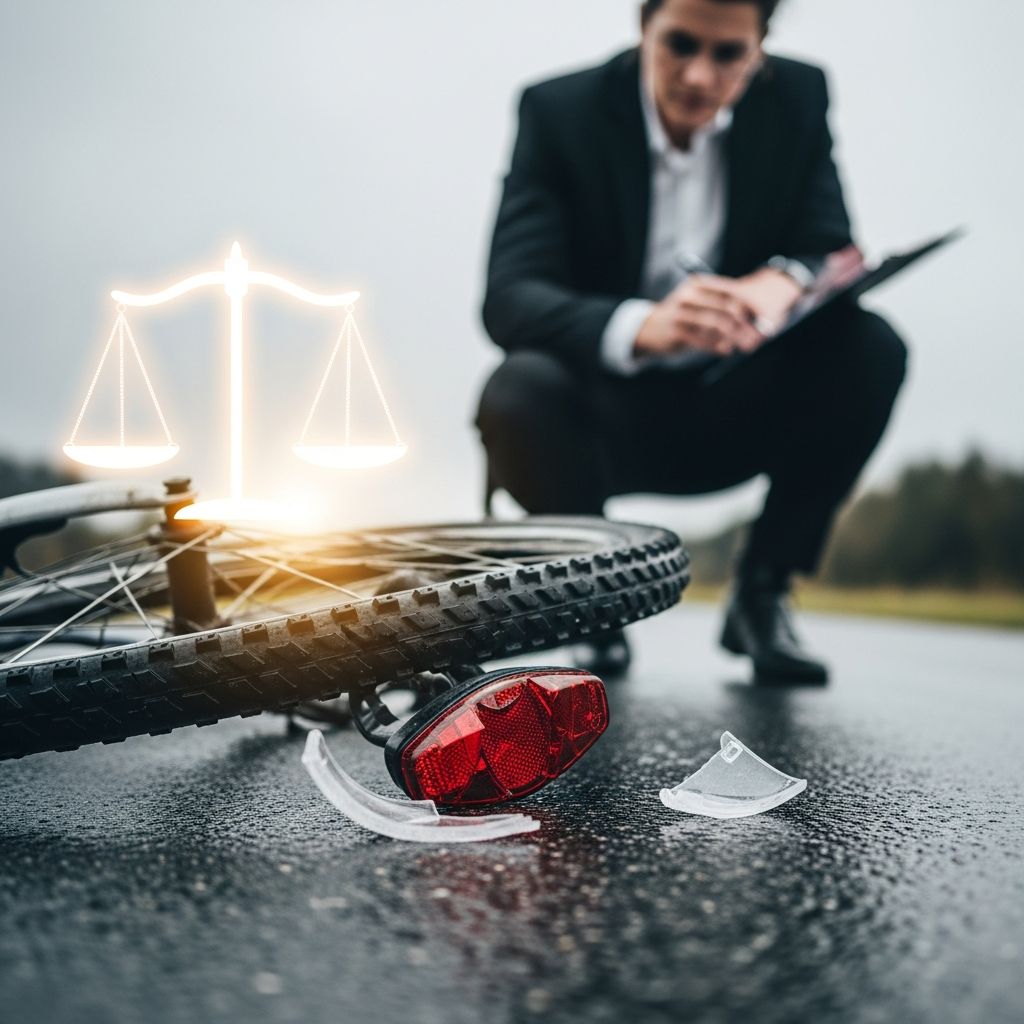
Immediate Actions at the Accident Scene
When a bicycle accident occurs, your first priority should always be ensuring personal safety and well-being. If you are able to move without aggravating injuries, relocate yourself and your bicycle to a safe location away from traffic flow. This prevents additional harm and allows emergency responders clearer access to the scene. Call emergency services immediately if you or anyone else involved has sustained injuries that require medical attention, even if they seem minor at first.
While waiting for assistance to arrive, document the accident scene thoroughly using your smartphone or camera. Capture photographs and videos of the following elements:
- The overall accident scene from multiple angles
- Your bicycle and any visible damage
- The other vehicle involved (if applicable) and its position
- Road conditions, weather, and lighting circumstances
- Traffic signals, signs, or lane markings relevant to the accident
- Visible injuries you sustained
- The surrounding area showing proximity to intersections, buildings, or other landmarks
Gathering witness information is equally critical. Exchange contact details with anyone who witnessed the accident. Ask bystanders for their names, phone numbers, email addresses, and home addresses. Request permission to record brief video statements describing what they observed. Witnesses who depart the scene often become unavailable later, so securing their information immediately prevents losing valuable testimony.
Obtaining Official Reports and Documentation
Police reports serve as credible evidence in bicycle accident claims and investigations. Request that law enforcement create an official accident report and provide you with a copy. The report typically includes officer observations, witness statements, environmental factors, and preliminary fault assessments. In some jurisdictions, you may need to obtain the report number and retrieve the full document from the police department later.
Medical documentation becomes essential, particularly if injuries require emergency room treatment or ongoing care. Preserve all medical records, including initial emergency room visits, follow-up appointments, diagnostic imaging (X-rays, MRI scans), and specialist consultations. These records establish the extent of your injuries and create a timeline of your recovery. Additionally, maintain receipts for all medical expenses, including ambulance services, hospital stays, prescription medications, and rehabilitation therapy.
Insurance documentation must also be organized systematically. If the accident involved a motor vehicle, collect the driver’s insurance information, including the policy number and insurance company details. Document your own insurance coverage, including auto and homeowner’s policies that may cover bicycle accidents. Preserve all correspondence with insurance companies, including claim numbers, adjuster contact information, and written communications regarding your claim status.
Understanding Legal Liability in Bicycle Accidents
Determining fault in bicycle accidents involves examining the conduct of all parties involved. Every driver has a legal duty of care, and failing to uphold that duty creates legal liability for resulting injuries. Courts evaluate driver behavior against standards set by the National Highway Traffic Safety Administration (NHTSA) when assessing whether negligence occurred.
However, cyclists also bear responsibilities under traffic laws. Cyclists must obey the same traffic regulations as motor vehicle operators, including stopping at red lights, riding with traffic flow, and signaling turns. If a cyclist’s violation of traffic laws contributes to the accident, the concept of comparative negligence may apply. This principle allows courts to assign fault percentages to each party based on their respective contributions to the accident.
California employs a pure comparative negligence model, meaning cyclists can recover compensation even when partially at fault. If a cyclist was 30% responsible for an accident, they can still recover 70% of their documented damages. This legal framework recognizes that accidents rarely result from entirely one-sided negligence.
Establishing Negligence Through Evidence
To hold someone legally responsible for your injuries, you must establish that they acted negligently. This involves demonstrating that a duty of care existed, the defendant breached that duty, the breach caused your injuries, and you suffered quantifiable damages. Several questions help determine whether negligence played a role in your accident:
- Did the defendant have a legal obligation to exercise reasonable care?
- Did the defendant’s actions fall below the standard of reasonable care?
- Did the defendant’s negligence directly cause your injuries?
- Did you suffer permanent or serious injuries as a result?
- Did your own conduct contribute to the accident through negligent behavior?
Negligence takes many forms in bicycle accident cases. Common examples include distracted driving, speeding, failing to yield at intersections, unsafe lane changes, and opening vehicle doors into cyclist paths. Establishing these behaviors through witness testimony, traffic camera footage, or accident reconstruction analysis strengthens your claim.
Product Defect Claims in Bicycle Accidents
Some bicycle accidents result from defective or poorly designed equipment rather than driver negligence. Product liability claims offer an alternative path to compensation when manufacturing defects contribute to injuries. Common examples of product defects in bike accidents include brake system failures, cracked or unstable bike frames and forks, and malfunctioning safety gear such as helmets that fail on impact.
Proving product liability differs from proving negligence. Instead of demonstrating careless conduct, you must establish that the product was defective, the defect directly caused your injury, and you were using the item as intended. Product design flaws, manufacturing defects, and inadequate warning labels all constitute potential bases for claims. If your accident involved a defective bicycle component, you may have a claim against the manufacturer or seller of the defective equipment.
Insurance Coverage and Uninsured Motorist Claims
If a motorist with auto liability insurance caused your bicycle accident, their insurance policy typically covers your damages. The at-fault driver’s liability coverage should compensate you for medical expenses, lost wages, property damage to your bicycle, and pain and suffering. Insurance companies are contractually obligated to cover injuries caused by their policyholder’s negligence.
However, complications arise when the at-fault driver lacks liability insurance or carries insufficient coverage. California law provides protection through uninsured and underinsured motorist (UIM) coverage. If you carry your own auto insurance policy with UIM coverage, you can file a claim with your own insurer to recover damages from an uninsured or uninsured driver. This protection ensures you have recourse even when the responsible party cannot pay.
Statute of Limitations for Bicycle Accident Claims
California law imposes strict time limits on filing bicycle accident claims. Most bicycle accidents are classified as personal injury cases, which carry a two-year statute of limitations from the date of the accident. This means you have two years to file a lawsuit against the responsible party. If the injury developed gradually and was not immediately apparent, you have one year from the date the injury was discovered to pursue legal action.
Claims involving government entities follow different timelines. If your accident was caused by a poorly maintained public road or other government negligence, you must file a claim within six months of the incident. Failing to meet these deadlines results in losing your right to pursue compensation entirely. The statute of limitations is one of the most critical deadlines in bicycle accident claims, making prompt legal consultation essential.
Rights and Responsibilities of Cyclists
Cyclists in California have the same rights and responsibilities as drivers of motor vehicles. By law, motorists must treat cyclists with the same caution and respect as other drivers. If a driver fails to do so and causes an accident, they can be held liable for resulting injuries. This legal equality establishes that cyclists are entitled to full protection under traffic and personal injury laws.
Simultaneously, cyclists must comply with all traffic regulations. Key responsibilities include riding with the flow of traffic, staying as close to the right side of the roadway as possible, and signaling turns. Cyclists must obey traffic signals, avoid riding against traffic direction, and follow lane requirements when bike lanes are available. While violating these traffic laws does not automatically bar cyclists from recovering compensation, violations may affect the amount recovered through comparative negligence principles.
It is important to note that even cyclists who commit traffic violations can pursue bodily injury claims. A cyclist who was riding on the wrong side of the street, not wearing a helmet, or lacking proper lights at night may still recover damages. The critical factor is whether the traffic violation caused or contributed to the collision. If your violation was not the cause of the accident, it should not prevent recovery.
Recreational Immunity and Private Property Accidents
Bicycle accidents occurring on private or public land designated for recreational use involve different legal considerations. Generally, landowners owe a duty of reasonable care to keep premises safe for visitors. However, California’s Recreational Immunity Doctrine provides landowners with protection from liability in certain circumstances.
Under Civil Code §846, landowners owe no duty of care to maintain safe conditions for recreational users or to warn of hazardous conditions. This means if you are injured while riding your bicycle for recreational purposes on someone else’s property, the property owner may have no legal liability. The recreational immunity doctrine applies to unpaid recreational users accessing land for activities such as hiking, biking, or picnicking. Commercial recreational facilities and owners who charge fees fall outside this protection.
Pursuing Compensation and Damages
When someone else’s negligence causes a bicycle accident, victims are entitled to compensation for injuries and losses. Recoverable damages include medical expenses, lost wages from time unable to work, property damage to the bicycle, and pain and suffering. Long-term or permanent injuries may justify compensation for ongoing medical care, rehabilitation costs, and diminished earning capacity.
Insurance companies and responsible parties frequently attempt to minimize or deny claims by blaming cyclists. Common allegations include improper lane changes or riding into vehicle paths. Because California follows comparative negligence principles, it is crucial to contest these claims vigorously. Experienced legal representation helps present evidence of the defendant’s negligence and counter unfounded allegations of cyclist fault.
When fault is divided between parties, your recovery is reduced proportionally. For example, if you were found 10% at fault for an accident, your awarded damages are reduced by 10%. This makes establishing the defendant’s primary responsibility critical to maximizing your recovery. Each percentage point of fault significantly impacts the total compensation received.
Frequently Asked Questions About Bicycle Accidents
Q: What should I do immediately after a bicycle accident?
A: Ensure your safety by moving to a safe location, call emergency services if injuries require medical attention, photograph the accident scene and damage, exchange information with involved parties, and gather witness contact information and statements.
Q: Can I recover damages if I was partially at fault for the accident?
A: Yes. California’s comparative negligence doctrine allows you to recover damages even when partially responsible. Your compensation is reduced by your percentage of fault, so if you were 25% at fault, you can recover 75% of your damages.
Q: How long do I have to file a bicycle accident claim?
A: California allows two years from the accident date to file personal injury claims. For gradually discovered injuries, you have one year from the discovery date. Claims involving government entities must be filed within six months.
Q: What if the at-fault driver has no insurance?
A: You may file an uninsured motorist (UIM) claim with your own auto insurance carrier if you carry UIM coverage. This protection ensures you can recover damages even when the responsible party lacks insurance.
Q: Can I claim compensation for a defective bicycle component that caused my accident?
A: Yes. If a manufacturing defect, design flaw, or lack of adequate warnings caused your accident, you can pursue a product liability claim against the manufacturer or seller of the defective component.
Q: Do traffic law violations prevent me from recovering damages?
A: Not necessarily. Even traffic violations do not automatically bar recovery. The critical factor is whether your violation caused the accident. If another party’s negligence was the primary cause, you may still recover compensation.
References
- Who’s Liable in a Bicycle Accident? Understanding Negligence in California — AA Law. 2024. https://aa.law/blog/whos-liable-in-a-bicycle-accident-understanding-negligence-in-california/
- Rights and Responsibilities as a Bicycle Rider in California — J. Rosenberg Law Offices. 2024. https://www.jrosenberg.com/rights-and-responsibilities-as-a-bicycle-rider-in-california/
- Determining Fault in Bicycle Accidents — Ben Crump Law. 2024. https://bencrump.com/areas-we-serve/los-angeles-ca/bicycle-accident-lawyer/
- Legal Rights and Responsibilities for Cyclists in Orange County — Rosen Law Offices. 2024. https://www.snrosenlaw.com/bicycle-accidents/
- The Legal Rights of E-Bike Riders in California — California Accident Attorneys Blog. 2024. https://www.californiaaccidentattorneysblog.com/the-legal-rights-of-e-bike-riders-in-california-understanding-californias-e-bike-laws/
- Bicycle Accident Attorney — San Francisco — Fulvio A. Picerno, Esq. 2024. https://picernolaw.com/bicycle-accidents/
- Oxnard Bicycle Accident Lawyer | Bike Injury Attorney — Crane Flores LLP. 2024. https://www.cranefloresllp.com/personal-injury/bicycle-accidents/
Similar Articles








Read full bio of Sneha Tete


