
New York Pet Cremated Remains Law: A Practical Guide Explained
How New York’s burial law lets devoted pet owners share a final resting place while respecting cemetery and consumer protection rules.
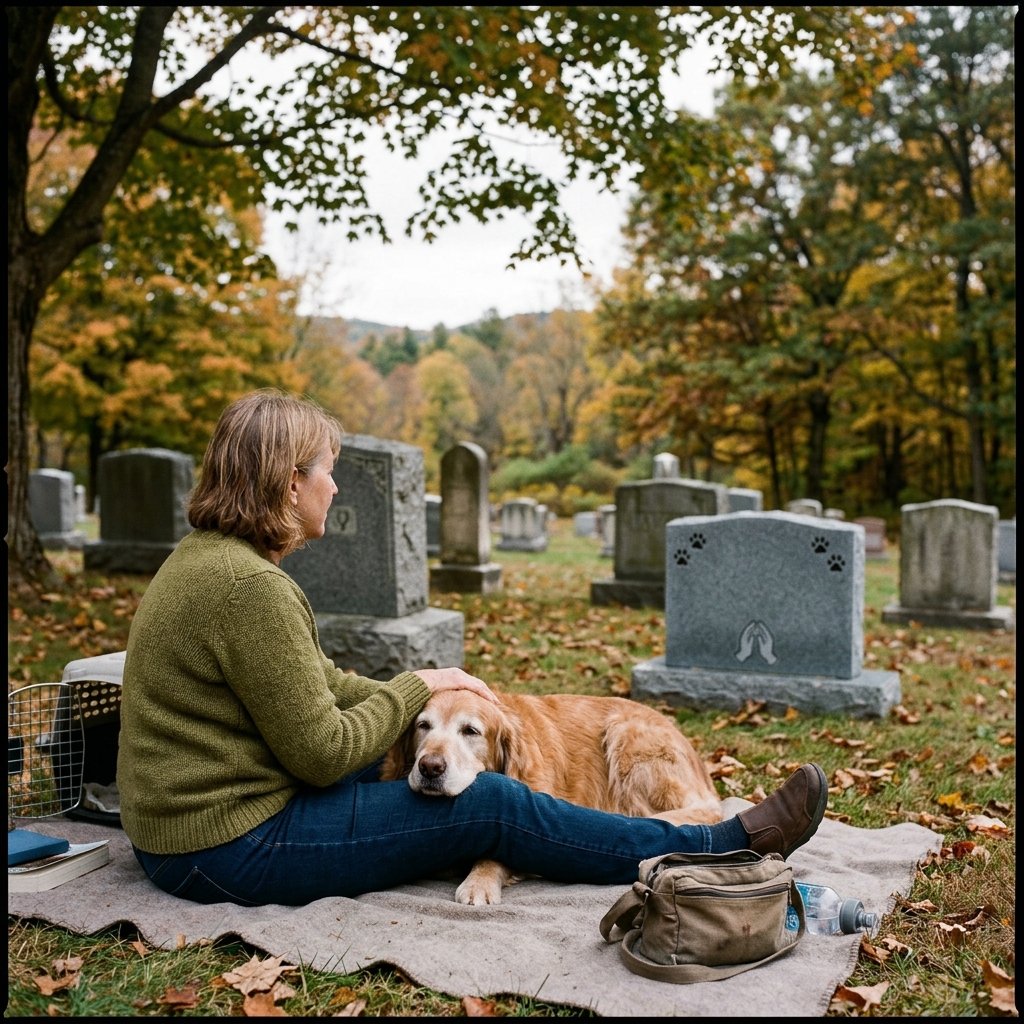
For many New Yorkers, pets are more than animals; they are family members, emotional anchors, and daily companions. It is unsurprising that some people want their final resting place to reflect that bond. New York law now allows certain cemetery lots to hold both human remains and the cremated remains of a pet, but the rules are detailed and specific. This guide explains what that law does, what it does not do, and how pet owners can plan ahead.
1. How New York Came to Allow Burials With Pets
For years, truly devoted pet owners had limited options if they wanted to share a grave with a pet. They could be buried in a pet cemetery, which is legally set up for animal remains, or rely on informal arrangements that did not have clear legal protection. New York changed this by adopting a law that lets certain cemeteries inter the cremated remains of companion animals in graves or niches intended primarily for human remains.
The policy is part of a wider trend. Other states, including Virginia and Pennsylvania, have passed laws that explicitly authorize cemeteries to create sections where humans and pets can be buried close together or side by side. These developments recognize the social reality that pets often play the same role as family members and that many people want end-of-life arrangements that acknowledge that relationship.
1.1. Why Lawmakers Addressed Pet Cremated Remains
New York’s approach focuses specifically on pet cremated remains, not full pet bodies. That choice reflects several legal and practical concerns:
- Health and sanitation: Cremated remains pose fewer public health risks than buried animal bodies.
- Cemetery layout and space: Urns with ashes occupy much less space than additional caskets.
- Regulatory clarity: Cremation reduces concerns about decomposition that could conflict with human burial regulations.
By limiting the law to cremated remains in sealed urns, the state balances demand from pet owners with the responsibilities cemeteries have to all lot owners and visitors.
2. Core Features of New York’s Pet Cremated Remains Law
New York’s law does not create a general right for anyone, anywhere, to be buried with their pet. Instead, it allows certain cemeteries to offer the service if they choose to, under defined conditions. Understanding these conditions is critical for planning.
2.1. Cemeteries That May Participate
The law applies only to non-profit, non-religious cemeteries. Religious cemeteries and for-profit cemeteries are outside its scope. A cemetery is not required to accept pet cremated remains; it may decide whether to offer that service.
- Non-profit, non-religious cemeteries may opt in and adopt policies for interring pet cremated remains.
- Religious cemeteries are exempt. Their governing bodies or religious authorities decide whether pets can be interred, often under separate rules.
- For-profit cemeteries are not covered by this law and typically may not use it as authority to accept pet cremated remains with human remains.
2.2. Incidental Interment: Human Remains Come First
The law describes the interment of pet cremated remains as incidental to human burial. In practice, this means:
- Every grave, crypt, or niche is legally intended primarily for human remains.
- Pet cremated remains may be added only where human remains are present or will be present.
- The grave must not appear to be devoted primarily to pet remains; cemetery layouts and policies must reflect that human burial is the central purpose.
This incidental framework is important because it preserves the legal character of cemeteries as places for human burial, while allowing a limited secondary use.
2.3. Simultaneous Interment Requirement
New York’s law requires that the pet’s cremated remains be interred at the same time as the human remains.
- Cemeteries are not expected to reopen graves to add pet ashes later.
- The practical implication is that the pet must already be deceased, cremated, and ready for interment at the time of the owner’s burial.
- In scenarios where the pet outlives the owner, simultaneous interment is not possible under this rule; in those cases, families may need alternative arrangements.
This timing rule can be emotionally challenging, but it is designed to avoid repeated disturbance of graves and to keep cemetery operations manageable.
2.4. What Counts as a Pet Under the Law
New York’s law focuses on domesticated companion animals rather than any creature someone might label a “pet.”
- Dogs, cats, and other typical household animals fit within the concept of companion animals.
- Caged wild animals or animals that cannot legally be owned as pets do not qualify.
- The cremated remains must be contained in a sealed urn, and cannot be commingled with human remains.
These definitions reflect both animal control laws and cemetery regulations, which distinguish between domesticated animals and wildlife for safety and legal reasons.
3. How Cemeteries Must Handle Pet Cremated Remains
Cemeteries that choose to permit pet cremated remains must comply with several procedural and documentation requirements. These rules are meant to protect consumers, preserve orderly records, and maintain the cemetery’s primary role as a resting place for human remains.
3.1. Written Authorization
The law requires written authorization before any pet cremated remains are interred.
- One written authorization gives the lot owner the general right to inter pet cremated remains in the grave, crypt, or niche.
- A second written authorization applies when the right is actually exercised and the pet’s cremated remains are interred.
- If both actions occur at the same time—such as when the lot is purchased and the pet’s remains are interred—the cemetery may combine both authorizations into one form, as long as both rights are clearly documented.
Cemeteries must retain these authorizations in their records. This documentation can be important decades later, when families or regulators review how a lot is being used.
3.2. Physical Handling of Pet Cremated Remains
New York sets basic requirements for how pet cremated remains are placed in a grave or niche.
- The cremated remains must be in a sealed urn designed to contain the ashes.
- The urn must be placed in a grave, crypt, or niche that either contains or will contain human remains.
- The law does not permit scattering of pet cremated remains in the cemetery; scattering is outside the authorized scope.
- The pet’s ashes cannot be mixed directly with human remains; commingling is prohibited.
These requirements keep cemetery practices consistent with broader burial regulations and help avoid disputes over how remains were handled.
4. Backyard Pet Burial and Other Options in New York
Being buried with a pet in a cemetery is only one part of the legal landscape. New York also addresses how people may handle the remains of their pets outside of cemetery settings, including backyard burial and cremation.
4.1. Backyard Burial Rules
New York permits pet owners to bury animals on their own property, as long as the burial does not create a health hazard or nuisance. This is a separate issue from the human–pet burial law, but many families consider it when planning how to honor a pet.
- Burial is allowed on private property if the owner meets local health and safety requirements.
- Burials should be deep enough—often at least three feet—to prevent scavenging animals from disturbing the remains.
- Owners should avoid burying pets near wells, streams, or wetlands to protect water quality.
- It remains illegal to bury animals on public property, including parks and rights-of-way.
Local governments may have additional ordinances, so checking city or county rules is recommended before choosing a backyard burial.
4.2. Pet Cremation Services
Cremation is a widely used option in New York and can be a step toward interring pet ashes with human remains in a cemetery. Pet crematoriums operate under state rules and licensing requirements.
Typical price ranges for pet cremation in New York include:
- Communal cremation (ashes not returned): roughly $50–$200, depending on size and location.
- Private cremation (ashes returned to the owner): often $125–$450, with witnessed or memorial services costing more.
In New York City, the municipal system notes that residents can bring deceased pets to designated locations for cremation for a set fee, although policies and fees may change and should be confirmed in advance.
5. Planning to Be Buried With Your Pet
Pet owners who wish to use New York’s law need to plan ahead. The law alone does not guarantee that a cemetery will accept pet cremated remains, nor does it automatically coordinate timing, cremation, and documentation. Thoughtful planning can reduce uncertainty for both the owner and their family.
5.1. Key Steps for Pet Owners
- Confirm cemetery participation: Contact prospective non-profit, non-religious cemeteries and ask if they accept pet cremated remains, and under what conditions.
- Review written policies: Request copies of the cemetery’s rules on pet cremated remains, including any fees, limits on the number of pets, and urn requirements.
- Discuss with your family: Explain your wishes and how they fit within the law, so relatives understand the practical and emotional reasons behind your plan.
- Talk to your attorney: Incorporate your wishes into your will, trust, or other estate documents, and ensure you name someone who understands the steps required.
- Coordinate with your veterinarian: If your pet is elderly or ill, discuss cremation options, including how ashes will be returned and stored until needed.
5.2. Common Planning Challenges
Several complications can arise when trying to align human and pet burials under New York’s law:
- Timing mismatch: Many pets die before their owners, but some pets outlive them. Because the law requires simultaneous interment, an owner whose pet lives longer may not be able to share a grave under the statutory framework.
- Cemetery policy changes: A cemetery that currently accepts pet cremated remains could change its policy in the future. Written contracts and clear documentation are important.
- Family disagreement: Some relatives may feel uncertain about the presence of pet remains in a family plot, especially in multi-generation lots. Early discussion can help avoid conflict.
6. Ethical and Cultural Considerations
Beyond legal rules, burial with pets raises ethical and cultural questions. The law tries to respect differing perspectives by allowing cemeteries to opt in while preserving space for religious traditions that do not permit pets in human cemeteries.
- Respect for religious norms: By excluding religious cemeteries, the law avoids imposing requirements that might conflict with doctrinal beliefs.
- Balancing grief needs: For some, sharing a grave with a pet is deeply meaningful. For others, the idea feels unfamiliar. The law creates options without forcing them.
- Public perception: Clear rules about incidental interment help ensure cemeteries continue to be seen as dignified spaces while accommodating evolving attitudes about animals.
7. Quick Comparison: Cemetery Versus Backyard Options
| Option | Who Is Buried | Key Legal Features | Typical Use Case |
|---|---|---|---|
| Human cemetery with pet cremated remains | Human plus pet ashes (sealed urn) | Non-profit, non-religious cemetery; incidental interment; written authorization; simultaneous interment; no scattering. | Owner wants a formal grave shared symbolically with a pet, under regulated rules. |
| Backyard burial | Pet body only | Allowed on private property if no health hazard or nuisance; depth and location guidelines; prohibited on public land. | Owner prefers an informal grave at home, without combining human and pet burials. |
| Pet cemetery | Pet only | Specialized facilities for animal remains; New York’s human–pet burial law does not convert these into human cemeteries. | Owner wants a dedicated resting place for the pet, separate from human graves. |
8. Frequently Asked Questions
8.1. Can any New Yorker be buried with their pet?
No. Only non-profit, non-religious cemeteries that choose to offer this service can inter pet cremated remains with human remains, and they must follow state rules about authorization and timing.
8.2. Does the pet have to be cremated?
Yes. New York’s law concerns pet cremated remains in sealed urns. Full-body pet burials with human remains in the same grave are not covered by this framework, and commingling of ashes with human remains is prohibited.
8.3. Can a cemetery scatter my pet’s ashes near my grave?
No. The law specifically requires that pet cremated remains be placed in a grave, crypt, or niche, and does not permit scattering of pet ashes within the cemetery as the method of interment.
8.4. If my pet dies years before me, can I still be buried with its ashes?
Yes, as long as the pet has been cremated and the ashes are preserved in a sealed urn. However, the actual interment must take place at the same time as your burial, not years earlier or later.
8.5. What if I live in New York City and cannot bury my pet at home?
New York City allows property owners to bury animals on their own property if there is no health hazard, but in dense urban areas it may be impractical. Residents can use pet cremation services, including municipal options listed by NYC311 or private providers, and then decide whether to store the urn at home, place it in a pet cemetery, or plan for interment with human remains under the state law.
8.6. Are these laws the same in other states?
No. There is no single national pet burial law. States vary widely: some allow backyard pet burials with conditions, others restrict them, and only a few explicitly authorize cemeteries to inter humans and pets in adjacent or shared sections. Anyone outside New York should consult local statutes and cemetery regulations.
References
- You Can Now Be Buried With Your Pet in a NY Cemetery — FindLaw Legal Blogs. 2016-09-29. https://www.findlaw.com/legalblogs/legally-weird/you-can-now-be-buried-with-your-pet-in-a-ny-cemetery/
- Pet Cremated Remains Frequently Asked Questions — New York State Department of State, Division of Cemeteries. 2016-10-24. https://dos.ny.gov/pet-cremated-remains-frequently-asked-questions
- New Law Allows Owners to be Buried with Pets — TrustLaw (The Trust Company of Virginia). 2014-08-26. https://www.trustlaw.com/resources/blog/new-law-allows-owners-to-be-bu/
- Dead Animal on Private Property — NYC311, City of New York. 2023-05-01 (last updated). https://portal.311.nyc.gov/article/?kanumber=KA-03451
- Pet Burial Laws by State [2024 Guide] — Pet Memory Shop Blog. 2024-01-15. https://petmemoryshop.com/blogs/pet-loss-support/pet-burial-laws-by-state-2024-guide
- State and Local Pet Burial Laws in the United States — Titan Casket Blog. 2023-08-10. https://titancasket.com/blogs/funeral-guides-and-more/state-and-local-pet-burial-laws-in-the-united-states
- New York Pet Cremation Guide: Laws, Costs & Options — Funeral.com. 2026-01-05. https://funeral.com/blogs/the-journal/new-york-pet-cremation-guide-laws-costs-options
Similar Articles








Read full bio of medha deb


