
Can You Sue For A Bad Online Review: When To Act In 2025 Safely
Why rushing to court over a harsh online review can backfire, and smarter legal and business strategies to protect your reputation.
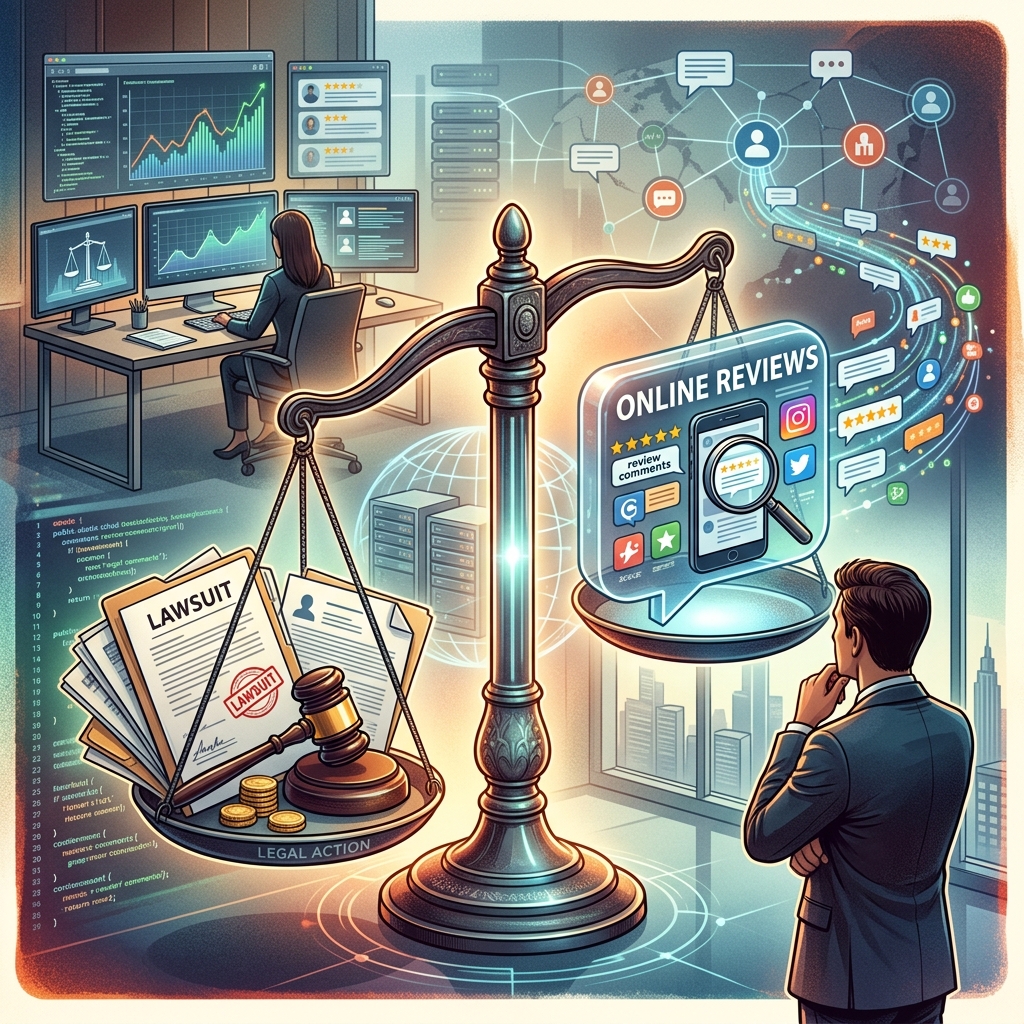
Online review platforms have become central to how customers decide where to eat, who to hire, and which products to trust. For small business owners, a single harsh review can feel devastating. The temptation to call a lawyer and file a lawsuit is understandable, but rushing into court is often the most expensive and least effective way to respond.
This article explains why suing is rarely the best first move, when legal action might be appropriate, and how to protect your reputation without turning a customer complaint into a prolonged legal battle.
Why Online Reviews Matter So Much to Small Businesses
Online reviews influence consumer choices in nearly every industry, from restaurants and retail to professional services and health care. Even a handful of low-star ratings can significantly reduce traffic to your website or storefront and affect search engine visibility.
As a result, negative feedback can feel like an attack on the core of your business. Yet, from a legal standpoint, not every painful review is actionable. Understanding this distinction is critical before pursuing any claim.
- High visibility: Popular platforms can expose reviews to thousands of potential customers.
- Long shelf life: Critical comments can remain online indefinitely, influencing future buyers.
- Trust factor: Consumers often trust peer reviews more than advertising or company statements.
Because of this influence, many business owners assume that litigation is the best way to “set the record straight.” In reality, legal protections for review sites and consumers are strong, and courts are cautious about chilling free speech.
Key Legal Frameworks Governing Online Reviews
Before considering any lawsuit, it is essential to understand the major legal rules that govern online reviews and review platforms. Three concepts dominate this area: defamation law, federal protections for review websites, and consumer protection laws on reviews.
Defamation Basics: Opinion vs. False Statements
Most lawsuits over reviews hinge on whether the content is defamatory. Defamation generally involves a false statement of fact published to a third party that damages reputation. Courts distinguish between factual assertions that can be proven true or false and opinions or subjective impressions that cannot.
| Type of statement | Example | Likely legal status |
|---|---|---|
| Opinion | “I think the service was rude and unprofessional.” | Generally protected speech; not defamation. |
| Factual claim | “This business charges hidden fees that are not disclosed.” | May be actionable if demonstrably false and harmful. |
| Accusation of crime | “They stole my credit card information.” | More likely to be treated as potentially defamatory if false. |
To succeed in a defamation claim, a business typically must show:
- A false statement of fact, not mere opinion or hyperbole.
- Publication to at least one third party (e.g., posted online).
- Resulting harm, such as loss of customers or damage to reputation.
- A level of fault (negligence or malice) by the reviewer.
If the review is harsh but ultimately reflects the customer’s subjective view—for example, calling a product “terrible” or staff “rude”—courts are unlikely to treat it as defamation.[10]
Section 230: Why Suing the Review Site Usually Fails
Many business owners instinctively blame the platform that hosts the review. However, U.S. law generally shields websites that publish user-generated content from liability for what users say. Under federal law that protects online intermediaries, review sites are treated as platforms, not publishers, for content posted by users.
In practice, this means:
- Review platforms are usually not legally responsible for defamation claims based on user reviews.
- Courts frequently dismiss suits against websites at an early stage, leaving plaintiffs with legal bills but no remedy.
- Any viable claim, if one exists, is almost always against the individual poster, not the platform.
Because of these protections, suing a large review site is rarely successful and often leads to substantial legal costs with little chance of recovery.
Consumer Review Fairness Act: Limits on Silencing Customers
Some businesses have tried to avoid negative reviews by including clauses in contracts or terms of service that penalize customers for posting critical comments. Federal law now restricts this approach. The Consumer Review Fairness Act (CRFA) makes it illegal for companies to use standard contract terms that bar or punish honest consumer reviews or claim copyrights over them.
Under this law, form contracts generally may not:
- Prohibit or restrict a consumer from posting a review of products, services, or conduct.
- Impose fees or penalties simply for sharing a negative review.
- Force consumers to surrender their intellectual property rights in lawfully posted reviews.
The same law allows businesses to remove or challenge content that is clearly unlawful—for example, reviews that are libelous, harassing, disclose confidential information, or are demonstrably false. However, using contract terms to broadly gag criticism can trigger enforcement and penalties.
When a Negative Review Might Cross the Legal Line
Although most negative online comments are protected, there are situations where a business may have a legitimate claim. The key is distinguishing between ordinary criticism and harmful falsehoods that satisfy defamation elements.
Warning Signs of Potentially Defamatory Reviews
Reviews become legally risky when they move beyond opinion and into specific factual allegations that can be disproven. Potential red flags include:[10]
- Specific claims of criminal behavior (e.g., fraud, theft) without factual basis.
- Detailed statements about events that clearly never occurred.
- Allegations of professional misconduct or regulatory violations that are untrue.
- Assertions that the business falsified records or lied to customers when records show otherwise.
Even in these scenarios, the burden of proof is high. The business must provide convincing evidence that the statements are false and that they caused concrete harm.
Public Figures, Professionals, and Higher Legal Thresholds
Some businesses or professionals may be treated more like public figures, especially when they advertise widely or operate in a regulated field. In such cases, the law may require proof of “actual malice”—that the reviewer either knew the statement was false or acted with reckless disregard for the truth.
This standard is demanding and reflects courts’ reluctance to punish criticism of public-facing entities. It is another reason why lawsuits based solely on hurt feelings or reputational discomfort are unlikely to succeed.
Risks and Costs of Suing Over a Review
Even when a review appears unfair, legal action can create new problems. Lawsuits are expensive, public, and often unpredictable. For small businesses, they can draw more attention to the original criticism and strain resources.
Direct Financial Costs
Pursuing a defamation claim usually requires retaining counsel, paying filing fees, and investing time in evidence gathering and court appearances. Defendants may file motions to dismiss or invoke special protections, increasing the complexity and duration of the case.
Businesses should evaluate:
- The estimated cost of legal fees compared to the economic impact of the review.
- The chance of recovering damages, which may be limited if the reviewer lacks assets.
- The risk that the court will dismiss the case early, leaving costs unrecovered.
Anti-SLAPP Statutes: The Risk of Countersuits
Many states have adopted anti-SLAPP (Strategic Lawsuit Against Public Participation) laws intended to stop lawsuits that aim to silence free speech on matters of public concern. Defamation claims over online reviews often fall within the scope of these statutes if they appear designed primarily to punish criticism rather than address genuine falsehoods.
When a defendant invokes an anti-SLAPP law:
- The court may rapidly review whether the claim has merit.
- If the suit is deemed abusive or unsupported, it can be dismissed early.
- The business may be ordered to pay the reviewer’s attorney fees and other costs.
This possibility makes ill-considered lawsuits particularly dangerous. Instead of repairing reputational harm, litigation can multiply both financial losses and negative publicity.
Reputational Backfire and the Streisand Effect
Beyond legal risks, suing a reviewer can trigger public backlash. Media coverage, social posts, and additional reviews may portray the lawsuit as an attempt to silence customers. Often, the disputed review receives more attention than it would have otherwise, amplifying its impact.[10]
For small businesses, cultivating trust usually matters more than eliminating every negative comment. Demonstrating maturity in handling criticism can be more persuasive to customers than a courtroom victory.
Alternative Strategies to Manage Harmful Reviews
Because litigation is risky and uncertain, businesses benefit from a structured approach to negative reviews that prioritizes evidence, communication, and platform tools before considering legal action.
Step 1: Evaluate the Review Objectively
The first step is a calm, fact-based assessment. Not all negative feedback is malicious; some reviews highlight genuine problems that deserve attention.
- Compare the complaint with internal records (receipts, emails, logs).
- Speak with staff who interacted with the customer.
- Identify whether aspects of the review are accurate, partially accurate, or clearly false.
Where the complaint exposes operational weaknesses, addressing those issues can mitigate future criticism and demonstrate responsiveness.
Step 2: Consider a Professional, Public Response
On many platforms, businesses can respond publicly to reviews. A measured reply can reassure other customers and show commitment to service. Best practices include:
- Acknowledging the customer’s experience without admitting facts that are incorrect.
- Inviting the reviewer to contact the business privately to resolve the matter.
- Avoiding hostile or defensive language, which can escalate conflict.
Even if the reviewer never engages further, other readers will see the business’s willingness to address concerns, which can soften the impact of the criticism.
Step 3: Use Platform Tools and Policies
Major review sites maintain guidelines for user content and often provide mechanisms to report violations. While platforms are shielded from liability, they may remove reviews that clearly violate their own rules—for example, content that is abusive, reveals private information, or is demonstrably false.
Practical steps include:
- Reviewing the platform’s content standards and reporting procedures.
- Submitting a detailed report explaining why the review violates those standards.
- Providing documentation where appropriate to support claims of falsity.
In some specialized contexts, platforms may give account holders limited opportunities to request removal without extensive justification, though such policies vary widely.
Step 4: Strengthen Your Overall Review Profile
One harsh review is less damaging if surrounded by numerous positive, genuine reviews. Encouraging satisfied customers to share their experiences can improve average ratings and dilute the effect of outliers.
- Ask customers for feedback after successful transactions.
- Provide simple instructions or direct links to review pages.
- Avoid incentives tied to positive ratings that may violate platform policies or regulations.
Over time, a balanced review profile tends to reflect the business’s true performance, and occasional negative posts appear less alarming.
When Legal Counsel Becomes Necessary
Despite the preference for non-litigation responses, there are circumstances where consulting an attorney is appropriate. Legal advice is particularly important when reviews contain serious allegations that could affect licensing, professional standing, or major contracts.
Signs You Should Talk to a Lawyer
- The review alleges criminal conduct or regulatory violations that are clearly false.
- You can document substantial financial losses directly linked to the review.
- The reviewer appears to be a competitor or disgruntled former employee engaged in a campaign to harm your business.
- Platform requests for removal have failed, and the content remains visible despite violating clear rules.
An attorney can help evaluate whether the elements of defamation are met, advise on evidence collection, and assess local laws, including anti-SLAPP statutes and procedural rules.
Possible Legal Steps Short of Full Litigation
In some cases, attorneys may recommend targeted actions that fall short of a full lawsuit:
- Demand letters: A formal letter requesting removal or correction of false statements.
- Negotiated resolutions: Discussions with the reviewer to clarify facts and encourage edits.
- Subpoena for identity: Where anonymous reviewers post harmful falsehoods, courts may allow limited discovery to identify them, subject to legal standards.
These steps still carry risks and costs, but they may resolve issues more efficiently than a contested trial.
Practical Tips to Make Your Own Reviews Defamation-Safe
Business owners are also consumers, and you may post reviews of vendors or partners. Understanding how to avoid defamation yourself is wise. Legal guidance emphasizes sticking to verifiable facts and honest opinions.
- Keep evidence of your experience (receipts, emails, photos).
- Describe events accurately and avoid exaggeration.
- Separate facts (e.g., “delivery arrived two days late”) from opinions (e.g., “I was disappointed by the service”).
- Refrain from naming individual staff or sharing private contact details.
By following these practices, you reduce the risk of facing a claim yourself while still contributing useful information to the public.
Frequently Asked Questions
Can I sue the website that hosts the bad review?
In most cases, you cannot successfully sue the review platform itself. Federal protections generally shield websites from liability for content posted by users, and courts routinely dismiss such claims. Any viable defamation action is almost always directed at the individual reviewer, not the site.
Is a harsh opinion ever defamation?
Strongly worded opinions are usually protected speech. Statements like “worst service ever” or “I will never return” are subjective and not inherently defamatory. A claim becomes more legally significant when it asserts specific false facts that can be proven untrue and cause demonstrable harm.
What if I include a clause in my terms that bans negative reviews?
Standard contract provisions that restrict customers from posting honest reviews, impose penalties for negative comments, or force them to surrender rights in their reviews are generally prohibited under federal consumer protection law. Using such clauses can expose your business to enforcement actions and penalties.
How do anti-SLAPP laws affect my decision to sue?
Anti-SLAPP statutes allow defendants to quickly challenge lawsuits that appear intended to silence their speech on matters of public concern. If your claim is viewed as an attempt to punish a reviewer simply for criticism, the case may be dismissed early, and you could be ordered to pay the reviewer’s legal fees.
When is litigation a reasonable option?
Lawsuits may be appropriate when reviews contain serious false allegations of criminal activity, professional misconduct, or regulatory violations, and those statements cause substantial, provable harm. Even then, you should seek legal advice to understand local law, evidentiary requirements, and the likelihood of success relative to cost.
References
- Consumer Review Fairness Act: What Businesses Need to Know — Federal Trade Commission. 2017-02-21. https://www.ftc.gov/business-guidance/resources/consumer-review-fairness-act-what-businesses-need-know
- Can I Get Sued for a Negative Online Review? — Super Lawyers. 2021-06-01. https://www.superlawyers.com/resources/civil-rights/can-i-get-sued-for-a-negative-online-review/
- False Review Lawyer: How to Sue for False Review — The Sterling Firm. 2023-01-10. https://thesterlingfirm.com/how-to-sue-for-false-review/
- Can I Sue for Bad Reviews Against My Business? — Hanley Law. 2022-04-15. https://www.hanley-law.com/blog/can-i-sue-for-bad-reviews-against-my-business/
- Consumer Review Fairness Act — Federal Trade Commission (Statutory overview). 2016-12-14. https://www.ftc.gov/news-events/topics/truth-advertising/consumer-review-fairness-act
- Negative Online Reviews: Think Before You Sue — Vegas Legal Magazine. 2017-01-05. https://www.vegaslegalmagazine.com/negative-online-reviews-think-before-you-sue/
- What Can I Do About a Negative Online Review? — National Center for Biotechnology Information (PMC). 2017-09-20. https://pmc.ncbi.nlm.nih.gov/articles/PMC5605203/
Similar Articles








Read full bio of medha deb


