
Bankruptcy, Reorganization and Your Commercial Lease
How Chapter 11 bankruptcy reshapes commercial lease rights, risks, and strategies for both small business tenants and landlords.
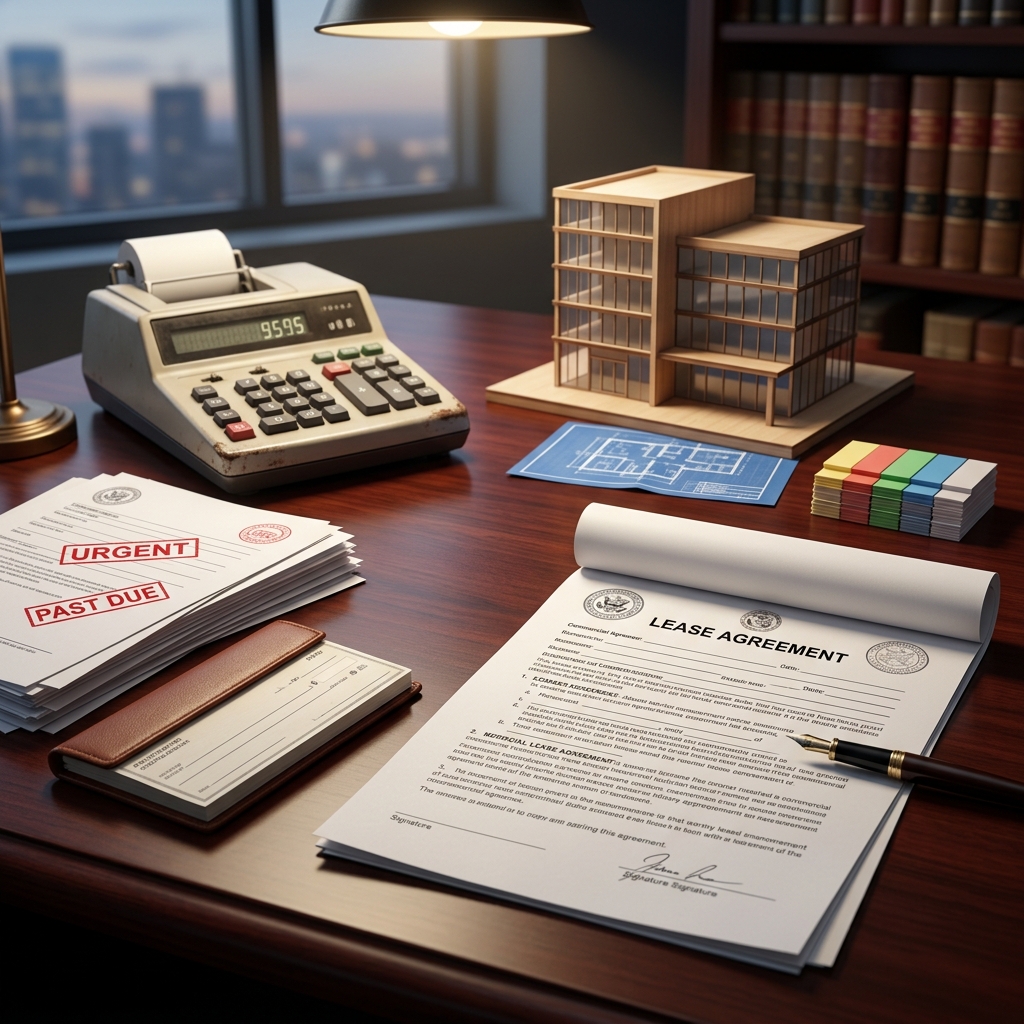
For many small businesses, the commercial lease is one of the largest monthly expenses and a critical asset: it is where customers visit, employees work, and operations take place. When a business enters Chapter 11 bankruptcy, that lease does not simply disappear. Instead, the U.S. Bankruptcy Code creates a detailed framework that governs how the lease can be kept, modified, or ended, and what rights both tenant and landlord have along the way.
This article explains in plain language how commercial leases are treated in Chapter 11, what the timelines look like, and how both business owners and property owners can navigate the process strategically.
Understanding Chapter 11 Bankruptcy in a Leasing Context
Chapter 11 is designed primarily for business reorganization. A debtor (the business) proposes a plan to restructure debts, continue operations, and pay creditors over time. The commercial lease often plays a central role in that plan, because it affects both cash flow and the ability to keep operating from the same location.
Key features of Chapter 11 that matter for leases include:
- Automatic stay that halts most collection and eviction actions when the petition is filed.
- The debtor’s power to assume, assign, or reject commercial leases under the Bankruptcy Code.
- Specific timelines and procedures governing how and when those choices must be made.
- Rules that limit landlords’ damages if the lease is ultimately rejected.
Because Chapter 11 is about restructuring rather than liquidation, the law tries to balance protecting the business’s chance at recovery with preserving landlords’ legitimate property and payment rights.
The Automatic Stay: Immediate Impact on Landlords and Tenants
When a business files for Chapter 11, an automatic stay goes into effect at once. This court-ordered injunction prevents most creditor actions, including attempts by a landlord to terminate the lease, sue for unpaid rent, or evict the tenant without bankruptcy court approval.
For tenants, the stay provides breathing room. It allows continued occupancy while the reorganization strategy is developed. For landlords, it can be frustrating, because ordinary remedies under the lease (such as declaring a default and changing locks) are temporarily unavailable.
Typical consequences of the automatic stay for commercial leases:
- Landlords cannot start or continue state court eviction proceedings without bankruptcy court permission.
- Lease clauses that declare a default solely because of bankruptcy (often called ipso facto clauses) are generally unenforceable.
- Pre-bankruptcy rent claims become part of the debtor’s overall creditor pool rather than being immediately collectible.
Despite the stay, rent for periods after the filing usually must still be paid, and those post-petition rent obligations often receive priority treatment as administrative expenses, reflecting the benefit the estate receives from ongoing occupancy.
Critical Decision: Assume, Assign, or Reject the Lease
Under Chapter 11, a debtor is not locked into its pre-bankruptcy leasing decisions. The Bankruptcy Code permits the debtor to either continue the lease, transfer it, or walk away. These choices are known as assumption, assignment, and rejection of the lease.
| Option | What It Means | Impact on Tenant | Impact on Landlord |
|---|---|---|---|
| Assume | Keep the lease going under its terms (possibly renegotiated). | Must cure past defaults and resume full performance. | Regains paying tenant; arrears must be cured. |
| Assign | Transfer the assumed lease to a new party. | Can monetize valuable lease rights; still must cure defaults and show adequate assurance. | Receives new tenant but cannot usually block assignment just because lease forbids it. |
| Reject | Treat the lease as terminated and surrender premises. | Stops future rent obligations for that space; landlord gets an unsecured damages claim. | Regains possession and may claim limited damages for lost rent and related costs. |
Assumption: Keeping the Premises
If the debtor wants to stay in the location, it will typically seek to assume the lease. To do this, the Bankruptcy Code requires:
- Curing all existing defaults, including unpaid pre-bankruptcy rent.
- Providing adequate assurance of future performance—proof that the reorganized business can pay rent and comply with lease terms going forward.
- Often, negotiations with landlords over revised lease terms that better fit the reorganization plan.
Once a lease is validly assumed, the debtor must continue honoring it, and post-assumption defaults can again lead to enforcement actions (subject to the court’s oversight).
Assignment: Transferring Lease Value
A debtor may also assume a lease and then assign it to another party, such as a buyer of the business or a new tenant. The Bankruptcy Code allows assignments even when the lease itself contains restrictions, provided that defaults are cured and adequate assurance is given for the new tenant’s performance.
Assignment can be valuable when:
- The location is desirable and could command a premium from a replacement tenant.
- The debtor wants to exit direct operations but monetize the lease as part of its reorganization.
- A buyer of the business wants to continue operating at the same premises.
Rejection: Ending the Relationship
If the lease has become too costly or no longer fits the reorganized business model, the debtor can reject the lease. Under the Bankruptcy Code, rejection is treated as a breach occurring just before the bankruptcy filing date. The debtor must surrender the property, and the landlord gains a claim for damages.
Landlord rejection damages typically include:
- Unpaid rent for periods before the bankruptcy filing.
- A limited amount of future rent (“rent reserved”), capped by statute—usually the greater of one year of rent or 15% of the remaining rent, not to exceed three years.
- Reasonable costs related to regaining and preparing the premises for a new tenant, such as removal or cleanup costs, subject to court review.
These damages are generally treated as unsecured claims in the bankruptcy case, meaning they share pro rata with other unsecured creditors and are paid according to the confirmed plan, not immediately or in full.
Decision Deadlines and Extensions
Debtors do not have unlimited time to decide whether to assume or reject a commercial lease. Federal law sets specific deadlines to protect landlords from prolonged uncertainty while still giving the debtor time to evaluate its options.
For non-residential real property leases, the Bankruptcy Code provides an initial period—commonly described in practice as roughly 120 days from the filing date—within which the debtor must decide whether to assume or reject. Courts may allow limited extensions, but all further extensions typically require either court approval or landlord consent, and courts are increasingly reluctant to grant lengthy delays.
During this decision window:
- The automatic stay usually remains in place, preventing unilateral termination by the landlord.
- The debtor may continue to occupy the premises, often with rent obligations for the post-petition period classified as administrative expenses.
- Both parties can negotiate adjustments, renewals, or exit strategies that align with the broader reorganization plan.
Special Considerations: Rent, Security Deposits, and Lease Clauses
Post-Petition Rent Obligations
One critical distinction in bankruptcy law is between pre-petition and post-petition obligations. Rent owed for periods before the filing date becomes part of the general unsecured creditor pool. Rent accruing after the filing date, while the debtor continues using the premises, is typically treated as an administrative expense with higher priority in payment.
This means landlords often have a stronger position regarding ongoing occupancy than regarding past-due rent.
Security Deposits
Security deposits under commercial leases are generally viewed as property of the bankruptcy estate. Landlords usually cannot unilaterally apply the deposit to unpaid rent or other obligations without court approval. Instead, the deposit becomes part of the overall estate assets, and its use is subject to bankruptcy rules and oversight.
Ipso Facto Clauses
Many leases include “bankruptcy” or “insolvency” default clauses that attempt to terminate the lease automatically if the tenant files for bankruptcy. Under the Bankruptcy Code, these ipso facto clauses are typically unenforceable for commercial leases, meaning the landlord cannot rely solely on the bankruptcy filing to terminate the lease or alter rights.
Landlords must instead rely on other grounds (such as nonpayment of post-petition rent or breach of non-bankruptcy lease terms) and go through the bankruptcy court when seeking termination or eviction.
Strategies for Small Business Tenants
For small businesses entering Chapter 11, the commercial lease decision is often a turning point. Effective planning can preserve essential locations or free the business from unsustainable obligations.
Practical strategies include:
- Assess location value early: Determine whether the premises are vital to future operations or whether relocation could reduce costs and improve long-term viability.
- Model cash flows: Compare ongoing rent obligations with projected revenue under a proposed reorganization plan.
- Engage the landlord proactively: Many landlords are willing to negotiate rent reductions, deferrals, or modified terms rather than face vacancy and rejection.
- Consider assignment opportunities: A below-market lease may have value to buyers or other tenants and can be leveraged to support the plan of reorganization.
- Track deadlines: Missing the decision window can result in automatic outcomes, such as deemed rejection, that may not align with the business’s goals.
Strategies for Commercial Landlords
Landlords confronted with a tenant’s Chapter 11 filing face uncertainty but also have tools to protect their interests.
Key landlord strategies include:
- Monitor the case closely: Review court filings, especially motions concerning lease assumption, assignment, or rejection, to understand the debtor’s intentions.
- Assert rights to post-petition rent: Ensure claims for ongoing occupancy are properly documented and presented as administrative expenses where appropriate.
- Evaluate alternatives: Consider whether a negotiated termination, rent modification, or new tenancy might be better than prolonged uncertainty.
- Prepare for repossession after rejection: If the lease is rejected, be ready to regain possession, refurbish the space, and re-market it promptly.
- Seek legal advice on motions for relief from stay: In some circumstances, landlords can ask the bankruptcy court to lift the automatic stay to proceed with eviction or other enforcement, particularly if the debtor fails to pay post-petition rent or misuses the premises.
Commercial Leases and the Plan of Reorganization
Chapter 11 culminates in a plan of reorganization that sets out how debts will be treated and what the business will look like after bankruptcy. Once confirmed, that plan binds the debtor and creditors and generally discharges many pre-confirmation obligations.
In the leasing context, the plan typically:
- Identifies which leases are being assumed, assigned, or rejected.
- Describes how arrears will be cured and over what timeframe.
- Addresses landlord claims for rejection damages, specifying how they will be treated relative to other unsecured claims.
- Integrates lease obligations into the reorganized business’s financial projections.
Because the confirmed plan creates new contractual rights that can replace or supersede pre-bankruptcy agreements, both tenants and landlords should scrutinize the plan carefully and participate in the process where possible.
FAQs: Bankruptcy and Commercial Lease Reorganization
Does filing Chapter 11 automatically cancel my commercial lease?
No. Chapter 11 does not automatically cancel the lease. Instead, the lease remains in place unless and until the debtor chooses to assume or reject it, subject to court approval. The automatic stay prevents most termination or eviction actions during this period.
Can my landlord evict me for filing bankruptcy?
Generally not without court approval. Bankruptcy-specific default clauses are usually unenforceable, and the automatic stay blocks most eviction actions based solely on unpaid pre-petition rent or the filing itself. Landlords must seek relief from the stay to proceed.
What happens to back rent I owe before filing?
Pre-petition rent becomes part of the bankruptcy claims against the estate. If the lease is assumed, those arrears must be cured. If the lease is rejected, the landlord’s claim for back rent is combined with other rejection damages and treated as an unsecured claim.
If I reject the lease, do I still owe future rent?
Rejection cuts off ongoing rent obligations, but the landlord is entitled to a claim for damages, including a capped portion of future rent. That claim is payable through the bankruptcy process, not as continuing monthly rent.
Can I renegotiate my lease terms during Chapter 11?
Yes. Tenants and landlords frequently renegotiate lease terms—such as rent level, duration, or use restrictions—to make assumption feasible and support the reorganization plan. Any modified lease still must comply with bankruptcy requirements regarding cure and adequate assurance.
References
- Chapter 11 – Bankruptcy Basics — United States Courts. 2023-01-01. https://www.uscourts.gov/court-programs/bankruptcy/bankruptcy-basics/chapter-11-bankruptcy-basics
- Commercial Real Estate Leases in Bankruptcy: What to Expect When Your Tenant Files for Chapter 11 — Dilworth Paxson LLP. 2020-06-01. https://www.dilworthlaw.com/blog/commercial-real-estate-leases-in-bankruptcy-what-to-expect-when-your-tenant-files-for-chapter-11/
- Important Q&A for Commercial Landlords Whose Tenants Seek Bankruptcy Protection — Foster Swift Collins & Smith PC. 2019-10-01. https://www.fosterswift.com/newsroom/publications/important-questions-commercial-landlords-tenants-bankruptcy
- Your Commercial Tenant Goes Bust – What Happens Next? — Fennemore. 2018-04-01. https://www.fennemorelaw.com/your-commercial-tenant-goes-bust-what-happens-next/
- Bankruptcy 101: Lease Assumption, Assignment, and Rejection — Nelson Mullins Riley & Scarborough LLP. 2021-02-15. https://www.nelsonmullins.com/insights/blogs/red-zone/bankruptcy-101/bankruptcy-101-lease-assumption-assignment-and-rejection
- Bankruptcy Provisions in Commercial Leases — WOLF Commercial Real Estate. 2016-09-01. https://wolfcre.com/bankruptcy-provisions-in-commercial-leases/
- Bankruptcy, Reorganization and Commercial Leases — FindLaw Small Business Legal Blog. 2015-05-01. https://www.findlaw.com/legalblogs/small-business/bankruptcy-reorganization-and-commercial-leases/
Similar Articles








Read full bio of Sneha Tete




