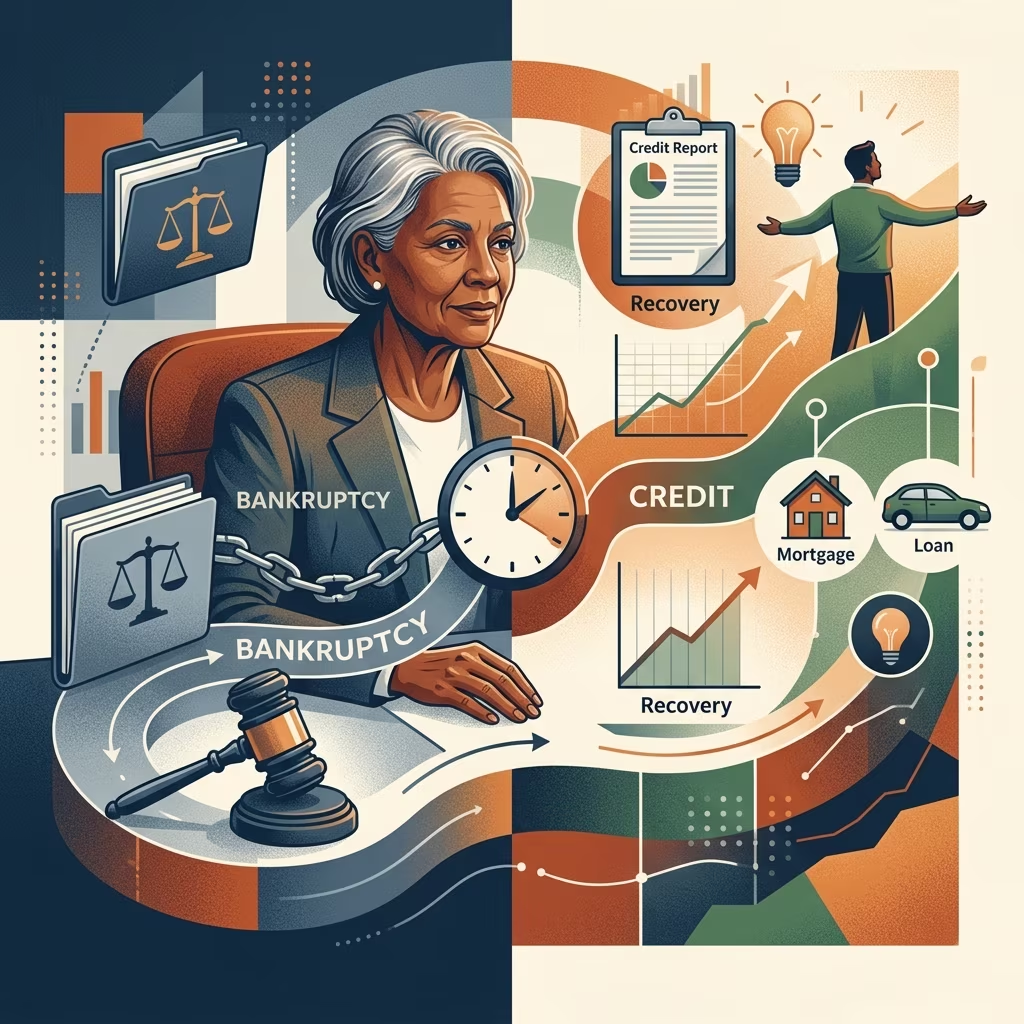
Filing for bankruptcy is one of the most serious financial decisions you can make, and its impact on your credit score and credit report can last for many years. Yet bankruptcy is also a legal tool designed to give people a fresh start when debt becomes unmanageable. Understanding how bankruptcy affects credit in the short, medium, and long term can help you rebuild with realistic expectations and smart strategies.
This guide walks through the long-term effects of bankruptcy on your credit profile, how lenders view you afterward, and practical steps you can take to rebuild your financial life.
Key Takeaways: How Bankruptcy Affects Credit
- Credit score drop: Many filers see a decline of roughly 100–200 points or more after bankruptcy.
- Duration on credit report: Chapter 7 can remain for up to 10 years; Chapter 13 typically stays for up to 7 years.
- Access to credit: New credit is often harder to obtain and usually comes with higher interest rates and stricter terms.
- Not all debts are erased: Certain obligations like student loans, recent taxes, and support payments usually survive bankruptcy.
- Rebuilding is possible: With consistent on-time payments and careful use of new credit, many people see noticeable improvement within 3–5 years.
Types of Personal Bankruptcy and Why They Matter for Credit
The type of bankruptcy you file affects both the duration of the negative mark on your credit report and how lenders interpret your financial history.
| Bankruptcy Type | Basic Approach | How Long on Credit Report | Typical Credit Impact |
|---|---|---|---|
| Chapter 7 | Liquidation of non-exempt assets to discharge most unsecured debts. | Up to 10 years from filing date. | Often larger immediate score drop; lenders may view it as a more severe action. |
| Chapter 13 | Court-approved repayment plan over several years; some debt is repaid. | Generally up to 7 years from filing date. | Still damaging, but sometimes perceived as more responsible because you repay part of what you owe. |
Both types significantly harm your credit scores, but they do not permanently prevent you from rebuilding or accessing credit in the future.
Short-Term Credit Effects: The First Year After Bankruptcy
The months immediately following a bankruptcy filing are usually the most challenging in terms of credit.
Immediate Score Decline
Credit scoring models treat bankruptcy as one of the most negative events that can appear on your credit report. Your payment history is the largest component of widely used scoring systems, and a bankruptcy signals that you were unable to meet your obligations as agreed. Many filers experience a drop in the range of 100 to 200 points or more, depending on their starting score and existing negative information.
Ironically, people who began with higher scores often see the biggest decline, because the contrast between previously strong credit and a bankruptcy is more pronounced.
Access to New Credit Right After Filing
In the first several months, obtaining new credit can be extremely difficult:
- Many mainstream lenders may automatically decline applications while the bankruptcy is open or recently discharged.
- Any approval you receive is likely to come with higher interest rates, lower limits, or additional fees because you are considered higher risk.
- Some lenders offer “second chance” products, but they may be costly and require careful evaluation.
For most people, the first six to twelve months are about stabilizing cash flow, staying current on remaining obligations, and avoiding new problems—not chasing major new credit lines.
Medium-Term Credit Effects: Two to Five Years After Bankruptcy
As time passes, the weight of a bankruptcy on your credit scores gradually decreases, provided you build a positive track record.
Score Recovery Over Time
From roughly year two onward, consistent responsible behavior can begin to offset the bankruptcy record:
- On-time payments across all active accounts help re-establish positive payment history.
- Keeping credit card balances low relative to limits supports healthier utilization ratios, another key scoring factor.
- Avoiding new collections or serious delinquencies prevents additional major derogatory marks.
Many individuals begin to see meaningful improvement in their credit scores three to five years after filing, even though the bankruptcy itself may still appear on the report.
Borrowing Opportunities Gradually Reopen
During this phase, access to credit often looks like this:
- Secured credit cards and low-limit unsecured cards become more attainable as you demonstrate stability.
- Auto loans and smaller personal loans may be available, often at higher rates or with larger down payments.
- Mortgage qualification remains possible, particularly for Chapter 13 filers who have successfully completed repayment plans, but underwriting is stricter and timelines vary by lender.
Lenders will still see the bankruptcy on your report, but if you show several years of reliable behavior afterward, they may treat it as a past problem rather than a current ongoing risk.
Long-Term Credit Effects: Seven to Ten Years and Beyond
Bankruptcy does not stay on your credit report forever, and its influence gradually fades even before it officially drops off.
When the Bankruptcy Disappears from Your Credit Report
Credit reporting rules generally follow these timelines:
- Chapter 7: Up to 10 years from the filing date.
- Chapter 13: Up to 7 years from the filing date.
Once this period ends, the public record item for the bankruptcy should no longer appear in your credit file. Individual accounts included in the bankruptcy typically have their own reporting timelines and generally drop off after about seven years.
Life After the Record Is Gone
By the time the bankruptcy falls off your report, your credit future depends almost entirely on what you have done since the filing:
- If you have maintained strong payment habits and low debt, your scores may be competitive with consumers who never filed.
- If you incurred new delinquencies or high balances, your credit may still struggle, even without the old bankruptcy record.
The disappearance of the bankruptcy is best viewed as the removal of a major obstacle, not a reset button. Long-term financial health comes from sustained behaviors, not just the passage of time.
Debts and Obligations That Bankruptcy Often Does Not Erase
While bankruptcy can discharge many unsecured debts, some obligations usually remain. Understanding these helps you plan your post-bankruptcy budget more accurately.
- Most student loans: These are generally not discharged except in rare cases involving undue hardship and specific legal requirements.
- Recent federal tax liabilities and certain tax liens: Some older tax debts may be eligible for discharge, but many are still collectible afterward.
- Child support and alimony: Court-ordered family support obligations continue after bankruptcy.
- Certain fines and penalties: Government and court-imposed fines often survive bankruptcy.
On top of that, bankruptcy may involve legal fees and court costs, which can present an additional short-term expense. These surviving obligations and costs influence your capacity to rebuild credit because they affect your monthly cash flow.
How Bankruptcy Changes the Way Lenders View You
Even if your credit scores begin to recover, lenders look at more than just the number. A bankruptcy can influence their decisions in several ways.
- Higher perceived risk: A past bankruptcy suggests you once could not meet your obligations, leading to stricter underwriting and possible declines.
- Stricter loan terms: Approved applicants may face higher interest rates, shorter repayment periods, or lower credit limits.
- Additional documentation: Some lenders require more detailed proof of income and stability, such as tax returns and bank statements.
- Specialty products: You may be offered products designed for higher-risk borrowers, which can be useful if carefully managed but sometimes come with elevated costs.
Despite these obstacles, many creditors are willing to work with borrowers who demonstrate steady employment, reasonable debt levels, and a multi-year history of paying on time after bankruptcy.
Practical Strategies to Rebuild Credit After Bankruptcy
Bankruptcy marks a financial low point, but it can also be the starting line for healthier habits. Rebuilding credit is a gradual process that depends on consistent and thoughtful decisions.
1. Verify and Clean Up Your Credit Reports
Start by reviewing reports from all major credit bureaus to ensure that accounts included in the bankruptcy are updated correctly.
- Confirm that discharged accounts are reported as closed and no longer show ongoing delinquencies.
- Dispute any inaccuracies or outdated information with the bureaus and, if needed, with the original creditors.
2. Build a Realistic, Sustainable Budget
A structured budget helps you avoid falling back into the patterns that led to bankruptcy:
- Track all sources of income and fixed expenses, including surviving debts.
- Set aside funds for irregular costs (car repairs, medical bills) so they do not force you into high-cost borrowing.
- Commit to a manageable savings goal, even if small, to increase resilience.
3. Protect Your Payment History
Every on-time payment helps counterbalance the bankruptcy. Every missed payment undermines progress.
- Use automatic payments or reminders for essential bills such as utilities, rent, and remaining loans.
- Prioritize required obligations (housing, food, transportation, support payments) before discretionary spending.
- Communicate early with creditors if you anticipate difficulty; some may offer temporary relief options.
4. Reintroduce Credit Carefully
When you are ready, the goal is to show that you can handle credit responsibly, not to accumulate large limits quickly.
- Consider a secured credit card, where you provide a refundable deposit that acts as your limit.
- Use the card for small, predictable expenses and pay the balance in full each month.
- Limit new applications; multiple inquiries in a short period can slightly reduce your score and signal desperation.
5. Explore Alternative Ways to Build Credit History
If you struggle to qualify for traditional credit products, a few alternatives may help establish or improve your record:
- Become an authorized user on a trusted person’s credit card, if they have strong credit habits.
- Work with a reputable non-profit credit counseling agency to develop a long-term repayment and financial plan—while avoiding “credit repair” companies that promise quick fixes.
Frequently Asked Questions About Bankruptcy and Credit
Does bankruptcy always ruin your credit forever?
No. Bankruptcy causes a significant but not permanent decline in your credit scores. Over time, as the record ages and you build positive history, many people are able to reach solid, even strong, credit standings again.
Is Chapter 7 worse for my credit than Chapter 13?
Both are serious negative marks, but Chapter 7 typically stays on your credit report longer—up to 10 years vs. about 7 for Chapter 13. Lenders may view Chapter 13 somewhat more favorably because it involves repaying part of your debt, but the practical difference will also depend on your behavior afterward.
How soon can I start rebuilding after bankruptcy?
You can begin immediately by making all remaining payments on time and avoiding new delinquencies. Within several months, you may be able to open a small, carefully chosen credit line, such as a secured card, and use it to demonstrate responsible borrowing.
Will I ever qualify for a mortgage after bankruptcy?
Many people do eventually qualify. Requirements vary by lender and program, but most will look for several years of stable income, reasonable debt levels, and consistent on-time payments after the bankruptcy. The waiting period may be shorter for Chapter 13 filers who successfully complete their repayment plans.
Why do I still struggle with credit even years after my bankruptcy?
If you continue to have late payments, high utilization, or new collection accounts, these issues can keep scores low even as the bankruptcy ages. Rebuilding requires addressing current behaviors as much as recovering from past events.
References
- How Does Filing Bankruptcy Affect Your Credit? — Experian. 2023-04-06. https://www.experian.com/blogs/ask-experian/how-does-filing-bankruptcy-affect-your-credit/
- Bankruptcy Types and Their Impact on FICO Scores — myFICO. 2022-01-15. https://www.myfico.com/credit-education/faq/negative-reasons/bankruptcy-types
- How Does Bankruptcy Affect Your Credit Score? — Lewis & Van Sickle, LLC. 2023-07-19. https://www.lewisvansickle.com/blog/how-does-bankruptcy-affect-your-credit-score/
- How Will Filing Bankruptcy Impact My Credit Score? — Debt.org. 2024-02-10. https://www.debt.org/bankruptcy/how-will-filing-bankruptcy-impact-my-credit-score/
- How Long Does Bankruptcy Stay On Your Credit Report? — Chase Bank. 2023-05-02. https://www.chase.com/personal/credit-cards/education/build-credit/bankruptcy-on-credit-report
- Bankruptcy Consequences Explained — Take Charge America. 2022-11-30. https://www.takechargeamerica.org/bankruptcy-consequences-explained/
- How to Repair Credit History After Bankruptcy — Equifax. 2023-06-12. https://www.equifax.com/personal/education/personal-finance/articles/-/learn/rebuilding-credit-after-bankruptcy/