
Bankruptcy Discharge vs. Dismissal Explained
Understand how discharge and dismissal shape the outcome of your bankruptcy case and your future financial options.
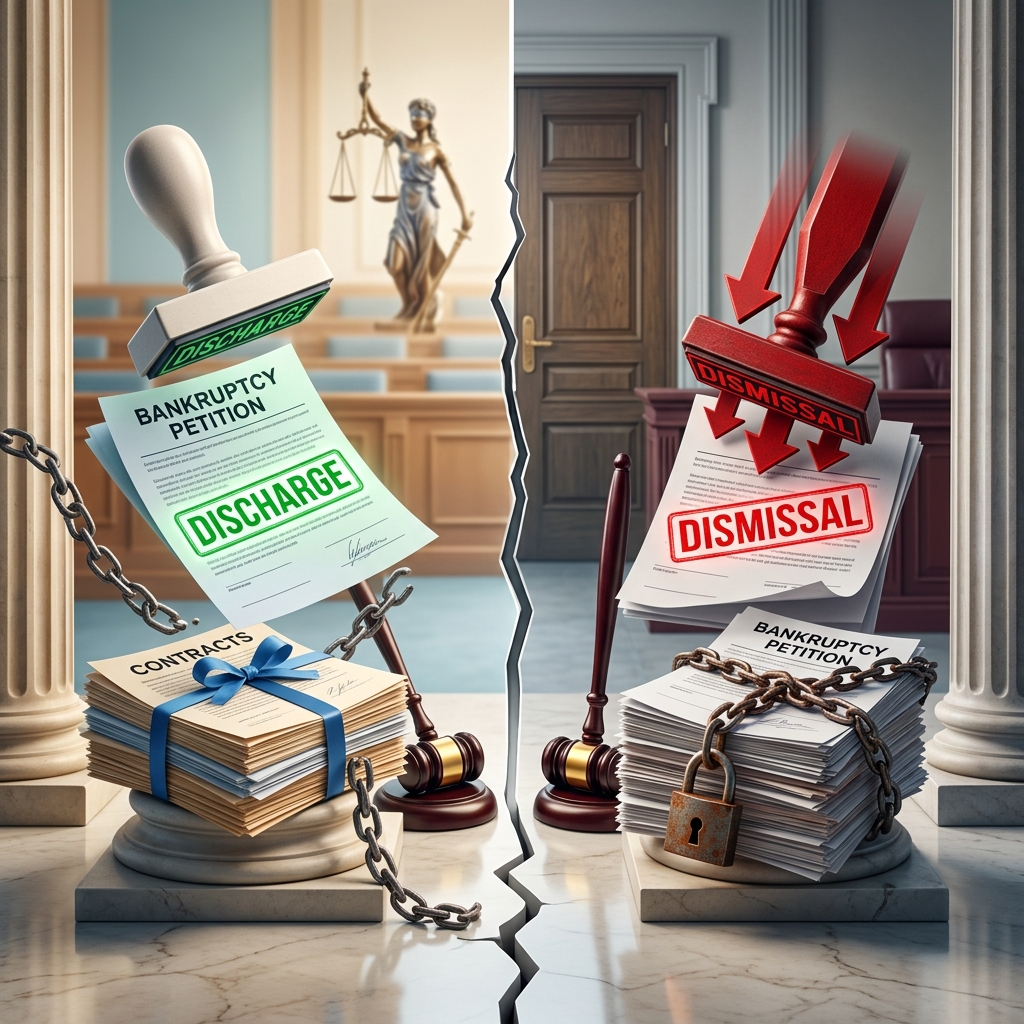
When you file for bankruptcy, two possible outcomes dramatically shape your financial future: discharge and dismissal. Although the words sound similar, they have very different legal and practical consequences for your debts, your credit, and your relationship with creditors.
This guide breaks down what each outcome means, how you get there, and what you can do if your case is headed in the wrong direction. It is designed for individuals considering bankruptcy or already in the process, especially under Chapter 7 and Chapter 13.
Core Concepts: What Discharge and Dismissal Really Mean
What is a Bankruptcy Discharge?
A bankruptcy discharge is a court order that legally wipes out certain debts and releases you from personal liability for them. In plain terms, you no longer have to pay those debts, and creditors cannot take action to collect them.
According to the United States Courts, a discharge:
- Eliminates your legal obligation to pay specific dischargeable debts.
- Prohibits creditors from any collection actions, including lawsuits, phone calls, letters, or other contact about discharged debts.
- Is generally permanent, unless revoked for serious misconduct.
Discharge is the outcome most debtors hope for because it delivers the core benefit of bankruptcy: a fresh start.
What is a Bankruptcy Dismissal?
A bankruptcy dismissal means the court stops your case without granting a discharge. The proceedings end, and it is as if the bankruptcy never produced debt relief.
As described by federal bankruptcy courts and legal sources:
- The case is terminated, and no discharge order is entered.
- The automatic stay that was protecting you from collection efforts ends.
- Creditors can resume collection, including calls, lawsuits, garnishments, and repossessions.
Dismissal is generally an unfavorable result for a debtor because it leaves you still responsible for your debts and often back where you started, sometimes worse off.
Key Differences at a Glance
The following table highlights the most important distinctions between discharge and dismissal:
| Feature | Discharge | Dismissal |
|---|---|---|
| Effect on debts | Certain debts are permanently erased; you are no longer personally liable. | No debts are erased; you still owe them as before the case. |
| Creditor collection | Creditors are barred from collecting discharged debts. | Creditors can immediately resume collection efforts. |
| Automatic stay | Ends, but replaced by a discharge injunction on discharged debts. | Ends with no discharge; protection from creditors stops. |
| Case status | Case typically closes after discharge, having achieved its goal. | Case is terminated without achieving debt relief. |
| Impact on future filings | Refiling is limited by time-based rules for successive discharges. | Refiling may be allowed sooner, especially if dismissed without prejudice. |
How Bankruptcy Discharge Works in Practice
When Do You Receive a Discharge?
Timing depends on the type of bankruptcy. The U.S. Courts outline typical timelines:
- Chapter 7 (liquidation): Discharge usually occurs about four months after filing, once the deadline for objections or motions to dismiss has passed.
- Chapter 13 (repayment plan): Discharge is granted after you complete all plan payments, often three to five years after filing.
- Chapter 12 and individual Chapter 11: Discharge is also typically granted after plan completion.
In most consumer cases, discharge is automatic as long as you follow all required steps and no party successfully objects to your discharge.
Debts Commonly Discharged
While exact results depend on the chapter and facts of your case, many unsecured debts can be discharged, such as:
- Credit card balances
- Medical bills
- Personal loans
- Certain utility or collection accounts
You remain responsible for non-dischargeable debts, which may include recent taxes, most student loans, domestic support obligations, and certain debts incurred through fraud or willful misconduct. Exact treatment varies and often requires legal advice.
The Discharge Order and Notice
When the court grants a discharge, it issues a formal order. Under federal rules, the clerk of the bankruptcy court mails a copy of the discharge order to:
- All listed creditors
- The U.S. trustee
- The case trustee and their attorney, if any
This notice serves to inform creditors that eligible debts have been discharged and collection attempts must cease. Any continued collection on discharged debts may violate court orders and can be challenged.
How Bankruptcy Dismissal Happens and What It Means
Reasons a Case May Be Dismissed
Bankruptcy can be dismissed either with the debtor’s participation or against their wishes. Courts and trustees may seek dismissal when legal requirements are not met.
Common reasons for dismissal include:
- Failure to file required documents or complete mandatory courses, such as financial management instruction.
- Missing scheduled hearings or the meeting of creditors.
- Not making required payments under a Chapter 13 repayment plan.
- Misconduct, such as concealing assets or abusive filings.
- Debtor’s request for voluntary dismissal when permitted under the chapter.
Who Can Seek Dismissal?
A dismissal order can be entered in several ways:
- The debtor requests dismissal and qualifies for voluntary dismissal.
- The court dismisses the case on its own, for example in response to misconduct or procedural failure.
- A trustee, U.S. Bankruptcy Administrator, or creditor files a motion to dismiss, and the court grants it.
In all scenarios, the practical consequence is the same: the case stops without a discharge order.
With Prejudice vs. Without Prejudice
Dismissals are often classified as with prejudice or without prejudice.
- Without prejudice: You may be able to file a new bankruptcy case immediately, subject to other legal limits. This is more common when the issues were procedural or easily corrected.
- With prejudice: The court bars you from refiling for a specified period, often 180 days, due to abuse or serious misconduct.
This distinction matters if you plan to correct problems and try again; a prejudicial dismissal forces you to wait and may have more severe consequences.
Dismissal vs. Closing: Closely Related but Different
Many debtors confuse dismissal with closing a case. Federal bankruptcy courts emphasize that these are not the same thing.
- Dismissal: The court stops all proceedings, and no discharge order is entered.
- Closing: All activity in the case is finished. This can follow a discharge or, in limited circumstances, a case may close without discharge, often because the debtor did not file required certificates.
If your case is closed without a discharge for procedural reasons, you may need to file a motion to reopen the case to pursue discharge.
Automatic Stay, Discharge Injunction, and Dismissal
The Role of the Automatic Stay
When you file bankruptcy, the automatic stay immediately stops most collection actions, including lawsuits, foreclosures, garnishments, and creditor contact. This protection applies while the case is pending.
However, what happens to this protection depends on whether you reach discharge or dismissal:
- With discharge, the automatic stay ends but is replaced by a discharge injunction that permanently bars collection on discharged debts.
- With dismissal, the automatic stay ends without any continuing protection. Creditors may resume collection activities right away.
Practical Impact on Debtors
After dismissal, your creditors can:
- Restart or continue lawsuits against you.
- Resume wage garnishment for eligible debts.
- Proceed with repossession or foreclosure actions, subject to state law.
- Contact you by phone, mail, or other means to collect debts.
By contrast, after discharge, creditors who attempt to collect discharged debts may be violating a court order and could face sanctions.
Strategic Considerations for Debtors
Why Discharge is the Desired Outcome
Legal sources and bankruptcy law definitions consistently describe discharge as the desired result of a bankruptcy case.
- It provides long-term relief from eligible debts.
- It allows you to rebuild your finances without ongoing collection pressure.
- It protects you from most creditor actions related to discharged debts.
While bankruptcy has credit and reputational impacts, the benefit of discharge often outweighs those costs for deeply indebted individuals.
How to Reduce the Risk of Dismissal
Although some circumstances are beyond your control, debtors can take steps to minimize the risk that their case will be dismissed:
- Complete all required credit counseling and financial management courses.
- Provide accurate, complete information about assets, income, and debts.
- Attend all scheduled hearings and the meeting of creditors.
- Follow the terms of your Chapter 13 or other repayment plan consistently.
- Respond promptly to trustee or court requests for documents or clarification.
Working with a knowledgeable attorney or trusted legal aid organization can help you avoid missteps that may lead to dismissal.
Frequently Asked Questions (FAQs)
Does dismissal erase my debts like discharge?
No. Dismissal does not erase any debts. You remain responsible for all obligations, and creditors can resume collection efforts once the case is dismissed. Only discharge eliminates personal liability for eligible debts.
Can I file bankruptcy again after my case is dismissed?
Often yes, especially if the case was dismissed without prejudice. However, if the dismissal was with prejudice, you may be barred from refiling for a period (commonly around 180 days). Future filings and eligibility for another discharge are also subject to timing and chapter-specific rules.
What happens if my case is closed without a discharge?
Closing without discharge usually means something procedural was not completed, such as filing the required certificate of completion of financial management instruction. In that situation, you may need to file a motion to reopen the case and complete outstanding requirements to obtain a discharge.
Will creditors be notified when I receive a discharge?
Yes. The clerk of the bankruptcy court sends a copy of the discharge order to all creditors, the U.S. trustee, and the trustee in your case. This notice informs them that eligible debts have been discharged and that collection efforts on those debts must stop.
Is discharge guaranteed if I file for bankruptcy?
No. While many debtors obtain discharge, it is not guaranteed. In Chapter 7, for example, debtors do not have an absolute right to discharge. Courts may deny discharge or dismiss the case if legal standards are not met, if there is fraud or misconduct, or if procedural requirements are ignored.
References
- Discharge in Bankruptcy — Legal Information Institute, Cornell Law School. 2023-05-01. https://www.law.cornell.edu/wex/discharge_in_bankruptcy
- Discharge in Bankruptcy – Bankruptcy Basics — United States Courts. 2023-04-01. https://www.uscourts.gov/court-programs/bankruptcy/bankruptcy-basics/discharge-bankruptcy-bankruptcy-basics
- Discharge vs. Dismissal: What’s the Difference? — Upsolve. 2024-01-15. https://upsolve.org/learn/discharge-vs-dismissal/
- Bankruptcy Dismissed vs Discharged — Sasser Law Firm. 2023-09-10. https://sasserbankruptcy.com/bankruptcy-court-litigation/bankruptcy-dismissal-versus-discharge/
- Dismissal, Conversion & Closing Of A Bankruptcy Case — U.S. Bankruptcy Court, Central District of California. 2022-11-30. https://www.cacb.uscourts.gov/faq/dismissal-conversion-closing-bankruptcy-case-what-are-differences-between-them
Similar Articles








Read full bio of Sneha Tete




