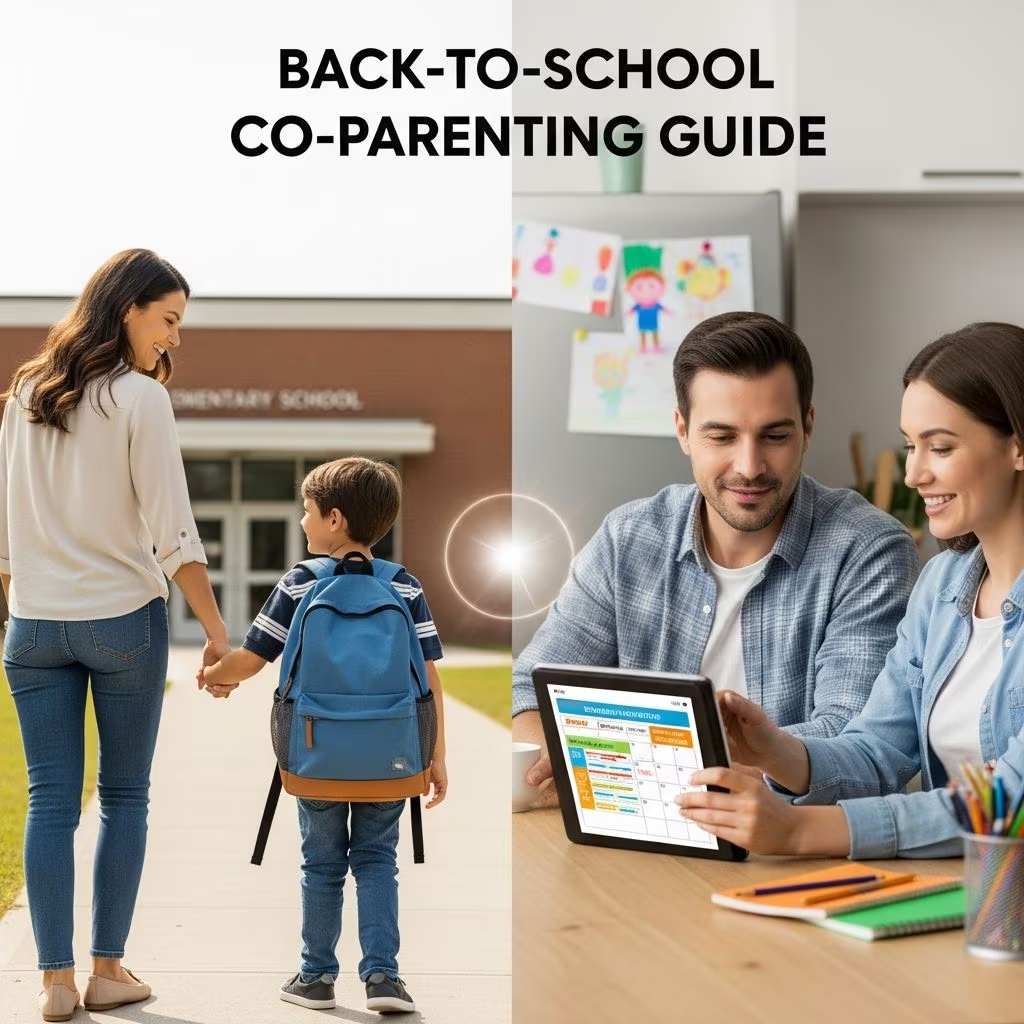
The transition back to school marks a pivotal shift for children of divorced parents, blending excitement with potential logistical hurdles. Co-parenting during this period requires intentional planning to maintain stability and focus on the child’s educational journey. By fostering collaboration and consistency, parents can create a supportive environment that promotes academic achievement and emotional security.
Assessing and Refining Your Parenting Agreement
Before the school year commences, a thorough review of the existing parenting plan is crucial. This document outlines custody arrangements, decision-making authority, and financial responsibilities, which often need adjustments to align with school calendars, holidays, and daily routines. Discrepancies between summer flexibility and structured school schedules can lead to conflicts if not addressed proactively.
Key elements to evaluate include transportation duties for drop-offs and pick-ups, attendance at parent-teacher meetings, and allocation of extracurricular costs. For instance, if a new job alters one parent’s availability, negotiate modifications like alternating drop-off responsibilities. Documenting agreements in writing prevents misunderstandings and provides a clear reference point.
- Verify custody exchange times match school start and end hours.
- Confirm provisions for school holidays and unexpected closures.
- Discuss and divide expenses for supplies, uniforms, and activities.
If consensus proves elusive, consulting a family law mediator ensures resolutions prioritize the child’s best interests, potentially leading to formal court amendments.
Establishing Robust Communication Protocols
Effective dialogue between co-parents forms the cornerstone of successful back-to-school coordination. Implement neutral, child-centered communication channels to share updates on grades, events, and behavioral concerns without injecting personal grievances.
Adopt digital tools like shared online calendars (e.g., Google Calendar) or specialized co-parenting apps such as OurFamilyWizard. These platforms enable real-time visibility into schedules, deadlines, and activities, reducing the risk of oversights.
| Communication Tool | Benefits | Example Use |
|---|---|---|
| Shared Digital Calendar | Real-time updates, notifications | Tracking parent-teacher conferences |
| Co-Parenting Apps | Message logs, expense tracking | Logging school supply purchases |
| Weekly Check-Ins | Proactive issue resolution | Discussing progress reports |
Schedule regular check-ins, perhaps bi-weekly, to review school-related matters. Maintain professional tone, focusing solely on the child’s needs to model respectful behavior.
Collaborating Seamlessly with Educational Institutions
Schools must be fully informed about family dynamics to facilitate smooth operations. Provide administrators, teachers, and counselors with copies of custody orders, parenting plans, and any protective directives. This ensures both parents receive identical communications, including report cards, event notices, and emergency alerts.
Under statutes like Oregon’s ORS 107.154, noncustodial parents retain rights to access records and consult staff, barring safety restrictions. Update emergency contacts and pickup authorizations promptly to avoid delays during crises.
- Submit custody documents outlining legal decision-making rights.
- List both parents (if applicable) with photo IDs for verification.
- Request duplicate notifications for all school correspondence.
Sharing the child’s full schedule—including exams, activities, and holidays—early helps both households prepare, minimizing disruptions.
Promoting Uniform Routines Across Households
Children flourish with predictable structures, particularly when transitioning between homes. Align core routines for homework, bedtime, meals, and screen limits to ease adjustments and bolster focus.
Even with stylistic differences, consistency in essentials like study times fosters security. For example, enforce a unified homework policy post-dinner, adapting only minor preferences like lighting or snacks.
Discuss and document these alignments during planning sessions. This approach not only supports academic performance but also diminishes anxiety from variability.
Navigating Extracurricular Commitments and Costs
After-school pursuits enrich education but complicate co-parenting logistics. Jointly decide on enrollments, considering travel distances, practice schedules, and alignment with custody periods to prevent overburdening one parent.
Establish a fair expense-sharing formula upfront, perhaps proportional to incomes or alternating payments. Use tracking apps to log contributions transparently.
- Consult before signing up for new programs.
- Coordinate transportation rotations.
- Budget collectively for fees and equipment.
Modeling Positive Interactions at School Events
Public school functions offer opportunities to demonstrate maturity. Greet each other cordially, then disengage to keep the focus on the child. Alternating attendance or dividing events equitably reduces tension.
Pre-plan interactions to maintain positivity, prioritizing the child’s pride in parental support over personal dynamics.
Preparing for Unforeseen School Disruptions
Emergencies like illnesses, weather closures, or early dismissals demand contingency plans. Define protocols for notifications, alternative pickups, and schedule impacts within the parenting agreement.
Designate primary contacts and backups, ensuring quick responses protect the child’s welfare without derailing routines.
Fostering the Child’s Connection with Both Parents
Actively encourage daily contact with the non-residential parent via calls, texts, or video chats. Rituals like goodnight calls reinforce bonds and stability.
Avoid disparaging remarks; instead, affirm the other’s role to nurture well-rounded development.
Frequently Asked Questions (FAQs)
What documents should I provide to the school?
Custody orders, parenting plans, separation agreements, emergency contacts, and any protective orders. Include IDs for pickup verification.
How do we handle shared school expenses?
Agree on a proportional split or alternation, documented in writing and tracked via apps for transparency.
What if our parenting plan doesn’t match the school schedule?
Review and amend via mutual agreement or mediation before issues arise.
Should both parents attend every school event?
Coordinate attendance to avoid conflict, alternating or dividing based on schedules.
How can we maintain consistent routines?
Align homework, bedtime, and meal times across homes, communicating adjustments clearly.
Long-Term Benefits of Proactive Co-Parenting
Investing effort in these strategies yields enduring advantages: enhanced child resilience, superior academic outcomes, and healthier parental relationships. Research underscores that cooperative co-parenting correlates with fewer behavioral issues and higher self-esteem in children.
By centering the child’s needs, parents not only survive back-to-school chaos but thrive, setting a foundation for ongoing success.
References
- 10 Back-to-School Tips for Co-Parents — Wasserman White Family Law. 2023. https://wassermanwhite.com/10-back-to-school-tips-for-co-parents/
- 10 Things Co-Parents Can Do to Prepare for Back to School — Barrows Firm. 2023. https://www.barrowsfirm.com/post/10-things-co-parents-can-do-to-prepare-for-back-to-school
- Practical Co-Parenting Strategies for Back to School — The Commons Law Center. 2023. https://thecommonslawcenter.org/blog/back-to-school-practical-co-parenting-strategies-to-navigate-the-school-year/
- Back-to-School and Co-Parenting: Navigating the Academic Year — Pearson Butler. 2025-08. https://www.pearsonbutler.com/blog/2025/august/back-to-school-and-co-parenting-navigating-the-a/
- 10 Tips for an A+ Back-to-School Transition — Emily Rubenstein Law. 2023. https://www.emilyrubensteinlaw.com/blog/10-tips-for-back-to-school-transition
- Back-to-School Custody Tips — Soberlink. 2023. https://www.soberlink.com/family-law-blog/back-to-school-custody-tips