
Vacation Home Estate Planning: 5 Essential Steps For Families
Practical legal and family planning steps that help vacation homes stay useful, fair, and peaceful.
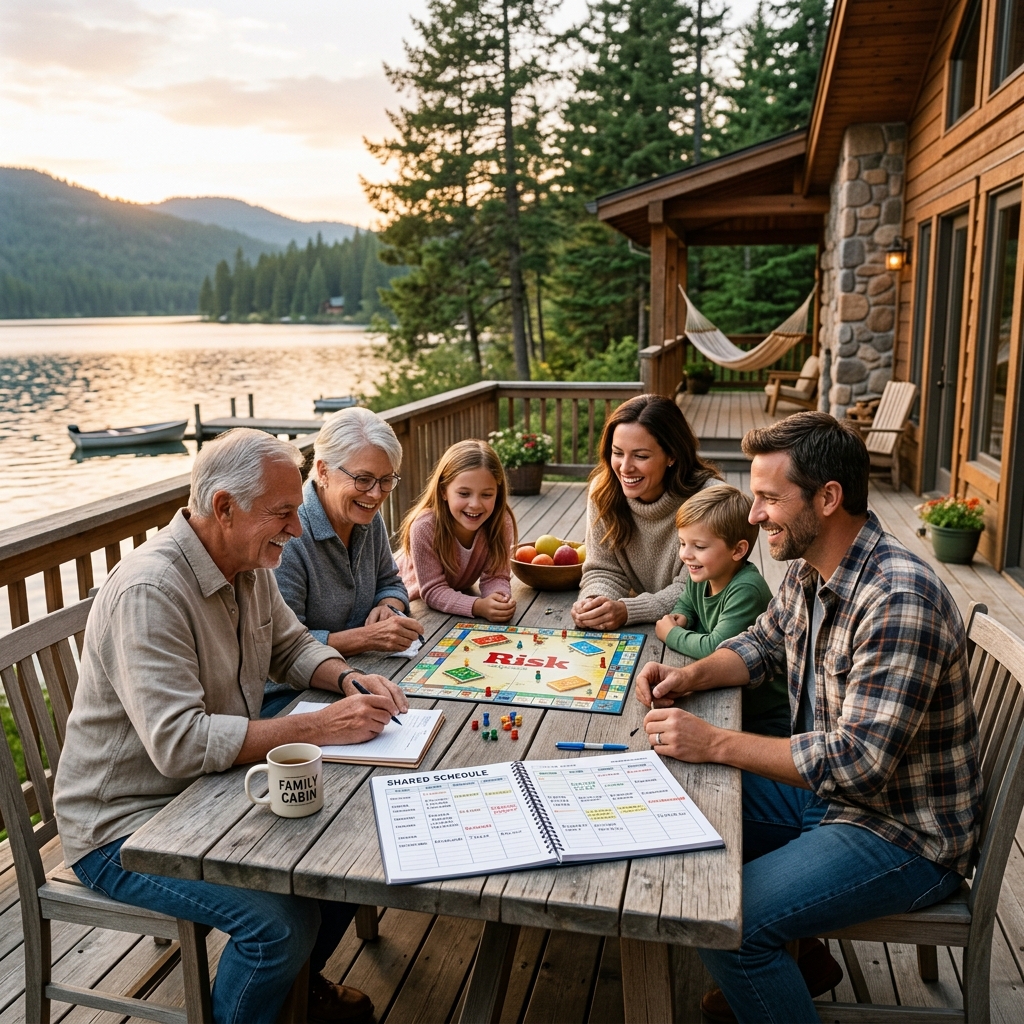
A vacation home can be a cherished family asset, but it can also become a source of tension if ownership, upkeep, and decision-making are left unclear. The best planning does more than transfer title; it creates a workable system for use, management, and future succession.
Families often focus on the sentimental value of a lake house, cabin, or beach property, yet the practical questions matter just as much. Who pays the taxes? Who books holiday weeks? What happens if one heir wants to sell and another wants to keep the home forever? Without written rules, even close families can find themselves in conflict.
Why vacation homes create unique planning problems
A vacation property is different from a primary residence or a typical investment asset. It is both personal and financial, which means the planning challenges are usually more complicated. Family members may have different levels of attachment, different financial means, and different expectations about how the property should be used.
Some heirs may see the property as a place to build memories. Others may see it as an expense that should be sold. Those differences can lead to disagreement unless the owner addresses them while everyone is still able to talk openly.
- Emotional attachment can make compromise difficult.
- Maintenance costs can feel uneven if not allocated clearly.
- Shared use can lead to scheduling disputes.
- Unequal financial ability among heirs can create resentment.
- Out-of-state property may require a separate probate process.
Choose the right ownership structure first
The way a vacation home is titled has a major effect on how smoothly it passes to the next generation. Some ownership methods are simple, but simplicity is not always the same as flexibility. A good structure can reduce probate complications, support long-term control, and make it easier to manage shared ownership.
Many families use either a trust or a business entity to hold the property. The right choice depends on the family’s goals, tax concerns, and the level of control the owner wants to retain during life and after death.
| Structure | Main benefit | Possible drawback |
|---|---|---|
| Trust | Can help avoid probate and allow detailed instructions for future use | May require careful drafting and ongoing administration |
| LLC | Creates a shared ownership framework with formal decision rules | Requires an operating agreement and regular compliance |
| Direct inheritance | Easy to understand at first | Can lead to confusion, probate delays, and disputes |
Use a trust when you want control and continuity
A trust can be a strong option when the owner wants to set clear expectations for the future. The property is transferred into the trust, a trustee holds title, and the trust document spells out who benefits from the home and under what conditions. This approach can be especially helpful when the owner wants to preserve the property for multiple generations.
A trust can also help reduce the risk that the property will be tied up in a separate probate proceeding if it is located in another state. That benefit matters when the home is in a different jurisdiction from the rest of the estate.
- The trust can define who may use the home.
- It can explain how expenses will be paid.
- It can authorize a trustee to make or break ties.
- It can limit transfers that would disrupt family use.
Consider an LLC when multiple heirs will share ownership
An LLC is often useful when the goal is to move from informal family ownership to a more structured arrangement. Instead of each heir directly owning a slice of the real estate, family members own membership interests in the entity that owns the property. That makes it easier to write rules for voting, budgeting, and exits.
This structure works well when the family wants the home to remain in the group but also wants a clearer process for management. An operating agreement can explain what happens if someone misses a payment, wants to rent the property, or asks to cash out.
- Membership interests can be divided in different proportions.
- Management authority can be assigned to one person or a small group.
- Buyout rights can help avoid deadlock.
- Financial responsibilities can be allocated in writing.
Put family expectations into a written usage agreement
Even the best title structure will not prevent conflict if the family has never discussed day-to-day use. A usage agreement gives everyone a practical roadmap. It is especially important where several siblings, cousins, or branches of a family want to use the home at different times of the year.
The agreement should not be vague. It should identify who may stay at the property, how reservations are made, whether guests are allowed, and what happens during holidays or peak seasons. Rules that seem unnecessary at first often become essential once the property is shared year after year.
- Set a reservation process for popular weeks.
- State whether guests or extended family members may visit.
- Clarify whether the home may be rented to outsiders.
- Assign cleaning and turnover responsibilities.
- Establish quiet, safety, or pet rules if relevant.
Plan for maintenance before the bills arrive
Ownership disputes often begin with money. A home that sits unused for parts of the year still generates taxes, insurance premiums, repairs, landscaping costs, and utilities. If nobody is specifically responsible for those expenses, resentment can grow quickly.
Families can reduce friction by creating a shared maintenance fund or another dedicated source of money for recurring costs. That keeps the home from becoming a surprise expense every time a roof leaks or a furnace fails.
- Set a yearly contribution formula.
- Open a dedicated account for shared expenses.
- Define who approves repairs above a set threshold.
- Require periodic financial reports to all owners or beneficiaries.
Build fair rules for sale, transfer, and exit
Not every heir will want to keep a vacation property forever. That reality should be addressed before a dispute forces the issue. A good plan gives family members a clear path to exit while protecting the interests of those who want to remain involved.
Buyout provisions are one of the most useful tools for this purpose. They allow one family member to purchase another’s interest under an agreed process rather than through a stressful, unplanned negotiation. A right of first refusal can also help by giving existing family members the first chance to buy before an outside sale occurs.
- Define how the property will be valued.
- Set deadlines for offering and accepting a buyout.
- State whether outside sales are permitted.
- Identify whether any owner has priority to buy.
Address tax questions early
Taxes should be part of the planning conversation from the beginning. A vacation home may create estate tax exposure, gift tax issues, or future capital gains consequences depending on how it is transferred and how the property is used. If the home is placed in an entity or trust, the tax effects should be reviewed carefully before documents are signed.
Tax planning should also match the family’s larger goals. For example, a strategy that reduces tax might not be ideal if it also makes management less flexible. The key is to avoid making tax decisions in isolation from succession planning.
- Review potential transfer tax consequences.
- Consider how rental income will be reported if the home is leased.
- Account for future appreciation when deciding whether to gift interests now.
- Coordinate the vacation home plan with the rest of the estate plan.
Prepare a dispute-resolution ladder
Even a well-drafted plan cannot eliminate every disagreement. What it can do is give the family a peaceful process for resolving conflict. The best documents do not jump straight to litigation. They create a step-by-step path that encourages conversation before the disagreement becomes public and expensive.
A tiered process is often the most effective. The first step can be internal discussion. If that fails, the family can move to mediation. If mediation does not work, arbitration can provide a binding private decision. Court should be the final option, not the first.
- Start with informal discussion among the owners or beneficiaries.
- Use a trusted neutral person to facilitate communication.
- Move to mediation if the problem remains unresolved.
- Use arbitration for a final private decision when appropriate.
Talk to the family before the plan is needed
Many conflicts arise because heirs are surprised by the owner’s intentions. A vacation home plan works better when the family understands the reasoning behind it. Open communication can reduce suspicion and help each person know what to expect.
That conversation does not need to cover every legal detail, but it should explain the basic structure, the maintenance expectations, and what will happen if someone cannot or does not want to keep the property. Clarity during life often saves relationships later.
Simple planning checklist for owners
Before finalizing any plan, it helps to review a practical checklist. The right answer is not always the most complicated one, but it should be complete enough to prevent uncertainty.
- Decide whether the home should stay in the family or eventually be sold.
- Choose an ownership structure that matches that goal.
- Write down use, payment, and repair rules.
- Include a method for handling disputes.
- Review the plan regularly as the family and the law change.
Frequently asked questions
Can a vacation home be left to several heirs at once? Yes, but leaving the property outright to multiple heirs without rules can create management and scheduling problems.
Is a trust always better than direct inheritance? Not always, but a trust often offers more control, clearer instructions, and a smoother transfer process than leaving the home by simple will alone.
Why do families use LLCs for shared property? LLCs can make it easier to divide ownership, set voting rules, and define how expenses and exits are handled.
What if one heir wants to sell and another wants to keep the home? A buyout clause or right of first refusal can help resolve that conflict without forcing an immediate outside sale.
Should rental use be addressed in the plan? Yes. If the property may be rented, the rules should cover who approves rentals, how income is divided, and how the added wear and tear will be managed.
References
- More than Memories: Estate Planning for Vacation Homes – Part 4 – Avoiding and Resolving Disputes — Hember and Associates. 2024-??-??. https://www.hembar.com/news/more-than-memories-estate-planning-for-vacation-homes-part-4-avoiding-and-resolving-disputes
- The family vacation home Relax — but don’t relax the rules — JD Supra. 2024-??-??. https://www.jdsupra.com/legalnews/the-family-vacation-home-relax-but-don-87930/
- How to Pass Down a Vacation Home Without Passing Down Conflict — Helix Probate & Wealth. 2025-09-22. https://www.helixpw.com/how-to-pass-down-a-vacation-home-without-passing-down-conflict/
- Protecting Your Summer Home: Estate Planning for Vacation Properties — LLC Law. 2024-??-??. https://llklaw.com/legal-blog/protecting-your-summer-home-estate-planning-for-vacation-properties
- Vacation home requires special estate planning considerations — Massachusetts Heritage Law Center. 2024-??-??. https://maheritagelawcenter.com/blog/vacation-home/
- Avoiding Vacation Home Havoc — Super Lawyers. 2024-??-??. https://www.superlawyers.com/resources/estate-planning-and-probate/massachusetts/avoiding-vacation-home-havoc/
Similar Articles








Read full bio of Sneha Tete


