
Appliance Repair Scams: How To Spot, Avoid Costly Frauds Now
Learn how appliance repair scams work, the warning signs to watch for, and practical steps to protect your home, wallet, and personal information.
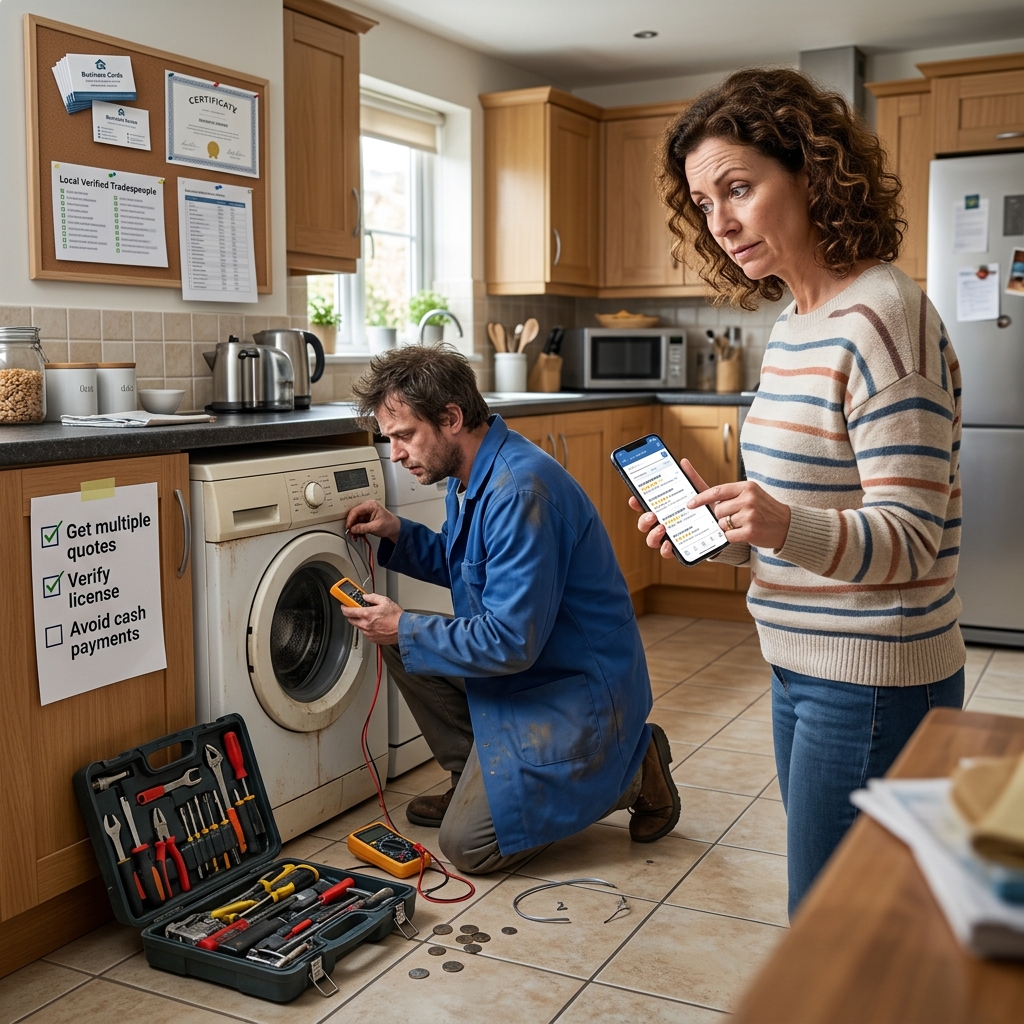
Home appliances tend to fail at the worst possible moment—right before a holiday dinner, in the middle of a heat wave, or when your budget is already stretched. That urgency makes you vulnerable to appliance repair scams that can cost hundreds of dollars, compromise your personal data, or even create safety hazards in your home.
This guide explains how these scams typically work, the most common warning signs, and what you can do before, during, and after a repair visit to protect yourself, your home, and your finances.
Why Appliance Repair Scams Are So Common
Appliance repair is an ideal target for scammers because:
- Most people can’t easily verify the problem. Few homeowners have the technical knowledge to know whether a part is truly broken or overpriced.
- There is often urgency. A broken fridge, stove, washer, or HVAC system is disruptive, and you may feel pressured to accept the first “solution” you find.
- Search results and online ads can be manipulated. Fake or low-quality repair services can buy ads or create misleading websites to appear trustworthy.
- Payments are usually small enough to avoid serious scrutiny. Individual repairs often cost a few hundred dollars, which may not justify lengthy investigations.
Because of these factors, scammers exploit information gaps, emotional stress, and the difficulty of comparing prices quickly.
How Appliance Repair Scams Typically Work
While individual schemes vary, many follow a similar pattern:
| Stage | What Legitimate Pros Do | What Scammers Often Do |
|---|---|---|
| Initial Contact | Use a clear business name, physical address, and consistent phone numbers. | Hide behind generic names, call centers, or vague online listings with little verifiable information. |
| Scheduling | Offer reasonable appointment windows and basic price ranges. | Push for immediate visits, sometimes at odd hours, and may avoid discussing costs. |
| On-Site Visit | Inspect the appliance, explain the issue, provide a written or clearly itemized estimate. | Quickly declare a serious problem, pressure you to authorize repairs, and may refuse written estimates. |
| Payment | Charge after work is done, accept secure payment methods, and provide a receipt. | Demand large upfront payments or cash, may ask to pay an individual, and sometimes disappear without completing work. |
| Follow-Up | Honor warranties, respond to callbacks, and maintain records. | Are unreachable after the visit; numbers and websites may stop working. |
Red Flags That Signal a Possible Repair Scam
Knowing the warning signs is your first line of defense. Be cautious if you notice any of the following.
1. Vague or Unverifiable Business Information
- Only a generic name like “Appliance Repair Service” with no full legal business name.
- No clearly listed physical address, or an address that does not match an actual business location when checked through online maps.
- Phone numbers that trace back to unrelated call centers or constantly change.
- Little or no online presence, or a website with no details about licensing, insurance, or ownership.
Legitimate companies usually display their contact details, service area, and business history prominently.
2. No Proof of Licensing or Insurance
Many states and localities require licenses for certain types of appliance and electrical work. Even where licensing is limited, reputable businesses carry general liability insurance and, when applicable, specific trade licenses. Warning signs include:
- Refusal or hesitation when you ask for a license number.
- Documents that look altered, expired, or inconsistent with state licensing records.
- Statements like “we don’t need a license for this” without referencing actual local rules.
3. Pressure for Upfront or Cash-Only Payments
One of the most common elements in repair scams is a demand for money before work is completed.
- Large “diagnostic” or “trip” fees demanded in cash before any inspection.
- Requests for full payment before ordering parts or starting the repair.
- Insistence on cash, peer-to-peer payment apps, or checks made out to an individual instead of the business.
Reasonable deposits may be justified for expensive special-order parts, but they should be clearly documented in writing and paid to the company, not a random individual.
4. Suspiciously Low Prices or “Today Only” Discounts
- Quotes far below those of other local companies.
- “Limited time” deals that require you to commit on the spot.
- Unwillingness to explain how the low cost is possible.
Extremely low prices are often bait to get into your home, where the technician may claim additional problems or push expensive unnecessary repairs.
5. Refusal to Provide Written Estimates or Receipts
- No written estimate before doing non-trivial work.
- Invoices that lack the company name, address, and phone number.
- No breakdown of parts versus labor.
Without documentation, you have little recourse if something goes wrong.
6. Overly Technical Explanations and Intimidation
Scammers often rely on your lack of technical knowledge:
- Using complex jargon without clear explanation.
- Claiming catastrophic failures that require full replacement without showing evidence.
- Discouraging second opinions or questioning by suggesting your appliance will become “dangerous” or “unusable” if you wait.
Steps to Take Before You Call a Repair Company
Preparation significantly reduces your risk. Before contacting any repair service, take these steps.
1. Check Your Warranty and Manufacturer Support
- Review your appliance warranty documents or the manufacturer’s website.
- Some repairs may be covered in full or partially, but only if you use authorized service providers.
- Manufacturers often list recommended or authorized repair partners by area.
This not only saves money but also guides you to vetted repair options.
2. Gather Basic Information About the Appliance
- Brand and model number.
- Approximate age of the appliance.
- Exact symptoms (noise, error codes, when the issue occurs).
Having these details ready makes it easier to obtain accurate estimates and compare quotes.
3. Research Companies Thoroughly
Investigate any company before you invite them into your home:
- Search for the company name along with terms like “reviews” and “complaints.”
- Check independent review platforms and watch for patterns of similar complaints.
- Verify business details and complaint history through consumer organizations or state agencies where available.
- Use online maps to confirm that the address is a real, consistent business location, not just a mailbox.
4. Compare Multiple Estimates
Consumer experts often recommend getting at least two or three quotes for non-trivial repairs.
- Provide the same information (brand, model, symptom) to each company.
- Ask for approximate cost ranges for diagnostics and typical repairs for that type of problem.
- Be wary of offers that are dramatically lower or higher than others without a clear reason.
Protecting Yourself During the Service Call
Once a technician arrives, you still have several opportunities to protect yourself and ensure the work is legitimate.
1. Verify Identity at the Door
- Ask for a business card and photo ID.
- Check that the company name and logo match what you saw online or on the phone.
- If the technician appears unexpectedly or earlier than scheduled, call the main company number (not a number they provide at the door) to confirm the visit.
2. Ask for a Clear Diagnosis and Written Estimate
Before authorizing substantial work:
- Ask the technician to explain the problem in plain language.
- Request a written or itemized estimate covering:
- Diagnostic fee (if any).
- Cost of parts.
- Labor charges and hourly rate.
- Any additional service or travel fees.
- Clarify whether the diagnostic fee is applied to the repair if you proceed.
Reputable companies are typically comfortable with transparency about pricing and process.
3. Stay Present, But Don’t Micromanage
- Remain in the home during the visit and stay reasonably nearby.
- Politely observe, and feel free to ask for an explanation of what is being done.
- Request to see any parts that are removed or replaced.
Your presence can discourage unnecessary or fraudulent charges while still allowing the technician to work efficiently.
4. Understand When Payment Is Due
- Prefer payment only after work is completed and tested.
- If a deposit is truly necessary (for example, to order a high-cost part), ensure it is clearly itemized and documented on a signed work order.
- Use payment methods that offer fraud protection when possible, such as credit cards.
5. Get Documentation Before the Technician Leaves
Before you sign or pay, make sure you receive:
- A detailed invoice including parts, labor, taxes, and fees.
- Information on any warranties for parts and labor, along with duration and conditions.
- Full business contact information and a phone number for follow-up questions.
What to Do If You Suspect You Were Scammed
If you believe a repair was fraudulent, incomplete, or dangerously performed, acting quickly can limit further damage and help authorities identify patterns of abuse.
1. Stop Further Payments
- If you paid by credit card, contact your card issuer immediately to dispute the charge and request a chargeback.
- If a check has not yet cleared, ask your bank whether it can be stopped.
- For electronic payments, review your bank’s fraud procedures and act promptly.
2. Document Everything
- Save copies of invoices, emails, texts, and any written estimates.
- Take photos of the appliance, including any visible damage or parts left behind.
- Write down the timeline of events while details are fresh.
3. Seek a Second Opinion
Have a reputable technician or service company inspect the appliance and provide a written assessment of:
- Whether the original diagnosis was accurate.
- Whether any claimed parts were actually replaced.
- Whether the work was properly performed or caused additional damage.
4. Report the Scam to Authorities
Reporting helps protect you and other consumers. Consider contacting:
- Your local police or sheriff’s office if there was clear fraud or theft.
- State or local consumer protection agencies that handle contractor complaints.
- Business watchdog organizations that collect and publish complaint information.
Long-Term Strategies to Avoid Future Scams
Beyond one-off precautions, you can build defenses that make you a much harder target for scammers.
1. Maintain a Short List of Trusted Providers
- Ask friends, neighbors, or coworkers which companies they have used successfully.
- Store contact information for vetted repair services in your phone or a home maintenance file before emergencies arise.
- Update the list periodically if ownership changes or service quality declines.
2. Learn Basic Appliance Care and Troubleshooting
You do not need to become a technician, but a little knowledge can reduce your vulnerability:
- Follow manufacturer maintenance guidelines, such as cleaning filters and vents.
- Learn safe, simple checks (like verifying power supply or checking for tripped breakers) before assuming a major failure.
- Consult owner manuals or official manufacturer resources for troubleshooting steps.
3. Keep Organized Records
- Maintain a folder (digital or physical) with warranties, purchase receipts, and service history.
- Note previous issues and repairs for each appliance.
- Having this information ready helps new technicians diagnose accurately and prevents repeated unnecessary work.
Frequently Asked Questions About Appliance Repair Scams
How much should a typical appliance repair cost?
Actual costs depend on your location, brand, and the specific issue, but national estimates often place average appliance repairs in the low hundreds of dollars, including both parts and labor. Extremely high or unusually low quotes compared with multiple local estimates are both reasons to investigate further.
Is it safe to hire a technician I found through an online search?
Yes, but only if you verify the company’s legitimacy. Check reviews, licensing, insurance, and physical address, and make sure phone numbers and names are consistent across platforms. Never assume that the first result or a paid advertisement is automatically trustworthy.
Should I ever pay a deposit before work starts?
A modest, clearly documented deposit may be reasonable for special-order parts or large jobs, but you should avoid large upfront payments, cash-only arrangements, or deposits without a written estimate. The safer approach is to pay most or all of the cost after the work is successfully completed.
What if the technician says the appliance cannot be repaired and I must buy a new one?
Sometimes replacement is the right choice, especially for older units or very costly failures. However, if the appliance is relatively new, still under warranty, or the explanation feels rushed or unclear, seek a second opinion. Also verify with the manufacturer or a trusted service if replacement is truly necessary.
Can I do anything if I already paid a scammer?
Yes. Contact your bank or credit card issuer immediately to report suspected fraud and request a dispute, gather all documentation, and file complaints with local consumer protection agencies or law enforcement where appropriate. A prompt response improves your chances of recovery or corrective action.
References
- How to Protect Yourself against Appliance Repair Scams — C&W Services. 2022-03-10. https://cwservicesinc.com/how-to-protect-yourself-from-appliance-repair-scams/
- 5 Appliance Repair Scams Every Homeowner Needs To Know — Angi. 2023-05-02. https://www.angi.com/articles/don-t-get-ripped-appliance-repair-scams.htm
- Detect Repair Rip Off With These 5 Common Scam Clues — Home-Tech. 2021-07-15. https://home-tech.com/25716/5-clues-to-detect-repair-rip-off/
- What is the Best Way to Avoid Appliance Repair Scams? — Kelly’s Appliance Repair. 2022-08-09. https://kellysappliancerepair.com/blog/what-is-the-best-way-to-avoid-appliance-repair-scams
- How to Determine Appliance Repair Scams — Queen City Home Store. 2021-11-30. https://queencityonline.com/blog/how-to-determine-appliance-repair-scams
Similar Articles








Read full bio of Sneha Tete




