
High School Diploma Scams: 6 Signs, How To Spot And Avoid Them
Learn how to spot fake diploma programs, verify legitimate options, and protect your education and career from costly high school diploma scams.
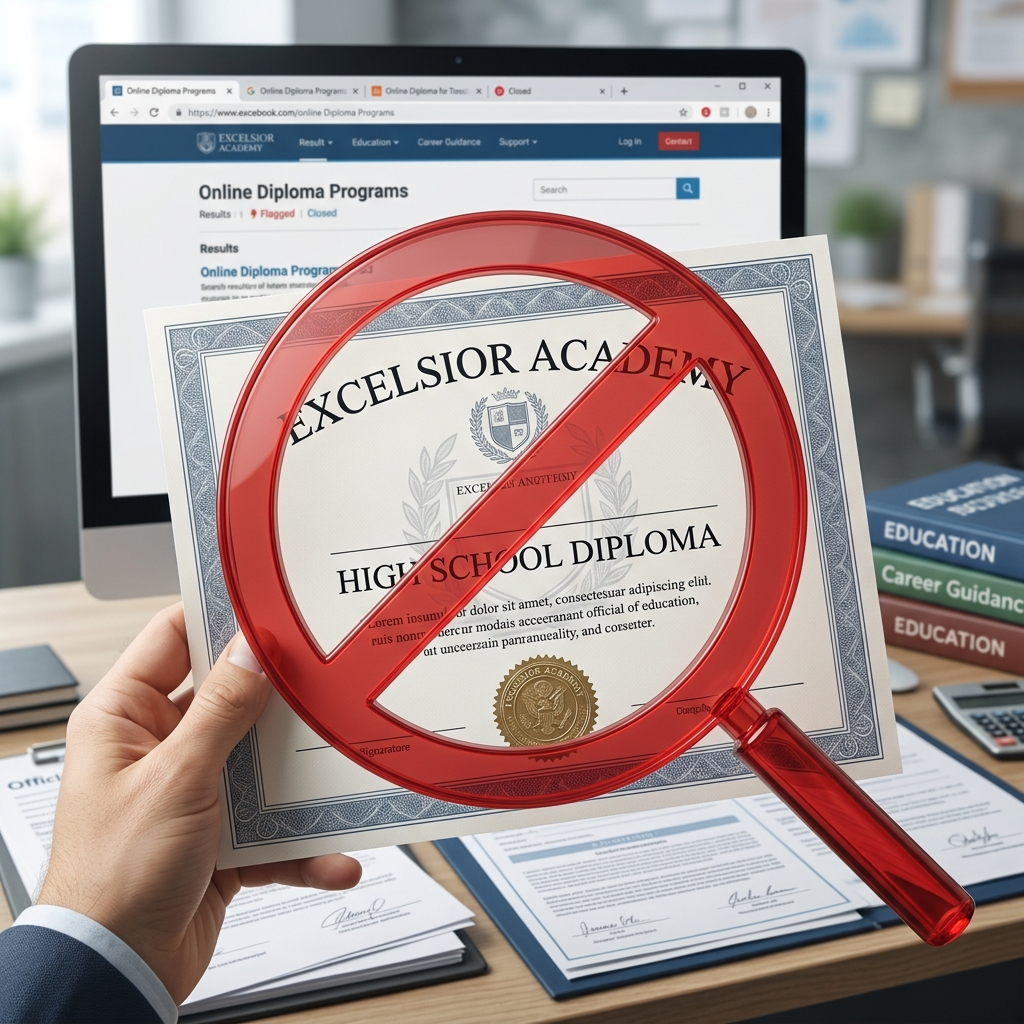
Finishing high school or earning an equivalent credential opens doors to better jobs, college, and military service. But the growing number of online programs has also created space for high school diploma scams that sell worthless certificates and leave people with lost money and dashed plans. This guide explains how these schemes work, how to spot them, and how to safely choose a legitimate path to graduation.
Why High School Diploma Scams Are So Common
People who never completed high school often face real pressure: job requirements, college admissions, and enlistment standards typically demand a recognized diploma or high school equivalency. Scammers exploit that pressure by offering quick and easy credentials that promise to bypass hard work and time. In reality, they provide no real education, and their diplomas are not accepted by employers, colleges, or the military.
Online advertising makes it easy for fraudulent programs to appear credible. They use professional-looking websites, official-sounding names, and language that mirrors legitimate schools. Without a clear understanding of how accreditation and testing work, many people assume these offers are genuine.
How Legitimate High School Credentials Work
To recognize scams, it helps to understand what a legitimate high school credential looks like. In the United States, there are two main routes:
- A traditional or online high school diploma from a school approved by a state or recognized accrediting agency.
- A high school equivalency credential, such as the GED® test, issued by a state or authorized jurisdiction.
Key facts about legitimacy:
- States, not the federal government, approve high school and equivalency programs. The U.S. Department of Education does not run high school diploma programs; states regulate them or recognize private accreditation.
- Accreditation must come from recognized agencies. Legitimate online high schools are accredited by bodies listed by the U.S. Department of Education or the Council for Higher Education Accreditation (CHEA).
- Real credentials require coursework or official testing. A valid diploma or GED® involves exams, assignments, and documented learning—not a single online quiz or payment form.
Typical Features of High School Diploma Scams
Although scams vary, most share certain patterns. Understanding these warning signs can help you quickly rule out dangerous programs.
1. Paying for the Diploma Itself
Fraudulent programs often emphasize that classes are free or minimal, but you must pay a flat fee to receive your diploma. Legitimate schools may charge tuition for the education they provide, but they do not sell the certificate as a separate product.
- Flat, one-time fee purely for a diploma or certificate.
- Promises of “no tuition, only diploma fee.”
- Upsells for “official documents” like transcripts or embossed diplomas.
2. Instant or Extremely Fast Graduation
Many scammers promise that you can earn a high school diploma in days or a few weeks, often by taking a single online test or “evaluation.” Genuine education takes time, and recognized equivalency tests like the GED® involve preparation, scheduling, and proctored exams.
- Claims like “graduate this weekend” or “earn your diploma today.”
- One short multiple-choice test with guaranteed retakes and highlighted correct answers.
- No homework, no assignments, and no interaction with licensed teachers.
3. False Government Affiliation
Some fake schools claim to be “federally approved” or “linked to the U.S. Department of Education.” These statements are misleading. The federal government does not operate high school diploma programs, and it does not directly accredit schools.
- Use of seals or logos that resemble government emblems.
- Language such as “national government-certified diploma.”
- References to non-existent federal accreditation systems.
4. Suspicious Accreditation Claims
Diploma mills often list accrediting organizations that sound official but are not recognized by CHEA or the U.S. Department of Education. They might also describe themselves as “fully accredited” without naming any recognized agency.
- Accreditation by agencies that do not appear in official databases.
- Vague phrases like “globally accredited” without details.
- Refusal to explain accreditation when asked directly.
5. “Life Experience” Diplomas
Another common tactic is offering a high school diploma based solely on life experience, work history, or an unproctored questionnaire. No recognized high school or equivalency program grants full credentials this way.
- Promises to convert years of work into a high school diploma instantly.
- No course requirements, no standardized tests, and no transcripts.
- Marketing claims targeting adults who feel that formal education is unnecessary.
6. Unrealistic Acceptance Claims
Scam schools typically claim that their diplomas are accepted everywhere: by all colleges, employers, and the military. In reality, when students submit these credentials, they often discover that admissions offices and HR departments treat them as invalid.
- Statements like “accepted by all U.S. colleges” without proof.
- Generic references to partnerships with universities but no specific names.
- No evidence of students successfully enrolling in community college, university, or the armed forces with their diplomas.
Comparing Legitimate Programs and Scams
| Feature | Legitimate High School or GED® | Diploma Scam / Diploma Mill |
|---|---|---|
| Accreditation / Approval | Recognized by state or accredited by agencies listed by U.S. Department of Education or CHEA. | Self-created or unrecognized “accrediting” bodies; vague claims of being fully accredited. |
| Cost Structure | Tuition for courses or official test fees; no separate charge just to print a diploma. | Flat fee for diploma or certificate, sometimes with optional extras for transcripts. |
| Time & Effort | Requires coursework, assignments, or proctored exams; completion takes months or years. | Promises graduation in days or weeks, often after a single online test with guaranteed passing. |
| Recognition | Accepted by community colleges, employers, and the military when properly documented. | Frequently rejected when used for college, job applications, or enlistment. |
| Government Role | Approved or overseen by state education authorities and official testing services. | Claims of federal government affiliation, which does not exist for high school diplomas. |
How to Verify Whether a Program Is Legitimate
Before enrolling in any online high school or equivalency program, take these steps to confirm that it is recognized.
Step 1: Check Accreditation Status
- Search the U.S. Department of Education database of accredited institutions or consult CHEA’s listing of recognized accrediting agencies.
- Verify that the accrediting body named by the school appears in those official lists.
- If the school refuses to provide details about accreditation, treat that as a major warning sign.
Step 2: Confirm State Recognition
- Contact your state’s Department of Education to ask whether the program is approved or recognized.
- Ask specifically about high school diplomas or GED® credentials earned through that provider.
- Check whether community colleges in your area accept the diploma for admission.
Step 3: Review Program Requirements
- Look for clear information on curriculum, graduation requirements, and assessment methods.
- Expect to see coursework, graded assignments, and exams supervised by qualified educators.
- A single online test, especially one that can be repeated until you pass without real study, is not sufficient.
Step 4: Ask Colleges or Employers Directly
- If your goal is college, contact admissions offices at schools you’re interested in and ask whether they accept diplomas from the program in question.
- For employment, talk to HR departments at organizations in your field and confirm whether they recognize that credential.
- Document the responses you receive to help guide your decision.
Safe, Legitimate Paths to a High School Credential
If you discover that a program is likely a scam, you still have solid options to earn a valid credential.
- Public adult education programs: Many districts offer evening or online classes for adults who want to complete high school.
- Accredited online high schools: Some schools specialize in flexible online learning and hold recognized accreditation.
- GED® and other equivalency tests: The official GED® is administered by authorized test centers and recognized by states and employers.
- Community college bridge programs: Certain colleges offer pathways that combine adult basic education with credit-bearing coursework.
If You Think You’ve Been Scammed
Realizing that your diploma is not valid can be upsetting, but you do have options for response and recovery.
- Stop using the credential. Continuing to present a fake diploma may expose you to accusations of misrepresentation or fraud.
- Report the program. File a complaint with the Federal Trade Commission (FTC) and your state consumer protection office; for GED®-related scams, you can also contact GED Testing Service.
- Consult your state education department. Ask what steps you can take now—such as enrolling in an approved program or testing—to obtain a recognized credential.
- Discuss your situation with employers or schools. Admissions officers and HR professionals may help you identify alternative documentation or pathways once you begin legitimate coursework.
Practical Tips to Protect Yourself
Use these quick checks whenever you encounter an offer to earn a high school diploma or equivalency online:
- Be skeptical of “too good to be true” promises: instant graduation, no classes, or one simple test.
- Never pay a flat fee just for a diploma; tuition or test fees should relate to actual instruction or official examinations.
- Verify accreditation through official government or CHEA sources, not only the school’s website.
- Look for clear information about state recognition and which colleges accept the credential.
- Consult trusted sources—local community colleges, adult education centers, and state education agencies—before enrolling.
FAQs About High School Diploma Scams
Are online high school diplomas real?
Yes, many online high schools are legitimate, but they must be properly accredited and recognized by state authorities or accepted by local colleges and employers. Always verify accreditation through official listings before enrolling.
Is it ever okay to pay for a diploma?
Legitimate programs may charge tuition or testing fees, but you should not pay solely for a diploma document. If the main product being sold is the certificate rather than the education or official test, treat that as a red flag.
Can I earn a real diploma based on life experience?
No recognized high school or equivalency program grants full credentials solely based on life experience. Your experience may help you place into certain courses or tests, but a valid diploma still requires coursework or official exams.
Who decides which programs are approved?
In the United States, state education authorities determine which high school programs and high school equivalency tests are approved within their jurisdiction. The federal government does not run diploma programs or directly accredit high schools.
What should I do if my diploma is rejected by a college or employer?
First, ask why it was rejected and whether the issue is accreditation or state recognition. Then contact your state Department of Education to explore legitimate options for earning a recognized diploma or equivalency credential. You may need to enroll in an approved program or take an official test like the GED®.
References
- Looking to get a high school diploma? Watch out for scams. — Military Consumer (Federal Trade Commission). 2018-09-12. https://www.militaryconsumer.gov/scam-alerts/looking-get-high-school-diploma-watch-out-scams
- List of Fake Online High Schools & Fake Online GED Programs — Excel High School. 2024-03-01. https://www.excelhighschool.com/blog/list-of-fake-online-high-schools-and-fake-online-ged-programs/
- Are Online High School Diplomas Legitimate? — U.S. Career Institute. 2023-07-10. https://www.uscareerinstitute.edu/online-high-school/legitimate-online-diplomas
- GED® Test Fraud — GED Testing Service. 2022-05-01. https://www.ged.com/test-fraud.html
- Is Creating a High School Diploma for Work Illegal? — JustAnswer (Education Law). 2021-06-15. https://www.justanswer.com/education-law/s1jnm-went-private-high-school-not-accredited.html
Similar Articles








Read full bio of Sneha Tete




