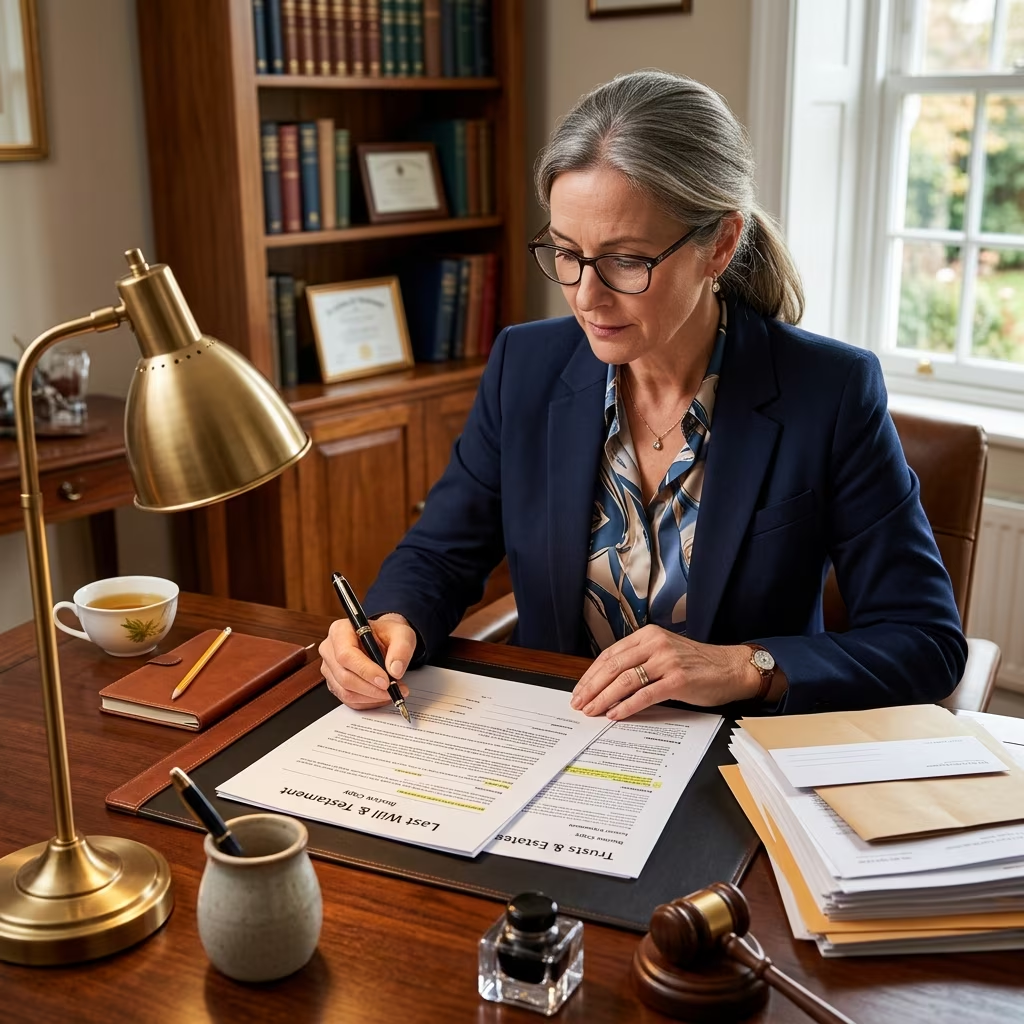
Writing a will is one of the most important legal steps you can take to protect your family, your assets, and your wishes after you die. Yet many people either put it off or rush through the process, leading to errors that can render the document invalid, trigger family disputes, or cause unnecessary delays and costs in probate. By understanding common mistakes and how to avoid them, you can create a clearer, more effective estate plan.
This guide explains frequent pitfalls in will writing, why they matter, and practical ways to avoid them. While it is not a substitute for legal advice, it can help you approach the process with greater confidence and foresight.
Why Mistakes in a Will Matter
A will is a legally binding document that directs how your assets are distributed and who will manage your estate after your death. If it contains errors or does not comply with local law, a court may treat it as invalid or ambiguous, forcing your estate to be handled under statutory default rules instead of your stated wishes. This can lead to:
- Delays in probate and higher legal costs.
- Disputes among family members or beneficiaries.
- Assets going to people you did not intend to benefit.
- Minor children lacking a clearly appointed guardian.
Because estate and probate laws differ by jurisdiction, even small mistakes such as improper witnessing or vague wording can have serious consequences.
Overview of Common Will-Writing Mistakes
While every situation is unique, many people repeatedly make similar errors when drafting their will. The most frequent categories of mistakes include:
- Formal validity issues – Improper signatures, witnesses, or storage.
- Omissions and vague wording – Missing assets or unclear inheritance instructions.
- Ignoring life changes – Failing to update the will after major events.
- Executor and guardian problems – Choosing unsuitable individuals or not naming backups.
- DIY complexities – Attempting complex planning without qualified legal advice.
Below is a closer look at each category, along with practical solutions.
Mistake 1: Ignoring Legal Formalities
Every jurisdiction has formal requirements that must be satisfied for a will to be valid. Typical requirements include being of sound mind, signing the will, and having one or more independent witnesses observe the signing. Failing to follow these rules is one of the fastest ways to invalidate your will.
Common formal errors
- Not signing the will or signing in the wrong place.
- Having fewer witnesses than required by local law.
- Using witnesses who are also beneficiaries or spouses of beneficiaries.
- Witnesses signing at a different time or not being present when you sign.
These errors can lead a court to treat the will as invalid, causing your estate to be distributed under intestacy laws rather than your wishes.
How to avoid formal mistakes
- Learn the basic witnessing and signing rules that apply in your jurisdiction (often available on government or court websites).
- Use witnesses who are legally eligible and not named as beneficiaries.
- Sign and date your will in the presence of all required witnesses.
- Consider having the will notarized or made “self-proving” where allowed, to simplify probate.
Mistake 2: Not Having a Will at All
One of the most serious errors is failing to make a will in the first place. If you die without a valid will, you are considered to have died “intestate,” and your estate will be distributed according to default rules set by law rather than your personal wishes. These rules may not reflect your preferences, especially in blended families or situations involving unmarried partners.
Consequences of intestacy
- Partners who are not legally married or in a recognized civil union may receive nothing.
- Stepchildren may be excluded unless laws explicitly include them.
- Courts may need to appoint a personal representative and guardian, increasing time and cost.
- Family members may dispute how property should be divided.
Preparing a basic will, even if your estate is modest, allows you to choose beneficiaries, name an executor, and set out guardianship preferences for minor children.
Mistake 3: Forgetting Assets and Beneficiaries
Many people focus on their home and bank accounts but fail to consider less obvious assets or classes of beneficiaries. Omissions can lead to confusion, missed inheritances, or assets falling into an unintended “residue” of the estate.
Frequently overlooked assets
- Investment accounts, retirement plans, and premium bonds.
- Business interests or partnership shares.
- Life insurance or accounts with designated beneficiaries.
- Digital assets such as online accounts, social media, and cryptocurrency wallets.
Similarly, people may neglect certain beneficiaries, including stepchildren, extended family, or charities they intend to support.
Strategies to include everything that matters
- Make a comprehensive list of your assets, including physical, financial, and digital property.
- Identify all individuals and organizations you may want to benefit, including stepchildren and charities.
- Use clear, specific language when describing items and beneficiaries (full names, relationships).
- Ensure the will covers what happens to any remaining assets (the “residue” of your estate) after specific gifts are distributed.
Mistake 4: Using Vague or Confusing Language
Ambiguity is a major source of conflict. If language in your will can be interpreted in more than one way, beneficiaries may disagree about your intent, and a court may need to resolve the dispute. This can delay probate and increase costs.
Examples of problematic wording
- “I leave my car to my son” when you own multiple vehicles.
- “Divide my savings fairly among my children” without specifying amounts or percentages.
- Referring to a person by a nickname instead of a full legal name.
- Not clarifying whether a gift should adjust if asset values change over time.
Precise drafting helps ensure that your will can be applied as written without needing external clarification.
Tips for clearer drafting
- Describe items specifically (for example, make, model, serial number, or address).
- Use full legal names of all beneficiaries and executors.
- State percentages or fixed amounts rather than vague terms like “share equally,” unless you are certain that is appropriate.
- Consider including a general clause addressing changes in value or the sale of assets before death.
Mistake 5: Not Updating the Will After Life Changes
A will that was perfectly appropriate several years ago may no longer reflect your current circumstances. Major life events, changes in assets, or shifts in relationships can make an old will inaccurate or unfair. Many people forget to revise their will after such changes, which can cause unintended consequences for beneficiaries.
Key events that call for a revision
- Marriage, civil partnership, or divorce.
- Birth or adoption of children or grandchildren.
- Death of a beneficiary, executor, or guardian named in the will.
- Acquiring or selling significant assets such as property or a business.
- Moving to a new jurisdiction with different estate laws.
Some jurisdictions treat marriage or divorce as events that change or revoke parts of a will automatically, making proactive review especially important.
Good practice for keeping your will up to date
- Review your will regularly, such as every three to five years or after major life events.
- Do not make handwritten changes on an existing signed document; use legally recognized procedures such as codicils or a new will.
- Cleanly revoke outdated versions and store only the current will as your official document.
Mistake 6: Poor Choice of Executor or Guardian
The executor manages your estate, pays debts and taxes, and distributes assets according to your will. A guardian may be appointed to care for minor children. Choosing the wrong person, or failing to name anyone, can create serious difficulties.
Risks of unsuitable appointments
- Executors who lack financial skills or time to manage the estate properly.
- Guardians who are unwilling or unable to assume responsibility for children.
- Unclear or conflicting appointments when multiple people are named without clear roles.
- No backup executor or guardian if the primary choice cannot serve.
How to choose wisely
- Select an executor who is trustworthy, organized, and capable of handling financial and legal tasks.
- Talk to prospective guardians in advance to confirm they are willing and able to serve.
- Consider naming alternates in case your first choice is unable or unwilling to act.
- For complex estates, consider appointing a professional such as a trust company or experienced attorney as co-executor.
Mistake 7: Overlooking Children and Vulnerable Beneficiaries
Children, beneficiaries with disabilities, or individuals who struggle with finances often need special consideration in a will. Failing to plan for these circumstances can expose them to risk or mismanagement of assets.
Key planning points
- Appoint guardians for minor children and outline any guidance you wish to provide about their upbringing.
- Consider trusts or other arrangements to manage funds for young or vulnerable beneficiaries rather than giving assets outright.
- Clarify whether and how stepchildren or children from previous relationships should be included.
- Seek legal advice if a beneficiary receives disability-related government benefits, since direct inheritances can affect eligibility.
Mistake 8: Ignoring Local Laws and Tax Implications
Estate, inheritance, and tax rules vary widely. A will that does not take local law into account may conflict with statutory rules or fail to use available tax allowances and planning tools. This can increase the tax burden on your estate or beneficiaries.
Issues related to law and tax
- Ownership rules for jointly held property, which may pass outside the will.
- Mandatory shares for certain family members in some jurisdictions.
- Estate or inheritance tax thresholds and exemptions.
- Different rules for digital assets or foreign property.
Because these issues can be complex, professional advice is often helpful in ensuring that your will is both valid and tax-efficient.
Mistake 9: DIY Wills for Complex Situations
Basic templates or do-it-yourself kits may be sufficient for simple estates, but they are rarely adequate when multiple properties, businesses, blended families, or cross-border issues are involved. In such cases, generic forms can overlook critical provisions or create conflicting instructions.
When legal help is strongly recommended
- Blended families or second marriages with children from previous relationships.
- Large or complex estates, including business interests and several properties.
- International assets or beneficiaries living in different countries.
- Desire to set up trusts or long-term arrangements for beneficiaries.
Consulting a qualified attorney or other regulated estate-planning professional helps ensure your will complies with local law and addresses your specific situation thoroughly.
Mistake 10: Poor Storage and Document Management
Even a carefully drafted will is of little use if it cannot be located when needed or if multiple versions create confusion. Proper storage and clear communication about where the will is kept are essential.
Common storage problems
- Only keeping photocopies and misplacing the signed original.
- Attaching extra documents to the will with staples or clips, which may raise questions about whether they are part of the will.
- Failing to tell the executor or family where the will is stored.
- Leaving multiple inconsistent versions without clearly revoking older ones.
Better storage practices
- Store the original signed will in a safe but accessible location, such as a fireproof home safe or professional storage facility.
- Tell your chosen executor and at least one trusted person how to access it.
- Avoid physically attaching extra notes or letters; instead, keep separate documents clearly labeled.
- Maintain a record of when each version was created and revoke outdated copies.
Quick Comparison: Good vs. Risky Will Practices
| Aspect | Safer Practice | Risky Practice |
|---|---|---|
| Witnesses | Two disinterested adults present for signing. | Family beneficiaries or spouses acting as witnesses. |
| Asset list | Comprehensive list including digital assets and investments. | Only listing major physical items like home and car. |
| Updates | Review after major life events and every few years. | Never revising an old will despite major changes. |
| Executor choice | Capable, willing individual or professional executor. | Overburdened or unsuitable relative chosen by default. |
| Legal advice | Professional help for complex estates or family situations. | Using generic forms for intricate or high-value estates. |
Frequently Asked Questions (FAQs)
Do I need a lawyer to write a will?
In many jurisdictions, you are not legally required to use a lawyer to write a will, and simple estates may be handled with standardized forms. However, professional advice is strongly recommended when you have complex assets, blended families, or cross-border issues, because local law and tax rules can significantly impact your estate plan.
How often should I review my will?
It is sensible to review your will after any major life event—such as marriage, divorce, birth of a child, death of a beneficiary, or purchase of significant property—and at least every three to five years even if nothing obvious has changed.
What happens if my will is not properly witnessed?
If your will is not signed and witnessed according to the rules in your jurisdiction, a court may treat it as invalid. In that case, your estate would be distributed under intestacy laws, which may result in different beneficiaries and shares than you intended.
Can I include digital assets in my will?
Yes. Modern estate planning increasingly recognizes digital assets such as online accounts, social media profiles, and cryptocurrencies. Listing these assets and providing instructions (including how executors can access them) helps prevent loss or misuse and ensures they are managed according to your wishes.
Is a photocopy of my will enough for probate?
Typically, courts expect the original signed will when administering an estate. While procedures for lost originals vary, relying only on photocopies can cause delays and complications. It is best practice to safeguard the original and let your executor know where it is stored.
References
- 14 common mistakes to avoid when writing a will — PHR Solicitors. 2023-05-10. https://www.phrsolicitors.co.uk/legal-services-for-individuals/wills-and-probate/resources/14-common-mistakes-to-avoid-when-writing-a-will
- 8 Common Mistakes When Making a Will — State Trustees. 2022-08-15. https://www.statetrustees.com.au/resources/8-common-mistakes-when-making-a-will/
- Writing a Will? Avoid These Common Mistakes — HumanGood. 2021-11-02. https://www.humangood.org/resources/senior-living-blog/writing-a-will-common-mistakes
- 10 Mistakes to Avoid When Writing Your Will — Marshall, Parker & Weber Elder Law Firm. 2020-09-18. https://www.paelderlaw.com/wills/10-mistakes-to-avoid-when-writing-your-will/
- 8 Common Mistakes When Making a Will — Berkley Oliver. 2022-03-29. https://berkleyoliver.com/common-mistakes-to-avoid-when-writing-your-will/
- Writing a Will: Best Practices and Common Mistakes — National Church Residences. 2021-06-14. https://www.nationalchurchresidences.org/blog/writing-a-will-best-practices-and-common-mistakes/