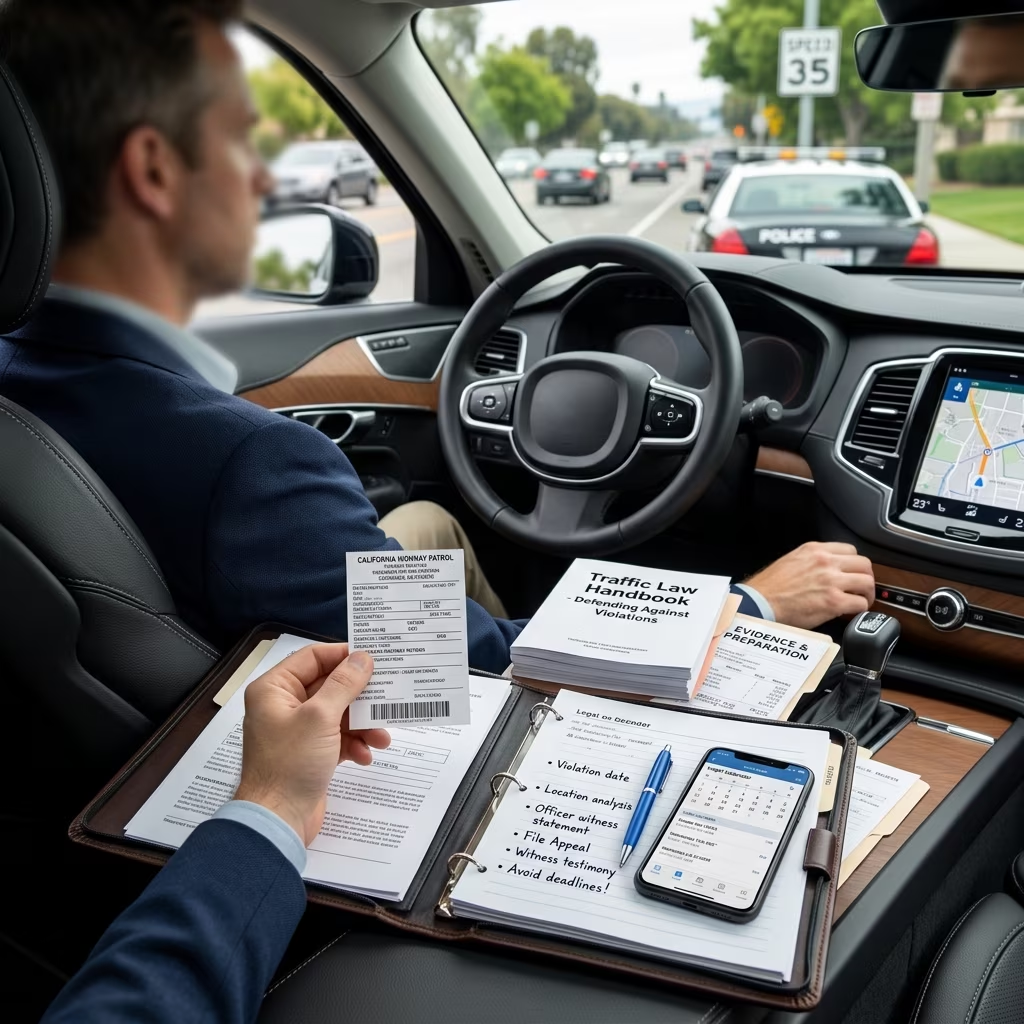
For many drivers, receiving a traffic ticket feels frustrating and unfair. Contesting the ticket can protect your driving record, prevent insurance rate hikes, and avoid costly fines, but approaching traffic court carelessly often does more harm than good. This guide explains the most common mistakes people make when fighting traffic tickets and how to handle your case strategically instead of emotionally.
Why Contesting a Ticket Requires Strategy, Not Impulse
Every traffic citation is essentially an allegation that you violated a specific law. To prove the violation, the government must establish each legal element of the offense, such as speed, location, or traffic signal status. When drivers respond impulsively—by ignoring deadlines, admitting guilt too quickly, or appearing in court unprepared—they often help the government meet its burden instead of challenging it.
A thoughtful approach to contesting a ticket usually involves:
- Reading the citation thoroughly, including deadlines and instructions.
- Gathering evidence about what happened and the conditions at the time.
- Understanding the law you are accused of violating.
- Developing a defense theory based on facts, not feelings.
- Deciding whether self-representation or hiring a lawyer makes sense for your situation.
Procedural Pitfalls That Can Destroy Your Case
Many drivers lose their cases before they ever present evidence. Traffic courts run on strict deadlines and basic procedural rules, and failing to follow them can lead to automatic judgments against you.
Missing Deadlines or Ignoring the Ticket
One of the most serious missteps is simply doing nothing. If you ignore a traffic ticket, courts can enter default judgments, add penalties, and in some jurisdictions even issue bench warrants for your arrest. The citation usually states whether you must:
- Pay the fine by a specific date.
- Contact the court to request a hearing.
- Appear in person on a scheduled court date.
Failing to respond by the deadline may lead to:
- Automatic conviction and fines.
- License suspension or additional sanctions.
- Increased insurance premiums because of a conviction on your record.
Skipping Your Court Appearance
Tickets often list a date and time for traffic court. If you plan to fight the ticket, you must appear or formally arrange for another type of hearing, depending on your jurisdiction. Not appearing can result in:
- Conviction in your absence.
- Additional fines and fees.
- Possible warrant or license consequences in some states.
If you know you cannot attend on the scheduled day, contact the court as early as possible to request a continuance or new date. Courts are more receptive to rescheduling requests made well before the hearing.
Disregarding Court Rules and Decorum
Traffic court is still court. Judges expect respect, punctuality, and basic decorum. Common mistakes include:
- Arriving late and missing your hearing when your case is called.
- Appearing in improper attire that signals disrespect.
- Arguing aggressively rather than presenting facts calmly.
- Interrupting the judge or officer instead of waiting to speak.
While these issues may not directly determine guilt, they influence how the judge perceives your credibility and can affect discretionary decisions such as fines, eligibility for traffic school, or leniency.
Evidentiary Mistakes: When You Show Up Empty-Handed
Even if you appear in court on time, you can still undermine your case by failing to bring evidence. Judges typically give more weight to objective documentation than to a driver’s unsupported testimony.
Not Collecting Evidence Immediately
Key evidence often disappears quickly. After receiving a ticket, it helps to document:
- Photographs of the scene – road signage, lane markings, visibility, and traffic conditions.
- Weather and lighting conditions – especially in speed or visibility-related cases.
- Witness information – names and contact details of passengers or bystanders.
- Vehicle condition – brake status, lights, or mechanical issues relevant to the allegation.
Without these details, you may struggle to challenge the officer’s observations, which courts often presume to be accurate.
Overlooking Documentation That Shows Compliance
Some tickets stem from issues that can be corrected quickly, such as expired registration, insurance lapses, or broken lights. A common mistake is going to court without proof that the problem was fixed. Helpful documents can include:
- Proof of current insurance.
- Receipts for repairs (e.g., new headlights or brake lights).
- Renewal confirmations for license or registration.
- Inspection reports showing the vehicle now meets legal standards.
Judges sometimes reduce fines or dismiss citations when you show that the issue was promptly remedied, but only if you present the documentation.
Failing to Review the Officer’s Report Carefully
Officers usually record details about the violation—your speed, location, weather, time, and their observations. Reviewing that report can reveal inconsistencies or errors, such as incorrect statute numbers or inaccurate descriptions of your vehicle.
Typical mistakes by defendants include:
- Never requesting or reading the report before court.
- Ignoring obvious errors that could support a defense.
- Not preparing questions about the officer’s vantage point or equipment used.
If something in the report contradicts reality—for example, a wrong license plate number or misidentified intersection—it may create reasonable doubt about the citation’s accuracy.
Substantive Errors: Misunderstanding the Law and Defenses
Another broad category of mistakes arises from misunderstanding traffic law. Many drivers focus on fairness (“no one was hurt” or “everyone was speeding”) rather than on legal defenses tied to the statute they’re accused of violating.
Assuming Good Intentions Are a Defense
Courts rarely dismiss cases simply because you did not intend to break the law or did not know the rule. In most traffic matters, ignorance of the law is not a valid defense. Saying “I didn’t know the speed limit” or “I thought that turn was allowed” will not help unless there is a specific factual reason you could not reasonably know the rule, such as obscured signage.
Using Weak or Commonly Rejected Arguments
Certain arguments are consistently unsuccessful, including:
- “No one was hurt or endangered.” – Safety is important, but many traffic laws are enforced regardless of whether harm occurred.
- “Everyone else was doing it.” – Claiming that other drivers were speeding or running lights does not excuse your own violation.
- “The officer is lying.” – Courts usually view unsupported accusations against officers as less credible than official testimony.
- “Radar is never accurate.” – General complaints about equipment rarely succeed without specific evidence of malfunction or improper use.
Strong defenses tend to focus on factual or legal elements, such as whether signs were visible, whether your speed matched safe driving under conditions, or whether equipment was properly calibrated.
Neglecting Possible Legal Justifications
In limited situations, the law allows for justifications—reasons why conduct that would normally violate a traffic rule may be excused. These are narrow and fact-specific but can include:
- Driving slightly above the limit to avoid a collision or significant hazard.
- Moving through an intersection to avoid being rear-ended.
- Responding to a medical emergency, when supported by evidence.
A mistake many drivers make is failing to connect these circumstances to actual legal standards. Simply saying “it felt safer” is less effective than explaining how the specific danger required a brief, reasonable departure from the rule.
Representation Choices: Going It Alone Without Preparation
Some traffic cases are straightforward, but others can carry serious consequences, especially when they involve high speeds, multiple violations, or commercial drivers. Choosing whether to represent yourself or hire an attorney should be a deliberate decision, not an assumption that tickets are always minor.
Representing Yourself Without Understanding the Process
Self-representation is common in traffic court, yet many defendants walk in with no plan, no evidence, and no understanding of rules of procedure. Common self-representation mistakes include:
- Not knowing how to present evidence or call witnesses.
- Failing to question the officer effectively about vantage point or memory.
- Ignoring potential consequences for your license or insurance.
- Assuming the judge will “help” build your case rather than remain neutral.
If you choose to represent yourself, it helps to research local traffic court procedures, understand how to introduce photographs or documents, and outline your main arguments before your hearing.
Hiring a Lawyer Too Late—or Not at All When Stakes Are High
Lawyers are not necessary in every traffic matter, but many people wait until after losing in court to seek legal advice. Consulting an attorney early can help you:
- Evaluate defenses based on local law and prior cases.
- Negotiate with prosecutors, where permitted.
- Understand collateral consequences, such as points on your license or insurance impacts.
- Decide whether to accept supervision, traffic school, or plea options instead of going to trial.
When a ticket could result in license suspension, major fines, or job consequences (for example, for commercial drivers), treating the case as trivial is a serious mistake.
Table: Common Mistakes vs. Better Practices
| Common Mistake | Impact on Case | Better Practice |
|---|---|---|
| Ignoring the ticket or deadlines | Default judgment, extra fines, possible warrant. | Read the citation promptly and respond before the deadline. |
| Appearing in court with no evidence | Judge relies mainly on officer’s report. | Gather photos, documents, and witness information in advance. |
| Relying on “everyone was speeding” argument | Provides no legal defense; often rejected. | Focus on specific legal elements and conditions at the scene. |
| Admitting guilt prematurely to “get it over with” | Limits defense options and appeal opportunities. | Consider legal advice and understand consequences before pleading. |
| Not reviewing the officer’s report | Missed opportunities to challenge inaccuracies. | Request and read the report; prepare targeted questions. |
Strategic Steps to Improve Your Chances in Traffic Court
Avoiding mistakes is only half the battle. To maximize your chances of success, treat your case like a structured project rather than a quick errand.
Step 1: Analyze the Alleged Violation
Identify the exact code section listed on your ticket and look up its language on your state’s official legal or transportation website. Pay attention to:
- All elements the government must prove (speed, distance, signage, etc.).
- Any exceptions or defenses written into the statute.
- Whether the offense is strict liability (intent irrelevant) or requires a specific mental state.
Step 2: Collect and Organize Evidence
Use a simple checklist:
- Scene photos and diagrams.
- Weather reports (if relevant).
- Repair invoices or compliance documents.
- Witness statements or prepared testimony from passengers.
- Any communications from the court or agency.
Keep copies and bring originals to court. Label each item so you can reference it clearly when speaking to the judge.
Step 3: Decide on Your Main Theory
Rather than throwing out multiple unrelated arguments, focus on one or two central points, such as:
- The elements of the offense are not fully satisfied.
- Conditions justified your actions within reason.
- Procedural or documentation errors create reasonable doubt.
Organize your testimony to support this theory, and ensure that each piece of evidence you present relates directly to it.
Step 4: Prepare for Possible Outcomes
Even well-prepared defendants sometimes lose. Before your hearing, learn about possible consequences and post-trial options:
- Traffic school or supervision programs that may keep the conviction off your record.
- Payment plans for fines.
- Appeal rights and deadlines if you believe the court committed a legal error.
Discuss these options with an attorney if your case is complex or the stakes are high.
FAQs About Contesting Traffic Tickets
Can I win my case if the officer does not appear?
In many jurisdictions, if the officer fails to appear and there is no other evidence, judges may dismiss the ticket, but this is not guaranteed and can depend on local rules. You should still be prepared with your evidence and arguments in case the officer attends.
Is it better to just pay the ticket instead of contesting it?
Paying a ticket is often treated as an admission of guilt and can result in a conviction on your driving record, affecting insurance and future penalties. Whether you should pay or fight depends on the severity of the alleged violation, your record, and the strength of potential defenses.
Do minor errors on the ticket matter?
Typographical errors that do not affect the core facts of the violation may not lead to dismissal, but more significant mistakes—incorrect vehicle information, wrong statute, or inaccurate location—can support challenges to the citation’s validity.
Should I bring witnesses to court?
Witnesses who observed the incident can be helpful, especially when their testimony supports your version of events or contradicts key parts of the officer’s account. Ensure they understand that they will be under oath and must tell the truth.
Can I appeal if I lose in traffic court?
Most jurisdictions offer some form of appeal or review, usually with strict deadlines and procedural requirements. Appeals typically focus on legal errors rather than simply disagreeing with the judge’s factual findings.
References
- Fighting a Traffic Ticket in Legal Proceedings — Justia. 2023-05-01. https://www.justia.com/traffic-tickets/how-to-fight-a-traffic-ticket/
- Contesting Traffic Tickets — LawInfo. 2022-09-15. https://www.lawinfo.com/resources/traffic-violations/
- 5 Mistakes to Avoid When Fighting Traffic Violations — Carosella & Associates. 2021-11-10. https://carosella.com/blog/5-mistakes-to-avoid-when-fighting-traffic-violations/
- Contesting a Traffic Ticket in Illinois — Maksimovich & Associates. 2022-04-06. https://www.maksimovichlaw.com/contesting-traffic-ticket-il
- Contesting Traffic Tickets — Illinois State Bar Association. 2020-03-01. https://www.isba.org/public/guide/illinoistrafficcourts
- 16 Mistakes To Avoid After A Traffic Violation in Colorado — Lyda Law Firm. 2023-02-20. https://lydagroup.com/blog/16-mistakes-to-avoid-after-a-traffic-violation-in-colorado/
- Common Mistakes People Make When Contesting a Traffic Ticket in Wisconsin — Oshkosh Defense Lawyers. 2019-08-12. https://oshkoshlawyers.org/common-mistakes-people-make-when-contesting-a-traffic-ticket-in-wisconsin/