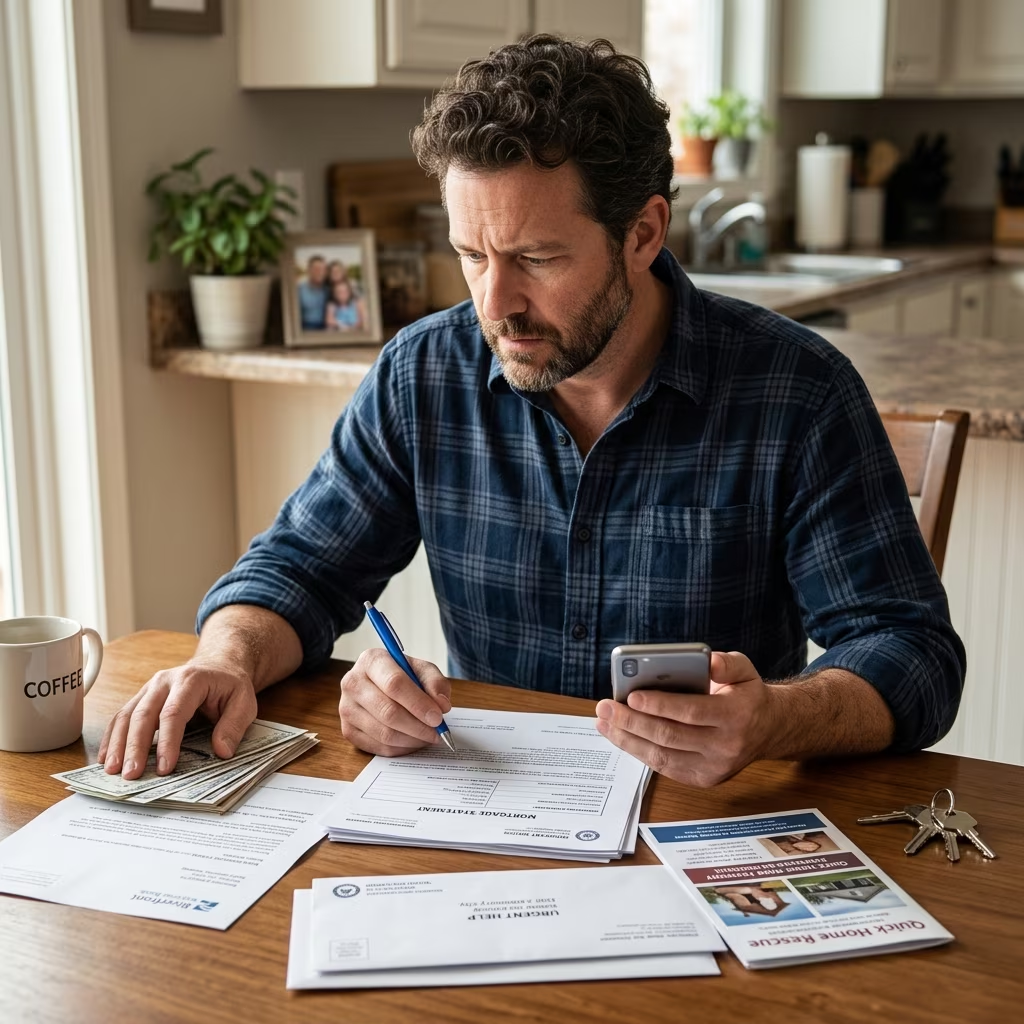
When a homeowner falls behind on mortgage payments, urgency can make any promise of help sound attractive. That is exactly why foreclosure rescue scammers target people in distress: they offer hope, push for quick decisions, and hide the real cost until it is too late. State consumer agencies and the Federal Trade Commission warn that these schemes often involve false guarantees, advance fees, pressure tactics, and attempts to take control of the home’s title.
The safest approach is to slow the process down, verify every claim, and contact your lender or a HUD-approved housing counselor before you sign anything. Legitimate assistance exists, but real help does not require secrecy, fear, or surrendering ownership of your home.
What a foreclosure rescue scam looks like
Foreclosure rescue scams come in several forms, but they usually share the same pattern: someone claims they can stop the foreclosure, lower your payment, or save your house if you act immediately. In many cases, the scammer asks for money up front, tells you not to speak with your lender, or requests a deed transfer that gives them control of the property.
Some fraudsters pose as consultants, housing specialists, or legal representatives. Others present themselves as investors or relief companies and promise to negotiate with the mortgage servicer on your behalf. Consumer protection agencies caution that these claims are often exaggerated or completely false.
Common warning signs
Although scams vary, several red flags appear again and again. If you see one of these, treat it as a warning and pause before moving forward.
- Anyone promises to guarantee a loan modification or foreclosure fix.
- You are told not to contact your lender, servicer, attorney, or housing counselor.
- Payment is requested before any meaningful work is completed.
- The company pressures you to sign documents quickly or without review.
- You are asked to transfer the deed or title to your home.
- The person says you can stay in the home as a renter and buy it back later.
- The business refuses to give clear terms in writing.
- The offer sounds too easy compared with your financial situation.
Why deed transfers are especially dangerous
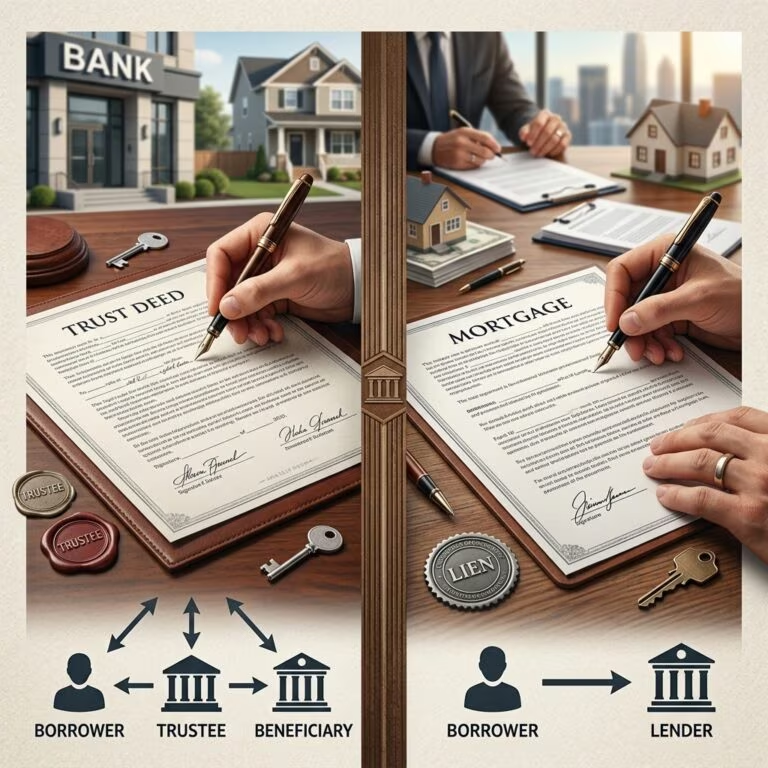
One of the most harmful tricks in foreclosure rescue fraud involves convincing a homeowner to sign over the deed. The scammer may claim this is only temporary or that the home will be “protected” while they work out a solution. In reality, the transfer can strip you of ownership, allow the scammer to borrow against the property, and make it much harder for you to recover your equity.
Once title changes hands, the new owner may stop making mortgage payments, collect rent, and delay any promised repurchase. By the time the homeowner realizes what happened, the property may already be tied up in additional debt or even lost to eviction proceedings.
How legitimate help is different
Real mortgage assistance is usually transparent, documented, and slow enough for you to review. Reputable organizations explain the process, answer questions, and provide written information you can take to a lender, attorney, or housing counselor for review.
Legitimate assistance also does not depend on isolation. A trustworthy provider will not insist that you cut off contact with your mortgage servicer, and it will not punish you for seeking a second opinion. If a company is unable to clearly explain what it will do, how much it will cost, and what results are possible, that is a sign to walk away.
| Behavior | Likely risk | Safer alternative |
|---|---|---|
| Guarantees of success | High risk of deception | Ask for realistic, written explanations of possible outcomes |
| Upfront fees before help is delivered | Often illegal or fraudulent | Check whether fees are allowed and when they are due |
| Pressure to transfer title | Possible loss of ownership and equity | Keep title in your name unless a trusted attorney advises otherwise |
| Instruction to avoid your lender | You may miss real options from the servicer | Contact the lender directly as soon as payment trouble begins |
Smart steps to take before you agree to anything
If you are behind on payments, time matters, but careful review matters too. The first step is to call your mortgage servicer and explain the situation. Lenders often have loss-mitigation options, and early communication can open more paths than waiting for a third party to intervene.
Next, seek independent advice. A HUD-approved housing counselor can help you understand possible repayment plans, forbearance, modification, or other alternatives. If someone claims to offer legal services, confirm the attorney’s name, license status, and disciplinary history before relying on the offer.
- Read every document carefully before signing.
- Keep copies of advertisements, contracts, emails, and text messages.
- Ask for the company’s full legal name and physical address.
- Check whether the person is licensed where required.
- Bring the paperwork to an attorney, counselor, or trusted advisor.
- Never sign a blank form or an agreement you do not understand.
Questions that can expose a scam
Simple questions often reveal whether an offer is credible. A legitimate business should be able to answer clearly and in writing.
- What exactly will you do for me?
- How much will it cost, and when is payment due?
- Will I keep legal ownership of my home?
- Can I contact my lender directly while you work?
- What evidence do you have that similar cases were successful?
- Are you licensed, and where can I verify that license?
Scammers often dodge these questions, shift to emotional pressure, or insist that you trust them without documentation. That response is itself a warning sign.
What to do if you already paid someone
If you have already paid money or signed documents, act quickly. Contact your mortgage servicer, a housing counselor, and an attorney to determine whether the transaction can be reversed or whether additional steps are needed to protect your rights.
You should also gather records of every payment, message, and agreement. If the scam involved identity theft or misuse of your personal information, report it through the federal identity theft reporting process and consider placing fraud alerts where appropriate.
How to report suspected fraud
Reporting helps protect both you and other homeowners. Federal and state agencies may investigate patterns of deceptive practices, and a complaint can create a paper trail if the scammer later targets someone else.
In many situations, homeowners may want to contact their state attorney general, the FTC, or a consumer protection agency. If the conduct involves a lawyer or law firm, a state bar complaint may also be appropriate. Keep copies of all documents before submitting reports.
Safer alternatives when foreclosure is approaching
A homeowner who falls behind is not out of options. Depending on the lender and the facts of the case, possible alternatives may include repayment plans, temporary forbearance, a modification, a sale of the property, or other negotiated solutions. The key is to pursue these paths directly or through a qualified counselor rather than through an unverified rescue company.
In some cases, the best outcome may be to sell the home before foreclosure advances too far. That is not a failure; it may preserve equity and reduce the long-term financial damage. A trustworthy advisor will discuss both retention and exit options instead of promising only one miracle solution.
Frequently asked questions
Can someone legally charge me upfront for foreclosure help?
In many places, advance-fee rules limit or prohibit charging before real relief is obtained, and consumer agencies warn that upfront requests are a major scam signal.
Should I ever transfer the deed to my house?
Not without independent legal advice. Unexplained deed transfers are one of the most dangerous parts of foreclosure rescue fraud and can lead to loss of ownership.
What if the company says it has lawyers?
Ask for the names of the lawyers, where they are licensed, and how to verify their standing. Do not rely on a vague claim that “attorneys are involved.”
Is it a good idea to wait until the company handles everything?
No. You should stay in contact with your lender and review any offer independently. Avoid anyone who tells you to stop communicating with the servicer.
Where can I get help without risking another scam?
Look for government-approved housing counseling, direct lender communication, and licensed professionals whose credentials you can verify. That combination is far safer than relying on a cold call or a promise made under pressure.
Final precautions worth remembering
Foreclosure rescue fraud works because it exploits fear. The best defense is a calm, documented process: verify the person, confirm the license, refuse advance fees, keep title in your name, and speak directly with your lender or a trusted housing counselor before making any irreversible decision.
If the offer depends on secrecy, urgency, or a promise that sounds unusually easy, treat it as a warning rather than a solution. Homeowners who pause long enough to verify the facts are far less likely to lose money, equity, or the house itself.
References
- Mortgage Assistance Relief Scams — Wisconsin Department of Agriculture, Trade and Consumer Protection. 2025-??-??. https://datcp.wi.gov/Pages/Publications/MortgageAssistanceReliefScamsSPANISH954.aspx
- What Is Mortgage Fraud? — Allstate. 2025-??-??. https://www.allstate.com/es/resources/identity-protection/what-is-mortgage-fraud
- Identificación de fraudes hipotecarios — Tennessee Office of the Attorney General. 2025-??-??. https://www.tn.gov/attorneygeneral/working-for-tennessee/consumer/resources/materials/mortgage-scams-sp.html
- Alerta para ayudar a los consumidores a evitar estafas relacionadas con el rescate de ejecución hipotecaria — California Department of Real Estate. 2011-03-22. https://dre.ca.gov/files/pdf/pr/2011/DRENewsRelease_032211_SP.pdf
- Detectar fraude hipotecario y otras estafas de asistencia para evitar ejecuciones hipotecarias — Bank of America. 2025-??-??. https://homeloanhelp.bankofamerica.com/es/avoiding-mortgage-scams.html
- Cómo evitar las estafas de rescate de ejecución hipotecaria — Illinois Legal Aid Online. 2025-??-??. https://es.illinoislegalaid.org/legal-information/avoiding-foreclosure-rescue-scams
- ShowMeTheMoney: Estafas de rescate hipotecario — Bank On Milwaukee. 2025-??-??. https://bankonmilwaukee.org/es/resources/showmethemoney-mortgage-rescue-scams/