
Autonomous Vehicle Accidents: Legal Liability & Compensation
Navigate legal complexities when injured by driverless vehicles and understand who bears financial responsibility.
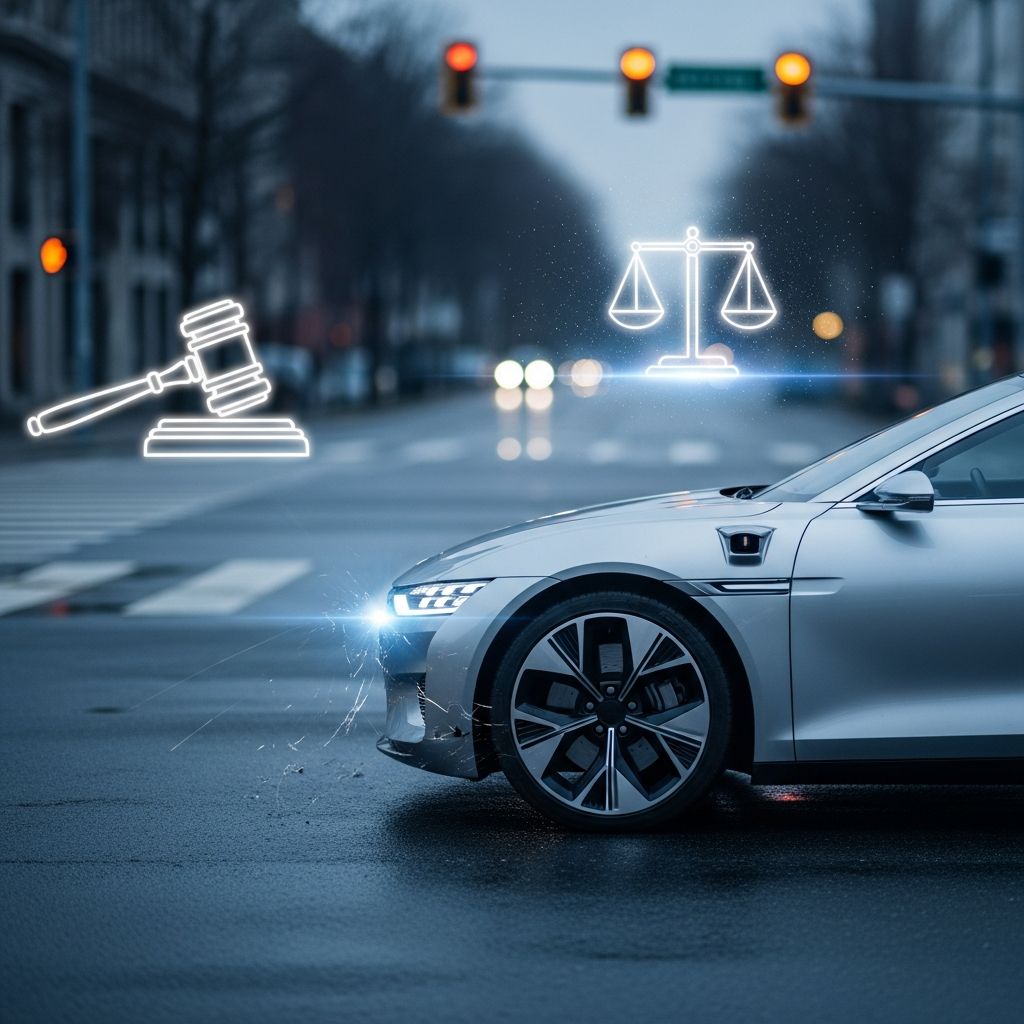
Understanding Liability in Autonomous Vehicle Accidents
The emergence of autonomous vehicles on roadways has fundamentally altered traditional concepts of accident liability and fault determination. Unlike conventional vehicles where driver negligence forms the basis of legal responsibility, self-driving cars introduce multiple parties whose actions, decisions, or failures may contribute to collision outcomes. When you suffer injuries in an accident involving an autonomous vehicle, determining who bears financial responsibility requires navigating a complex legal landscape that combines product liability principles, emerging state regulations, and evolving industry standards.
The fundamental challenge in autonomous vehicle liability stems from the absence of a human operator actively controlling vehicle functions. Traditional negligence law assumes a driver makes moment-to-moment decisions about speed, braking, steering, and hazard avoidance. When an autonomous system makes these decisions, legal accountability shifts from the individual controlling the vehicle to those responsible for designing, manufacturing, programming, and maintaining the automated systems. This shift represents one of the most significant changes in accident law since the automobile’s invention.
Identifying Potential Defendants in Autonomous Vehicle Collisions
Several entities may share responsibility for injuries sustained in autonomous vehicle accidents. Understanding each potential defendant’s role helps clarify where legal action should be directed and strengthens your compensation claims.
Vehicle Manufacturers
Autonomous vehicle manufacturers represent the primary defendants in most accident cases. These companies design and produce the vehicles’ hardware, including sensors, cameras, and radar systems that collect environmental data. When defective sensors fail to detect obstacles, or when the vehicle’s structural design proves inadequate during collision impact, manufacturers face product liability claims. The manufacturer’s responsibility extends beyond initial production quality to encompass the adequacy of testing protocols before public deployment and the sufficiency of safety features engineered into the vehicle’s design.
Software Development Companies
Third-party software developers who create the autonomous driving algorithms bear potential liability when programming errors or inadequate testing cause accidents. These developers write the code determining how the vehicle interprets sensor data, predicts road hazard scenarios, and executes driving responses. If the software fails to account for common road conditions, misinterprets traffic signals, or responds inadequately to unexpected situations, injured parties may pursue claims against the software developer. The complexity of artificial intelligence systems means that even sophisticated testing may fail to identify all potential failure modes before real-world deployment.
Sensor and Component Suppliers
Autonomous vehicles depend on sophisticated sensor technologies supplied by specialized manufacturers. These suppliers provide lidar systems, radar units, cameras, and computing processors essential for vehicle operation. When these components malfunction or prove inadequately designed for real-world conditions, suppliers may face liability claims from injured accident victims. Establishing supplier liability requires demonstrating that the component defect directly caused the accident rather than driver error or other contributing factors.
Road Mapping Services
Companies providing digital mapping data that autonomous vehicles rely upon for navigation may share liability when inaccurate or outdated maps contribute to accidents. These services supply the road geometry data, traffic signal locations, and hazard information that autonomous systems use for decision-making. If mapping data fails to reflect actual road conditions or contains errors about hazard locations, the mapping service provider may face liability when these inaccuracies contribute to collisions.
Vehicle Owners and Operating Companies
The legal status of vehicle owners and autonomous taxi or delivery service operators varies significantly by jurisdiction. Some states classify the vehicle owner as the operator responsible for traffic violations, while others limit owner liability to scenarios where negligence in vehicle maintenance occurs. Ride-sharing or delivery companies operating autonomous fleets may bear responsibility for ensuring proper vehicle maintenance and timely system updates.
Legal Standards for Determining Autonomous Vehicle Liability
Multiple legal frameworks have emerged to assess liability in autonomous vehicle accidents, reflecting ongoing debate among legal scholars, policymakers, and industry experts about appropriate standards.
Product Liability Framework
Most current autonomous vehicle accident cases fall within product liability law, treating the autonomous system similarly to other vehicle components like defective airbags or brake systems. Under this framework, injured parties must demonstrate that the autonomous vehicle contained a design defect, manufacturing defect, or inadequate warnings that directly caused their injuries. The manufacturer bears liability regardless of negligence if a defect in the product caused harm. This approach simplifies liability determination but may not adequately address software-related failures or scenarios involving unexpected interactions between automated systems and real-world environments.
Reasonable Driver Standard
An emerging legal approach evaluates autonomous vehicle conduct against the “reasonable human driver” standard. Under this framework, manufacturers bear liability whenever their autonomous system fails to avoid accidents that a competent, attentive, and unimpaired human driver would have avoided. This standard potentially holds autonomous systems to a higher accountability threshold since human drivers regularly cause accidents through inattention or impairment, while autonomous systems theoretically maintain perfect focus and sobriety. Implementation of this standard would likely result in strict liability for many autonomous vehicle accidents, as manufacturers would pay damages even without evidence of negligence in system design.
Negligent Operation Standard
Some legal theorists propose treating autonomous vehicles as “computer drivers” subject to negligent driving standards similar to human operators. Under this approach, liability attaches when the autonomous system fails to exhibit reasonable driving behavior. However, this standard differs from the reasonable driver approach by requiring actual proof of negligent operation rather than automatic liability for any accident a careful human would have avoided. Courts would examine whether the autonomous system behaved reasonably given the circumstances it encountered.
State-Specific Liability Frameworks
Liability determination varies considerably across jurisdictions as states implement different regulatory approaches to autonomous vehicles.
Michigan’s Manufacturer Liability Model
Michigan became the first state establishing clear autonomous vehicle liability standards, directing that manufacturers bear responsibility when the autonomous operating system causes collisions. This framework provides injured parties with clear guidance about where to direct claims and establishes insurance requirements for autonomous vehicle operations.
Nevada and Texas Operator Definitions
Nevada and Texas define the vehicle owner or operator as responsible for traffic violations committed by autonomous systems. Under these approaches, owners may face citations and liability for traffic infractions committed while the autonomous system operates the vehicle, even when not physically present in the vehicle. These definitions effectively treat autonomous operating systems as extensions of owner responsibility.
California’s Recent Regulatory Advances
California’s Assembly Bill 1777, signed into law in September 2024, fundamentally shifted liability by making manufacturers, not drivers, responsible for traffic violations committed by autonomous vehicles. When a vehicle operating in autonomous mode runs a red light or commits traffic infractions, manufacturers receive the citation rather than drivers. Beginning July 2026, this law also mandates that manufacturers implement two-way voice communication systems and 24/7 emergency hotlines in autonomous vehicles, enabling first responders to issue emergency commands and potentially stop or redirect vehicles during crisis situations.
Establishing Fault and Causation in Autonomous Vehicle Cases
Successfully pursuing compensation after an autonomous vehicle accident requires establishing clear connections between specific failures and your injuries. The investigation process differs substantially from traditional accident cases.
Obtaining Critical Evidence
Police reports provide foundational documentation of accident circumstances, including weather conditions, road surface quality, and initial observations about vehicle positioning. However, autonomous vehicle cases require additional investigation beyond standard police reports. You should request the autonomous vehicle’s event data recorder information, similar to airplane “black boxes,” which captures the vehicle’s sensor readings, decision-making processes, and system responses in the moments preceding the collision.
Expert Analysis Requirements
Establishing liability in autonomous vehicle cases typically requires expert testimony from specialists in autonomous vehicle technology, sensor systems, and artificial intelligence. These experts can analyze whether the autonomous system operated within design specifications, whether the vehicle’s sensors functioned properly, and whether the vehicle’s response to the accident scenario met reasonable standards for autonomous operation. Experts may also identify whether software updates or recalls issued after your accident would have prevented the collision, suggesting manufacturers were aware of dangerous conditions.
Traffic Law Compliance Analysis
Determining whether the autonomous vehicle violated traffic laws provides important evidence of responsibility. If investigation reveals the vehicle ran a red light, exceeded speed limits, or failed to yield right of way, this evidence directly supports liability claims against manufacturers responsible for programming the vehicle’s compliance with traffic regulations.
Factors Affecting Compensation Amounts
Multiple variables influence the financial compensation you may recover from autonomous vehicle accident defendants.
Injury Severity and Medical Expenses
Compensation directly correlates with injury severity. Catastrophic injuries, permanent disabilities, or wrongful death claims justify substantially larger awards than minor injuries. Your compensation should cover all medical expenses, including emergency care, hospitalization, surgical procedures, rehabilitation, and ongoing treatment. Even injuries caused by vehicle safety features like airbags may form part of your claim if the autonomous system’s failure to avoid collision led to the safety feature deployment.
Economic and Non-Economic Damages
Economic damages encompass quantifiable losses including medical bills, lost wages during recovery, property damage to your vehicle, and future earnings reduction from permanent disability. Non-economic damages address pain and suffering, emotional distress, loss of life enjoyment, and permanent scarring or disfigurement. Establishing non-economic damages requires detailed documentation of your injury experience and recovery challenges.
Environmental and Circumstantial Factors
Weather conditions, road surface quality, lighting conditions, and traffic density at accident time may influence compensation calculations. Defense arguments may attribute accident causation to environmental factors such as rain, ice, or poor road conditions rather than autonomous system failure. However, autonomous vehicles’ theoretical superiority in processing environmental data may shift responsibility to manufacturers even in challenging conditions if their system failed to adjust appropriately.
Insurance Considerations and Coverage
Insurance requirements for autonomous vehicles remain inconsistent across jurisdictions, complicating compensation pathways. Traditional auto insurance typically assumes human driver operation, creating gaps when autonomous systems cause accidents. Insurance companies are developing specialized policies for autonomous vehicles, but comprehensive coverage remains limited. Michigan’s requirement that manufacturers carry insurance for autonomous operations signals a developing industry standard, though many jurisdictions lack explicit insurance mandates.
Steps to Protect Your Legal Rights
Following an autonomous vehicle accident, specific actions strengthen your compensation claims:
- Document the accident scene thoroughly with photographs, video, and written descriptions of all vehicles, road conditions, and visible damage
- Obtain contact information from witnesses and request their written accounts of accident events
- Request the autonomous vehicle’s event data recording and ask whether the vehicle had recently received software updates
- Seek medical evaluation immediately, even for injuries that seem minor, as some injuries manifest gradually
- Preserve all medical records, bills, and evidence of lost wages or reduced earning capacity
- Report the accident to law enforcement and obtain a complete police report
- Consult a personal injury attorney experienced with autonomous vehicle cases before discussing the accident with insurance companies or defendants
Future Developments in Autonomous Vehicle Liability Law
Legal frameworks governing autonomous vehicle liability continue evolving as technology advances and accident cases establish precedent. Federal policymakers are developing guidelines balancing innovation with consumer safety protection. As autonomous vehicles become more prevalent, standardized liability frameworks may emerge, clarifying defendant identification and damage calculation. The interplay between strict product liability, negligent operation standards, and state-specific regulations will continue shaping how courts determine responsibility and calculate compensation for autonomous vehicle accident victims.
Frequently Asked Questions
Q: Can I sue the autonomous vehicle’s owner if the owner wasn’t in the vehicle?
A: Liability depends on your state’s regulations. Some jurisdictions hold owners responsible for autonomous vehicle operations regardless of physical presence, while others focus liability on manufacturers or operating companies. Consult a local personal injury attorney to understand your state’s specific rules.
Q: What if both a human driver and an autonomous vehicle contributed to the accident?
A: Accidents involving both human operators and autonomous vehicles require determining each party’s proportional responsibility. Comparative negligence laws in your state determine how fault allocation affects compensation. Evidence analysis becomes more complex but remains possible with thorough investigation.
Q: How long do I have to file a claim after an autonomous vehicle accident?
A: Statutes of limitations vary by state but typically range from two to four years for personal injury claims. File claims promptly, as evidence preservation becomes increasingly difficult with time delays, and witness memories fade.
Q: Will my regular auto insurance cover injuries from autonomous vehicle accidents?
A: Standard auto insurance policies may not provide adequate coverage for autonomous vehicle accidents. The defendant manufacturer’s insurance typically covers damages, and your uninsured motorist coverage may provide additional protection. Review your policy and discuss autonomous vehicle accident scenarios with your insurance agent.
Q: What evidence is most important in autonomous vehicle accident cases?
A: The autonomous vehicle’s event data recorder information is critical, as it documents the system’s sensor readings and decision-making processes. Police reports, witness statements, expert analysis, and maintenance records for the vehicle also provide essential evidence establishing liability.
References
- Liability for Autonomous Vehicle Accidents — The Gatti Law Firm. 2024. https://www.gattilaw.com/blog/autonomous-vehicle-accidents-liability/
- Setting the Standard of Liability for Self-Driving Cars — Brookings Institution. 2017. https://www.brookings.edu/articles/setting-the-standard-of-liability-for-self-driving-cars/
- Navigating Liability in the Age of Autonomous Vehicles — Wasser Cooperman & Hinds LLP. 2024. https://www.wshblaw.com/publication-navigating-liability-in-the-age-of-autonomous-vehicles
- Driver-Assist Accident Liability — Dolan Law Firm. July 2025. https://www.dolanlawfirm.com/blog/2025/07/08/who-s-liable-for-driver-assist-car-220211/
- Who May Be Responsible for Car Accidents Involving Self-Driving Vehicles — JD Supra. 2024. https://www.jdsupra.com/legalnews/who-may-be-responsible-for-car-3736450/
Similar Articles








Read full bio of medha deb




