
Auto Repair Rights Every Driver Should Know
Understand what repair shops must disclose, when they need your approval, and how to challenge unfair charges.
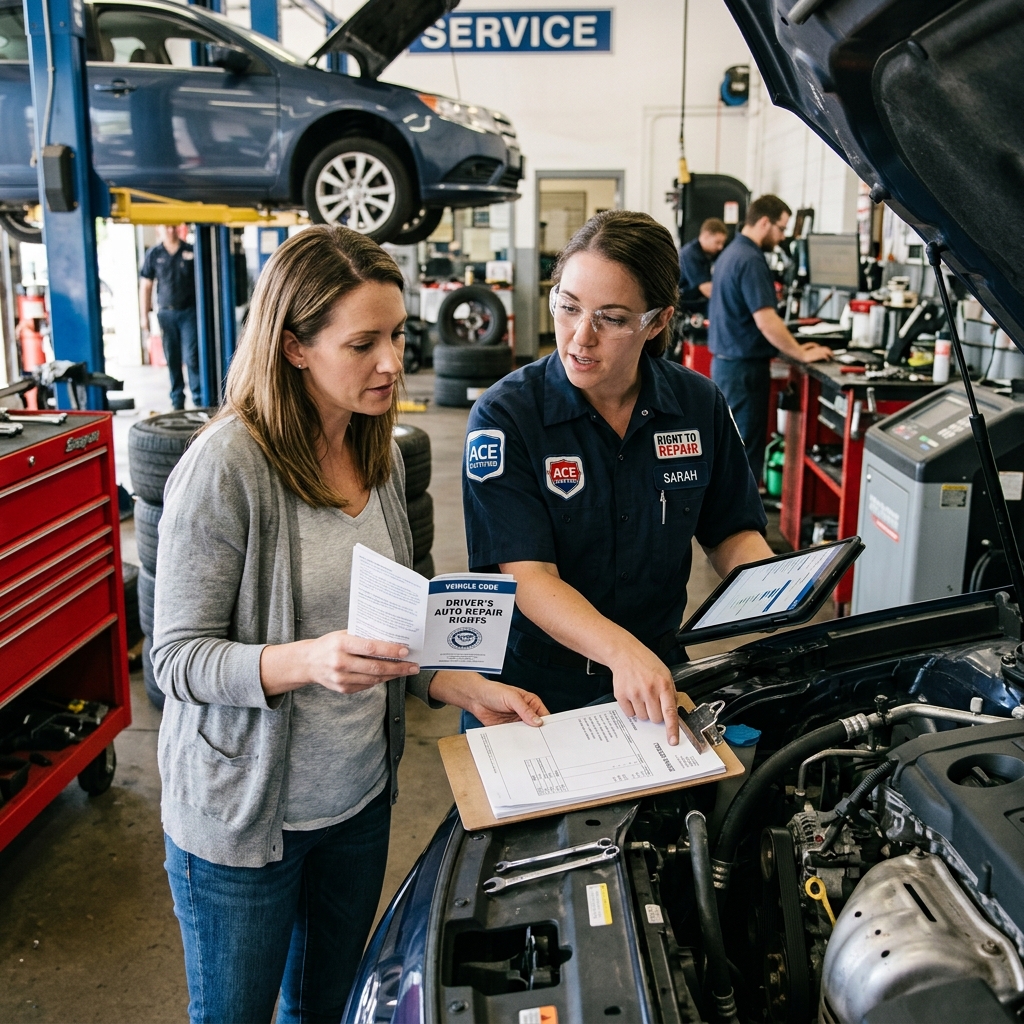
Taking a car to a mechanic can be stressful, especially when the diagnosis is unclear and the bill is hard to predict. Consumer protection rules are designed to reduce that uncertainty by requiring repair shops to explain the work, get approval before doing it, and document the final charge. The exact details vary by state, but the basic idea is consistent: you should not be surprised by repairs you never authorized or by a bill that bears no relation to the estimate you received.
Knowing your rights before you hand over the keys can help you avoid unnecessary costs and handle disputes more effectively. It also puts you in a better position to compare shops, ask informed questions, and insist on written records when something does not sound right. In many states, repair laws also protect your ability to choose the shop and decide which repairs are worth approving.
Why written documentation matters
Clear paperwork is the foundation of a fair repair transaction. An estimate tells you what the shop expects the work to cost, while authorization shows what you agreed to before the repair began. A final invoice shows what was actually done and what you are being charged for. Without those records, it becomes much harder to prove that a shop exceeded its authority or charged for work that was never approved.
Written records also help if the matter escalates to a consumer agency, an insurance dispute, or small claims court. Even when a state allows oral or electronic approval, the consumer still benefits from keeping emails, texts, photographs, and copies of every repair document.
Your right to an estimate before major work begins
Many repair laws require a shop to provide an estimate before starting work, especially when the likely cost exceeds a state-set threshold. In practice, this estimate should identify the expected labor and parts charges so you can decide whether to proceed. Some states also allow a shop to perform a diagnostic tear-down first, but even then the shop should explain whether that diagnostic step itself carries a fee.
An estimate is not the same thing as a blank check. If the shop discovers new problems, it should not simply continue without contacting you. The whole point of the estimate is to let you make a choice with enough information to understand the financial risk.
| Document | Purpose | What you should check |
|---|---|---|
| Estimate | Gives an expected price before work starts | Labor, parts, fees, and any diagnostic charges |
| Authorization | Shows your permission to begin or continue work | Scope of repair, price limits, and date of approval |
| Final invoice | Lists what was actually completed and charged | Parts used, additional work, totals, and warranties |
How authorization should work
A mechanic normally needs your approval before performing repairs. That approval can sometimes be written, oral, or electronic, depending on state law. What matters is that the shop can show you agreed to the work. If the vehicle needs extra repairs after the shop has already begun, the shop should contact you again before moving forward.
You are not required to approve every suggested repair. You can accept the work that is urgent and decline items that can wait. If a shop tells you that several services are needed at once, ask which one is necessary for safe operation and which ones are recommended maintenance. That distinction can save you money and reduce pressure to approve unnecessary work.
What to do when the shop finds more problems
Unexpected issues are common once a mechanic opens up a vehicle. A worn belt may reveal a damaged pulley, or a brake inspection may uncover a leaking line. The key question is not whether additional problems exist, but whether the shop gave you a fair chance to approve them before doing the work.
If the repair grows beyond the original plan, ask the shop to pause and explain three things: what new problem was found, why the additional work is needed, and how much it will cost. If the shop refuses to stop, or if the bill includes work you never approved, you may have a basis to challenge the charge under your state’s consumer rules.
Parts, substitutions, and disclosure rules
Consumers often care as much about the parts used as the repair itself. Depending on state law, repair shops may need to identify whether parts are new, used, rebuilt, or remanufactured. That disclosure helps you compare quality, warranty coverage, and price. It also matters when a shop substitutes one type of part for another after giving an estimate.
If the shop changes the kind of part it plans to use, it should explain the change before installing it. You may want to know whether the part is covered by a warranty, whether it is factory-equivalent, and whether the substitution lowers the price or affects performance. A simple verbal reassurance is not the same as a clear written disclosure.
Knowing your rights about replaced parts
In many states, you can ask for the old parts back. This is useful if you want to verify that the replacement was necessary or confirm that the shop actually swapped the correct component. If you want the parts returned, ask before authorizing the work so the shop can hold them for you. Some parts may be exempt for safety, core returns, or other legal reasons, but the request itself is still worth making.
Requesting the old parts can also discourage questionable billing. When a shop knows the customer may inspect the removed component, it has less room to exaggerate the need for replacement. Even when the part cannot be returned, the invoice should still describe what was installed and why.
The final invoice should tell the full story
The repair ends with an invoice, not just a total. A proper invoice should identify the shop, list the work performed, describe the parts supplied, and show the amount charged for labor and materials. If a shop performed some work at no charge, that should still appear in the records. The invoice is the document that lets you compare the actual repair against what was originally authorized.
Read the invoice carefully before paying. Look for duplicate charges, vague labor descriptions, or items that were never discussed. If you see a mismatch between the estimate and the final bill, ask for an explanation in writing. A calm, specific question often produces more useful results than a general complaint.
When a repair takes longer than expected
Delays can create serious inconvenience, especially if the vehicle is needed for work, school, or family obligations. Depending on the state and the service agreement, a customer may be able to request a status update, cancel the repair, or negotiate a partial refund if the shop repeatedly misses deadlines. Some customers may also ask whether a loaner car or rental reimbursement is available, though that depends on the contract and the facts of the repair.
If time matters, make that clear at the outset. Ask for an estimated completion date and request updates if the date changes. The more clearly you document your expectations, the easier it is to show that a delay became unreasonable.
How warranty rules affect where you can go
Many drivers worry that using an independent shop will void the manufacturer’s warranty. In general, consumer-protection and warranty rules prevent a warranty from being canceled simply because you chose a different repair shop, so long as the work is done properly and the correct parts and procedures are used. That means you are usually free to shop around rather than relying only on a dealership.
This freedom matters because prices, labor rates, and service quality can vary widely. An independent mechanic may offer a lower price, a faster schedule, or a more detailed explanation of the repair. The most important point is to keep proof of the service performed so you can show the vehicle was maintained appropriately.
Practical ways to protect yourself before leaving the car
- Ask for a written estimate before approving significant work.
- Request a clear explanation of the problem and the reason for each recommended repair.
- Confirm whether the shop will contact you before doing anything beyond the estimate.
- Keep receipts, texts, emails, and photos connected to the repair.
- Ask whether parts are new, used, rebuilt, or remanufactured.
- Find out whether you can have the old parts returned.
- Compare prices and opinions if the repair is expensive or unclear.
What to do if you think the shop crossed the line
If you believe a shop performed unauthorized work, start by asking for a written explanation and copies of the documents related to the repair. Sometimes the problem is a misunderstanding, but sometimes the invoice reveals a real violation. If the shop refuses to resolve the issue, you can usually escalate to a state consumer agency, an attorney general’s office, or a motor vehicle repair board where one exists.
Small claims court may also be an option for lower-value disputes. For larger losses or repeated misconduct, a consumer law attorney can help evaluate contract claims, warranty issues, and state repair-law violations. The best result usually comes from organized records rather than memory alone.
Questions drivers often ask
- Can a shop start work without my permission?
- In many places, no. Shops usually need authorization before beginning repair work, and they should seek fresh approval if the job expands beyond what you approved.
- Can I refuse extra repairs?
- Yes. You can approve only the work you want completed and decline the rest unless the extra repair is legally required or necessary to complete the original work safely.
- What if the final bill is higher than the estimate?
- Ask for an itemized explanation immediately. A higher bill may be allowed only if the state law, the service agreement, or your later authorization permits it.
- Do I have to take the shop’s word that a part was replaced?
- No. Ask for the old part, request photos if available, and keep all paperwork showing what was installed.
- Can I choose a different shop even if the dealer recommended one?
- Usually yes. Consumers generally retain the right to choose where they have maintenance and repairs performed, subject to the terms of the warranty and applicable law.
Better questions lead to better repairs
The most effective consumer strategy is often simple: slow the process down enough to understand it. Ask for estimates, compare options, and make the shop explain the job in ordinary language. A reputable mechanic should not object to reasonable questions about price, parts, timing, and authorization. In fact, a shop that welcomes those questions is usually easier to trust.
When you know your rights, you are less likely to accept vague advice, unsupported charges, or work you never requested. That knowledge does not eliminate car trouble, but it does make the repair process more transparent, more predictable, and easier to dispute when something goes wrong.
References
- Maintenance and repairs — California Bureau of Automotive Repair. 2026-01-01. https://www.bar.ca.gov/auto-repairs
- Car Repairs and the Law — FindLaw. 2025-01-01. https://www.findlaw.com/consumer/lemon-law/car-repairs-and-the-law.html
- Rights at Auto Repair Shop — DRiV Parts. 2025-01-01. https://www.drivparts.com/parts-matter/learning-center/driver-education-and-vehicle-safety/rights-at-auto-repair-shop.html
- Auto repair facilities customer rights — Washington State Department of Revenue. 2025-01-01. https://dor.wa.gov/forms-publications/publications-subject/tax-topics/auto-repair-facilities-customer-rights
- For Consumers — Ohio Board of Motor Vehicle Repair. 2025-01-01. https://mvrboard.ohio.gov/for-consumers
Similar Articles








Read full bio of Sneha Tete


