
Attorney Business Card Pitfalls to Dodge
Discover critical errors lawyers make with business cards and learn ethical, effective strategies to enhance networking success.
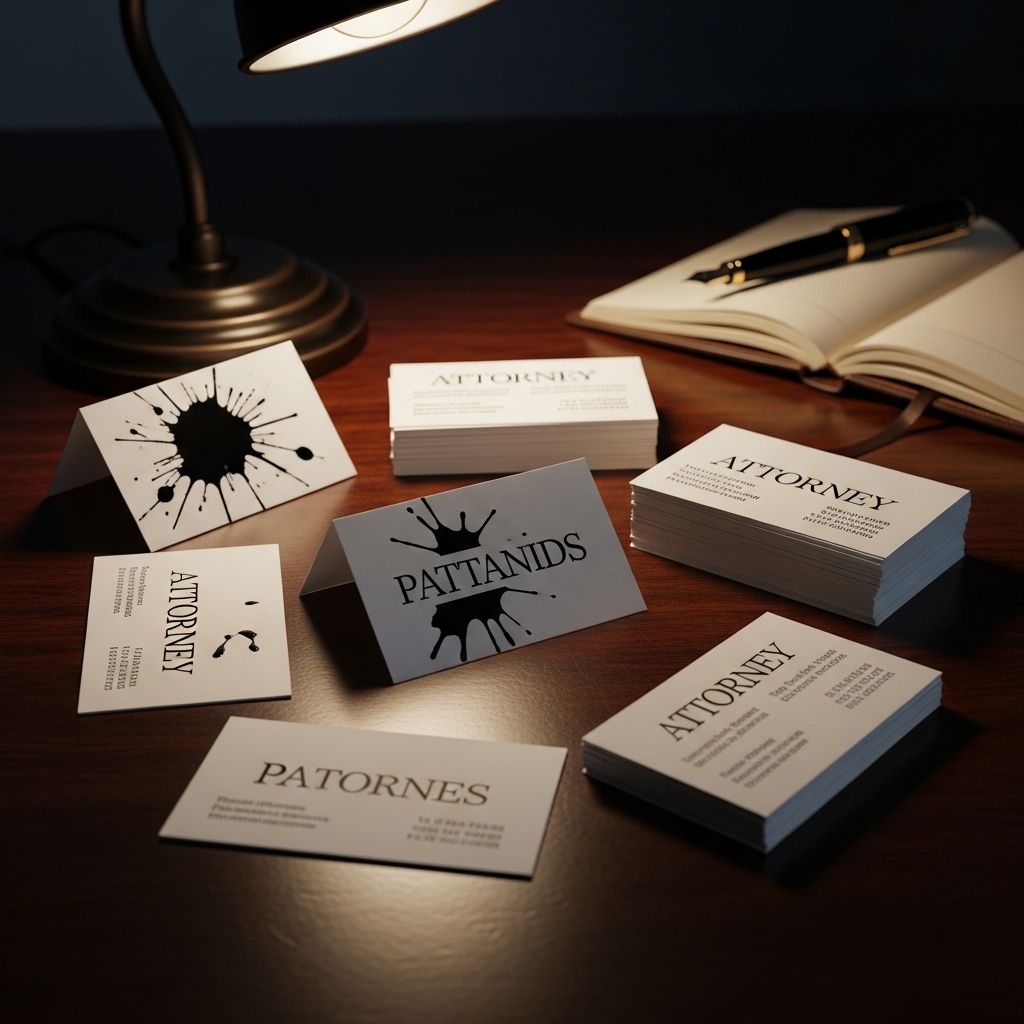
Business cards remain a cornerstone of professional networking for lawyers, serving as a tangible first impression in an increasingly digital world. Yet, many attorneys undermine their efforts by committing avoidable errors that violate ethical standards or diminish perceived professionalism. This comprehensive guide explores key missteps, drawing from established legal ethics rules and design principles to help you craft cards that comply with regulations and captivate potential clients.
Understanding the Ethical Framework for Legal Business Cards
Legal professionals operate under strict guidelines set by bodies like the American Bar Association (ABA) and state bar associations. These rules ensure communications, including business cards, remain truthful and non-misleading. ABA Model Rule 7.1 prohibits false or deceptive statements about services, qualifications, or firm status. Violations can lead to disciplinary actions, tarnishing reputations built over years.
For instance, terms like “expert” or “specialist” require certification in most jurisdictions. Without it, such claims on a card could invite scrutiny. Always verify state-specific rules, as variations exist—some permit nicknames if they don’t obscure identity, while others demand the exact licensed name.
Top Design and Content Errors Undermining Your Credibility
- Overloading with Excessive Details: Cramming resumes, lengthy bios, or multiple slogans onto a small card creates clutter. Focus on essentials: name, firm, contact info, and a concise tagline. Reserve deeper info for your website.
- Typos and Inaccurate Information: A misspelled email or outdated phone number erodes trust instantly. Proofread meticulously and double-check all details before printing large batches.
- Flashy or Inconsistent Styling: Wild colors, mismatched fonts, or tiny text hinder readability. Opt for clean, professional designs aligning with your firm’s branding—subtle elegance trumps ostentation.
These issues not only fail to impress but signal carelessness, a fatal flaw in a field demanding precision.
Navigating Firm Representation and Office Disclosures
Solo practitioners must avoid implying a larger operation. Names like “Johnson Legal Group” suggest multiple attorneys unless true, breaching rules against misleading firm portrayals. Use straightforward identifiers like “Johnson Law” for solos.
Virtual or remote setups pose another challenge. Listing a prestigious address without qualification misleads if no physical presence exists. Add “By Appointment Only” or clearly state virtual status to maintain transparency. For multi-jurisdictional work, disclose non-licensure in the listed state, e.g., “Licensed in California, not New York.”
| Scenario | Correct Approach | Risky Mistake |
|---|---|---|
| Solo Practice | “Jane Doe, Attorney at Law” | “Doe & Partners Legal Firm” |
| Virtual Office | “123 Main St, By Appt. Only” | “123 Main St, Suite 200” (no physical office) |
| Out-of-State | “Not licensed in TX; TX Bar #12345” | Texas address without disclosure |
Mastering the Essentials: What to Include and Exclude
Effective cards balance brevity with utility. Core elements include:
- Your licensed name
- Firm name (truthfully represented)
- Phone, email, website
- Physical address or virtual disclaimer
- Logo for brand consistency
Exclude unsubstantiated claims like “#1 Injury Lawyer” or superlative domains (e.g., bestdivorcelawyer.com). Social handles are fine if professional, but avoid gimmicky ones.
Incorporate a value proposition subtly, such as “Dedicated Family Law Advocate,” ensuring it’s factual and non-comparative.
Strategic Distribution: Beyond the Handshake
Handing out cards isn’t enough—do it purposefully. At networking events, pair with conversation: “Here’s my card; let’s discuss your estate needs.” Avoid mass distribution resembling solicitation, which ethics opinions like the San Diego County Bar’s deem permissible only if not primarily pecuniary-motivated.
Encourage reciprocity by asking for others’ cards first. Follow up promptly via listed contacts to convert impressions into consultations.
Enhancing Impact with Modern Touches
While traditional cards endure, integrate tech ethically. QR codes linking to your site boost interactivity without overwhelming print space. Ensure the site complies with ethics—no misleading claims there either.
Premium materials like matte finishes or embossing convey quality, aligning with a high-end practice. For solos, a subtle headshot humanizes the card, fostering connection.
Frequently Asked Questions (FAQs)
Can I use a nickname on my business card?
Yes, in many states if it doesn’t mislead about your identity, but confirm local rules and use your licensed name primarily.
What if my firm has a trade name?
Trade names are allowed in some jurisdictions like New York, but ensure they don’t imply unavailable services or false partnerships.
Is it okay to include social media on my card?
Absolutely, provided handles are professional and profiles adhere to advertising ethics—no unsubstantiated boasts.
How do I handle multi-state practice?
Disclose jurisdictions clearly, e.g., “Admitted in IL and WI,” avoiding implication of universal licensure.
Should I print double-sided cards?
Yes, use the back for a tagline, services list, or QR code, keeping the front clean for contacts.
Case Studies: Lessons from Real-World Examples
Consider Attorney A, whose “Elite Litigation Experts” card implied unproven superiority, drawing bar complaints. Contrast with Attorney B’s simple “Focused on Your Defense Needs,” which built referrals ethically.
Another pitfall: Lawyer C’s virtual address sans disclaimer led clients to no-shows, damaging trust. Transparent labeling resolved this.
Best Practices Checklist for Compliance and Appeal
- Verify all claims against certifications
- Proofread 3+ times
- Test readability from arm’s length
- Align with firm branding
- Include clear contact paths
- Add disclaimers where needed
Regularly update cards for address changes or new bar admissions to prevent obsolescence.
In summary, a well-crafted business card amplifies your professional presence when ethics and design harmonize. Invest time in refinement to turn pocket-sized prints into powerful networking tools.
References
- Model Rules of Professional Conduct: Rule 7.1 Communications Concerning a Lawyer’s Services — American Bar Association. 2023-01-01. https://www.americanbar.org/groups/professional_responsibility/publications/model_rules_of_professional_conduct/rule_7_1_communications_concerning_a_lawyers_services/
- Formal Opinion 495: Remote Work and Virtual Practice — American Bar Association Standing Committee on Ethics and Professional Responsibility. 2021-07-08. https://www.americanbar.org/content/dam/aba/administrative/professional_responsibility/ethics-opinions/495.pdf
- Ethics Opinion 2000-1: Business Cards as Communications — San Diego County Bar Association. 2000-01-01. https://www.sdcba.org/?pg=ethicsopinion00-1
- Rule 7.2: Advertising — New York Rules of Professional Conduct. 2024-01-01. https://nysba.org/professional-standards/rules-of-professional-conduct/
- Business Card Etiquette and Design for Professionals — Clio Legal Trends Report. 2023-05-15. https://www.clio.com/resources/legal-trends/
Similar Articles








Read full bio of medha deb




