
Understanding Assistance Animals in D.C.: Rights and Legal Protections
Navigate D.C. and federal laws governing service animals and emotional support animals in public and residential spaces.
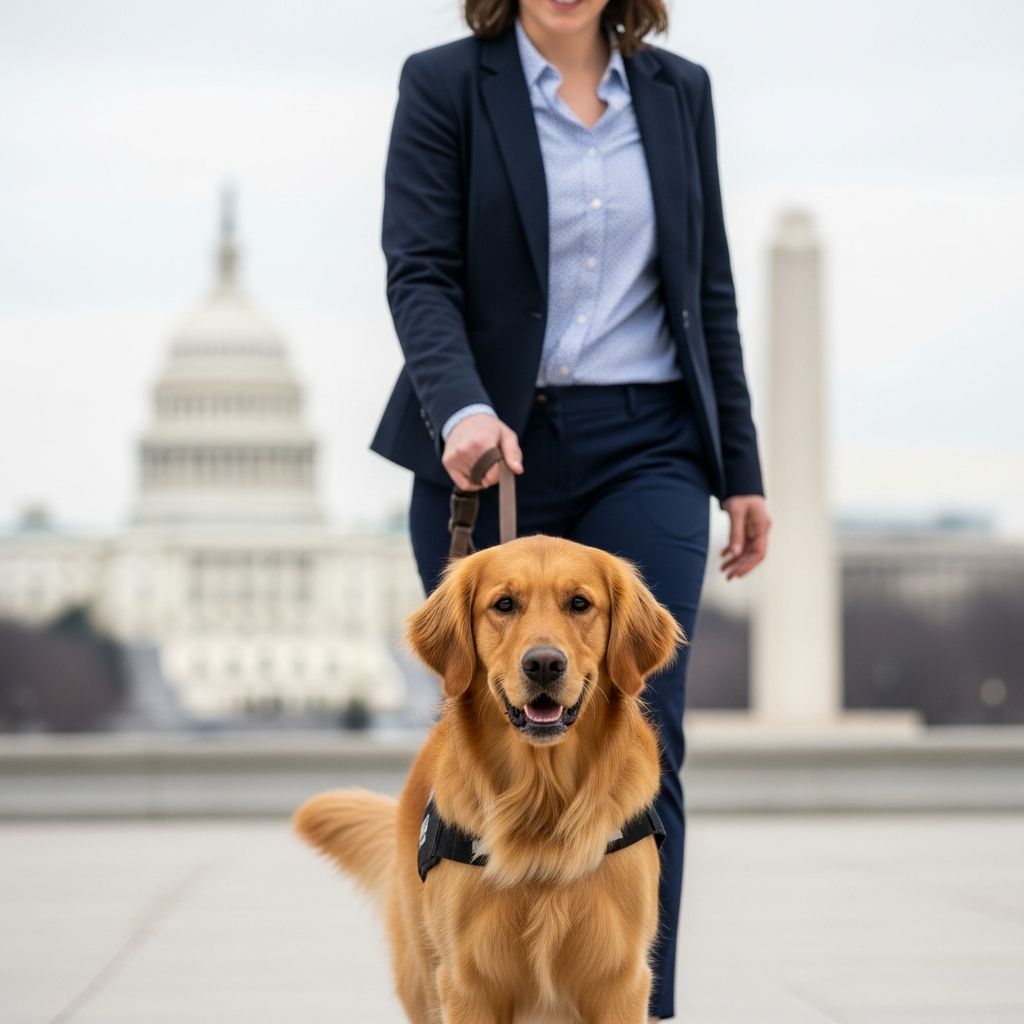
Navigating Assistance Animal Protections in Washington, D.C.
Washington, D.C. residents with disabilities benefit from comprehensive legal protections that guarantee access to public spaces and housing with their assistance animals. These protections stem from both federal legislation and local D.C. laws that work together to ensure equal access and opportunity. Understanding the distinctions between different types of assistance animals, the rights they provide, and the limitations that apply is essential for both individuals with disabilities and those who operate public facilities and housing.
Distinguishing Between Assistance Animal Types
The term “assistance animal” encompasses different categories, each with distinct legal definitions and protections. The differences matter significantly because they determine where an animal can accompany its handler and what accommodations must be provided.
Federal Service Animal Definition
Under the Americans with Disabilities Act, a service animal is specifically defined as a dog or, in limited cases, a miniature horse that has undergone specialized training to perform work or tasks directly related to a person’s disability. These tasks must address specific disability-related needs. Common examples include guide dogs for individuals who are blind, alert dogs for those who are deaf, mobility assistance dogs for wheelchair users, psychiatric service dogs that provide stability during emotional crises, and medication reminder dogs that alert individuals to take prescribed medications. The critical element distinguishing service animals from other animals is that they perform specific, disability-related functions rather than simply providing general comfort or companionship.
D.C. Local Service Animal Definition
Washington, D.C.’s local disability rights law takes a broader approach than federal ADA standards. Under D.C. Code, a service animal is defined as any domesticated animal that is legal to possess in the District without requiring special permits and that has been trained to perform tasks related to a person’s disability. This means that while the ADA limits service animals to dogs and miniature horses, D.C. law potentially permits other domesticated animals to qualify as service animals. However, D.C. law explicitly excludes animals whose sole function is to provide companionship or to deter crime.
Emotional Support Animals
Emotional support animals occupy a distinct legal category from service animals. These animals provide comfort through their presence but are not trained to perform specific disability-related tasks. An emotional support animal might help reduce anxiety, provide grounding during panic attacks, or offer psychological comfort, but it does not perform work or tasks. This distinction is crucial because it affects where emotional support animals are permitted and what legal protections apply to them. Unlike service animals, emotional support animals have more limited access rights in public accommodations.
Access Rights in Public Accommodations
Federal and D.C. laws guarantee that individuals with disabilities can access public spaces with their service animals. Public accommodations include a broad range of facilities and establishments.
Covered Public Spaces
Service animals must be permitted in numerous public settings under both federal and D.C. law, including:
- Restaurants, cafes, and food service establishments
- Retail stores and shopping centers
- Hotels, motels, and other lodging facilities
- Theaters, concert venues, and entertainment facilities
- Hospitals, medical offices, and healthcare facilities
- Public transportation systems and terminals
- Libraries, museums, and cultural institutions
- Government offices and public buildings
- Educational institutions
- Recreation and fitness facilities
Important Exemption: Religious Institutions
One significant limitation exists under federal ADA provisions: religious organizations such as churches, synagogues, mosques, and similar entities are not classified as public accommodations. This exemption applies regardless of whether the religious institution provides secular services. For example, a church-affiliated daycare center that serves families regardless of religious affiliation is still exempt from ADA public accommodation requirements.
What Handlers Cannot Be Charged
Both federal and D.C. law protect individuals from bearing additional financial burdens when accessing public spaces with their service animals. Establishments cannot charge special admission fees, entry charges, or other costs specifically for allowing service animals to accompany their handlers. However, this protection does not shield handlers from paying for any damage their animal causes to the facility. If a service animal damages property, the handler remains liable for repair or replacement costs.
When Service Animals Can Be Excluded
While the right to bring service animals into public accommodations is strong, limited circumstances permit exclusion.
Control and Behavioral Issues
A service animal may be excluded if it poses a direct threat to health or safety. This determination must be based on the animal’s actual behavior, not assumptions. For instance, if a service dog is aggressively barking and snapping at other customers, creating a genuine safety concern, the facility can request removal. Similarly, if an animal is out of control and the handler is unable or unwilling to control it effectively, exclusion is permissible. The key standard is whether the specific animal’s actual conduct creates a direct threat.
Housebreaking Status
An animal that is not housebroken can be excluded from public accommodations. This requirement protects the sanitation and safety of shared spaces. However, simply because an animal occasionally has an accident does not automatically render it excluded; the animal must demonstrate a pattern of not being housebroken.
Questions That Can and Cannot Be Asked
Staff at public accommodations have limited authority to question handlers about their service animals. This protection ensures that people with disabilities are not subjected to invasive questioning or harassment.
Prohibited Questions
Under both federal ADA rules and D.C. law, establishments cannot ask about the handler’s specific disability, demand to see medical documentation or certification, request proof of the animal’s training credentials, or require a demonstration of the animal’s abilities. These prohibitions prevent discrimination based on disability status and protect medical privacy.
Permitted Questions
When a service animal’s disability-related function is not apparent, staff members may ask two specific questions: “Is this animal required because of a disability?” and “What work or task does the animal perform?” These narrow questions allow establishments to verify that the animal is indeed a service animal without requiring medical information or invasive personal details.
Housing Protections for Service Animals and Emotional Support Animals
Federal and D.C. housing laws provide robust protections for individuals with disabilities who live with assistance animals, including protections that differ from public accommodation rules.
Service Animals in Rental Housing
Under D.C. disability rights law, landlords must allow individuals with disabilities to live with their service animals and must provide full and equal access to housing. Landlords cannot charge extra fees for service animals, though they can require payment for any damage the animal causes. These protections apply regardless of building pet policies; a “no pets” clause in a lease does not override the requirement to accommodate service animals.
Emotional Support Animals in Housing
Federal housing law extends broader protections than D.C. law when it comes to emotional support animals. Under the Fair Housing Act, housing providers must make reasonable accommodations for assistance animals when necessary for a person with a disability to have equal opportunity to use and enjoy housing. This means that emotional support animals, which are not covered under D.C.’s local equal access housing law, are protected under federal Fair Housing Act provisions. To qualify for these federal protections, an individual must have both a disability and a demonstrated need for the specific animal.
No Extra Charges for Assistance Animals
Federal Fair Housing Act protections prohibit landlords from charging additional rent, deposits, or fees for service animals or emotional support animals. However, handlers remain responsible for paying for any damage their animal causes.
When Housing Providers Can Exclude Animals
Federal law permits housing providers to exclude assistance animals only when the animal poses a direct threat to the health or safety of other residents or property and this threat cannot be mitigated through reasonable accommodations. Critically, animals cannot be excluded based solely on breed or size; exclusion decisions must be grounded in evidence of the animal’s actual conduct or behavior.
Recent Changes: D.C. Pets in Housing Amendment Act
Recent legislation in Washington, D.C. addresses companion animal housing more broadly. The Pets in Housing Amendment Act of 2024, effective October 2025, restricts what landlords can charge for pets and eliminates breed and size discrimination for companion animals in pet-friendly units. This law caps pet security deposits at 15 percent of monthly rent and limits pet rent to one percent of monthly rent. Beginning in October 2026, housing providers that allow companion animals cannot impose restrictions or charge different fees based on breed, size, or weight. While this law addresses general companion animals rather than service or emotional support animals specifically, it reflects a broader D.C. commitment to expanding housing access for individuals with animals.
Training Status and Animals in Training
Service animals in training receive different treatment under D.C. versus federal law. While the ADA does not cover service animals that are still being trained, D.C.’s equal access laws do protect animals undergoing training, provided the training is being conducted by an organization that provides service animals to individuals with disabilities. This D.C. protection ensures that animals in the training pipeline for service work can access public spaces during their training period.
Preventing Fraud and False Representation
In Washington, D.C. and 27 other states, it is illegal to misrepresent a regular pet as a service animal or emotional support animal, including through fraudulent identification cards or vests. This legal prohibition protects genuine service animal handlers from the complications that arise when fraudulent animals disrupt public spaces and undermines the legitimacy of actual service animals.
Special Circumstances and Reasonable Accommodations
Both federal and local law recognize that reasonable accommodations may be necessary to ensure equal access. When conflicts arise—such as when another resident is allergic to a service animal in housing—facilities are expected to provide accommodations for all affected parties, potentially including separate locations or modified schedules, rather than excluding either party.
Frequently Asked Questions About Assistance Animals in D.C.
Q: Can I be asked to remove my service animal from a public place?
A: Yes, but only in limited circumstances. Your service animal can be removed if it poses a direct threat to health or safety based on its actual behavior, if it is not housebroken, or if it is out of control and you cannot manage it effectively. Staff cannot remove your animal based on its breed, size, or assumptions about it.
Q: What is the difference between a service animal and an emotional support animal?
A: Service animals are trained to perform specific disability-related tasks, while emotional support animals provide comfort through their presence without performing trained tasks. Under federal law, only dogs can be service animals, but emotional support animals can be other species. Service animals have access rights in public accommodations; emotional support animals have more limited rights but are protected in housing under federal law.
Q: Can my landlord charge me extra for my service animal or emotional support animal?
A: No. Both federal and D.C. law prohibit landlords from charging extra fees, rent, or deposits for service animals or emotional support animals. You can be charged for any damage your animal causes, but not for its presence.
Q: What animals qualify as service animals under D.C. law?
A: Under D.C. law, any domesticated animal legal to keep in the District without special permits can be a service animal if trained to perform disability-related tasks. This is broader than federal ADA law, which limits service animals to dogs and miniature horses.
Q: Can restaurants ask me for proof that my dog is a service animal?
A: No. Public accommodations cannot ask for certification, identification, medical documentation, or proof of training. If your service animal’s disability-related function is not apparent, staff can only ask whether the animal is required because of your disability and what task it performs.
Q: Are emotional support animals protected in D.C. housing under local law?
A: D.C.’s local equal access housing law does not specifically cover emotional support animals, though service animals are covered. However, the federal Fair Housing Act extends protection to emotional support animals when necessary for a person with a disability to have equal opportunity to use and enjoy housing.
References
- Service Dog and Emotional Support Animal Laws in D.C. — Nolo. Accessed 2026. https://www.nolo.com/legal-encyclopedia/d-c-laws-on-service-dogs-and-emotional-support-animals.html
- DC emotional support animal laws: A guide for your association — FirstService Residential. Accessed 2026. https://www.fsresidential.com/washington-dc/news-events/articles/what-your-d-c-association-needs-to-know-about-serv/
- D.C. Pets in Housing Act Aims to Remove Barriers to Housing for Multispecies Families — Animal Legal Defense Fund. 2024. https://aldf.org/article/d-c-pets-in-housing-act-aims-to-remove-barriers-to-housing-for-multispecies-families/
- ADA Service Dog Laws 2026: Rules, Access & Proof — Pettable. 2026. https://pettable.com/blog/ada-service-animal
- Service Animals and Emotional Support Animals — ADA National Network. Accessed 2026. https://adata.org/guide/service-animals-and-emotional-support-animals
Similar Articles








Read full bio of medha deb


